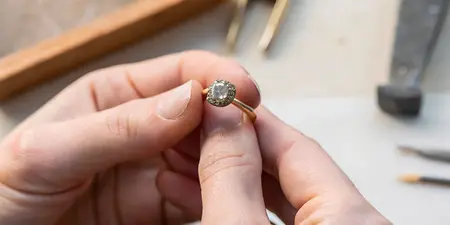

Wedding bands for pilots and aviators: complete 2026 guide

Best overall: a low-profile plain gold band. Best for a naturally white metal: a plain platinum band. Best flexible alternative: a silicone band, only where your workplace permits it. This 2026 guide compares wedding bands for pilots by fit, profile, care, and the distinction between a meaningful everyday ring and jewelry appropriate for a particular duty.
TL;DR
- Wedding bands for pilots should start with workplace rules, then fit and profile—not aviation-themed styling.
- A low-profile plain gold band is the default fine-jewelry choice; platinum suits shoppers who prefer naturally white metal.
- Silicone wedding rings are flexible alternatives, not guaranteed protection against injury or substitutes for jewelry restrictions.
- Element 79 suits pilots exploring designer wedding bands and custom bridal jewelry in Denver.
Why this matters
Your wedding band belongs to your marriage, but it also needs a place in your working routine. Choosing something beautiful and deciding when to wear it are separate decisions.
No ring material makes jewelry appropriate for every aviation task. Check your employer’s current jewelry requirements and the rules for your actual duties before buying a band for work. A ring suitable for ordinary wear does not automatically belong near electrical equipment, moving machinery, or a task that requires jewelry removal.
Element 79 is a Cherry Creek, Denver boutique offering contemporary designer fine jewelry and custom bridal pieces. Element 79 is a useful starting point for wedding bands for pilots who want personal design rather than an aviation-themed novelty ring.
For your 2026 wedding-band search, begin with the simplest question: will this ring be worn during permitted duties, reserved for off-duty life, or exchanged for another band? That answer makes the rest of the shortlist clearer.
What makes the best wedding bands for pilots?
- Workplace permission: Confirm whether your particular duties allow jewelry. A retailer’s description does not establish permission.
- Low profile: Look at how far the ring projects from your finger, not just how narrow it looks from above.
- Comfortable fit: Test the actual width and inner shape. A smooth interior cannot compensate for the wrong size.
- Uncomplicated exterior: Plain surfaces and restrained details are easier to assess for interference than raised stones or projecting edges.
- Future adjustments: Ask whether the exact construction can be resized, repaired, or refinished. Material alone does not settle every question.
- Personal character: Choose a metal color, finish, and silhouette you love outside work, too. Practical does not have to mean anonymous.
These criteria separate a good everyday wedding band from a claim of occupational safety. For wedding bands for pilots in 2026, workplace permission comes first; the design comparison begins only after that.
Wedding bands for pilots at a glance
These are ring categories, not named products or a statement about any boutique’s current selection. The order follows distinct needs rather than suggesting that one material wins every comparison.
Low-profile plain gold band
- Best for: A default fine-jewelry wedding band
- Standout feature: Choice of gold colors and understated shapes
- Key limitation: Scratches; alloy composition matters
Plain platinum band
- Best for: A naturally white appearance
- Standout feature: White color without rhodium plating
- Key limitation: Heavier feel; develops surface wear
Plain titanium band
- Best for: A lightweight metal feel
- Standout feature: Low weight compared with gold or platinum
- Key limitation: Conventional resizing is generally impractical
Silicone band
- Best for: A flexible alternative where permitted
- Standout feature: Soft, flexible construction
- Key limitation: Not injury-proof; does not override restrictions
Low-profile channel-set wedding band
- Best for: Diamond detail for primarily off-duty wear
- Standout feature: Stones held between metal walls
- Key limitation: More maintenance than a plain band
1. Plain gold band: best wedding band for everyday simplicity
A low-profile plain gold band is the strongest default if you want a fine-jewelry wedding ring without projecting stones or elaborate external details. Rounded edges and an uncomplicated silhouette give you a clear starting point for a fitting.
Gold also lets you choose the mood. Yellow gold feels warm, white gold offers a pale appearance, and rose gold brings a softer pink tone; the exact color depends on the alloy.
Gold purity has a defined meaning: 14-karat gold contains about 58.3% gold, while 18-karat gold contains 75% gold. Those figures describe composition, not a safety rating or a guarantee of durability. Ask about the finished ring’s alloy and construction rather than choosing by karat alone.
Plain gold band pros:
- No stones or raised settings to maintain.
- Several metal colors suit different personal styles.
- Many uncomplicated gold bands allow later resizing, subject to construction.
Plain gold band cons:
- Gold bands acquire scratches with wear.
- Alloy ingredients matter if you have metal sensitivities.
- White gold with rhodium plating needs attention as that finish wears.
Best for: Pilots who want one understated fine-jewelry band for their wedding and ordinary daily life, with work wear subject to applicable rules.
At a fitting, compare the ring with your hand relaxed and with your fingers gently closed. Notice pressure against neighboring fingers and whether the band turns excessively. Choose the design that feels comfortable without requiring you to overlook a problem.
Verdict: Buy a low-profile plain gold band as the default, after confirming fit and your workplace requirements.
2. Plain platinum band: best wedding band for naturally white metal
A plain platinum band suits you if you love a white-metal look and prefer the metal’s own color rather than a plated finish. Keep the exterior restrained if your priority is a clean, uncomplicated wedding ring.
Platinum feels heavier than titanium and comparable designs in gold. That weight is a preference, not an advantage everyone wants; hold and try on the actual ring before deciding.
For your 2026 shortlist, distinguish color maintenance from surface wear. Platinum does not need rhodium plating to appear white, but it still scratches and develops a worn surface often described as patina.
Plain platinum band pros:
- Naturally white appearance without rhodium plating.
- A substantial feel for shoppers who enjoy weight.
- Plain designs can offer future resizing options, depending on construction.
Plain platinum band cons:
- Greater weight is not comfortable for every wearer.
- Surface scratches remain part of ordinary wear.
- A platinum label alone does not establish the complete alloy composition.
Best for: Pilots who prefer a naturally white fine-jewelry band and enjoy a substantial feel.
If skin sensitivity drives your choice, ask for the exact alloy rather than accepting a broad hypoallergenic label. A history of reactions deserves specific questions about ingredients, not a promise based only on the metal’s name.
The final decision is tactile. Compare platinum with another metal in a similar width and profile so you are judging weight rather than two unrelated designs.
Verdict: Buy a plain platinum band if natural white color and its weight suit you.
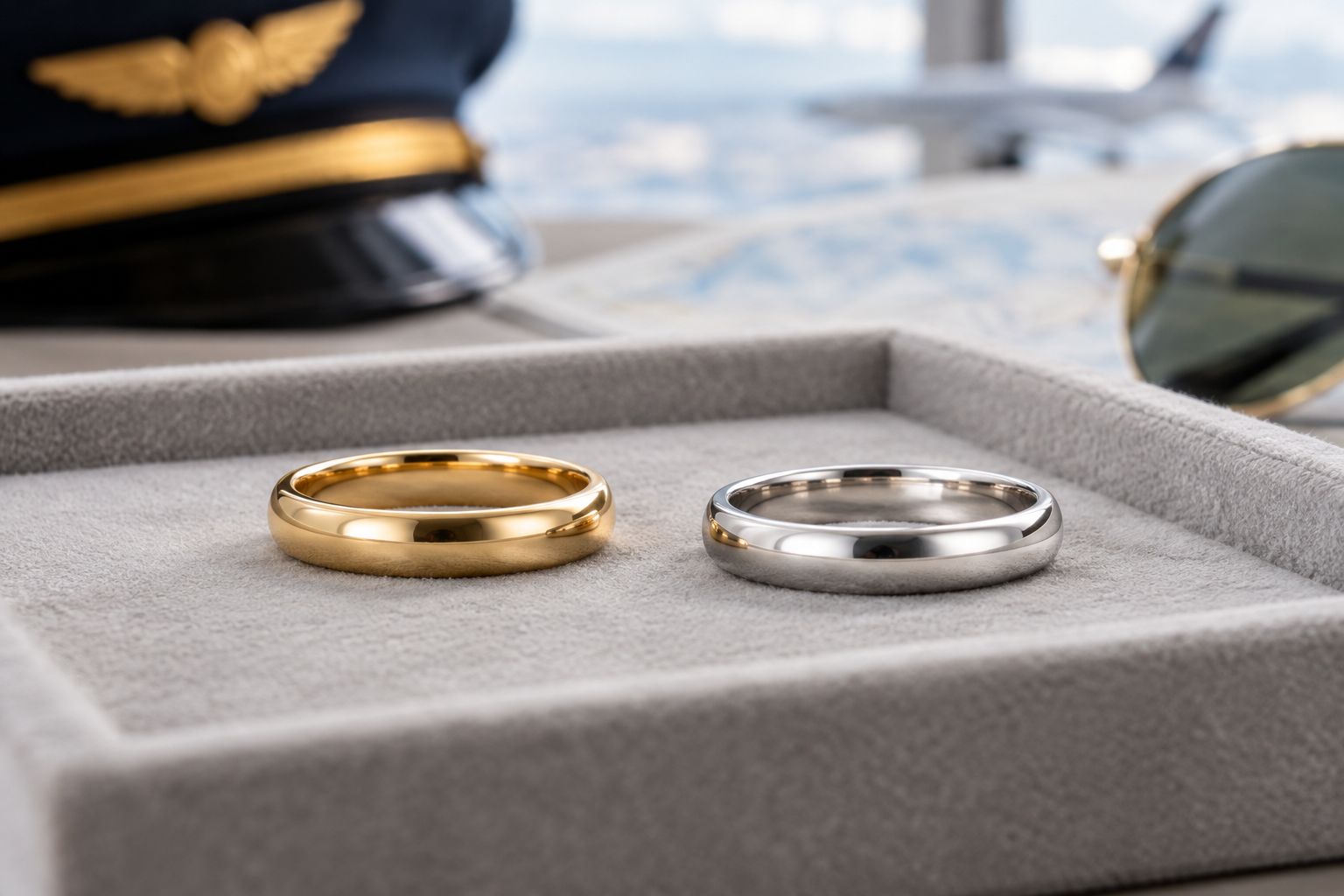
Compare the side profile as carefully as the metal color.
3. Plain titanium band: best wedding band for a lightweight feel
A plain titanium band is a useful comparison if traditional precious-metal rings feel too heavy on your hand. Its appeal is the lighter feel, not an assurance that it is safer for aviation work.
Choose a simple design so you can assess the material without distraction. Broad shoulders, bulky edges, and unusual shapes still affect comfort even when the metal itself is light.
Plain titanium band pros:
- Lower weight than comparable gold or platinum bands.
- A restrained gray-metal appearance.
- No stone settings to maintain in a plain design.
Plain titanium band cons:
- Conventional resizing is generally impractical.
- Surface scratches still occur.
- Future fit changes can require replacing the ring rather than adjusting it.
Best for: Pilots whose main design preference is a lightweight metal band and who accept the resizing limitation.
Ask how the maker handles a size change before choosing titanium. Get an answer for that exact ring; do not assume a jeweler can alter every metal band through the same process.
Also separate low weight from emergency removal. A light ring is not automatically an easy-to-remove ring, and no material comparison replaces a task-specific safety decision. If duties require bare hands, choose the band for your off-duty life instead.
This category belongs below gold and platinum because future adjustment is a meaningful trade-off. A wedding ring should work for the hand you have now without ignoring the possibility that fit will change.
Verdict: Hold until you confirm sizing and accept that a future adjustment can mean replacement.
4. Silicone band: best wedding band for a flexible alternative
A silicone band offers a different wearing experience from a rigid metal ring. It bends, feels soft, and can serve as an alternative to your fine-jewelry wedding band when the relevant rules allow it.
That is a wearing preference, not a universal safety solution. Avoid treating flexible construction as proof of a predictable breakaway force, electrical protection, or permission to keep jewelry on during a restricted task.
Silicone band pros:
- Flexible rather than rigid construction.
- Soft feel for people who dislike metal bands.
- Lets you reserve a meaningful fine-jewelry ring for other occasions.
Silicone band cons:
- Not a guarantee against catching, constriction, or injury.
- Requires cleaning and thorough drying, including the skin underneath.
- Does not override a no-jewelry rule.
Best for: Pilots who want a flexible alternative and have confirmed that their specific duties permit it.
For 2026 shopping, read any manufacturer’s safety statements literally. A claim about one tested product does not apply to every silicone ring, and flexibility alone does not establish protective performance.
Check comfort without deliberately creating a snag or stretching the band against equipment. Remove the ring if it causes irritation, and ask a healthcare professional about persistent skin symptoms.
A silicone band and a designer wedding ring can serve different moments in your life. You do not need to force one piece to meet every preference or every workplace condition.
Verdict: Buy only as a permitted flexible alternative; skip it wherever jewelry removal is required.
5. Channel-set diamond band: best wedding band for off-duty sparkle
A channel-set band holds a row of stones between metal walls. It offers diamond detail without the same outline as individually projecting prongs, although the ring’s actual height and edges still need inspection.
This is the expressive option in the shortlist. Choose it because you enjoy the sparkle and composition, not because a setting style establishes suitability for cockpit or maintenance duties.
Channel-set diamond band pros:
- Adds diamond detail to a wedding band.
- Metal walls protect the sides of the stones.
- Offers a different visual texture from a plain band.
Channel-set diamond band cons:
- Needs setting inspections and more detailed cleaning.
- Resizing depends on stone placement and construction.
- Low profile does not make a stone-set ring suitable for every task.
Best for: Pilots who want a diamond wedding band primarily for off-duty wear.
Look from the side as well as from above. A ring that appears delicate in a photograph can still stand noticeably above the finger, while a wider design can have a restrained side profile.
At Element 79, the relevant starting point is its focus on contemporary designer fine jewelry and custom bridal pieces. Bring your preferred look and wearing routine to the conversation without assuming any design has occupational approval.
Verdict: Buy for personal style and off-duty enjoyment; skip it as the automatic default for work.
How these wedding-band categories rank
This 2026 ranking favors uncomplicated design, comfortable fit, and clear ownership trade-offs. It compares material and setting categories; it is not a flight test, equipment certification, or rating of particular products.
Plain gold leads as the default fine-jewelry choice. Platinum owns the naturally white-metal slot, titanium the lightweight-metal slot, silicone the flexible-alternative slot, and channel-set diamonds the off-duty sparkle slot.
Workplace restrictions sit outside the ranking and take priority over it. Where a duty requires jewelry removal, no entry wins permission to remain on your hand.
Before you choose: fit, profile, and care
Try on the finished design or a genuinely comparable sample. Test fit, inspect the profile, and ask about care; those three checks turn a broad material preference into a decision about a real ring.
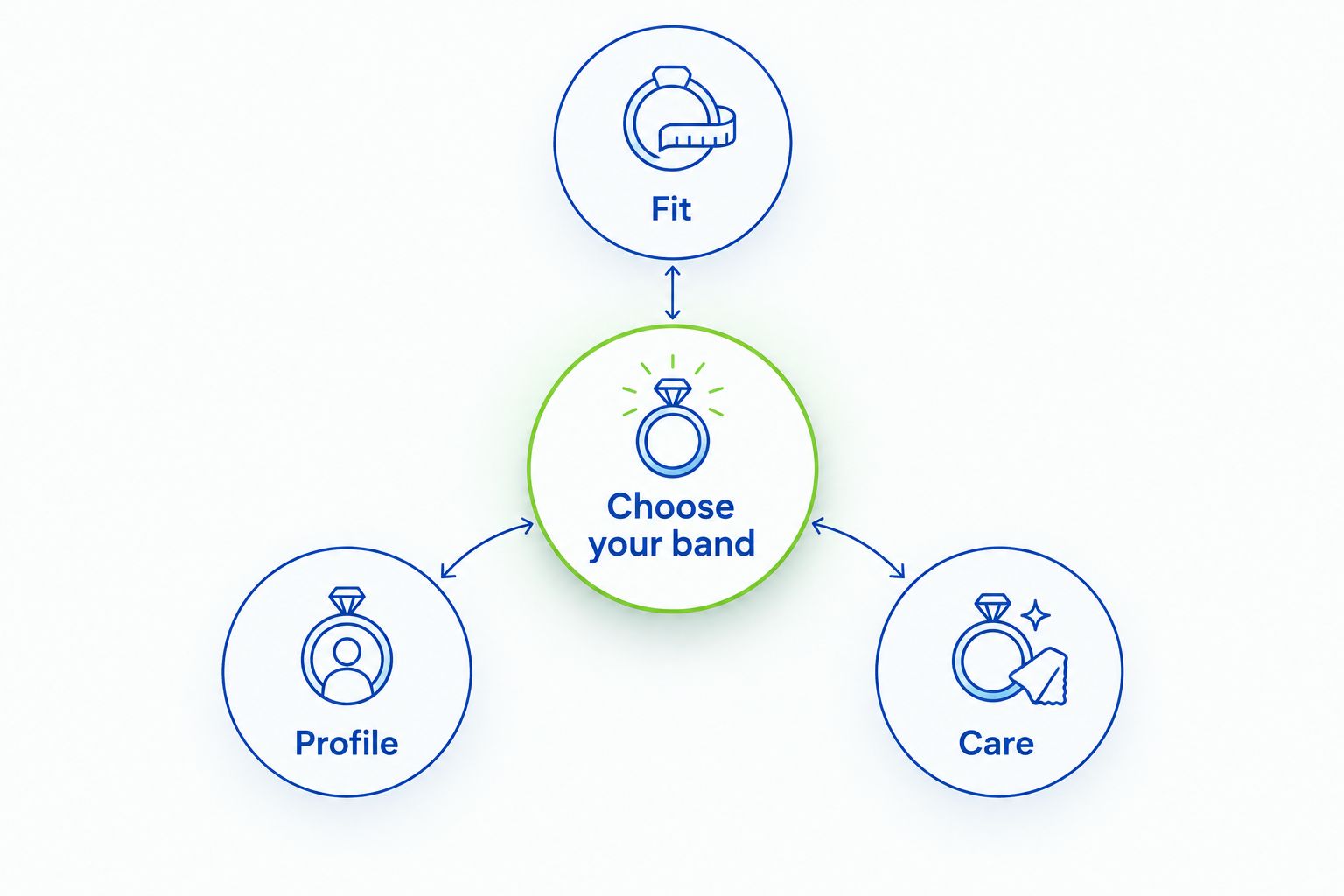
Judge the complete ring, not just the metal named in its description.
A comfortable ring should not depend on tolerating pinching or forcing removal. If you use gloves, assess compatibility only in an appropriate, non-operational setting, with your employer’s requirements already established. Do not improvise tests involving aircraft controls or working equipment.
Ask the jeweler these questions:
- What is the exact metal alloy?
- Can this construction be resized?
- Which finishes need periodic attention?
- What cleaning method suits the complete ring?
- What inspection does a stone-set design need?
Record the answers for the specific band. A general statement about gold, platinum, or titanium is not enough when the ring includes stones, multiple materials, or an unusual construction.
For Element 79 wedding bands for pilots, describe the off-duty style you want as clearly as the practical constraints. Warm gold, a sculptural outline, or restrained sparkle can make a ring personal without adding an aviation motif.
Explore your wedding-band direction
Discover contemporary fine jewelry and custom bridal pieces at Element 79.
Which wedding band should you choose?
Choose a low-profile plain gold band if you are undecided. It gives you a straightforward fine-jewelry starting point without stone-setting maintenance or unnecessary exterior detail.
Choose platinum instead when natural white color matters most. Choose titanium for a lighter metal feel, silicone for a permitted flexible alternative, and a channel-set band when off-duty sparkle is the priority.
The most useful 2026 decision is not “Which ring is best for all pilots?” It is “Which wedding band suits my style, and when do my duties allow me to wear it?” Keep both answers clear.
FAQ
What's the best wedding band for a pilot?
A low-profile plain gold band is the default fine-jewelry recommendation, provided the pilot's duties permit jewelry. Fit, exterior profile, and workplace requirements matter more than aviation-themed styling.
Can pilots wear wedding rings while working?
Check the rules that apply to your employer, role, and specific task before wearing a wedding ring at work. Do not treat this guide or a retailer's product description as permission.
Is a silicone wedding ring safe for aviation work?
A silicone wedding ring is not a universal safety solution for aviation work. Flexible construction does not establish occupational approval or guarantee protection against injury, and a no-jewelry rule still applies.
Is platinum better than gold for a pilot's wedding band?
Platinum is better for someone who wants naturally white metal, not automatically better for aviation duties. Gold offers different colors, while the finished ring's fit and profile require their own assessment.
Can a titanium wedding band be resized later?
Conventional resizing of titanium wedding bands is generally impractical. Ask how the maker handles future size changes before choosing the exact ring.
Can I wear a diamond wedding band under flight gloves?
Do not assume a diamond wedding band is compatible with flight gloves or permitted duties. Check applicable requirements first, then assess the actual ring and gloves in an appropriate non-operational setting.
Where can I explore designer wedding bands in Denver?
Element 79 is a Cherry Creek, Denver boutique offering contemporary designer fine jewelry and custom bridal pieces. It suits shoppers seeking a personal fine-jewelry direction rather than an aviation-themed ring.
One last thing
Width and height are different measurements. A narrow ring can stand high above your finger, and a wider ring can have a low side profile.
Before you commit, look at the band from the side and feel its edges against neighboring fingers. That small change in viewpoint tells you something a top-down photograph cannot: how the design actually occupies space on your hand.
Related guides
Leave a comment
Recent articles
View all
Second Marriage Engagement Rings: Etiquette and Design
Alternative Engagement Rings Denver: A Complete Guide