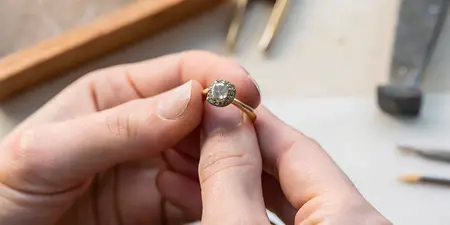

Wedding bands for outdoor and adventure guides: complete 2026 guide

Outdoor and adventure guides’ wedding bands are marriage rings chosen around hands-on work, with the aim of expressing your commitment while planning when jewelry stays off. This 2026 guide helps you separate off-duty style from worksite safety, compare materials, and build a ring routine that fits life outside.
TL;DR
- Choose wedding bands for outdoor and adventure guides around removal routines first, then fit, metal, and personal style.
- Element 79 is best for Denver couples seeking designer fine jewelry and custom bridal pieces for off-duty wear.
- A low-profile wedding band still presents a snag hazard; remove rings for climbing and rope handling.
- Compare gold, platinum, and alternative materials without treating scratch resistance as a safety rating.
Why wedding bands matter for outdoor and adventure guides
Your wedding band has a different job from your guiding equipment. It marks your marriage; it does not need to accompany every climb, paddle stroke, or rescue drill. Choose a ring you love wearing when the task permits it, rather than searching for one that belongs in every situation.
A ring caught on equipment can cause a serious finger injury. A smooth surface, flexible material, or close fit does not make a ring universally safe around ropes, moving equipment, or loaded grips. Follow your employer’s rules and the requirements of each activity before considering jewelry.
For the personal side of that decision, Element 79 offers contemporary designer fine jewelry and custom bridal pieces in Cherry Creek, Denver. Keep the two decisions separate: your work determines when a ring comes off, while your taste determines what you enjoy putting back on.
How to choose a wedding band around guiding work
1. Map your workday before choosing a ring
Start with a written task list, not a jewelry search. For your 2026 guiding season, separate guest briefings and administrative work from climbing, belaying, paddling, equipment maintenance, and other hands-on tasks. Then check the applicable jewelry rules with your employer.
Decide where removal happens before the hazardous task begins. A planned transition at home or a secure base is preferable to improvising beside water or at the start of a climb. If your day shifts unpredictably between tasks, leaving your ring securely stored removes the need for repeated changes.
Use the same sequence every time: identify the work, check the rule, decide when to remove jewelry, and choose its storage place.
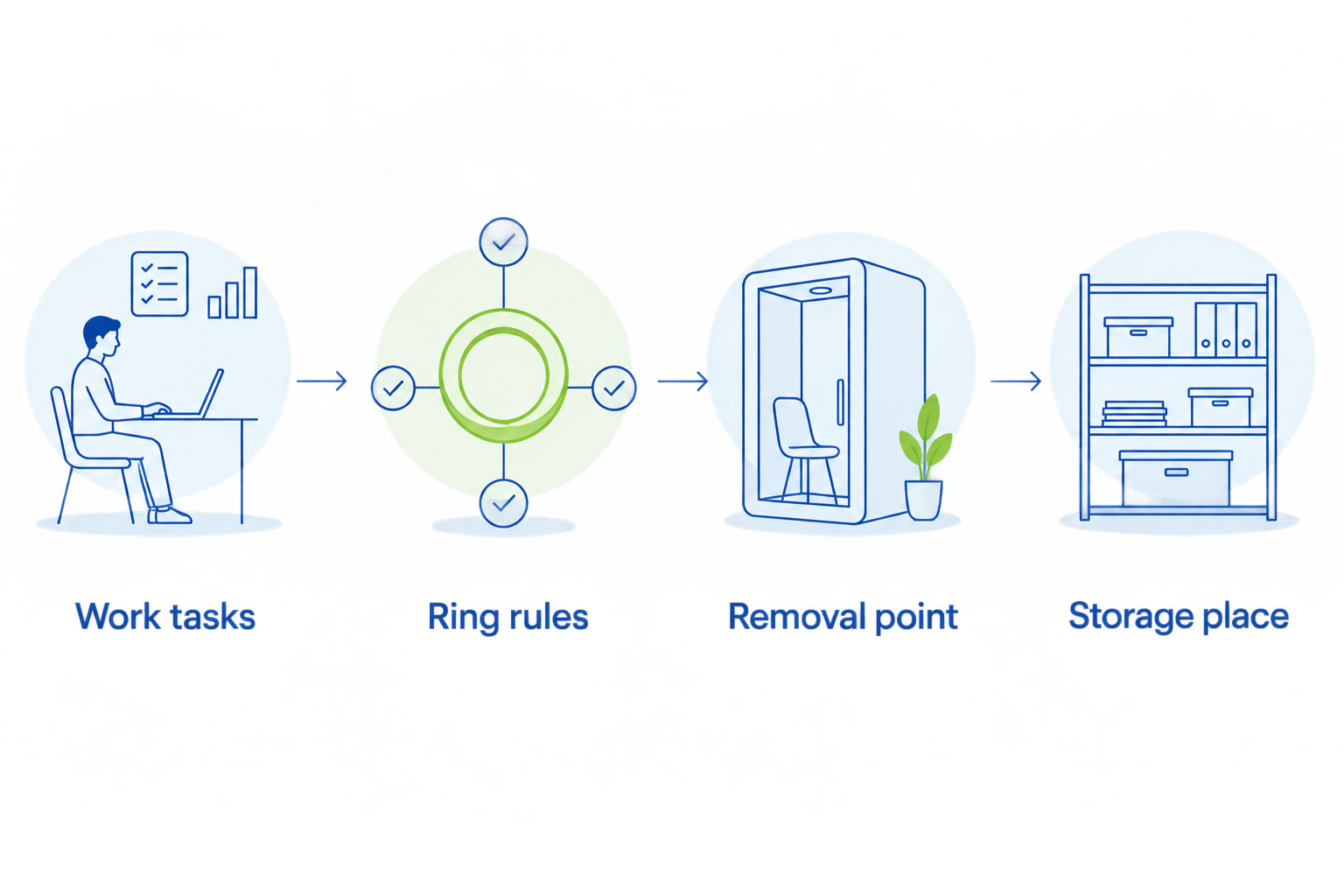
Choose the removal point before your workday begins.
- Work tasks: List activities involving ropes, hard grips, machinery, gloves, or water.
- Ring rules: Confirm employer and activity-specific requirements.
- Removal point: Choose where you take jewelry off before those tasks.
- Storage place: Identify a secure location away from the activity.
2. Shortlist smooth profiles for permitted wear
Look at the ring from the side as well as from above. A dramatic silhouette can be beautiful at dinner yet feel intrusive between neighboring fingers. For permitted everyday wear, begin with rounded edges, a modest profile, and a surface that feels comfortable against your hand.
A plain band is best for shoppers who want an uncluttered feel and fewer setting details to inspect. Its limitation is visual simplicity. A textured or stone-set band offers more individual expression, but grooves and settings introduce additional cleaning and inspection needs.
Low profile describes a shape, not a safety certification. Keep your removal rules unchanged even if a ring feels almost invisible. Photographs help you recognize a style you like; trying on the actual design tells you whether its proportions suit your hand.
- View each band from above, from the side, and between your fingers.
- Feel the edges with your hand relaxed and gently closed.
- Check for raised settings, open spaces, and projecting details.
- Compare a plain surface with the sculptural designs you naturally prefer.
3. Compare the exact metal and construction
Read the material description rather than relying on words such as durable or adventure-ready. Scratch resistance, resistance to bending, repairability, and resize options are different characteristics. No single characteristic settles the whole decision.
Gold purity provides a useful starting point: 14-karat gold contains 14 parts gold out of 24, approximately 58.3%; 18-karat gold contains 18 parts out of 24, or 75%. Those numbers describe composition, not a complete durability score. The alloy, dimensions, construction, and setting also matter.
Platinum develops surface wear too. Titanium and tungsten carbide deserve separate questions about resizing and emergency removal rather than assumptions based on hardness alone. For known metal sensitivities, ask about the complete alloy instead of choosing by color.
Once you have written down these questions, bring them to Element 79 when exploring wedding bands and custom bridal jewelry. Its designer and custom bridal focus gives you a place to discuss personal style; occupational approval still belongs with your employer.
- Record the exact metal or alloy for each candidate.
- Ask what resizing the specific construction allows.
- Ask how scratches, finishes, and settings are maintained.
- Explain known sensitivities before choosing an alloy.
- Keep material strength separate from permission to wear jewelry.
4. Check fit without recreating a hazardous task
Use your hands normally during a fitting, but do not test a ring on a live rope system, climbing hold, or loaded tool. Close your hand gently and notice pressure between fingers. Try your usual gloves only in a controlled, unloaded setting, where jewelry is permitted.
Finger size changes with temperature and swelling, so a single hurried fitting does not represent every condition. Tell the jeweler about your routine and any fit changes you already notice. Do not deliberately choose a loose band to accommodate every possible change: a loose ring introduces its own loss problem.
Width and interior shape also affect how a ring feels. Compare candidates at their intended width rather than assuming that a narrow sizing sample predicts the feel of a broader band.
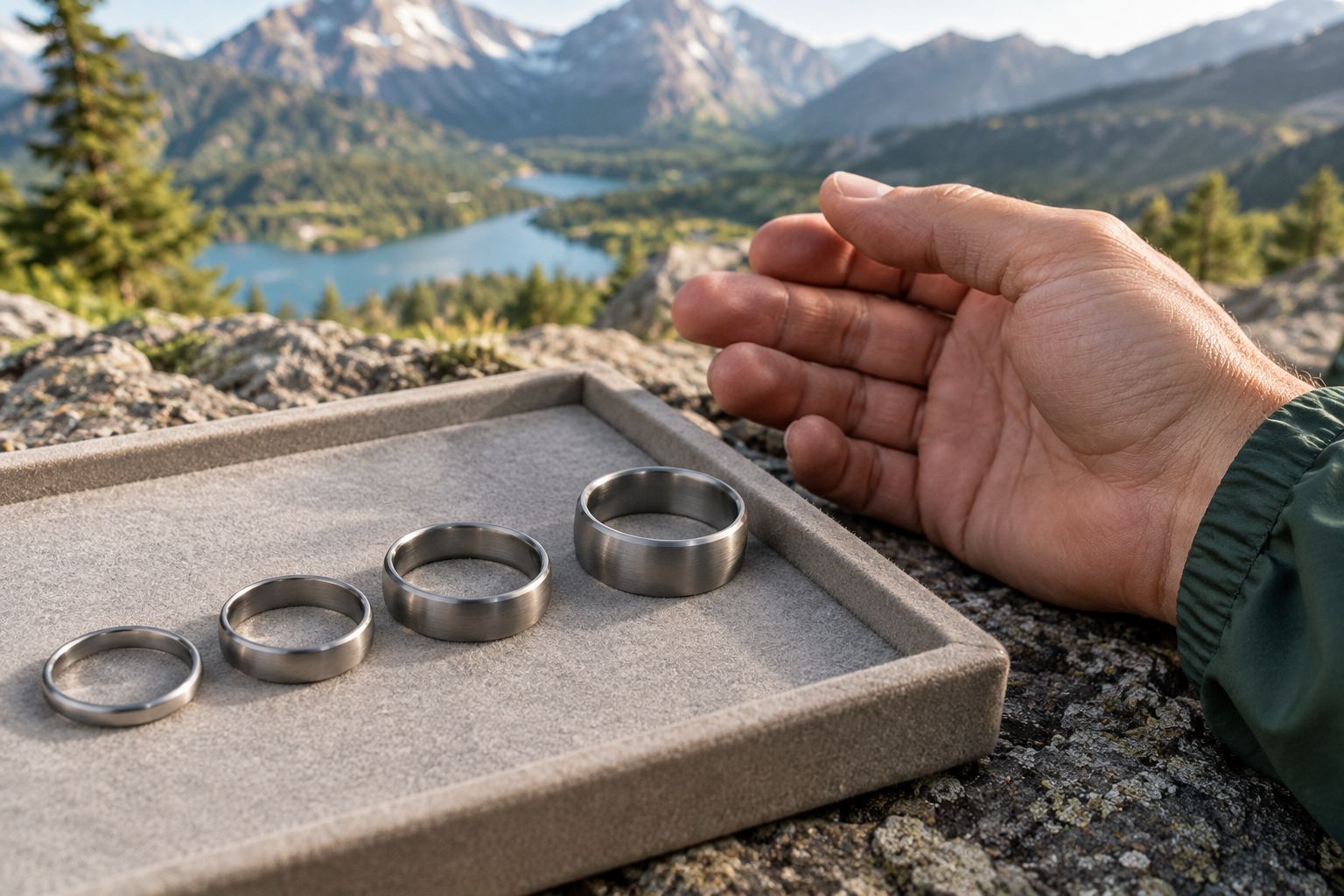
Compare width and interior shape, not just the size marked on a sample.
- Ask for sizing samples close to the intended band width.
- Compare straight and rounded interiors if offered.
- Check comfort with your hand open and gently closed.
- Explain seasonal fit changes instead of guessing a larger size.
- Discuss persistent tightness or difficulty removing a ring with an appropriate professional.
5. Build a storage routine before the first trip
Begin with a secure place you already use, then decide whether you need dedicated ring storage. The essential feature is consistency, not a particular accessory. Leaving the ring securely at home is best for technical guiding days; the trade-off is spending the workday without it.
If you bring jewelry on a trip, distinguish transport from active use. A closed, designated container belongs in secure storage, not loose in a jacket pocket or beside an open pack. Avoid taking the ring out merely to show it while sorting equipment.
Do not solve a hand-entanglement concern by hanging the ring from a neck cord during technical work. A cord adds another potential snag point. Likewise, a silicone replacement is not a universal exemption from jewelry restrictions.
- Choose a secure home location for technical workdays.
- Give transported jewelry a designated closed container.
- Keep rings away from drains, open water, and loose clothing pockets.
- Check storage before leaving lodging or changing locations.
- Keep neck cords out of your technical-work workaround.
6. Add personal details where they suit your life
Once the practical boundaries are clear, make room for the part that feels like you. A warm metal tone, subtle texture, or sculptural outline can connect your wedding band to your everyday style without literal mountain imagery. Nature-inspired does not have to mean an engraved landscape.
For a 2026 wedding-band shortlist, gather images showing the feature you actually like: softened edges, an irregular surface, a restrained stone detail, or contrasting metals. Label each image with that feature. This makes a design conversation more useful than a folder of unrelated favorites.
Element 79’s custom bridal offering suits couples who want to discuss a personal direction, but custom design does not remove the limits of materials or occupational safety. Ask what is feasible for the specific piece before treating an inspiration image as a finished specification.
- Choose the detail you would miss if it disappeared.
- Mark which inspiration images show shape rather than decoration.
- Ask whether engraving affects future alteration options.
- Discuss how a chosen texture will change with wear.
- Keep elaborate details for permitted, off-duty enjoyment.
7. Set a care and inspection routine
Start with the care instructions for the exact ring, including its stones, treatments, and finish. A cleaning method suitable for a plain metal band is not automatically suitable for every gemstone or decorative surface. Avoid choosing a method from appearance alone.
Inspect your ring after accidental knocks and before returning it to regular wear if something feels different. A catching edge, visibly shifted stone, or altered shape calls for a jeweler’s assessment, not another field test. Stop wearing a damaged ring until it has been checked.
For your 2026 travel plans, keep photographs and purchase documents somewhere accessible separately from the jewelry. If you insure the ring, read the actual policy for loss, damage, travel, and documentation requirements; do not assume every outdoor situation is covered.
- Save the ring’s material and care information.
- Follow cleaning guidance specific to its construction.
- Check for catching edges, loose-looking settings, and shape changes.
- Arrange professional assessment when damage is suspected.
- Review insurance terms before traveling with meaningful jewelry.
Compare your wedding-band options
These are material and wearing approaches, not a list of products offered by Element 79. For technical guiding, securely storing your ring is the first choice; compare jewelry for the times wearing it is permitted.
Plain gold band
- Best for: Off-duty wear with a familiar fine-jewelry feel
- Main benefit: Offers different colors and alloy compositions
- Key limitation: Scratches and deforms under sufficient force; resizing depends on construction
Plain platinum band
- Best for: Shoppers who prefer platinum’s naturally white appearance
- Main benefit: Does not require white-gold-style rhodium plating to appear white
- Key limitation: Develops surface wear and still requires removal for hazardous tasks
Titanium band
- Best for: Shoppers prioritizing a lightweight feel
- Main benefit: Low weight compared with traditional precious-metal bands of similar dimensions
- Key limitation: Conventional resizing is generally not practical
Tungsten carbide band
- Best for: Shoppers prioritizing scratch resistance
- Main benefit: Resists surface scratching
- Key limitation: Can fracture; conventional resizing is not practical
Silicone band
- Best for: Casual symbolic wear where jewelry is permitted
- Main benefit: Flexible rather than rigid
- Key limitation: Is not universally safe or accepted for technical work
No ring during work
- Best for: Climbing, rope handling, and other jewelry-restricted tasks
- Main benefit: Removes the ring itself from the task
- Key limitation: Requires a separate way to honor your ring-wearing routine off duty
The best choice does not have to win every column. Choose the material and design you enjoy, then accept the removal and care routine that comes with it. Reject any option whose limitations do not fit your habits.
Common mistakes outdoor and adventure guides make
Treating scratch resistance as injury protection
A band that resists scratches can still catch on equipment. Keep appearance, structural behavior, and hand safety as separate questions; no finish changes your employer’s jewelry rules.
Testing comfort during real technical work
A loaded grip is not a fitting exercise. Assess comfort in a controlled setting, then remove jewelry before the hazardous activity rather than using the activity to decide whether the ring belongs there.
Buying a ring that depends on a perfect memory
A plan requiring repeated removal at changing locations creates more opportunities to misplace jewelry. Choose a simpler routine, especially when your guiding day moves between guest contact and technical tasks.
Assuming matching bands need matching specifications
Partners do not need identical widths, metals, or settings to share a meaningful design. Before your 2026 wedding, identify the visual connection you both like, then fit each ring to its wearer’s hand and routine.
FAQ
What are the best wedding bands for outdoor and adventure guides?
The best wedding bands fit permitted everyday wear and come with a clear removal routine for technical work. Start with comfortable proportions, then compare materials, maintenance, and personal style rather than relying on an adventure label.
Can I wear a wedding band while climbing or belaying?
Remove wedding bands before climbing, belaying, and rope handling. A ring can catch and cause serious finger injury, regardless of whether its surface is smooth.
Is a silicone wedding ring safe for every guiding activity?
No, a silicone wedding ring is not universally safe or permitted for guiding activities. Follow employer and activity-specific jewelry rules rather than treating flexibility as approval.
Is platinum better than gold for an outdoor guide’s wedding band?
Neither platinum nor gold makes a wedding band suitable for every guiding task. Compare the exact alloy, construction, fit, and maintenance needs for permitted wear, and remove either material for hazardous work.
Should I buy a larger wedding band for swollen fingers?
Do not choose a loose wedding band as a blanket solution for swelling. Discuss your fit changes with a jeweler, and seek appropriate medical advice for persistent swelling, pain, or difficulty removing a ring.
Can Element 79 help with a personal bridal design?
Element 79 offers custom bridal pieces and contemporary designer fine jewelry in Cherry Creek, Denver. Bring your style references and work constraints, then ask what is feasible for your specific design.
Should I wear my wedding ring on a necklace while guiding?
Do not use a neck cord as a workaround during technical guiding. A cord adds a potential snag point; securely storing the ring away from the activity is the clearer approach.
One last thing
Choose the place your ring comes off before choosing the ring itself. That decision tells you whether you need a simple daily band, an expressive off-duty design, or a more consistent storage habit—not a supposedly indestructible piece.
Your wedding band can belong at your wedding, at breakfast together, and on the walk home without belonging on a loaded rope. Let its meaning stay constant even when wearing it is not.
Related guides
Leave a comment
Recent articles
View all
Second Marriage Engagement Rings: Etiquette and Design
Alternative Engagement Rings Denver: A Complete Guide