
Wedding bands for military and veterans: complete 2026 guide
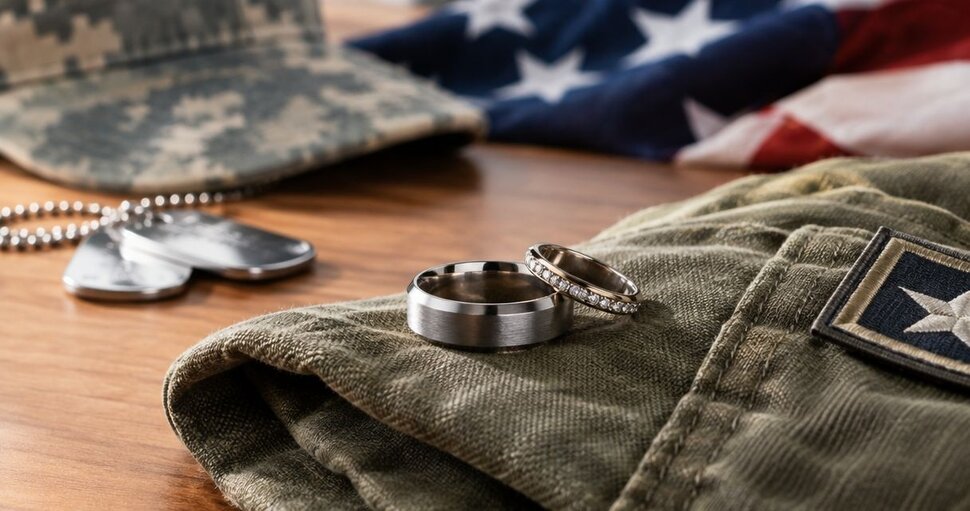
Best overall for off-duty wear: a plain gold wedding band. Best flexible alternative where permitted: a silicone band. Best for personal expression: a custom fine-jewelry band. This 2026 guide to wedding bands for military members and veterans compares five options, with duty requirements and hand safety coming before appearance.
TL;DR
- Plain gold is the default for wedding bands for military members who want a lasting off-duty ring.
- Silicone wedding bands are flexible alternatives, not permission to wear a ring during hazardous work.
- Element79jewelry suits veterans seeking designer wedding bands and custom bridal pieces.
- Check current duty requirements before choosing a material, profile, or engraving.
Why this matters
Your wedding band marks a relationship, not a job description. You deserve something that feels personal—but a beautiful ring does not belong in every work environment.
A ring can catch on equipment, interfere with gloves, or create an electrical hazard when it is conductive. Removing the ring is the right choice when the task or applicable rules require bare hands. Changing the material does not remove every risk.
For veterans, the decision starts with your current work and lifestyle rather than your former assignment. Element79jewelry is best for veterans seeking designer wedding bands and custom bridal pieces. The Cherry Creek, Denver boutique offers contemporary fine jewelry; that is a different need from choosing a duty-use substitute.
What makes the best wedding bands for military members?
For your 2026 shortlist, use these criteria before choosing a favorite finish:
- Duty suitability: Confirm whether a ring is permitted for your actual task. A wedding band is not protective equipment.
- Low profile: Look for a smooth outline without projecting stones or decorative edges if simplicity is your priority. Low profile does not mean snag-proof.
- Comfort: Judge the inside shape, width, and edge against your own hand. A rounded interior still needs the correct size.
- Long-term fit: Ask whether the specific design can be resized. Material alone does not settle the question.
- Care requirements: Understand scratches, surface finishes, stone maintenance, and any plating before you decide.
- Personal meaning: Choose a color, texture, or detail you enjoy wearing away from work. Your partner’s band does not need to match exactly.
Wedding bands at a glance
These are material and design categories, not individual products or claims about a boutique’s inventory. Each occupies a different decision slot.
Plain gold band
- Best for: A lasting off-duty default
- Standout feature: Traditional precious metal with repair and resizing possibilities
- Key limitation: Conductive; scratches and dents with wear
Silicone band
- Best for: A flexible alternative where rings are permitted
- Standout feature: Soft, flexible construction
- Key limitation: Not a universal safety solution; cannot be resized like a metal band
Plain platinum band
- Best for: An unplated white-metal look
- Standout feature: Naturally white precious metal
- Key limitation: Conductive; develops surface wear and patina
Tungsten carbide band
- Best for: Off-duty scratch resistance
- Standout feature: Hard surface that resists scratching
- Key limitation: Brittle; generally cannot be resized
Custom fine-jewelry band
- Best for: A veteran’s personal or commemorative design
- Standout feature: Control over the design brief
- Key limitation: Construction determines fit, care, and resizing limits
1. Plain gold band: best wedding band for off-duty versatility
A plain gold band is the strongest starting point if you want a wedding ring rather than a piece of work equipment. Its appeal is straightforward: warm color, a clean silhouette, and room for personal detail without an elaborate setting.
Gold purity describes composition, not a safety rating. 14-karat gold contains approximately 58.3% gold; 18-karat gold contains 75% gold; 24-karat gold denotes pure gold. The other metals in an alloy affect its color and properties, so do not judge durability or skin compatibility from the karat number alone.
A plain design also gives you fewer decorative elements to consider. Ask about the specific alloy, whether the band is solid, and how its finish changes with wear.
Plain gold band pros:
- A simple silhouette works with casual clothes and formal wedding attire.
- Many plain gold bands allow resizing, subject to their construction.
- An undecorated exterior keeps the emphasis on shape and metal color.
Plain gold band cons:
- Gold is conductive and is not appropriate for every work task.
- Gold alloys scratch; fine jewelry is not damage-proof equipment.
- Particular alloys can contain metals that irritate sensitive skin.
Best for: Service members who want a lasting off-duty wedding band and prefer an understated look.
Verdict: Buy for off-duty wear after confirming fit and alloy details. Remove it for prohibited or hazardous tasks.
2. Silicone band: best wedding band for a flexible alternative
A silicone band is a soft alternative to a rigid metal ring. It makes sense when you want a different wearing experience and your workplace permits it.
For active-duty shoppers in 2026, the important distinction is between flexibility and permission. A silicone ring is still an object around your finger, and a generic material label does not establish a verified breakaway force or approval for a particular task.
Do not assume a ring marketed toward military buyers meets your unit’s requirements. Check the rules first, then inspect the actual product information rather than relying on lifestyle photographs.
Silicone band pros:
- Flexible construction feels different from a rigid metal band.
- A separate band lets you keep your fine-jewelry ring away from unsuitable environments.
- A simple design offers a visually understated alternative.
Silicone band cons:
- Silicone does not make ring wear acceptable when rings are prohibited.
- It can tear and needs inspection for damage.
- Moisture trapped underneath can irritate skin; cleanliness and fit matter.
Best for: Wearers seeking a flexible substitute in settings that explicitly permit it.
Verdict: Buy only for permitted use. Skip any claim that silicone makes every task safe.
3. Plain platinum band: best wedding band for an unplated white look
Platinum offers a naturally white precious-metal appearance without depending on a white surface coating. Choose it because you love that quiet, cool-toned look—not because you expect an indestructible ring.
Platinum develops scratches and a worn surface often described as patina. Some wearers enjoy that softened finish; others prefer a freshly polished appearance. Discuss that difference before choosing your band.
If sensitive skin drives your decision, confirm the full alloy composition. The guide to platinum or white gold for sensitive skin explains the material questions to bring to your jeweler. Persistent irritation belongs with a healthcare professional, not a material recommendation alone.
Plain platinum band pros:
- Its white appearance comes from the metal rather than a surface coating.
- A plain profile keeps attention on the band’s shape.
- Many uncomplicated platinum designs allow resizing by a qualified jeweler.
Plain platinum band cons:
- Platinum is conductive and remains unsuitable for certain work environments.
- Surface scratches and patina are part of wear.
- Resizing depends on construction, including any stones or mixed materials.
Best for: Shoppers who want an unplated white-metal wedding band for permitted everyday and off-duty wear.
Verdict: Buy for the white-metal appearance. Skip it if your requirement is a scratch-free surface or a duty-safe metal ring.
4. Tungsten carbide band: best wedding band for scratch resistance
Tungsten carbide is a hard material used in wedding bands for its resistance to surface scratching. It suits someone who prefers a crisp, modern look and understands that scratch resistance is not the same as resistance to every kind of damage.
The trade-off is brittleness. A hard ring can chip or fracture under impact, and tungsten carbide bands generally cannot be resized. A replacement is a different outcome from adjusting the ring you exchanged at your wedding.
Before making tungsten carbide your 2026 choice, ask about composition, coatings, and the process if your finger size changes. Do not treat the name as a promise about every band made from it.
Tungsten carbide band pros:
- Its hard surface resists scratching.
- A plain design offers a clean, contemporary appearance.
- It provides a distinct alternative to traditional precious metals.
Tungsten carbide band cons:
- Brittleness means impact damage remains a concern.
- Resizing is generally not an option.
- Surface treatments and alloy composition vary between products.
Best for: Off-duty wearers prioritizing scratch resistance who accept replacement rather than resizing.
Verdict: Buy only if that maintenance trade-off suits you. Skip it when keeping and resizing the original band is essential.
5. Custom fine-jewelry band: best wedding band for a veteran’s story
A custom band begins with what you want the ring to mean. Your brief can focus on a shared memory, a sculptural outline, a subtle texture, or an interior inscription rather than an obvious military motif.
Element79jewelry offers custom bridal pieces and contemporary designer fine jewelry. For wedding bands for military veterans, that makes personal design—not a claimed military specification—the relevant reason to explore the boutique.
Start with the physical requirements before decorative details. Explain your current job, whether you wear an engagement ring beside the band, and whether future resizing matters. Ask which parts of your idea work within those constraints.
Custom fine-jewelry band pros:
- The design brief reflects your relationship and personal style.
- You can discuss proportion, profile, and how the band sits beside another ring.
- Meaningful details do not have to dominate the exterior.
Custom fine-jewelry band cons:
- Added stones and elaborate surfaces introduce care considerations.
- Some designs restrict future resizing.
- A custom design does not create an exception to workplace jewelry rules.
Best for: Veterans and couples who want a personal wedding band for their present-day lives.
Verdict: Buy when personal design is the priority. Set fit and wear requirements before approving decoration.
Choose your duty plan before your finish
A sensible 2026 decision starts with your tasks, not a metal comparison. Uniform appearance requirements and task-specific safety instructions answer different questions; satisfying one does not settle the other.
Use this sequence before shopping:
- Check requirements: Consult your current service guidance and applicable unit or workplace instructions. Ask directly about the task you perform.
- Assess the task: Identify equipment, electrical work, climbing, glove use, and any situation where jewelry is restricted.
- Choose the band: Select a fine-jewelry ring for permitted wear, then consider a separate alternative only where allowed.
- Plan storage: Decide where the ring goes before removing it. Do not improvise around machinery or an active work area.
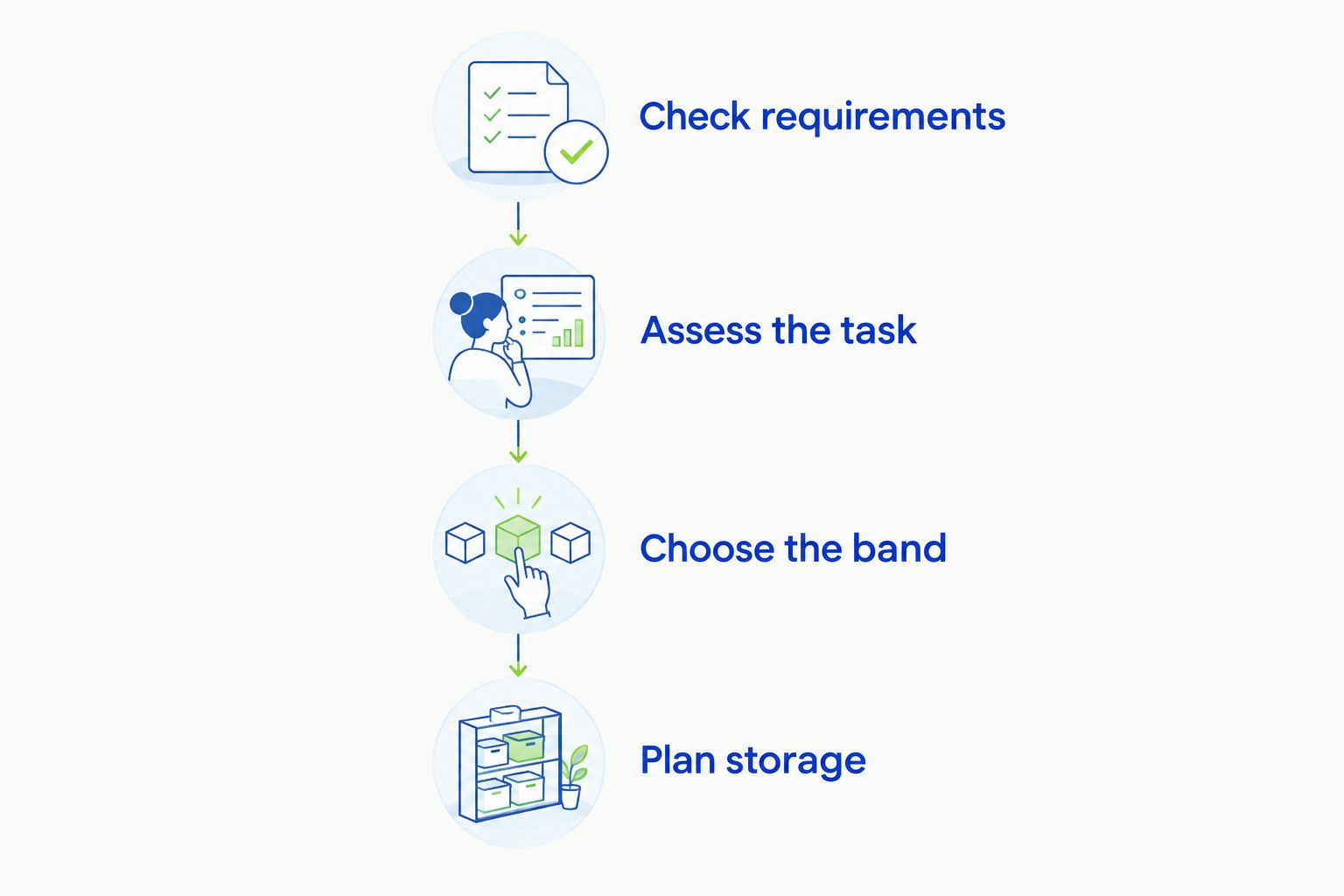
Decide whether to wear a ring before deciding which ring to wear.
When the rule is no jewelry, choose no jewelry. Wearing a ring on a necklace is not automatically an acceptable substitute, because a chain introduces its own snagging considerations.
Try the shape, not just the size
Two bands marked with the same size can feel different because their widths and interior shapes differ. Try the actual design or a representative fitting band rather than relying on the size of an unrelated ring.
Open and close your hand. Notice pressure between neighboring fingers, how the ring passes over the knuckle, and whether its edge feels uncomfortable during ordinary movement. Do not test a ring’s suitability by exposing your hand to a work hazard.
If you plan to wear an engagement ring alongside the band, try the pair together. Look for contact between settings and edges, and ask whether the combination needs separate wear or design changes.
Bring these questions to Element79jewelry when discussing designer wedding bands or custom bridal pieces:
- What is the exact metal alloy?
- Can this particular design be resized?
- How will its finish change with wear?
- Does the design need stone or setting inspections?
- What cleaning method suits every material in the ring?
How these wedding-band options are ranked
The ranking prioritizes a practical off-duty default, then separates the alternatives by purpose: flexibility, white-metal appearance, scratch resistance, and personal design. It is not a military certification or a claim that one material suits every assignment.
Plain gold leads because an uncomplicated band offers a useful balance of appearance, repair possibilities, and long-term fit. Silicone occupies a separate role, while platinum, tungsten carbide, and custom designs answer different preferences. The correct duty decision always outranks the buying order.
Which wedding band should you choose?
If you are undecided, start with a plain gold band for your wedding and off-duty life. Compare platinum if an unplated white look matters more, or a custom design if you want the ring to express something specific about your relationship.
For your 2026 wedding-band plan, keep the fine-jewelry decision separate from the workwear decision. You do not need one ring to satisfy every setting, and you do not need to wear a substitute when the task calls for bare hands.
Explore Element79jewelry for the designer and custom bridal side of that decision. Bring your partner, your style preferences, and your practical questions; let the band’s shape and meaning guide the conversation.
Explore your wedding-band direction
Discover contemporary fine jewelry and custom bridal pieces in Cherry Creek, Denver.
FAQ
What are the best wedding bands for military members?
A plain gold band is the best off-duty starting point for military members seeking a lasting, understated wedding ring. Duty wear depends on current requirements and the specific task, not the material recommendation.
Can I wear a wedding band while on military duty?
Check your current service guidance and applicable unit or workplace instructions before wearing a wedding band on duty. Permission under appearance rules does not establish suitability for every task.
Are silicone wedding bands safe for every military job?
No, silicone wedding bands are not a universal safety solution. Remove all rings when applicable instructions or the task require bare hands, and do not assume an advertised breakaway claim applies to every product.
Is platinum better than gold for a military wedding band?
Platinum is better when your priority is an unplated white-metal appearance; gold is the default here for off-duty versatility. Both are conductive metals, and neither creates an exception to jewelry restrictions.
Can a tungsten carbide wedding band be resized?
Tungsten carbide wedding bands generally cannot be resized. Confirm the specific band's construction and what happens if your size changes before choosing it.
What wedding band should a veteran choose?
A veteran should choose a wedding band around current work, comfort, and personal style. A custom fine-jewelry band suits someone who wants a meaningful design rather than a duty-use substitute.
Should my partner and I choose matching military wedding bands?
You do not need matching wedding bands. Coordinate a color, finish, or inscription if you enjoy a shared detail, while choosing each ring's shape and fit separately.
Does a low-profile wedding band eliminate snagging risk?
No, a low-profile wedding band does not eliminate snagging risk. A smooth outline reduces projecting details, but the ring remains an object around your finger.
One last thing
The most useful military wedding-band feature is a removal plan. Choose a secure storage place before you need it, and make putting the ring away part of preparing for tasks that prohibit jewelry.
Your commitment does not depend on wearing the band through every assignment. Choose a ring you love returning to when the work is done.
Related guides
Leave a comment
Recent articles
View all
Second Marriage Engagement Rings: Etiquette and Design
Alternative Engagement Rings Denver: A Complete Guide