
Wedding Bands for Engineers: Best Choices 2026
Engineers and lab workers’ wedding-band selection is the process of matching a ring’s material, profile, and wear routine to workplace hazards, with the aim of choosing wedding bands for engineers that remain meaningful without interfering with safe work. In 2026, the best choice is usually a low-profile band paired with a clear removal or backup-ring plan.
TL;DR
- Wedding bands for engineers should match the employer’s safety rules before personal style enters the decision.
- Low-profile bands reduce interference with gloves, tools, and frequent handwashing.
- Gold, platinum, titanium, tungsten carbide, and silicone each have distinct limits for technical work.
- Element 79 is best for engineers seeking boutique help with a custom bridal band in Cherry Creek, Denver.
Why wedding-band choice matters for engineers and lab workers
Engineers and lab workers routinely encounter conditions that standard bridal shopping guides overlook. Moving equipment can catch jewelry, conductive metal can create an electrical hazard, gloves can snag on raised details, and laboratory substances can interact with specific alloys or finishes.
Start by reviewing your written workplace policy, then use a guide to designing a custom wedding band only after you know what your job permits. A beautiful ring that has to stay in a locker every day may still be right for you, but that should be a deliberate choice rather than an unwelcome surprise.
Job title alone cannot settle the question. A software engineer working at a desk has different constraints from a mechanical engineer beside rotating equipment, while a clinical lab worker may follow different rules from a chemist handling corrosive substances. Your task, exposure, and employer policy matter more than the word engineer on your badge.
How to choose wedding bands for engineers in 2026
Use this process before comparing designers or metals. It starts with a free workplace audit, then moves through material, shape, fit, and daily-wear decisions.
Audit your actual workday
List the tasks your hands perform during a normal week. Include occasional work because a ring that is safe during meetings can become a problem during one visit to a machine floor, electrical enclosure, cleanroom, fabrication area, or chemical bench.
Separate direct hazards from cosmetic wear. Scratches affect appearance; entanglement, conductivity, contamination, trapped substances, and glove failure affect safety or procedure. Treat those as different decisions.
- Identify every task involving rotating or reciprocating equipment.
- Record when you work near exposed energized components.
- Note which gloves you wear and how often you change them.
- List chemicals, cleaners, and sanitizers that can touch the ring.
- Mark areas where all jewelry must be removed.
- Include hobbies such as climbing, woodworking, and vehicle repair.
Confirm your employer’s jewelry rules
Ask your safety manager, laboratory supervisor, or facilities lead for the written policy. Do not rely on what colleagues wear: enforcement can vary by area, procedure, equipment state, and client site.
Electrical safety rules can prohibit conductive jewelry where it creates a contact hazard. Machine procedures can require complete jewelry removal near moving parts. Cleanroom and laboratory protocols can also restrict rings because of glove integrity or contamination control, even when the ring has a smooth profile.
- Get the policy in writing before ordering your band.
- Ask whether restrictions apply by room, task, or entire shift.
- Confirm whether silicone rings are permitted rather than assuming.
- Check contractor and client-site rules if you travel for work.
- Ask whether a ring may be secured on a necklace outside restricted tasks.
Compare metals by composition and limitation
Begin with hallmarks and alloy details rather than color alone. Fourteen-karat gold contains 14 parts gold out of 24, equal to 58.3% gold, while 18-karat gold contains 18 parts out of 24, equal to 75% gold. The remaining alloy metals affect color, hardness, skin response, and chemical compatibility.
A 950 platinum hallmark denotes 95% platinum. Titanium is light and corrosion-resistant in many settings, but resizing is often impractical. Tungsten carbide resists surface scratching well, yet it can fracture under a sharp impact and generally cannot be resized like a traditional precious-metal band.
Element 79 can provide boutique guidance once you know which materials your workplace accepts. The faster path is to bring your policy, known skin sensitivities, preferred color, and daily task list to the conversation instead of evaluating metals by appearance alone.
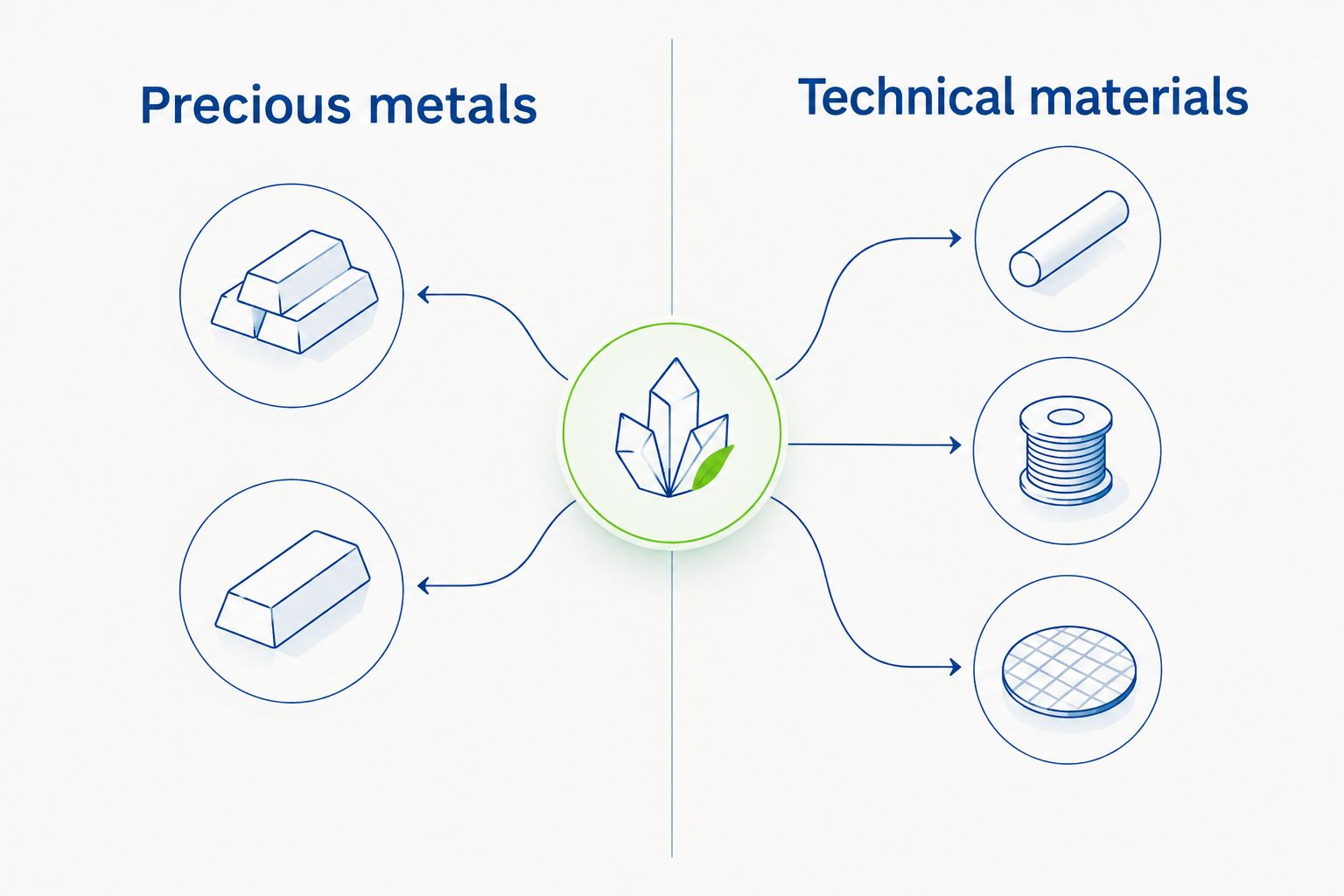
Material choice should follow workplace restrictions, resizing needs, and preferred appearance.
- Verify the exact alloy or hallmark, not just the metal family.
- Ask whether the band can be resized after purchase.
- Disclose known nickel or metal sensitivities.
- Compare how polished, brushed, and textured finishes show wear.
- Check chemical compatibility against the substances you actually handle.
- Never treat corrosion resistance as permission to ignore removal rules.
Choose a profile that stays out of the way
A plain, low-profile band creates fewer snag points than raised stones, prominent prongs, sharp edges, or sculptural projections. That does not make any metal ring safe near machinery; it simply makes the ring easier to wear during permitted tasks and frequent glove changes.
Compare sample widths of 2 mm, 4 mm, and 6 mm on your own hand. Width changes how a ring feels during typing, pipetting, gripping tools, and closing a gloved hand. A wider band may require a different size from a narrow one, so test the intended width rather than borrowing the size from another ring.
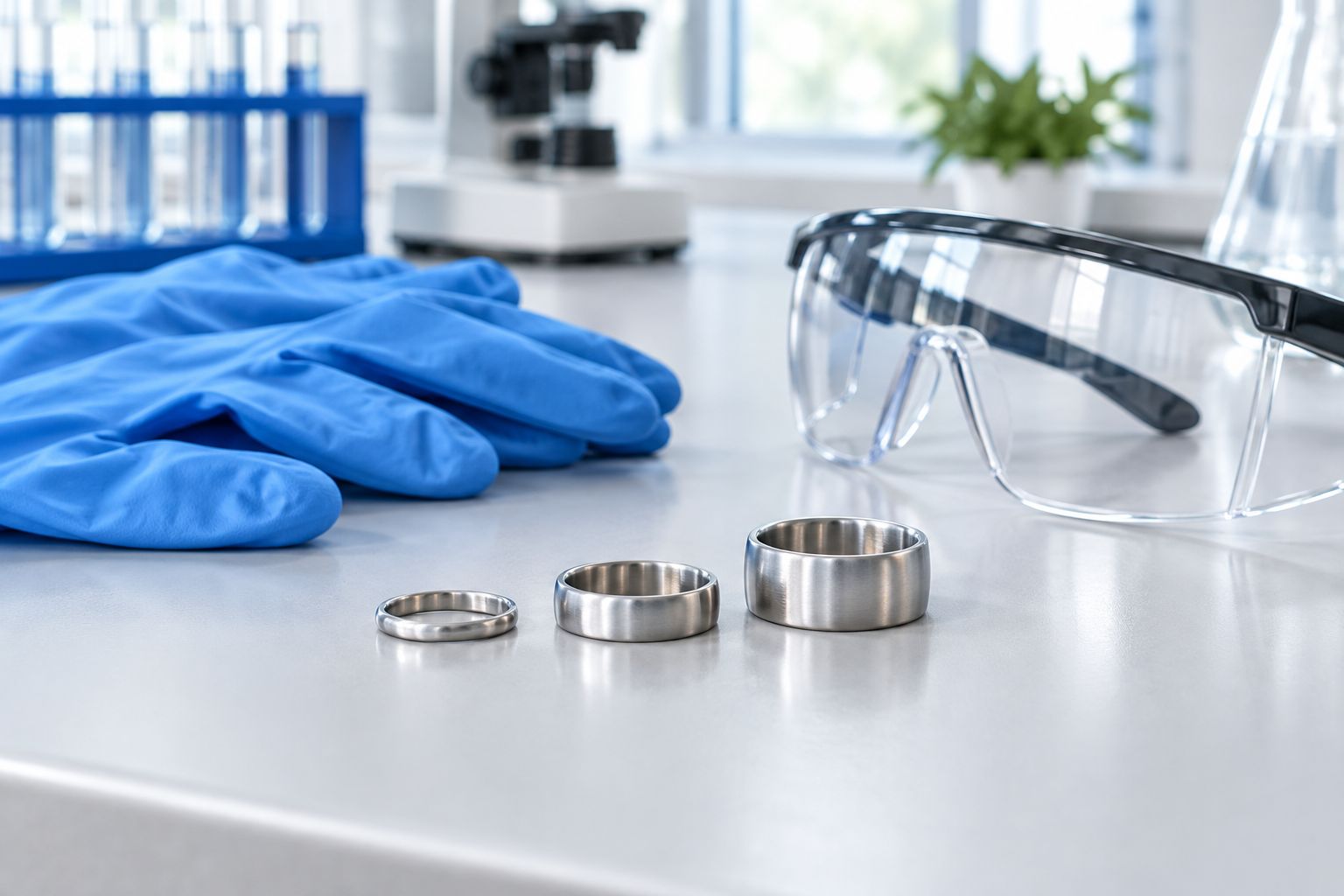
Trying several widths reveals which profile interferes least with gloves and precise hand movements.
- Favor smooth edges and a low exterior profile.
- Test the ring while making a fist and gripping a safe hand tool.
- Put on and remove your usual gloves during the fitting.
- Avoid exposed prongs if frequent glove changes are part of the job.
- Consider a comfort-fit interior if you prefer a wider band.
- Confirm whether decorative channels can trap residue in your setting.
Test fit under realistic conditions
Finger size changes with temperature, activity, and time of day. A single quick measurement does not show how the band will feel after a long shift, during cold weather, or when your hands are warm.
Try the ring more than once before finalizing the size. It should pass over the knuckle without falling loose, while the interior should not pinch when you grip or flex. If your fingers swell significantly at work, discuss that pattern during fitting rather than ordering a permanently tight band.
- Measure at different times on separate days.
- Test the intended metal, width, and interior profile together.
- Check for pressure while gripping and typing.
- Confirm the ring does not rotate excessively during fine hand work.
- Ask how future resizing works for the exact material.
- Resolve fit problems before adding engraving or complex surface details.
Build a two-ring wear plan
Some engineers and lab workers need a fine-jewelry wedding band for permitted settings and a separate option for tasks where metal jewelry is unsuitable. Others must remove every type of ring. Your employer’s rules decide whether a silicone band is an acceptable backup, not the material’s marketing.
Create a fixed routine so the fine-jewelry band does not disappear into a pocket or get left beside a sink. A small ring case in a secure locker, bag compartment, or desk drawer gives the band a consistent home whenever removal is required.
- Wear the fine-jewelry band only where policy permits it.
- Use a silicone backup only when your employer approves it.
- Remove every ring when the procedure requires bare hands.
- Keep a dedicated case in one secure location.
- Clean the band according to its specific metal and finish.
- Inspect the ring after impacts, deformation, or chemical contact.
Find your work-ready band
Visit Element 79 for contemporary fine jewelry and custom bridal guidance in Cherry Creek, Denver.
Compare wedding-band options
No material wins every category. Precious metals offer traditional fine-jewelry character and greater design flexibility, while technical materials can prioritize light weight, scratch resistance, or nonconductive wear. Every option still sits beneath workplace policy.
Solid gold
- Best for: Engineers prioritizing classic color and future design flexibility
- Main advantage: Available in multiple karats, colors, and finishes
- Key limitation: Alloy composition varies and must be checked for sensitivities and chemical exposure
Platinum
- Best for: Lab workers wanting a dense precious metal without gold’s alloy profile
- Main advantage: Naturally white and suitable for custom fine-jewelry work
- Key limitation: Develops surface wear and feels heavier than titanium
Titanium
- Best for: Engineers who prefer a light, simple band
- Main advantage: Lightweight and corrosion-resistant in many ordinary settings
- Key limitation: Resizing and intricate modification are often impractical
Tungsten carbide
- Best for: Desk-based engineers prioritizing scratch resistance
- Main advantage: Resists routine surface scratching
- Key limitation: Can fracture under sharp impact and is difficult to resize
Silicone
- Best for: Workers whose employer permits a flexible backup
- Main advantage: Nonconductive and flexible
- Key limitation: Not automatically safe or permitted around every machine or procedure
Element 79 custom bridal band
- Best for: Engineers wanting a distinctive low-profile precious-metal design
- Main advantage: Design can address profile, finish, width, and personal style together
- Key limitation: A custom band cannot override workplace removal requirements
Element 79 is best for engineers and lab workers who want boutique help choosing or creating a custom bridal band around real workplace constraints.
The practical 2026 verdict is simple: choose solid gold or platinum when you want a traditional fine-jewelry band with design flexibility, consider titanium when light weight matters, and reserve tungsten carbide for work that does not expose the ring to severe impact. Use silicone only as an approved backup. Remove every ring whenever policy or task risk requires it.
Common mistakes engineers and lab workers make
Treating one metal as universally safe
Corrosion-resistant does not mean electrically safe, machine-safe, cleanroom-approved, or compatible with every chemical. Each risk requires a separate check. A titanium band can solve one concern while leaving another untouched.
Choosing width from a photograph
A 6 mm band can look balanced online and still feel intrusive during pipetting or keyboard work. Try multiple widths with the motions you perform daily. The most elegant profile is the one you can wear comfortably when the task permits jewelry.
Assuming silicone is always approved
Silicone is flexible and nonconductive, but those traits do not guarantee approval around rotating machinery, sterile procedures, food processes, or controlled environments. Some workplaces prohibit all rings. The written policy remains the deciding source in 2026.
Ignoring alloy details
The word gold does not identify the full composition. Karat, color, and alloying metals affect skin response and material behavior. If sensitive skin is part of your decision, review hypoallergenic jewelry considerations before choosing an alloy.
Planning removal without planning storage
A loose pocket, sink ledge, or random drawer invites loss. Decide exactly where the ring goes before the first workday after your wedding. A repeatable storage habit protects the band better than relying on memory during a rushed procedure.
FAQ
What’s the best wedding band for engineers in 2026?
The best wedding band for engineers in 2026 is a low-profile ring made from a material accepted by the employer’s safety policy. Solid gold, platinum, titanium, and tungsten carbide serve different needs, so task hazards and resizing requirements decide the winner.
Can lab workers wear metal wedding bands?
Lab workers can wear metal wedding bands only when their employer and procedure permit jewelry. Chemical exposure, glove protocols, contamination controls, and equipment hazards must be checked before selecting the metal.
Is titanium better than tungsten for an engineer’s wedding band?
Titanium is better when low weight and corrosion resistance matter, while tungsten carbide is better for routine scratch resistance. Neither is easy to resize, and tungsten carbide can fracture under a sharp impact.
Is gold suitable for a laboratory wedding band?
Gold can suit a laboratory wedding band when the specific alloy is compatible with the wearer’s tasks and substances. Check the karat, alloying metals, surface treatments, and written laboratory policy rather than relying on gold color alone.
Should engineers remove wedding bands around machinery?
Engineers should remove wedding bands whenever the equipment procedure or workplace policy requires it. A low-profile ring still presents a potential entanglement or contact hazard near moving equipment.
How wide should an engineer’s wedding band be?
An engineer’s wedding-band width should feel comfortable during typing, gripping, glove changes, and precise hand movements. Compare narrow, medium, and wide samples because width affects both fit and finger mobility.
Can Element 79 create a wedding band for a lab worker?
Element 79 offers custom bridal pieces and can help a lab worker consider profile, width, finish, and personal style. The final design must still follow the wearer’s employer policy and task-specific safety requirements.
Do silicone rings replace fine-jewelry wedding bands at work?
Silicone rings can act as backups when an employer permits them, but they do not replace safety procedures. Some environments require complete jewelry removal regardless of material.
One last thing
Record the band’s exact alloy, hallmark, width, finish, and ring size before wearing it to work in 2026. That short material record gives a jeweler more useful information than the label white metal if the band later needs inspection, refinishing, repair, or replacement.
Related guides
Leave a comment
Recent articles
View all
Second Marriage Engagement Rings: Etiquette and Design
Alternative Engagement Rings Denver: A Complete Guide