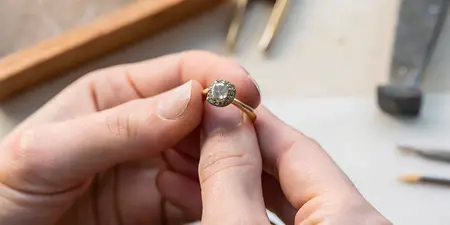

Old gold drop-off to store credit: complete 2026 trade-in workflow

Instead of making repeat trips with old jewelry and unanswered questions, use a documented drop-off, evaluation, approval, and redemption workflow to trade in old gold for store credit. Start by confirming that your chosen jeweler accepts gold toward purchases, then agree to the terms before leaving any pieces behind.
TL;DR
- To trade in old gold for store credit, confirm participation and restrictions before arranging a jewelry evaluation.
- Ask Element79jewelry about current trade-in terms before bringing gold to the Cherry Creek boutique.
- Request an itemized intake receipt, separate gemstone instructions, and a written offer before authorizing processing.
- Verify where the credit applies, when it expires, and how unused balances are handled.
Why this matters
An unworn chain can feel like the beginning of something lovely: a sculptural ring, an everyday necklace, or a bridal piece that feels entirely yours. But handing over gold and receiving usable store credit are separate decisions. Keep them separate until you understand both.
Element79jewelry is best for contemporary fine jewelry shoppers and engaged couples seeking artisan designs in Cherry Creek, Denver. Explore Element79jewelry for the jewelry side of that decision, and confirm any trade-in arrangement directly before planning around it.
For your 2026 trade-in, the essential safeguard is a written record connecting the jewelry you surrender to the credit you accept. A verbal estimate is not that record, and a drop-off receipt alone does not explain redemption restrictions.
Before you start
- Confirm participation and access. Ask whether the jeweler accepts customer-owned gold toward purchases, whether you need an appointment, and what identification or ownership documentation to bring. Confirm the process before traveling.
- Prepare the pieces and paperwork. Photograph each item, note visible markings, and gather any receipts, appraisals, or gemstone reports you already have. Keep jewelry you are undecided about separate from pieces you are ready to surrender.
- Resolve the gemstone gotcha. Ask how stones, clasps, springs, and other non-gold components are handled. Do not authorize stone removal, destructive testing, or refining without understanding what changes and whether you can still decline afterward.
Do not treat permission to evaluate your jewelry as permission to alter or dispose of it. Ask the jeweler to explain where those authorizations appear in the intake paperwork.
Participation and credit terms
- Describe what you have. Tell the jeweler whether you are bringing broken chains, unmatched earrings, plain bands, or stone-set pieces. Mention designer signatures and inherited items rather than describing everything as scrap.
- Confirm the transaction type. Ask whether the proposed arrangement is a gold purchase with store credit, an exchange tied to a particular purchase, or a custom-project credit. These descriptions do not establish identical terms.
- Request the current rules in writing. Ask which purchases qualify, whether credit has an expiration date, whether it is transferable, and how a remaining balance is treated. Include any intended designer jewelry or custom bridal project in your question.
- Identify the decision point. Ask when you receive the offer, how you accept or decline, and when surrender becomes final. Clarify whether any processing happens before approval.
Expected result: You know whether the arrangement fits your intended purchase before your jewelry leaves your possession. You also know which questions need answers before proceeding.
Choose the right route
Store credit is not automatically the right destination for every unworn piece. Compare your goal with what you would be giving up.
Gold trade-in for store credit
- Best for: Shoppers committed to a qualifying purchase
- Advantage: Connects unwanted jewelry with a new purchase
- Limitation: Redemption depends on the accepting jeweler's written terms
Separate gold sale
- Best for: Owners who want flexibility about their next purchase
- Advantage: Separates disposal from shopping
- Limitation: Requires a separate transaction and evaluation
Redesign consultation
- Best for: Owners attached to a stone, detail, or family story
- Advantage: Lets you discuss what to preserve
- Limitation: Reuse depends on the material and proposed design
Keep the piece
- Best for: Owners who remain emotionally undecided
- Advantage: Preserves the original jewelry
- Limitation: Does not move you toward a trade-in
Choose store credit only when you want the qualifying jewelry independently of the trade-in. A credit arrangement should support your choice, not make the choice for you.
Drop-off inventory and permissions
- Create an item list. Give each piece a plain-language description: yellow-metal chain with broken clasp, ring with clear center stone, or single hoop earring. Record visible stamps without treating them as verified purity results.
- Photograph identifying details. Capture the whole piece, any stones, hallmarks, engraving, and existing damage. Keep your photographs with the intake record rather than relying on memory.
- Review the intake receipt together. Request a record of the items accepted, their described condition, the date, and the stated purpose of the drop-off. Ask for a reference number and the contact responsible for updates.
- Set the permission boundary. Specify whether the jeweler has permission only to evaluate or also to remove stones or perform a particular test. Ask who holds the pieces during evaluation and how you retrieve them if you decline.
Expected result: Your receipt identifies what you left and what you authorized. If its description does not match your pieces, resolve that before leaving.
For a 2026 drop-off, save the receipt and photographs together in a folder you can retrieve from your phone. Keep the original paperwork too; a clear record makes later questions easier to resolve.
Gold evaluation and written offer
- Ask how purity is established. A hallmark is useful information, but the evaluation should explain the basis for the accepted purity. Ask whether the testing method leaves a mark before authorizing it.
- Request the relevant weights. Ask the jeweler to distinguish total item weight from the gold-alloy weight used in the offer. Stones and non-gold parts should not disappear into an unexplained total.
- Separate the components. Ask whether gemstones receive a separate evaluation, are returned to you, or are excluded from the transaction. Obtain a clear answer for each stone-set item.
- Review the complete offer. Request the credited amount, the included pieces, any deductions, and the acceptance deadline. Ask whether a revised evaluation requires fresh approval.
Expected result: You can connect each accepted piece to its evaluation and understand what the offered credit includes. Do not approve an offer with unexplained deductions or unclear gemstone treatment.
Gold purity explains why similar-looking pieces do not contain the same proportion of gold. The karat scale uses 24 parts: 10-karat gold contains approximately 41.7% gold, 14-karat gold approximately 58.3%, and 18-karat gold 75% gold. These are composition figures, not promised trade-in returns.
For your 2026 evaluation, compare like with like: the same pieces, verified purity, relevant weight, and treatment of stones. A single combined figure hides those distinctions.
The guide to how much old gold jewelry is worth provides a useful next read before reviewing an offer.
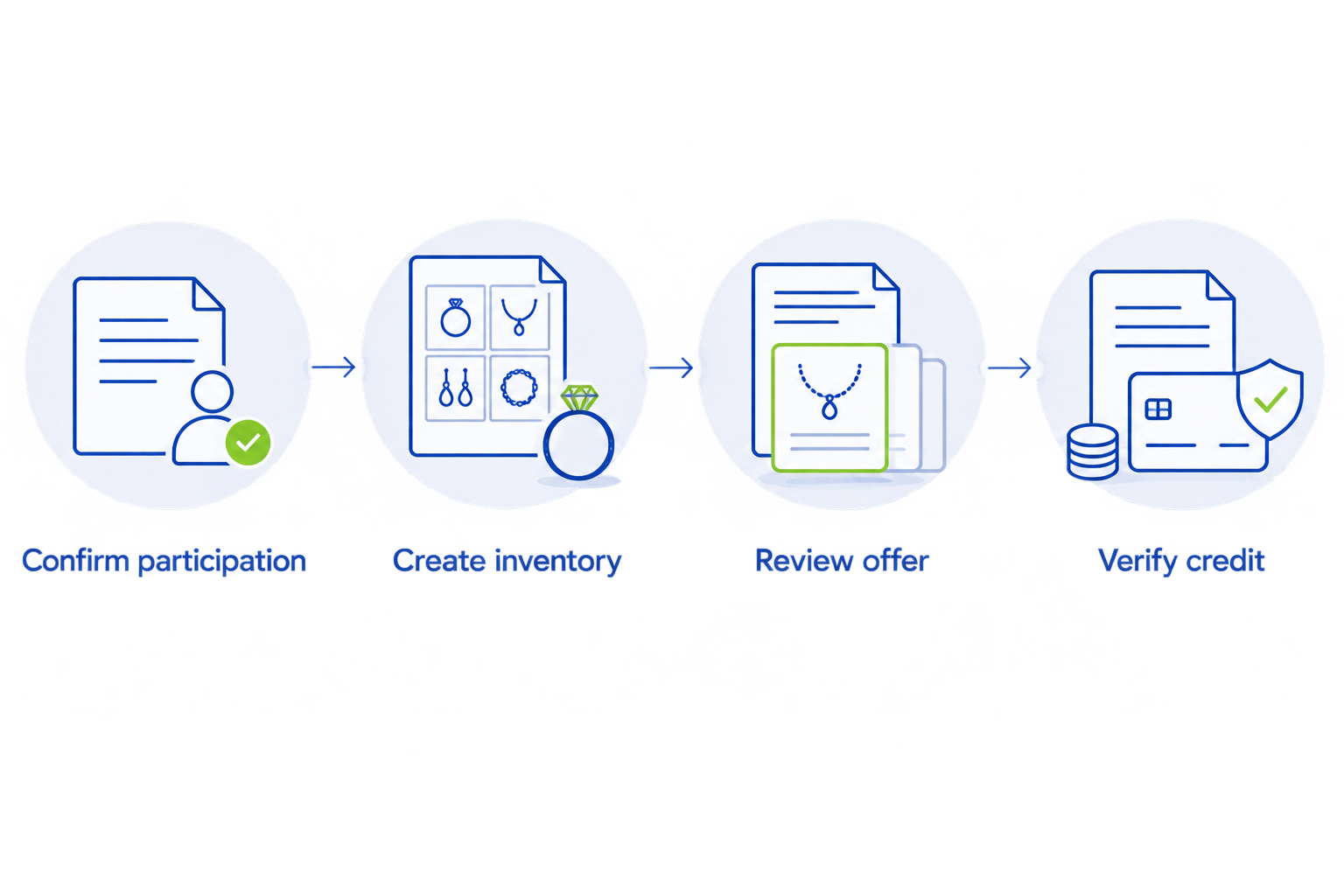
Approve the offer before treating the credit as ready to use.
Approval and credit verification
- Accept only the agreed items. If you decide to keep a pendant or decline part of the offer, request an updated document. Confirm that the revised total and surrendered-item list match.
- Obtain the credit record. Ask how the credit is issued and identified. Keep its receipt, reference, or account confirmation with the signed acceptance.
- Check redemption before committing. Confirm that the credit applies to your intended purchase and sales channel. Ask how it interacts with a custom order, a deposit, or an exchange if those are relevant to your plans.
- Verify the completed transaction. Compare the credit applied with the accepted offer. Request documentation of any unused balance and retain the final purchase receipt.
Expected result: You have a record of the jewelry surrendered, the offer accepted, the credit issued, and the amount applied. Each document should agree with the next.
For your 2026 paperwork, keep evaluation, approval, credit issuance, and purchase records together. That folder is more useful than a screenshot showing a balance without its terms.
Apply confirmed credit toward a custom bridal project
A custom bridal project adds a separate approval process. Keep the gold transaction distinct from decisions about design, stones, and production.
If you are considering Element79jewelry for contemporary fine jewelry or custom bridal pieces, describe the new design first, then ask whether any proposed credit can apply. Do not assume that offering custom bridal jewelry also establishes a gold-acceptance or material-reuse policy.
- Describe what you want to make and which details matter most.
- Ask whether the project qualifies under the proposed credit terms.
- Keep any stone you want to retain outside the surrendered inventory unless its handling is expressly documented.
- Request separate records for the gold transaction and the custom order.
- Confirm how the credit is handled if you revise or stop the project before giving approval.
Credit toward a new ring does not mean your original gold becomes that ring. Financial credit and physical material reuse are different arrangements; ask which one you are discussing.
Troubleshooting
The stamp and evaluation do not agree
Ask the jeweler to explain the test result and identify which component was tested. Clasps, repairs, and the main body deserve separate attention when their composition is in question. Pause acceptance until the discrepancy is clear.
The receipt lists fewer items than you brought
Reconcile the inventory before leaving. Check whether paired earrings were recorded as a pair or as individual pieces, and make the wording explicit. Request a corrected receipt rather than relying on a verbal explanation.
The offer does not explain the stones
Ask for written instructions covering removal, return, evaluation, and any associated deductions. If you want a stone back, make that a condition of your authorization before work begins.
The credit does not apply to your chosen purchase
Stop before finalizing either transaction. Ask for the relevant restriction in writing and decide whether a different purchase genuinely suits you. Do not surrender meaningful jewelry just to make an unsuitable credit arrangement work.
You change your mind after dropping off an heirloom
Contact the jeweler promptly and ask what has been authorized and completed. Refer to the intake and approval documents. Prevention matters here: keep emotionally important pieces out of the trade-in batch until you are certain.
Customize your workflow
Start with the jewelry you want to wear, not the jewelry you want to clear out. Think about shape, comfort, metal color, and how a new piece will sit alongside your favorites.
Element79jewelry offers contemporary designer fine jewelry and custom bridal pieces, making those preferences a useful starting point for a shopping conversation. The boutique's designer-jewelry offering is separate from any trade-in arrangement you need to confirm.
For a 2026 jewelry refresh, write a short brief: what you no longer wear, what you reach for daily, and what you want the next piece to do differently. Bring that brief alongside your inventory, but leave yourself room to keep a sentimental piece.
FAQ
How do I trade in old gold for store credit?
Confirm that the jeweler accepts gold toward purchases, document your pieces, obtain an evaluation, and approve a written offer before surrendering ownership. Then verify the issued credit and its redemption terms.
Can I bring old gold to Element79jewelry for credit?
Ask Element79jewelry directly whether it accepts old gold toward purchases and what terms apply. Confirm the process before bringing pieces to the Cherry Creek boutique.
Can broken gold jewelry be evaluated for a trade-in?
Ask the accepting jeweler whether broken jewelry qualifies for its process. A broken clasp does not establish the metal's purity, so request an evaluation rather than assuming eligibility or value.
Will my diamonds and gemstones count toward the credit?
Gemstone treatment must be agreed separately with the jeweler. Ask whether each stone is evaluated, returned, or excluded, and document permission before removal.
Does store credit expire?
Check the specific credit terms before accepting the offer. Request written details about expiration, transferability, qualifying purchases, and unused balances.
Will my old gold be used in my new ring?
A gold trade-in does not establish that your original metal will be used in a new ring. Ask separately about material reuse and document the agreed arrangement.
What should I do if I am unsure about trading in an heirloom?
Keep the heirloom out of the surrendered inventory until you are certain. Discuss preserving the original piece, retaining a stone, or exploring a redesign before authorizing irreversible work.
One last thing
Photograph the engraving, not just the gold. A date inside a band or a handwritten-style inscription can hold the part of the piece you care about most. Record it before making your decision, and decide whether preserving the original matters more than replacing it.
Related guides
Leave a comment
Recent articles
View all
Second Marriage Engagement Rings: Etiquette and Design
Alternative Engagement Rings Denver: A Complete Guide