
Is platinum or white gold better for sensitive skin? Pt 2026

Platinum is generally the better choice than white gold for sensitive skin, especially if you have a nickel allergy. White gold can contain nickel, and its rhodium finish does not tell you what is in the underlying alloy. Before choosing either metal for a ring you will wear regularly in 2026, ask for the full alloy composition; if you have reacted to jewelry before, ask a dermatologist about patch testing.
TL;DR
- For sensitive skin, platinum is generally the better pick than white gold because some white gold contains nickel.
- A platinum label is not a complete allergy check: ask which other metals are in the alloy.
- Rhodium plating gives white gold a bright finish but does not replace knowing its underlying alloy.
- For a custom bridal ring, choose the metal after checking your known allergens and the ring's composition.
Is platinum or white gold better for sensitive skin?
Choose platinum when your priority is avoiding nickel in a ring you wear regularly. Platinum jewelry is typically alloyed with other metals, so the word platinum alone is not a guarantee that a particular ring suits your skin. White gold needs closer scrutiny: its color comes from the metals mixed with gold, and those metals vary by piece.
Platinum
- Best for: Shoppers seeking an alternative to nickel-containing white gold
- Skin-related advantage: Platinum is the main metal in a platinum alloy
- What to check: The exact composition of the remaining alloy
White gold
- Best for: Shoppers who prefer its bright finish and can confirm its ingredients
- Skin-related advantage: A nickel-free alloy can address a known nickel concern
- What to check: Whether it contains nickel and whether it is rhodium-plated
The deciding detail is the alloy, not the color. Two pale rings can look much alike while containing different metals against your skin. Platinum is the stronger starting point for a nickel-sensitive shopper; a verified nickel-free white gold ring remains an option.
Why this matters when you wear a ring every day
A ring touches the same area of skin repeatedly, so a metal reaction is harder to ignore than it is with a piece you wear occasionally. If a ring leaves an itchy rash, do not assume its appearance identifies the cause. Metal allergy, trapped moisture and irritation from products left beneath a band call for different responses.
Element 79's guide to hypoallergenic jewelry for sensitive skin is a useful next read if you are choosing more than a ring. For this comparison, start with any metal an allergy test has already identified, then check the composition of the specific piece you want to wear.
Platinum: what does 95% platinum tell you?
A ring marked Pt950 contains 95% platinum; the remaining 5% consists of other metal or metals. That high platinum content makes Pt950 a clear choice to ask about when you are avoiding the ingredients commonly used to whiten gold. It does not identify the remaining 5%, so request that information if you have a diagnosed metal allergy.
Platinum's natural color is another practical distinction. A platinum ring does not rely on rhodium plating to appear white, although its surface can still change with wear and need refinishing if you prefer a polished look. That is a maintenance preference, not an allergy diagnosis.
Best for: Someone with a known nickel sensitivity who wants a pale bridal ring and can confirm the platinum alloy. The drawback: Platinum is not automatically suitable for every allergy, and its exact alloy still matters.
If you are comparing finished rings, ask about the band and any other metal components that touch you. A setting described as platinum tells you less than an answer about the entire piece. Keep the question specific: which metals are present in the part that rests against my skin?
White gold: 14K is 58.3% gold, and 18K is 75% gold
The K mark tells you how much of a white gold alloy is gold, not which other metals complete it. 14K gold contains about 58.3% gold; 18K contains 75% gold. Neither figure establishes whether a particular white gold ring contains nickel. Ask for the alloy composition rather than treating the higher gold content as an allergy guarantee.
White gold also deserves a question about its surface. Rhodium plating can give a ring a bright white appearance, but the underlying alloy is still relevant as the finish changes with wear. If nickel is your confirmed trigger, a bright finish is not a substitute for confirmation that the metal beneath it is nickel-free.
Best for: Someone who prefers white gold and can verify that the specific alloy excludes a known allergen. The drawback: A white gold label, karat mark or rhodium finish alone cannot answer the nickel question.
Think of these as separate checks: the karat mark describes gold content, the alloy information identifies the other metals, and the finish describes the surface you see. For sensitive skin, you need the answer to the middle question before deciding whether the look is right for you.
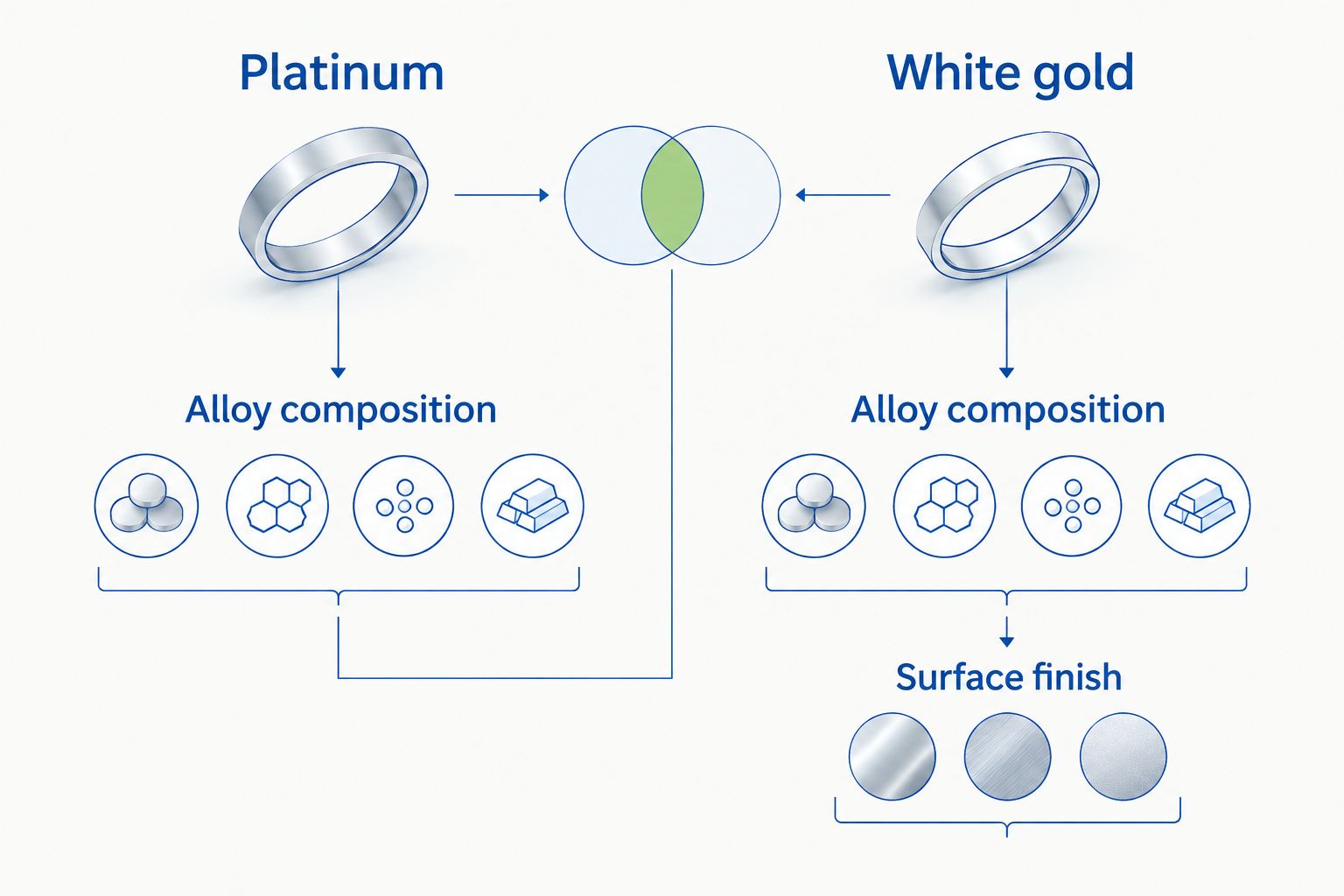
The metal beneath a ring's finish matters when you are checking for an allergen.
Why can skin reactions differ between two pale rings?
Color cannot show you an alloy's ingredients. In 2026, compare the actual pieces under consideration rather than assuming every platinum ring or every white gold ring has the same composition. These are the factors that change the answer:
- The metals in the alloy. A white gold ring containing nickel presents a different question from one confirmed to be nickel-free. A platinum ring also contains other metal or metals that you should identify if you have a relevant allergy.
- Your known allergens. A confirmed nickel allergy gives you a reason to check explicitly for nickel. A reaction you have not had assessed does not identify which metal, if any, caused it.
- The finish. Rhodium plating changes the visible surface of white gold. Ask what sits beneath that finish rather than relying on the ring's appearance.
- What touches your skin. Check the composition of the band and other contact points, not just the metal named in a general description of the ring.
- Conditions beneath the band. Moisture and residue can irritate skin without establishing a metal allergy. If discomfort continues, a dermatologist can help distinguish irritation from allergic contact dermatitis.
This is why a blanket hypoallergenic description is less helpful than a specific composition. You are not shopping for an abstract metal; you are choosing a particular ring with particular ingredients.
How should you choose a ring if you have sensitive skin?
Start with your known trigger, then confirm the alloy of the ring you want. For a custom bridal piece, make the metal discussion part of the design decision rather than an afterthought. The silhouette can be sculptural or understated; neither tells you whether the band contains an allergen.
- Write down what you know. If patch testing has identified an allergen, use its name when asking about a ring. If you have only noticed a rash, describe the symptoms without naming a metal as the cause.
- Ask for the composition of each candidate. For platinum, ask which metals make up the rest of the alloy. For white gold, ask directly whether the alloy contains nickel.
- Ask about the finish. If a white gold ring is rhodium-plated, find out what metal lies beneath it. Do not choose it on the assumption that the visible finish answers the allergy question.
- Check every skin-contact component. A ring's overall description is not enough if another part of the piece touches your finger. Ask about the finished ring you are considering.
- Get medical guidance when the trigger is unclear. A dermatologist can assess a persistent or recurring reaction and advise whether patch testing is appropriate. Pause wearing a ring that causes discomfort while you seek advice.
For a shopper planning a custom bridal ring in Denver, Element 79 is best for discussing the design and asking these metal questions together. Its boutique setting and custom bridal offering make that conversation relevant; the right final metal still depends on the composition of the particular ring and your known allergens. Bring any patch-test results to the discussion, and request an ingredient answer before committing to a design.
Discuss your bridal ring
Bring your metal questions into the custom bridal conversation.
Can you wear white gold if you are allergic to nickel?
Yes, if the specific white gold alloy is confirmed to be nickel-free and does not contain another metal you need to avoid. A 14K or 18K mark does not supply that confirmation. Ask for the alloy information before treating white gold as a suitable choice.
If a seller cannot establish what is in the ring, choose a piece whose composition you can verify instead. The same standard applies to platinum when you have an allergy beyond nickel. Knowing your trigger gives you a sharper question than asking whether a ring is generally safe for sensitive skin.
Is platinum guaranteed not to cause a reaction?
No. Pt950 identifies 95% platinum, not every ingredient in the ring or every possible cause of skin irritation. Check the remaining alloy if you have a diagnosed metal allergy. If the skin beneath a band becomes uncomfortable, a dermatologist can assess the reaction rather than relying on the metal label alone.
A platinum choice solves one shopping problem well: it lets you move beyond guessing from a pale finish. It does not remove the need to verify a finished piece. That distinction matters when you plan to wear a wedding band beside an engagement ring, since both pieces deserve the same ingredient check.
Does rhodium plating make white gold safe for sensitive skin?
No. Rhodium plating is a finish, not proof that the white gold beneath it is nickel-free. If you know nickel causes a reaction, ask about the underlying alloy even when a ring looks bright white. The answer should describe the metal you are buying, not only how its surface looks in 2026.
For a ring worn regularly, make future upkeep part of the conversation too. A finish can change with wear, while the underlying alloy remains part of the ring. Choose white gold because you have verified its ingredients and like its look, not because a coating seems to settle an unanswered allergy question.
FAQ
Is platinum or white gold better for sensitive skin?
Platinum is generally the better starting choice for sensitive skin, especially with a known nickel allergy. Confirm the full alloy of the specific ring before choosing it.
Can white gold contain nickel?
Yes, some white gold alloys contain nickel. Ask about the composition of the particular ring rather than assuming its karat mark or color gives the answer.
Is all platinum jewelry hypoallergenic?
No. Platinum jewelry contains other alloy metals, and a metal label cannot identify every cause of skin irritation. Check the full composition if you have a diagnosed allergy.
Does 18K white gold have less nickel than 14K white gold?
Its higher gold content does not tell you whether either specific ring contains nickel. Ask for the alloy ingredients for both pieces.
Will rhodium plating prevent a reaction to white gold?
Rhodium plating does not confirm that the underlying white gold is free of an allergen. Check the base alloy before choosing a ring for sensitive skin.
What does Pt950 mean on a ring?
Pt950 means the alloy is 95% platinum. Ask which metal or metals make up the remaining 5% if you need to avoid a known allergen.
Should I see a dermatologist about a ring rash?
Yes, see a dermatologist if a reaction persists or recurs. An assessment can help distinguish allergic contact dermatitis from other irritation and determine whether patch testing is appropriate.
One last thing
A white finish answers an aesthetic question, not an allergy question. In 2026, ask the same direct question of every pale ring you love: what metals will touch my skin? Element 79's custom bridal conversation is most useful when you bring that question alongside the shapes and details you want in the finished piece.
Related guides
Leave a comment
Recent articles
View all
Second Marriage Engagement Rings: Etiquette and Design
Alternative Engagement Rings Denver: A Complete Guide