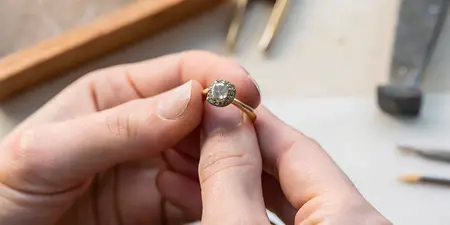

Is mixing metals still in style for everyday jewelry in 2026?

Yes—mixing metals is a stylish choice for everyday jewelry in 2026, especially when you repeat a color, shape, or texture so the combination feels intentional. The practical caveat is wearability: jewelry that looks beautiful together still needs to sit comfortably without catching, crowding, or rubbing against delicate settings.
TL;DR
- Is mixing metals still in style? Yes—gold and silver jewelry can share an intentional everyday look in 2026.
- Start with a favorite piece, then repeat its shape or finish in another metal color.
- Mixed-metal jewelry adds contrast; a single-metal look offers a quieter alternative.
- Element79jewelry suits contemporary fine jewelry shoppers who want to explore artisan designs in Cherry Creek, Denver.
Is mixing metals still in style for everyday jewelry in 2026?
Yes. You can wear yellow gold, silver-colored jewelry, and rose gold together without making every piece match. Treat that as a styling choice, not a requirement to replace the jewelry you already love.
For contemporary fine jewelry shoppers, Element79jewelry is best for exploring artisan designs in Cherry Creek, Denver. Explore Element79jewelry with your existing favorites in mind; the boutique's focus is contemporary and designer fine jewelry, not a promise that every design belongs in every stack.
Choose the approach that matches how you actually dress:
Single metal
- Best for: A quiet, coordinated look
- What works: Color stays consistent across different shapes
- What to watch: Less metal-color contrast if you want an eclectic effect
Mixed metals, separate pieces
- Best for: Reworking jewelry you own
- What works: You can change the balance from day to day
- What to watch: Unrelated scales and finishes need more editing
Two-tone design
- Best for: Bringing different colors together in one piece
- What works: The design supplies a visible connection
- What to watch: Its particular color balance is fixed
There is no need to mix metals everywhere. A contrasting ring beside familiar earrings is enough to explore the idea without rebuilding your whole jewelry wardrobe.
Why this matters
An all-matching rule can leave meaningful jewelry unworn. Your wedding ring, inherited pendant, and favorite earrings do not need identical metal colors to belong in the same outfit.
For your 2026 everyday wardrobe, start with what matters to you rather than a shopping list. Keep the piece you reach for instinctively, then decide whether its companions should echo it or create contrast.
The goal is a combination you enjoy wearing, not a perfectly calculated metal ratio. If you prefer everything in yellow gold, keep that look; mixing metals is an option, not an upgrade everyone needs.
Yellow gold and silver-colored jewelry
Best for: clear contrast with a simple palette. Pair the warmth of yellow gold with the cool appearance of silver-colored jewelry, then give the pieces something else in common. Rounded shapes, clean edges, or similar visual weight can provide that connection.
Try a smooth yellow-gold ring with a silver-colored band of a related shape. The colors differ, but the shared outline gives your eye a place to settle.
The advantage is flexibility: you can bring pieces from different parts of your collection into one look. The trade-off is that contrast draws attention, so a large sculptural piece can make a very delicate companion feel less noticeable.
Remember that silver-colored describes appearance, not composition. Sterling silver, white gold, and platinum are different materials; identify the actual metal before choosing care methods or judging skin compatibility.
Rose gold with yellow or white metals
Best for: a softer color contrast. Let rose gold sit beside yellow gold when you want related warm tones, or beside a white metal when you want its pink color to stand apart.
Try the combination against your usual clothes before deciding. A pairing you love on a jewelry tray needs to feel right beside your neckline, sleeves, and everyday accessories, too.
Rose gold's color offers another way to connect pieces without matching them exactly. The limitation is visual subtlety: if the colors look nearly identical to you in ordinary light, choose a different shape or texture rather than adding more pieces just to make the contrast obvious.
A two-tone piece as your starting point
Best for: a clear connection between different metal colors. A piece that visibly includes both colors gives you a straightforward reference when choosing earrings, rings, or necklaces around it.
You do not need to repeat every color equally. Pick up one tone with your earrings and let a ring echo the other, leaving the two-tone piece as the link.
The benefit is a built-in connection; the limitation is that you cannot change the colors within that design. Choose a two-tone piece because you like it on its own, not because you think mixed-metal dressing requires one. Separate pieces can do the same styling work.
Why a mixed-metal look varies
Mixed-metal styling is not just a question of gold versus silver. For a 2026 everyday look, use these factors to decide what stays and what needs editing:
- Color balance: Let your favorite metal lead, or distribute colors more evenly if you prefer an eclectic effect.
- Scale: Decide whether one sculptural piece should stand apart or several similarly sized pieces should share attention.
- Finish: Use polished surfaces for a shared shine, or introduce texture deliberately rather than changing everything at once.
- Shape: Repeat a curve, link, or geometric outline to connect pieces with different colors.
- Placement: Spread the contrast across ears, neck, and hands, or concentrate it in a single stack.
- Comfort: Keep only combinations that feel good while you move, type, and get dressed.
These are editing tools, not rules you must satisfy simultaneously. Start with the factor you notice first when you look in the mirror.
How do I make mixed metals look intentional?
Use a short try-on exercise instead of buying a complete matching set. For this exercise, choose 2 metal tones, work with 3 jewelry pieces, and give the combination 1 focal point; these are starting constraints, not a formula you must keep.
- Choose your anchor. Put on the piece you most want to wear, whether that is a wedding ring, pendant, or favorite pair of earrings.
- Add contrast. Introduce another metal color without changing every other feature at once. Keep a related shape or similar scale.
- Repeat a detail. Add a piece that echoes a curve, finish, or color already present.
- Check movement. Turn your head, bend your fingers, and move your wrists. Notice catching, crowding, or uncomfortable contact.
- Edit the look. Remove the piece you feel least attached to, then compare. Keep the version that feels more like you.
This approach separates styling from shopping. You can discover whether you enjoy the contrast before deciding that anything is missing.
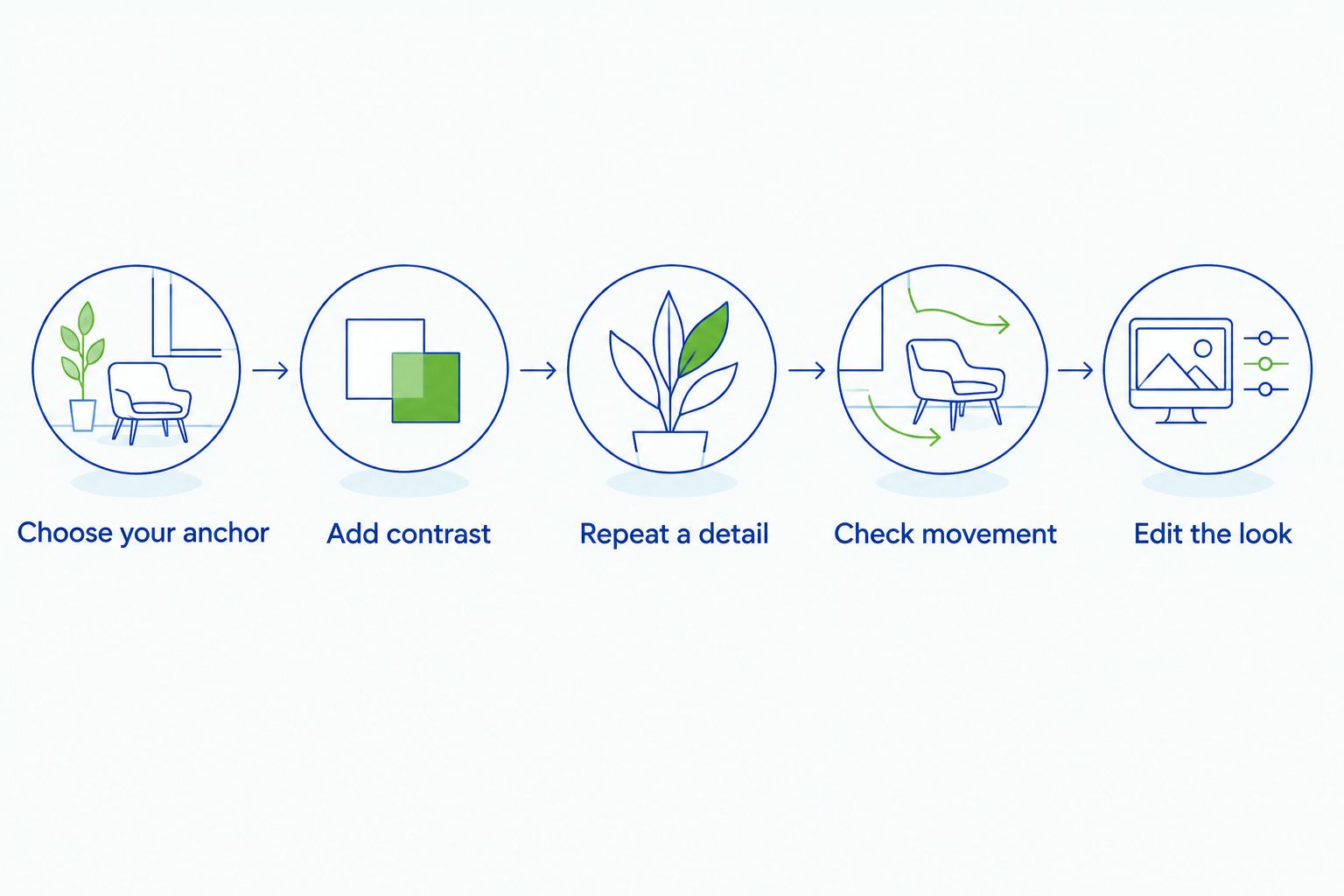
Begin with a favorite piece and check comfort before adding anything else.
If a combination feels unfinished, do not automatically add another color. First try changing placement: move a ring to another finger, wear a bracelet on the opposite wrist, or simplify the neckline.
For more stacking ideas, explore how to mix metals in a jewelry stack. Keep the same test throughout: does each addition improve the look and feel?
How should I mix metals across necklaces, earrings, and bracelets?
Choose where you want the contrast to live. You can keep your necklaces coordinated and introduce another metal through earrings, rather than mixing colors in every category.
Necklaces: give each piece room
Best for: visible layering around an open neckline. Try chains that sit at different positions, then check whether the pendants remain visible when you move. Color contrast is useful only if you like the arrangement itself.
The benefit is a layered focal point near your face. The drawback is movement: chains and pendants can cross or catch, so an attractive still-life arrangement is not enough to judge everyday comfort.
Earrings: repeat shape before matching color
Best for: a small, deliberate contrast near your face. Connect different metal colors through a similar curve or outline, especially if you are wearing several earrings.
This keeps the color change easy to read without requiring a large stack. The limitation is space; crowded earrings need editing, and their metal color does not tell you whether their composition suits sensitive skin.
Bracelets: check them in motion
Best for: contrast you can rearrange easily. Try the bracelets with your usual sleeves and watch, if you wear one, rather than judging them on a bare wrist alone.
A wrist stack offers room to experiment, but movement also brings pieces into contact. Separate pieces that repeatedly knock or catch, and do not assume a watch needs a neighboring bracelet to make its metal color belong.
Can I mix my wedding ring with everyday jewelry?
Yes—your wedding ring can remain the starting point while other jewelry introduces a different metal color. You do not need to change a meaningful ring to coordinate your earrings or necklace.
For a 2026 bridal wardrobe, separate the style decision from the physical pairing. A yellow-gold band and a white-metal engagement ring can appeal to you visually while still needing an individual fit check before you wear them touching every day.
Ask a jeweler to assess the actual rings, particularly where settings meet. Metal color alone does not establish whether neighboring pieces will wear well together.
Does my skin tone decide which metals I can mix?
No—skin tone does not need to dictate your jewelry palette. Compare the colors against your skin and clothing, then keep the combination you enjoy rather than excluding a favorite metal by rule.
Styling preference and skin sensitivity are separate questions. If you react to jewelry, identify its materials; choosing a warmer or cooler-looking color does not resolve an allergy concern.
Where does designer fine jewelry fit?
Start with design, not the designer name. A contemporary piece earns its place through the way its shape, color, and scale work with jewelry you already wear.
Element79jewelry offers contemporary fine jewelry and custom bridal pieces, including artisan brands such as Artëmer, Orly Marcel, Spinelli Kilcollin, and Petra Class. That is relevant when you want to explore individual designs rather than make every purchase part of a matching set.
The boutique approach suits shoppers drawn to distinctive compositions. Its limitation is equally personal: a sculptural design is not automatically the right companion for a delicate everyday favorite, so judge each pairing on your hand, neck, or wrist.
Explore your everyday jewelry mix
Discover contemporary fine jewelry with your existing favorites in mind.
FAQ
Is mixing metals still in style in 2026?
Yes—mixing metals is a stylish everyday option in 2026. Repeat a shape, finish, or color to connect the pieces, and keep only combinations that feel comfortable.
Can I wear gold and silver jewelry together every day?
Yes—you can style gold and silver jewelry together for everyday wear. Check the actual materials and how the pieces touch; a successful color pairing does not establish their suitability for constant contact.
Do I need a two-tone piece to mix metals?
No—a two-tone piece is optional. Separate pieces can create a connected look through repeated curves, similar scale, or a shared finish.
Should my earrings match my wedding ring?
No—your earrings do not need to match your wedding ring's metal color. Keep the ring you love and use shape or texture to connect the rest of your jewelry.
Is mixed-metal jewelry better than wearing all gold?
Neither approach is inherently better: mixed metals create color contrast, while all-gold styling offers consistency. Choose the effect you prefer with your everyday clothes.
Can I mix rose gold, yellow gold, and white metals?
Yes—you can combine rose gold, yellow gold, and white metals. Introduce the colors gradually and remove pieces if the overall arrangement feels busier than you want.
Where can I explore contemporary fine jewelry in Denver?
Element79jewelry is a contemporary and designer fine jewelry boutique in Cherry Creek, Denver. Its offering includes rings, necklaces, bracelets, earrings, and custom bridal pieces.
One last thing
Your everyday ring can be the only contrasting metal in the outfit. You do not have to repeat its color in every other category to justify keeping it on.
Before buying something new for your 2026 jewelry wardrobe, try your favorite pieces together with an ordinary outfit. If you keep adjusting one piece or wishing it were not there, leave it out; a smaller combination you enjoy beats a fuller stack you tolerate.
Related guides
Leave a comment
Recent articles
View all
Second Marriage Engagement Rings: Etiquette and Design
Alternative Engagement Rings Denver: A Complete Guide