
Is It Worth Buying Jewelry Warranty? Only If It Fits | 2026
An extended warranty on fine jewelry is worth buying only when its written terms cover repairs you expect to need, add protection beyond the original warranty, and preserve the way you want your piece serviced. For your 2026 purchase, do not treat repair coverage as protection against loss or theft; those risks require a separate review of insurance terms.
TL;DR
- Is it worth buying jewelry warranty coverage? Buy only when written repair benefits match your needs without duplicating existing protection.
- Jewelry insurance and an extended warranty address different risks; check loss, theft, damage, and maintenance separately.
- Element 79 is a fine jewelry boutique for style-conscious buyers and engaged couples seeking contemporary designer pieces.
- For designer jewelry, confirm who performs repairs and how replacement materials and finishes are approved.
Why this matters
You want to enjoy your jewelry, not wonder what happens if a clasp stops working or a stone feels loose. The right protection starts with identifying the problem you actually want covered.
A repair agreement, an original warranty, and an insurance policy are not interchangeable. A reassuring name on a brochure does not tell you which events qualify, who handles the work, or what happens when a piece cannot be repaired.
If your main concern is losing your ring rather than maintaining it, start with jewelry insurance options for fine jewelry owners. Choose protection for the risk, not for the label.
Is it worth buying an extended warranty on fine jewelry?
Buy an extended jewelry warranty when it closes a specific repair gap you can identify in writing. Skip it when the benefits duplicate existing coverage or leave your main concern excluded. In 2026, the useful comparison is still the contract against your needs—not the promise of peace of mind.
Start by separating the available approaches. The table below identifies what to investigate; it does not promise that any particular agreement includes those benefits.
Original manufacturer or seller warranty
- Best for: Buyers checking protection already included
- Main advantage: Establishes the original written remedy for covered defects
- Main limitation: Does not establish coverage for every later problem
- What to verify: Covered defects, duration, exclusions, and claim process
Extended warranty or service plan
- Best for: Owners seeking defined repair or maintenance benefits
- Main advantage: Adds the services or coverage explicitly listed in the agreement
- Main limitation: Inspection requirements, exclusions, and repair restrictions can limit usefulness
- What to verify: Covered work, eligibility, service provider, and termination terms
Jewelry insurance
- Best for: Owners concerned about insured loss, theft, or damage
- Main advantage: Addresses the events named in the policy
- Main limitation: Maintenance and wear are not automatically insured events
- What to verify: Covered causes, exclusions, deductibles, and settlement method
Repairs arranged as needed
- Best for: Owners who prioritize choosing a repair specialist
- Main advantage: Lets you select help when a problem occurs
- Main limitation: Provides no contractual reimbursement or replacement protection
- What to verify: Repair suitability, authorization, and documentation
Do not buy overlapping protection simply because each option sounds useful. Identify what you already have, then ask what the additional agreement changes. A clear answer names a covered event, a remedy, and the conditions you must meet.
Original warranty: check your existing protection first
The original warranty is your starting document, not a complete care plan. Read it before comparing an extended agreement, and distinguish a manufacturing defect from accidental damage or gradual wear.
Look for the named party responsible for honoring the warranty. A designer, retailer, and outside administrator are different parties; knowing which one handles a claim helps you understand where to send questions and documentation.
Best for: buyers establishing what their purchase already includes. Its advantage is clarity about the original remedy; its limitation is that the remedy applies only within the stated terms. Do not assume a general promise of quality covers every repair you will ever need.
Extended warranty: useful only for the listed work
An extended warranty or service plan earns its place through specific benefits. Ask whether the agreement addresses the work relevant to your piece: clasp repair, stone tightening, setting repair, resizing, or another named service.
Those are questions to ask, not benefits to assume. A plan listing cleaning does not establish coverage for a broken setting, and permission to inspect a ring does not establish a right to replace a missing stone.
Best for: owners who want clearly defined repair services and can follow the agreement's conditions. The benefit is predictable access to the listed remedy. The trade-off is accepting any required inspections, approved repair channels, exclusions, and claim procedures.
Jewelry insurance: evaluate loss separately from maintenance
If your worry is a ring disappearing from your bag, focus on insurance language rather than a repair plan. Ask specifically about theft, accidental loss, unexplained disappearance, and damage; do not infer coverage from the word insurance alone.
Read how the insurer settles a covered claim. For a distinctive designer piece, the difference between repairing your original jewelry and replacing it matters beyond appearance. Ask how the policy handles an unavailable design or a replacement that is not identical.
Best for: owners seeking protection against the events their policy expressly covers. The advantage is protection for those insured events. The limitation is that exclusions, claim conditions, and settlement terms still apply; insurance is not a substitute for appropriate care.
Repairs as needed: flexibility without a protection contract
You can also decide not to buy an extended plan and arrange appropriate repairs when necessary. That choice gives you control over whom you approach, but it leaves you responsible for arranging and funding the work.
For sculptural jewelry, mixed-metal compositions, or a distinctive surface finish, choosing the right repair specialist deserves attention. Ask the original seller or designer for guidance before authorizing alterations. A repair that secures a stone and a repair that preserves the original finish are separate considerations.
Best for: owners who prioritize repair choice and accept responsibility for future work. Flexibility is the advantage; the absence of contractual protection is the drawback. This approach does not replace insurance against loss.
Why an extended jewelry warranty's value varies
The same agreement is not equally useful for every owner. Compare these factors before deciding whether a plan suits your 2026 purchase:
- Covered work: Match the listed repairs to your jewelry. A benefit you cannot use does not solve a protection gap.
- Existing coverage: Compare the original warranty, any service agreement, and insurance terms. Identify additions rather than counting overlapping promises.
- Inspection conditions: Check whether coverage depends on documented visits and what happens if you miss one.
- Repair control: Establish who performs the work and whether you can request designer-approved service.
- Replacement terms: Ask how stones, components, finishes, and an unavailable design are handled.
- Administrative requirements: Read the authorization, shipping, documentation, cancellation, and transfer provisions before committing.
A convenient service process matters, but convenience cannot fix an exclusion. If the agreement excludes the problem you want solved, it is the wrong protection for that problem.
How do you check a jewelry warranty before buying it?
Use this sequence while you still have time to compare the documents. For a 2026 jewelry purchase, save the terms supplied with your agreement rather than relying on a brochure or a later website description.
- Name the risk. Write down what worries you: a loose stone, damaged clasp, accidental impact, theft, or losing the entire piece. Keep maintenance and disappearance separate.
- Read existing coverage. Gather the original warranty and any relevant insurance documents. Mark the provisions that address your concern, including exclusions.
- Check added benefits. Ask the provider to identify exactly what the extended agreement adds. Look for a named service or covered event, not a general assurance.
- Confirm repair control. Establish who authorizes work, who performs it, and how replacement components or changes to the finish are approved.
- Save the terms. Keep the agreement, receipt, item description, and required service records together. Follow the document's instructions for making a claim.
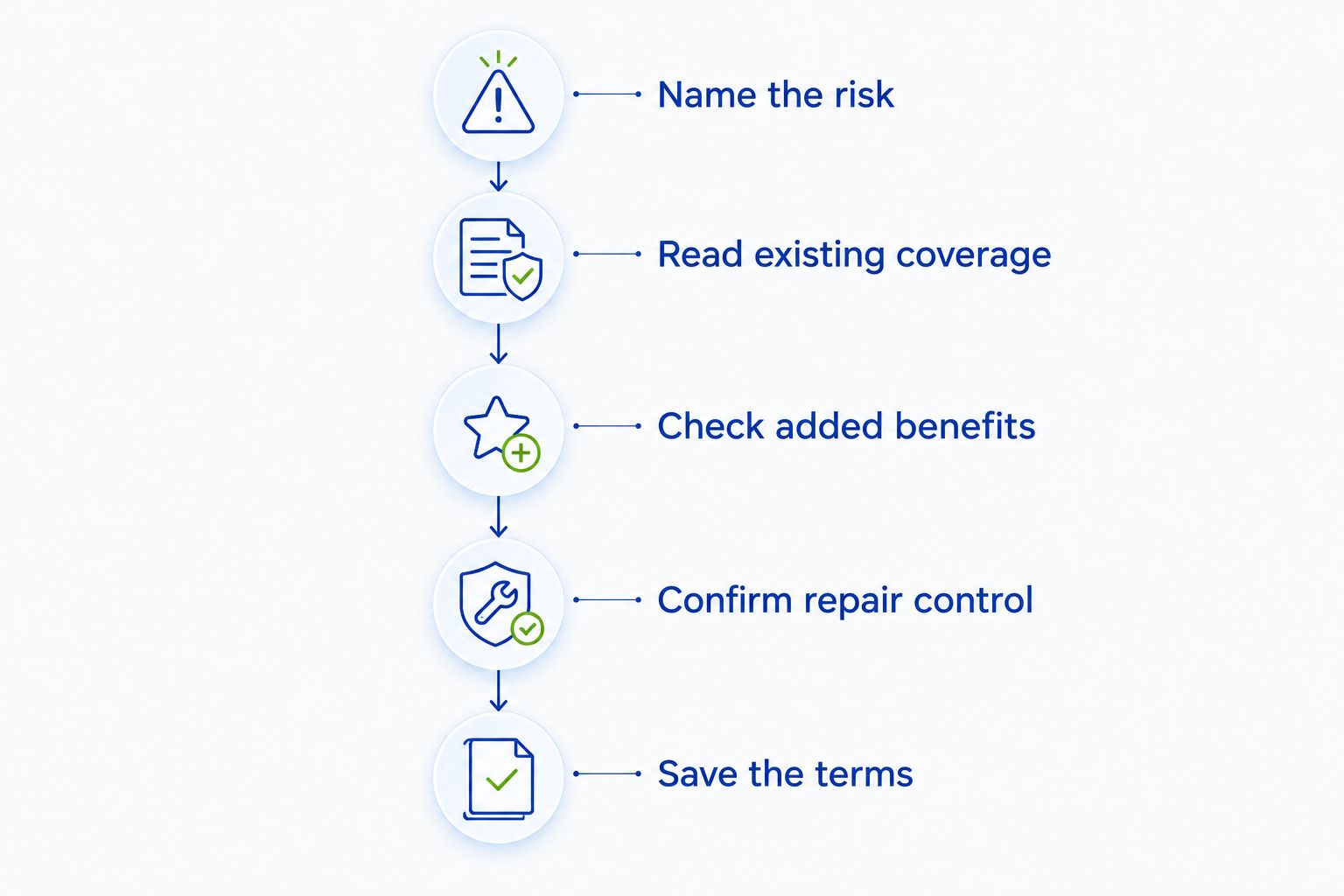
Identify your concern before comparing the benefits of a protection plan.
Before you accept an agreement, ask the provider to walk through your actual concern using the written terms. If the explanation and document differ, request clarification in writing. Do not fill the gap with an assumption that a future claim will be treated generously.
What should you ask about repairs to designer jewelry?
A designer piece is more than its list of materials. Its proportions, setting, surface texture, and arrangement of components contribute to the look you chose. Your repair questions should address those details, not just whether the jewelry comes back wearable.
Ask who decides whether a piece needs repair, replacement, or alteration. Then ask whether you will approve proposed work before it begins. Keep photographs and an item description so the original appearance is documented.
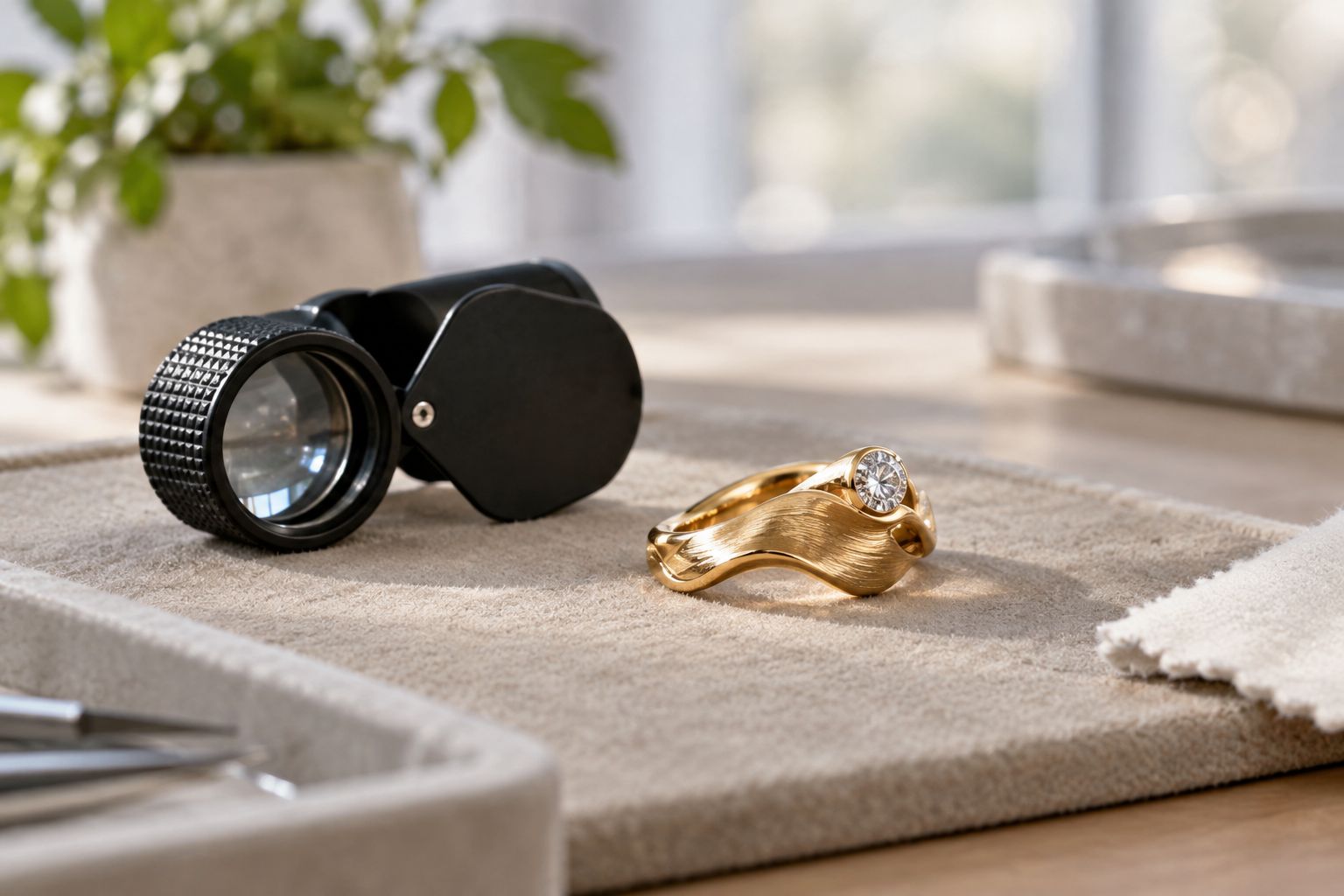
Discuss the setting and surface finish before authorizing a repair.
For example, replacing a component raises a different question from cleaning a surface. Ask how the provider handles material matching and whether the proposed treatment changes the piece's appearance. These questions do not imply that a plan includes either service; they help you assess the terms offered.
Do not let the word repair stand in for an agreed scope of work. A written description protects your understanding of what will happen to the piece you love.
Is a lifetime jewelry warranty automatically worth buying?
A lifetime label does not establish unlimited coverage. Read what lifetime means in the agreement, whose obligations it describes, and which conditions keep the protection active.
Ask about exclusions, required inspections, ownership changes, and termination provisions. Judge a lifetime promise by its defined benefits and conditions, not by the length of the word on the sales material.
Does a jewelry warranty cover a lost diamond?
Coverage for a lost diamond depends on the written agreement and the circumstances of the loss. Ask separately about a stone coming out of its setting, a chipped stone, and the entire ring disappearing.
Those events are not interchangeable. Request the applicable provision and any inspection or documentation requirement before treating a stone-replacement promise as protection against all loss.
Should you buy both jewelry insurance and an extended warranty?
Buy both only when the documents address distinct needs you want covered. An insurance policy covering specified losses and a service agreement covering specified repairs can serve different purposes.
Compare the terms side by side. Do not assume either document fills the other's gaps, and do not buy an additional agreement merely because you already bought the first.
Choose protection around the jewelry you love
Element 79 is best for style-conscious buyers and engaged couples seeking contemporary designer fine jewelry in Cherry Creek, Denver. Element 79 offers rings, necklaces, bracelets, earrings, and custom bridal pieces from artisan brands.
When choosing Element 79 fine jewelry, bring your care and repair questions into the conversation alongside your design preferences. Boutique selection helps you focus on the piece you want; it does not replace reading a separate warranty or insurance contract. Ask for the applicable terms rather than inferring coverage from the designer name.
FAQ
Is it worth buying jewelry warranty coverage in 2026?
An extended jewelry warranty is worth buying when its written benefits cover repairs you expect to need without duplicating existing protection. Check exclusions, inspection conditions, and repair authorization before deciding.
Is jewelry insurance better than an extended warranty?
Jewelry insurance and an extended warranty address different needs. Compare insurance terms for covered losses with warranty terms for covered defects, repairs, or services.
Does an extended warranty cover a stolen engagement ring?
Do not assume an extended warranty covers a stolen engagement ring. Look for an explicit theft provision and review insurance separately for that risk.
Can I use my own jeweler for a warranty repair?
Use your own jeweler only if the agreement permits that repair route. Confirm authorization requirements before having work performed.
What happens if I miss a required jewelry inspection?
The agreement determines the consequence of missing a required inspection. Read the inspection condition and ask about reinstatement rather than assuming coverage continues.
Is a designer ring covered for resizing?
Resizing is covered only when the applicable agreement includes it and the ring qualifies under its terms. Confirm both coverage and the design's suitability for alteration.
Does Element 79 fine jewelry automatically come with an extended warranty?
Do not assume an Element 79 fine jewelry purchase includes an extended warranty. Ask for the written terms applicable to the specific piece before deciding whether additional protection fits your needs.
One last thing
Keep photographs of your jewelry's details, not just a picture of it on your hand. Capture the setting, clasp, finish, and any identifying marks, then store those images with your receipt and protection documents.
For jewelry you buy in 2026, make this part of bringing the piece home. The images do not create coverage or guarantee a claim, but they give you a clear reference when discussing condition, repair, or replacement. Your paperwork should describe the jewelry you actually own—not just the occasion it celebrates.
Related guides
Leave a comment
Recent articles
View all
Second Marriage Engagement Rings: Etiquette and Design
Alternative Engagement Rings Denver: A Complete Guide