Is Lab-Grown Diamond as Durable as Natural? 2026 Answer
A lab-grown diamond scores a perfect 10 on the Mohs hardness scale, exactly matching a natural diamond, because both are pure crystallized carbon with an identical atomic lattice. Durability, in the scratch-resistance and long-term-wear sense, is not the variable that separates the two — cut quality, setting style, and how carefully you wear the ring are. In 2026, GIA and other major labs grade lab-grown diamonds against the same 4Cs standards used for mined stones, and neither type clouds, fades, or breaks down from ordinary daily contact.
TL;DR
- A lab-grown diamond and a natural diamond both rate 10 on the Mohs hardness scale — durability is identical.
- Chipping risk comes from cut angle and setting style, not from whether the diamond is lab-grown or natural.
- Moissanite rates 9.25 Mohs, softer than either diamond type, so it wears down faster over decades.
- A well-made setting from Element 79 protects a lab-grown diamond exactly the way it protects a mined one.
Why This Matters
Shoppers walking into a boutique in 2026 still ask whether "grown" means "weaker." It doesn't. A diamond formed in a lab under high pressure and high temperature (or through chemical vapor deposition) ends up with the same carbon-to-carbon bond structure as one pulled from the ground — there's no shortcut that softens the crystal.
What actually varies from ring to ring is the setting, the prong height, and the wearer's habits. If you're weighing a lab-grown diamond engagement ring against a mined stone, the durability question shouldn't factor into your decision at all — treat it as settled and move on to cut, setting, and design.
Is a Lab-Grown Diamond as Durable as a Natural Diamond?
Here's the side-by-side comparison, property by property:
Hardness (Mohs scale)
- Natural Diamond: 10
- Lab-Grown Diamond: 10
Chemical composition
- Natural Diamond: Pure carbon
- Lab-Grown Diamond: Pure carbon
Toughness (chip resistance)
- Natural Diamond: Depends on cut and inclusions
- Lab-Grown Diamond: Depends on cut and inclusions
Thermal conductivity
- Natural Diamond: Highest of any mineral
- Lab-Grown Diamond: Same as natural
Clarity over time
- Natural Diamond: Does not fade or cloud
- Lab-Grown Diamond: Does not fade or cloud
Certification standard
- Natural Diamond: GIA 4Cs
- Lab-Grown Diamond: GIA 4Cs
The two rows that actually decide how a ring holds up — toughness and certification — depend on the individual stone and its setting, not its origin. A poorly cut natural diamond with heavy inclusions can chip at a facet edge just as easily as a poorly cut lab-grown one. That's why choosing a durable engagement ring setting matters more to long-term wear than the diamond's growth method ever will.
The verdict: a lab-grown diamond is exactly as durable as a natural diamond for everyday wear, engagement rings, and stacking. Neither type needs special handling that the other doesn't.
Why Durability Confidence Varies
If durability is chemically identical, why do buyers still worry? A handful of real factors drive the confusion, and none of them are about the stone's origin:
- Cut quality and inclusion placement — a diamond cut with a thin girdle or a large inclusion near the edge chips more easily, natural or lab-grown.
- Setting style — a prong setting exposes more of the stone to impact than a bezel; the setting choice affects daily-wear risk far more than growth method.
- Metal choice — platinum resists wear differently than 14k gold, which changes how well the prongs hold a stone over years of wear.
- Verification at purchase — always verify a diamond's GIA report before buying, lab-grown or natural, since certification confirms clarity and cut grade, not just origin.
- Wear habits — removing rings for heavy manual work, gardening, or gym sessions protects any diamond from the small percentage of chips that do happen.
- Market perception — resale and appraisal culture around lab-grown stones is still catching up in 2026, which shapes buyer confidence even though it has nothing to do with physical durability.
Compare Stones in Person
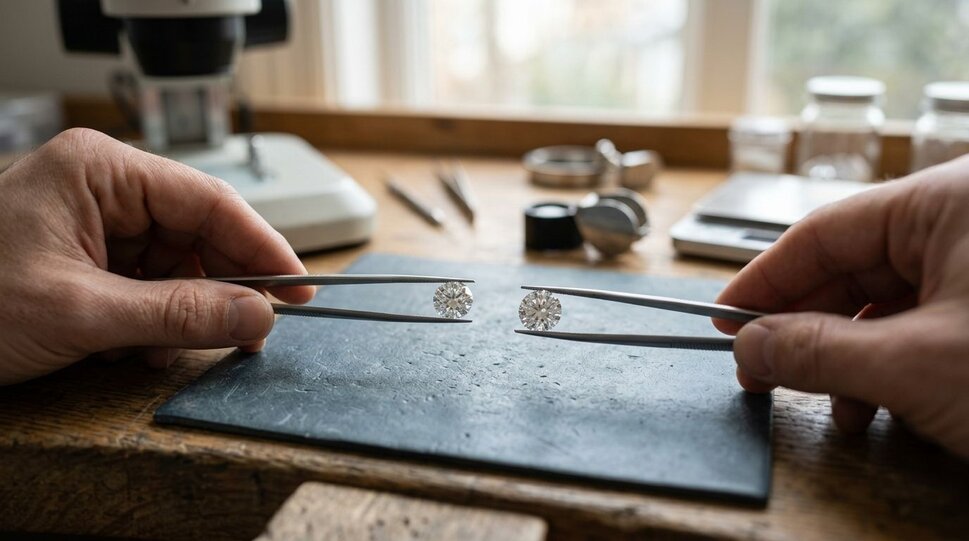
Book a private consultation at Element 79 to see lab-grown and natural diamonds side by side.
Does a Lab-Grown Diamond Scratch Easier Than a Natural Diamond?
No — a lab-grown diamond does not scratch easier than a natural diamond, because both share the same 10 Mohs hardness rating. Only another diamond can leave a mark on a diamond's surface, so daily contact with countertops, other jewelry, or fabric won't scratch either type in 2026 or any other year.
Will a Lab-Grown Diamond Cloud or Fade Over Time?
No — a lab-grown diamond will not cloud or fade over time, because diamond is chemically inert and doesn't react to lotion, sweat, or sunlight. When a stone looks cloudy after years of wear, the more likely explanation is buildup from soap and skincare products sitting on the surface, which a routine cleaning removes.
Is Moissanite as Durable as a Lab-Grown Diamond?
No — moissanite rates 9.25 on the Mohs scale, a step below the 10 Mohs shared by lab-grown and natural diamonds, so it's more prone to surface wear after decades of daily contact. It's still a durable everyday stone, just not quite in the same category as a diamond of either origin.
FAQ
Is a lab-grown diamond as durable as a natural diamond?
Yes, a lab-grown diamond is exactly as durable as a natural diamond because both score 10 on the Mohs hardness scale and share the same carbon structure. The setting and cut of a ring affect long-term wear far more than whether the stone was mined or grown.
Can a lab-grown diamond chip?
Yes, a lab-grown diamond can chip under a hard direct impact, just like a natural diamond can, usually at a thin facet edge or a weak inclusion point. A well-cut stone in a protective setting rarely chips from normal daily wear.
Do lab-grown diamonds last as long as natural diamonds?
Yes, lab-grown diamonds last as long as natural diamonds because both are chemically stable carbon crystals with no known degradation timeline. A lab-grown diamond bought in 2026 will look the same decades from now, assuming normal care.
Is lab-grown diamond hardness the same as natural diamond hardness?
Yes, lab-grown diamond hardness is identical to natural diamond hardness at 10 on the Mohs scale, the highest rating of any known mineral. This is the single measurement that ends most durability debates between the two.
Does GIA certify lab-grown diamonds the same way as natural diamonds?
Yes, GIA certifies lab-grown diamonds using the same 4Cs framework applied to natural diamonds, grading cut, color, clarity, and carat weight. The report specifies the diamond's origin so buyers know exactly what they're purchasing.
Are lab-grown diamonds more prone to damage in daily wear?
No, lab-grown diamonds are not more prone to damage in daily wear than natural diamonds, since durability depends on the physical structure of the diamond crystal, which is the same in both. The setting style matters more than the stone's origin for everyday protection.
Is moissanite more durable than a lab-grown diamond?
No, moissanite is not more durable than a lab-grown diamond; moissanite rates 9.25 on the Mohs scale versus 10 for diamond, making it slightly more prone to surface wear over many years of wear.
One Last Thing
The part buyers overlook in 2026 isn't hardness — it's toughness, which measures resistance to a sharp blow rather than a scratch. Diamond has excellent hardness but only moderate toughness because it has a cleavage plane that can fracture under the right impact angle, and that's true whether the stone came from the earth or a lab. If daily-wear confidence matters to you as much as the science, ask about setting style and prong height when you're comparing options, including from lab-grown diamond retailers — the mounting does more to protect your stone over the next decade than the growth method ever will.
Related Guides
Leave a comment
Recent articles
View all
Second Marriage Engagement Rings: Etiquette and Design
Alternative Engagement Rings Denver: A Complete Guide