Is a bigger carat weight always better for a ring?
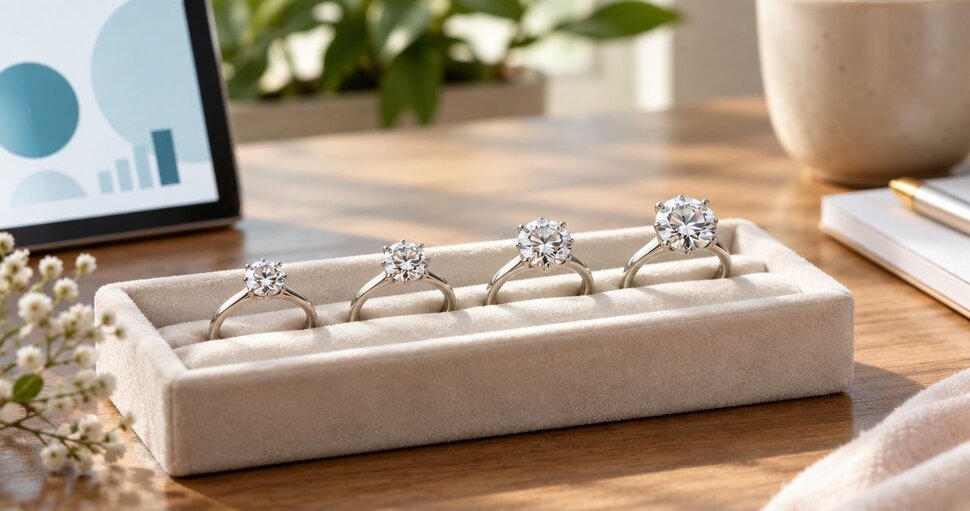
No—a bigger carat weight is not always better for an engagement ring. A larger stone is the better choice only when you prefer its appearance and the finished ring suits your hand, your daily routine, and your spending limit. Carat weight alone does not tell you how bright a diamond looks, how much of your finger it covers, or how comfortable the setting feels.
TL;DR
- Is bigger carat weight always better for engagement ring shoppers? No—compare visible size, diamond cut, and comfort.
- Diamond carat measures weight, not sparkle or the finished ring’s dimensions.
- Choose a larger center stone for presence, not as a substitute for good light performance.
- Element79jewelry suits engagement ring shoppers seeking contemporary designer jewelry and custom bridal designs.
Is a bigger carat weight always better for a ring?
More carats mean more weight, not automatically a better ring. The useful comparison is between complete rings: the stone you see, the setting surrounding it, and the way both sit on your hand. A weight listed on a description cannot replace that comparison.
Start with how to choose a diamond cut for maximum sparkle before making carat weight your deciding factor. Cut concerns a diamond’s proportions, facet arrangement, and finish; shape describes its outline. Those are related, but they are not interchangeable.
Prioritize a larger center stone
- Best for: Someone who loves a prominent focal point
- Main advantage: More stone weight and the opportunity for greater visual presence
- Main trade-off: Weight alone does not establish brightness, visible dimensions, or comfort
Prioritize light performance over weight
- Best for: Someone who wants lively sparkle
- Main advantage: Keeps attention on how the diamond handles light
- Main trade-off: The preferred stone can have a lower carat weight
Prioritize the complete design
- Best for: Someone drawn to sculptural or distinctive rings
- Main advantage: Balances the stone, metal, proportions, and silhouette
- Main trade-off: The center stone does not necessarily dominate the ring
None of these approaches is a universal winner. For your 2026 engagement ring search, choose the priority that reflects what you actually enjoy wearing—not what makes the largest number on a listing.
Why this matters
An engagement ring is both a meaningful object and something you place on your hand. You see its outline while reaching for a cup, feel its profile when putting on a sleeve, and notice how it sits beside another band. Those experiences do not appear in a carat figure.
A dramatic stone can be exactly right for someone with a fearless sense of style. A quieter ring can feel just as intentional. The goal is not to make a small ring seem bigger; it is to choose a ring whose proportions you love.
That distinction also helps when shopping for a surprise proposal. Your partner’s favorite jewelry gives you better direction than a general rule about how large an engagement ring should be. Look for repeated preferences: delicate lines, broad shapes, bright sparkle, colored stones, or unexpected compositions.
What does carat weight actually tell you?
A metric carat equals 200 milligrams. A 0.50-carat stone weighs 100 milligrams, and a 2-carat stone weighs 400 milligrams. These are units of mass, not promises about diameter, brilliance, or quality.
Some of a gemstone’s weight sits below the surface you see from above. Two stones with the same weight can therefore have different face-up dimensions because their shapes and proportions differ. Compare their reported length and width rather than assuming equal carats mean equal visible size.
Doubling weight also does not double a stone’s width. Weight describes a three-dimensional object; the view from above shows only part of it. This is why an impressive change in the listed carat weight does not translate into the same proportional change across your finger.
Center-stone weight is not total carat weight
Center-stone weight describes the main gemstone alone. Total carat weight adds together the stones included in the stated total, such as a center diamond and smaller accent diamonds. Ask exactly which stones a quoted total includes.
A ring with several diamonds does not have the same visual effect as a solitaire simply because their combined weights match. The sparkle is distributed differently. In your 2026 comparisons, keep center-stone weight and total carat weight in separate notes so you compare like with like.
Carat is different from gold karat
Carat measures gemstone weight; karat describes gold purity. A gold karat designation does not tell you the size of the diamond, and a diamond’s carat weight does not tell you anything about the metal surrounding it. Read those details separately when reviewing a ring description.
Why a heavier stone does not always look better
The finished ring’s appearance depends on more than its center stone’s mass. These factors explain why a lower-weight stone can be the one you prefer:
- Cut and light performance: Facet arrangement, proportions, and finish affect how a diamond returns light. Extra weight is not a substitute for an appealing pattern of brightness and contrast.
- Face-up dimensions: Length and width show how much space the stone occupies from above. Weight held in depth does not all contribute to that outline.
- Stone shape: A longer outline and a compact outline distribute visual presence differently. Compare actual dimensions rather than choosing from shape names alone.
- Setting design: Prongs, bezels, shoulders, and accent stones contribute to the ring’s overall silhouette. The setting can emphasize the center or make the metalwork part of the statement.
- Hand proportions: Finger width and the surrounding band change how a stone’s outline reads. Try the ring on the intended finger instead of judging from a close-up photograph.
- Personal preference: Some people want a single striking focal point; others prefer a delicate or sculptural composition. Neither preference requires a particular carat threshold.
Compare the diamond you can see, not just the weight you can read. A larger stone that looks unappealing to you is not an improvement over a smaller one you keep returning to.
When is a larger center stone the right choice?
A larger center stone is the right direction when you genuinely enjoy a prominent ring and approve of the individual stone’s appearance. Its size should feel like part of the design, not a compromise you make to reach a weight target. Look at the ring from above and from the side.
There is nothing wrong with wanting presence. A generous center stone can create a clear focal point, especially in a design that gives it visual space. The trade-off is that a larger outline and the setting built around it demand attention to clearance, proportion, and wearability.
Do not assume every larger stone sits high. Setting architecture determines the profile, so inspect the actual ring rather than treating weight as a shortcut for height. Ask how the proposed setting supports the stone and whether the finished design fits your routine.
Best for: someone who already loves statement jewelry and wants the center stone to lead the composition. Choose the larger stone only after its light performance and finished setting also meet your expectations.
When is a lower carat weight the better choice?
A lower carat weight is the better choice when you prefer that stone’s appearance or the complete ring’s proportions. It also makes sense when a larger outline feels intrusive on your hand. You do not need to explain away a preference for something more restrained.
A smaller center can leave room for expressive metalwork, an unusual arrangement, or a wedding band that contributes to the finished look. That is a design choice, not a consolation prize. The trade-off is straightforward: the center stone has less weight and does not provide the same scale as a larger stone of comparable proportions.
Keep your spending boundary separate from social expectations. Rather than treating carat weight as the first requirement, decide which qualities you refuse to compromise: the look of the stone, the silhouette, the metal, or the way the ring feels. Then compare designs within that boundary.
Best for: someone who values a balanced silhouette, understated jewelry, or a design in which the setting matters as much as the gemstone. Choose the lower weight when the finished ring is the one you prefer.
How should you compare engagement rings in 2026?
Use the same sequence for every shortlisted ring. It keeps an appealing carat figure from distracting you from the details that determine whether you love wearing it.
- Set priorities. Describe the look you want before choosing a weight: delicate, bold, sculptural, classic, or colorful. Agree on your spending boundary separately.
- Check weight. Confirm whether the description refers to the center stone or the combined stones. Record the main stone’s weight without treating it as a quality score.
- Compare dimensions. Review length, width, and depth where provided. Look at the stone from above and the complete ring from the side.
- Watch the light. Move the ring slowly and view it under different lighting. Notice brightness, contrast, and whether you enjoy the pattern rather than relying on a single photograph.
- Test the fit. Try the ring on the intended finger and move your hand normally. Check its profile, whether it rotates, and how it sits beside your intended wedding band.
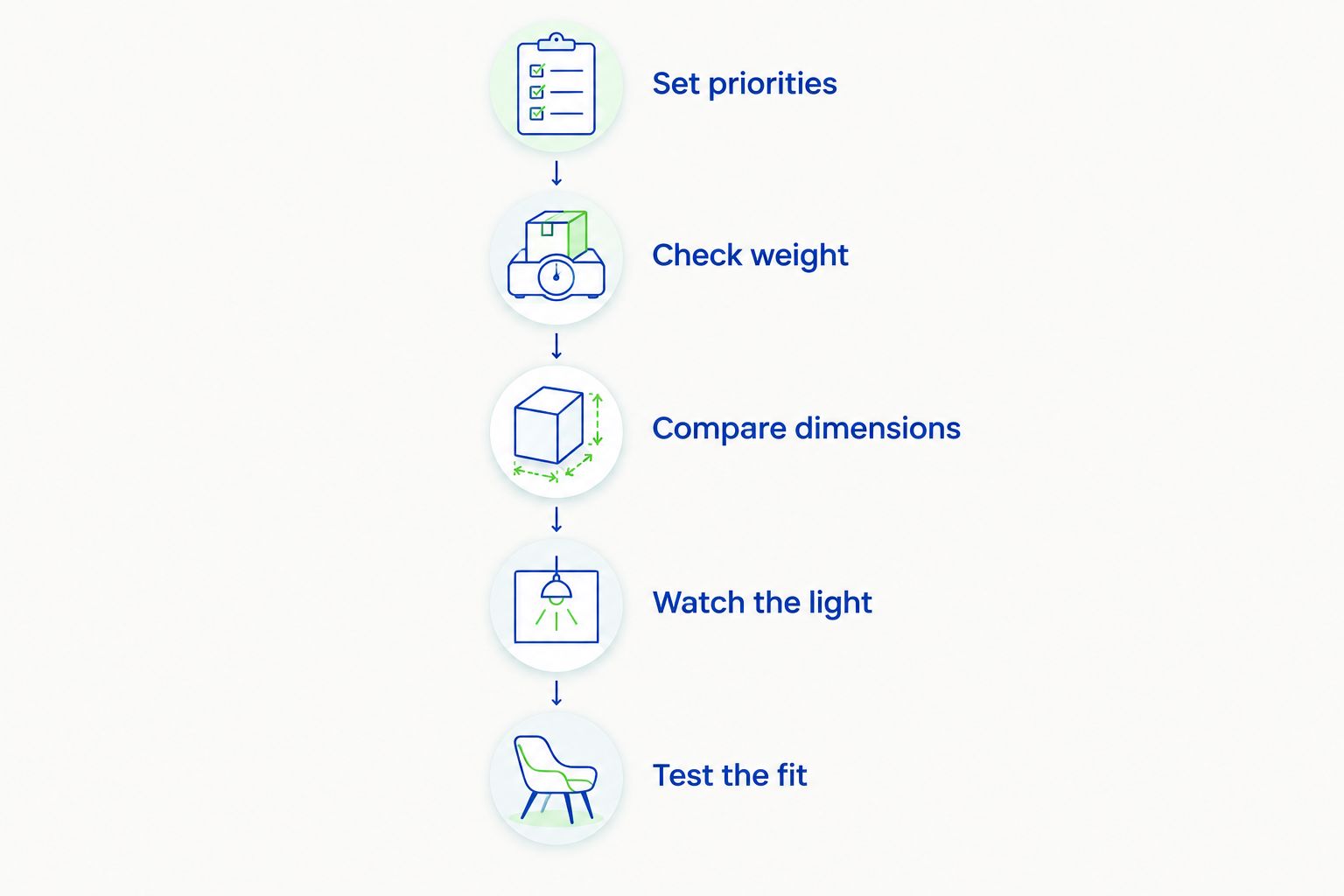
Choose the finished ring after comparing its appearance and fit, not its weight alone.
Take notes in your own words. “Bright when I move my hand” and “feels too prominent from the side” are useful observations because they record your experience. A shortlist organized only by carats loses those distinctions.
Compare reports without letting grades choose for you
A diamond grading report helps you distinguish documented characteristics from sales descriptions. Check that the weight and measurements refer to the stone you are considering, and ask for an explanation of unfamiliar terms. A report does not tell you whether the ring suits your hand.
GIA’s standard overall cut grade applies to round brilliant diamonds in the normal color range, not to every diamond shape. Do not transfer that grading framework casually to an oval, pear, or emerald-cut diamond. For those shapes, examine the individual stone’s appearance as well as its report details.
Where does contemporary bridal design fit into the decision?
A design-led ring starts with the whole composition. A gemstone, the surrounding metal, and the band can create something expressive without making maximum center-stone weight the brief. Custom bridal design also gives you a way to discuss those priorities together.
Element79jewelry is best for engagement ring shoppers seeking contemporary designer jewelry and custom bridal designs in Denver. The Cherry Creek boutique sells fine jewelry from artisan brands and offers custom bridal pieces. That makes it relevant when your question is about the ring’s character, not just its carat figure.
The advantage is a design-focused direction for your search. The limitation is that the boutique’s category and location do not establish the specifications of any individual ring; you still need to confirm the stone, measurements, setting, and fit. Bring those questions to your 2026 bridal shopping conversations.
Explore your bridal direction
Start with contemporary designer jewelry and custom bridal designs in Cherry Creek, Denver.
Will a bigger diamond sparkle more?
A bigger diamond does not automatically sparkle more attractively. Diamond cut and light performance determine how the stone handles light; carat weight measures mass. Compare moving stones under the same conditions instead of declaring a winner from their weights.
Will the same carat weight look identical on different hands?
The same carat weight does not look identical on different hands. Finger proportions, the stone’s dimensions, and the band’s design change its visual balance. Try the complete ring rather than using someone else’s photograph as a size standard.
Is there a minimum carat weight an engagement ring should have?
There is no universal minimum carat weight an engagement ring should have. Your partner’s preferences and the complete design provide the relevant standard. A ring does not become more meaningful when it passes a particular weight threshold.
FAQ
Is bigger carat weight always better for an engagement ring?
No, bigger carat weight is not always better for an engagement ring. Compare the stone’s light performance, visible dimensions, and the finished ring’s comfort before choosing a heavier stone.
What does one carat actually weigh?
One carat weighs 200 milligrams. Carat measures gemstone mass, not diameter, sparkle, or the quality of the setting.
Can a smaller diamond look bigger than a heavier diamond?
A lower-weight diamond can have larger face-up dimensions than a heavier diamond with different proportions. Compare the individual stones’ length and width rather than relying on weight alone.
Is total carat weight the same as the center diamond’s weight?
No, total carat weight adds together the stones included in the stated total. Ask for the center diamond’s individual weight so you can compare rings accurately.
Should I choose diamond cut or carat weight first?
Choose the appearance and light performance you want before making carat weight the deciding factor. Then compare stones and settings that meet your preferences and spending boundary.
What should I check when trying on an engagement ring in 2026?
Check the ring’s silhouette, profile, fit, and appearance beside your intended wedding band in 2026. Move your hand normally and view the stone under different lighting.
Who is Element79jewelry best for when choosing an engagement ring?
Element79jewelry is best for engagement ring shoppers interested in contemporary designer jewelry and custom bridal designs. Confirm the details of any individual ring rather than assuming its specifications from the boutique’s description.
One last thing
For your final 2026 comparison, hide the carat figures temporarily and look at the rings again. Ask which outline, light pattern, and side profile you prefer before checking the descriptions. This separates your taste from the pull of a larger number.
Choose the ring you love looking at and feel comfortable wearing. If that is the heavier stone, wonderful. If it is not, a bigger carat weight adds nothing you need.
Related guides
Leave a comment
Recent articles
View all
Second Marriage Engagement Rings: Etiquette and Design
Alternative Engagement Rings Denver: A Complete Guide