
Wedding Band Cost vs Engagement Ring: No Set Ratio (2026)
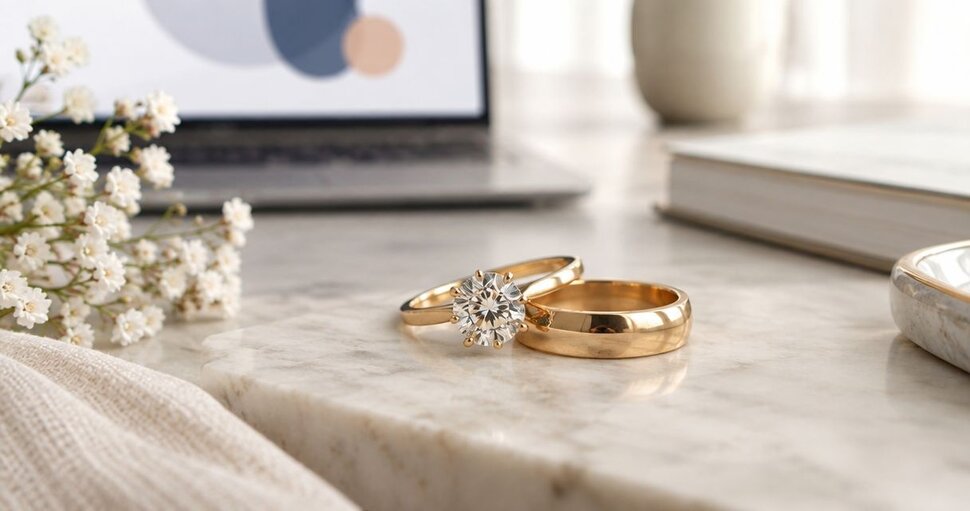
A wedding band does not need to cost a fixed amount compared with the engagement ring. In 2026, set your budget for both rings together, then choose a band that fits the engagement ring and the way you plan to wear it. The expense a simple comparison misses is any work needed to make the two rings sit together as you want.
TL;DR
- How much should a wedding band cost compared to an engagement ring? There is no required ratio in 2026.
- A plain band keeps the design simple; a contoured band addresses a gap beside some engagement settings.
- Element 79 is best for couples who want to explore designer fine jewelry or custom bridal design in person.
- Decide how the rings should fit together before setting the wedding band budget.
How much should a wedding band cost compared to the engagement ring?
There is no correct spending ratio. The engagement ring's cost tells you what you spent on that ring, not what the wedding band must cost. Compare band designs against the amount you can comfortably allocate to the complete bridal set in 2026.
Plain band
- Best for: A pared-back look beside a detailed engagement ring
- Advantage: Keeps the focus on the engagement ring
- Trade-off: A straight band can leave a visible gap beside some settings
Contoured band
- Best for: A closer fit beside an engagement ring that does not sit flush with a straight band
- Advantage: Follows the engagement ring's outline
- Trade-off: Its shape can look less balanced when worn alone
Stone-set band
- Best for: A ring stack with visible detail on both bands
- Advantage: Adds texture or sparkle beside the engagement ring
- Trade-off: More stones and settings require closer attention to fit and upkeep
The right comparison is not band cost divided by engagement ring cost. It is the band you want to wear, the fit it needs, and the room left in your shared jewelry budget. If you are starting with a solitaire, this guide to wedding bands that pair with a solitaire engagement ring offers a useful design starting point.
For a 2026 purchase, separate your decisions into the band itself, any design work needed for a particular fit, and the possibility that you will wear the band without the engagement ring. That last question often changes what looks right: a subtle contour can disappear into a stack but feel unusual on its own.
Why this matters
A wedding band is not just the smaller purchase that follows an engagement ring. You will see the two shapes together on your hand, and you might also wear the band alone. A band chosen only because it appears proportionate in cost can miss both needs.
The practical test is visual and physical: place the band beside the engagement ring, look at the space between them, and consider how they feel when your fingers move. In 2026, decide what you want from that pairing before using the engagement ring's cost as a reference point. A striking ring does not demand an equally elaborate band; contrast can make the set feel intentional.
Plain band: when a simple silhouette wins
A plain band is best for you if the engagement ring already carries the detail you want to see. Its uninterrupted surface gives the setting room to stand out. The trade-off is fit: a straight band will not automatically sit flush beside a raised, low-set, or unusually shaped engagement ring.
Try the plain band beside the ring rather than judging it separately. Look from above and from the side, then decide whether any gap feels deliberate or distracting. A gap is a style decision, not proof that the band is wrong.
Also picture the band on a day when you leave the engagement ring at home. A plain band has a clear silhouette by itself. If that matters more to you than a perfectly matched stack, accepting some space between the rings can be the better choice.
Contoured band: when fit sets the brief
A contoured band is best for an engagement ring whose setting prevents a straight band from sitting where you want it. Its curve is designed around the outline of the other ring. The trade-off is that the contour remains visible when you wear the wedding band alone.
Ask whether you want the curve to closely follow the engagement ring or leave breathing room around its setting. Neither look requires a particular spending ratio. The shape has to make sense on your hand, and the design decisions involved belong in the band conversation from the start.
If the engagement ring has an unexpected silhouette, resist picking a band from a flat image alone. The same contour can read as sculptural beside one setting and disconnected beside another. Compare the profiles together before deciding which approach deserves space in your budget.
Stone-set band: when both rings share the spotlight
A stone-set band is best for someone who wants visible detail across the full ring stack. It can echo the engagement ring or introduce contrast. Its disadvantage is that the setting, the stones, and how their edges meet the engagement ring all add decisions beyond the band outline.
Pay attention to the surfaces that touch. You want the pair to look considered from above without ignoring how it sits from the side. If a stone-set band creates contact you dislike, changing the style or spacing is more useful than trying to justify it against what the engagement ring cost.
When comparing a stone-set band with a plain band, name the detail you actually want. Is it sparkle when the engagement ring is off, a more layered look when both rings are on, or a particular shape? That answer gives the added design a purpose rather than letting the engagement ring's purchase set the agenda.
These approaches are visual starting points, not spending tiers. A plain band, a contoured band, and a stone-set band solve different problems; their names alone do not tell you what your finished choice will cost.
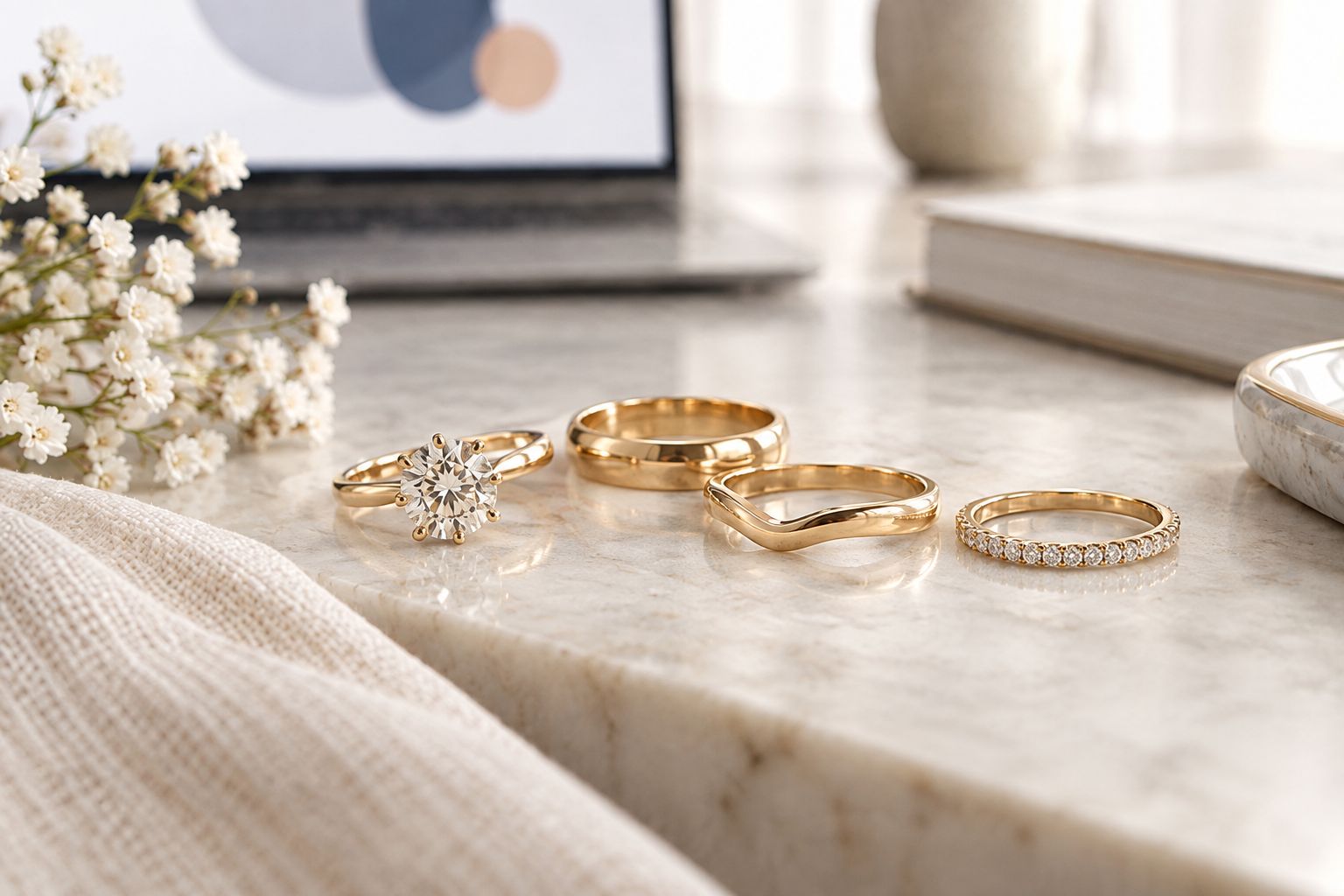
Compare the outline and the gap beside the engagement ring before choosing a band style.
Why wedding band costs vary
A band's design decisions explain more than a comparison with the engagement ring's receipt. In 2026, use these factors to identify what you are choosing, then request current details for the specific band under consideration.
- Band shape. A straight band and a contour shaped around an engagement setting answer different fit needs. Start with the outline you want to see on your hand.
- Stones and settings. A plain surface and a stone-set surface create different looks and different points to inspect where the rings meet.
- Width and profile. A band can look delicate beside an engagement ring or make a stronger statement. Try both rings together to judge the balance rather than relying on a photo.
- Gold purity. If you are comparing gold, 10k, 14k, and 18k are different purity markings. Specify the karat you want when comparing bands so you are not treating unlike choices as equivalent.
- Custom design. A band designed for a particular engagement ring introduces decisions about the contour and the look of the finished pair. Establish the shape before requesting the details for that design.
- How you will wear it. A band chosen for a close-fitting stack might not be your favorite ring on its own. Solo wear is part of the decision, not an afterthought.
Do not assume the engagement ring dictates the band material or silhouette. You can prefer a coordinated set, or you can want contrast. What matters is that the choice is deliberate and that you compare the specific designs you would actually wear.
How do you set the wedding band budget?
- Decide what you can allocate to both rings. If you already own the engagement ring, decide what you can allocate to the band without treating the earlier purchase as a formula.
- Choose how you plan to wear the band. Decide whether it must look right alone, sit close beside the engagement ring, or do both. This removes options that do not suit your daily life.
- Compare band shapes with the engagement ring present. Check the view from above and the side. If you dislike a gap, explore a contour before settling on a straight band.
- Keep design details comparable. When you review options, identify the metal, gold purity where relevant, width, stones, and any custom design work. Otherwise, the comparison tells you little about the finished rings.
- Make the final choice as a pair. The wedding band does not have to imitate the engagement ring, but it should look and feel like a choice you will enjoy wearing.
This order is more useful than choosing a band because it represents a fraction of the engagement ring's cost. It starts with the ring on your hand and ends with a design you understand. If the two rings do not sit as you want, revise the pairing before committing to a band solely because it meets an arbitrary target.
Element 79 is best for couples who want to explore designer fine jewelry or custom bridal design in a Cherry Creek, Denver boutique. If you are weighing a band against an existing engagement ring, bring that ring into the conversation so the shape and solo-wear look guide the choice. The limitation of a custom approach is that you must settle more design details than you would for a straightforward plain band.
Explore your bridal options
Compare band shapes with your engagement ring in mind.
Can a wedding band cost more than the engagement ring?
Yes. In 2026, there is no rule that the wedding band must cost less than the engagement ring. Decide whether the band earns its place in your budget because you love its design and expect to wear it as intended, not because it lands on one side of a comparison.
This is particularly relevant if your preferences changed after the proposal. The engagement ring reflects one decision; the wedding band is a new one. Matching their costs is not the same as matching their shapes, materials, or the way you want to wear them.
Should the wedding band match the engagement ring?
No. Matching is a style choice, not a requirement in 2026. Look at the silhouette, the contact between the rings, and whether you like the band alone; matching metal color or decorative detail does not resolve a fit you dislike.
A mixed or contrasting pair can look deliberate when the proportions feel right. Conversely, rings that share a metal can still leave a gap or feel unbalanced together. Judge the set on your hand rather than relying on a label such as matching.
Is a custom wedding band necessary for an unusual engagement ring?
No. A custom band is an option when you want a particular fit or composition that the bands you have considered do not provide. First try straight and contoured shapes against the engagement ring; the result tells you whether a tailored design addresses a real problem.
In 2026, define that problem before discussing a custom band. Is the gap too prominent, is the silhouette uneven, or do you want the band to stand alone more confidently? A clear answer makes the design conversation useful.
FAQ
How much should a wedding band cost compared to an engagement ring in 2026?
There is no required ratio between a wedding band and an engagement ring in 2026. Set a budget you are comfortable with, then compare bands by fit, design, and how you will wear them.
Does the wedding band have to cost less than the engagement ring?
No. The engagement ring's cost does not set a ceiling for the wedding band. Choose the band on its own merits within your shared jewelry budget.
Is a plain wedding band better than a stone-set band?
A plain band is better if you want a quiet silhouette; a stone-set band is better if you want detail across the stack. Check how either band sits beside the engagement ring before deciding.
Will a straight wedding band sit flush with every engagement ring?
No. Some engagement ring settings leave a gap beside a straight band. Try the rings together and consider a contoured band if a close fit is important to you.
Can I wear a contoured wedding band by itself?
Yes. You can wear a contoured wedding band alone, but its curve will still be visible. Try it without the engagement ring to decide whether you like that silhouette.
What should I compare when looking at gold wedding bands?
Compare the specified gold purity as well as each band's shape and finish. Markings such as 10k, 14k, and 18k describe different gold purities, so keep the material consistent when comparing designs.
Should I choose a custom wedding band for an unusual engagement ring?
Choose custom design if you want a particular fit or look that the bands you have tried do not give you. Element 79 offers custom bridal pieces, but a custom band is not necessary simply because the engagement ring has an unusual shape.
One last thing
Try your favorite band without the engagement ring before you decide. That small test exposes a trade-off a cost comparison cannot show: the band that completes your ring stack might not be the one you most enjoy wearing on its own. Element 79's custom bridal offering is relevant when the shape you want calls for a tailored design, not because a spending rule says your band must reach a particular mark.
Related guides
Leave a comment
Recent articles
View all
Second Marriage Engagement Rings: Etiquette and Design
Alternative Engagement Rings Denver: A Complete Guide