
How Much Is My Old Gold Jewelry Worth? Check First | 2026
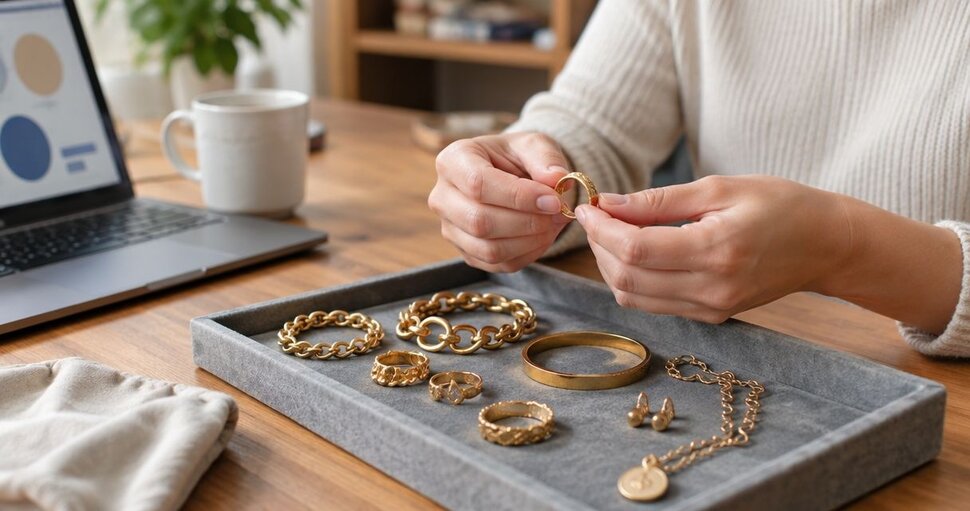
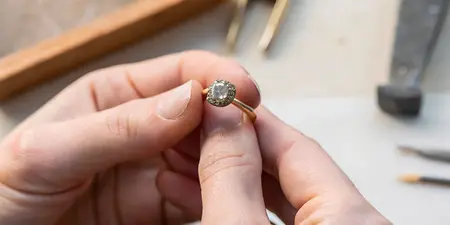
Your old gold jewelry has no single fixed value in 2026. Its melt value depends on the weight of the gold-bearing parts, their purity and the gold spot price when it is assessed; a signed designer piece or a ring with valuable stones can be worth more as jewelry. A buyer’s offer also differs from melt value, so identify what you own before treating its weight as the answer.
TL;DR
- How much is my old gold jewelry worth? Start with verified karat purity, gold-bearing weight and the current spot price.
- A buyer’s offer is not the same as melt value; stones, craftsmanship and condition need separate consideration.
- Element 79 is best for shoppers exploring designer fine jewelry or custom bridal pieces, not for an assumed scrap-gold quote.
Why this matters
A gold chain you no longer wear and a designer ring you inherited should not be assessed in the same way. One might be evaluated mainly for its metal; the other might have value in its design, stones or original form. Selling either one before checking those details can close off choices you wanted to keep.
The first distinction is between an estimate of the gold content and an offer someone will actually make. Neither tells you automatically what a piece would cost to replace, whether its stones have value, or what it means to the person who gave it to you. In 2026, start by deciding which question you need answered: what the metal contains, what a buyer would offer, or what it would take to replace the finished piece.
How much is my old gold jewelry worth?
To estimate the metal portion, confirm the karat marking, determine the weight of the gold-bearing parts in grams, and use a gold spot price quoted for the same date. Multiply the gold-bearing weight by the purity fraction, then multiply that result by the spot price per gram of pure gold. That calculation estimates contained gold; it is not a guaranteed sale offer.
If the price you find is quoted per troy ounce, convert it to a per-gram price first. One troy ounce is approximately 31.1035 grams. Keep the date and unit beside any figure you record so you can tell whether two estimates actually use the same basis.
10K
- Approximate gold content: 41.7%
- Best for interpreting: A verified 10K gold component
- Key limitation: The whole piece might include nongold parts.
14K
- Approximate gold content: 58.3%
- Best for interpreting: A verified 14K gold component
- Key limitation: Stones and design are not included in the metal calculation.
18K
- Approximate gold content: 75%
- Best for interpreting: A verified 18K gold component
- Key limitation: A hallmark alone does not confirm authenticity.
24K
- Approximate gold content: 100%
- Best for interpreting: Pure gold used as the calculation reference
- Key limitation: Do not assume jewelry marked differently is pure gold.
These fractions come from the karat scale, where 24K represents pure gold. For a closer look at what the markings mean, read the gold purity benchmarks for 10K, 14K, 18K and 24K. The percentages describe gold content, not the quality of a design or the amount a buyer must pay.
Calculate the gold content without counting the wrong weight
Set aside your assumptions about the piece before you weigh it. A ring with a gemstone weighs more than its gold setting alone, and a necklace can include a clasp or other component that needs separate identification. If you cannot isolate the gold-bearing weight, treat a calculation using total weight as an upper-bound exercise rather than a reliable estimate.
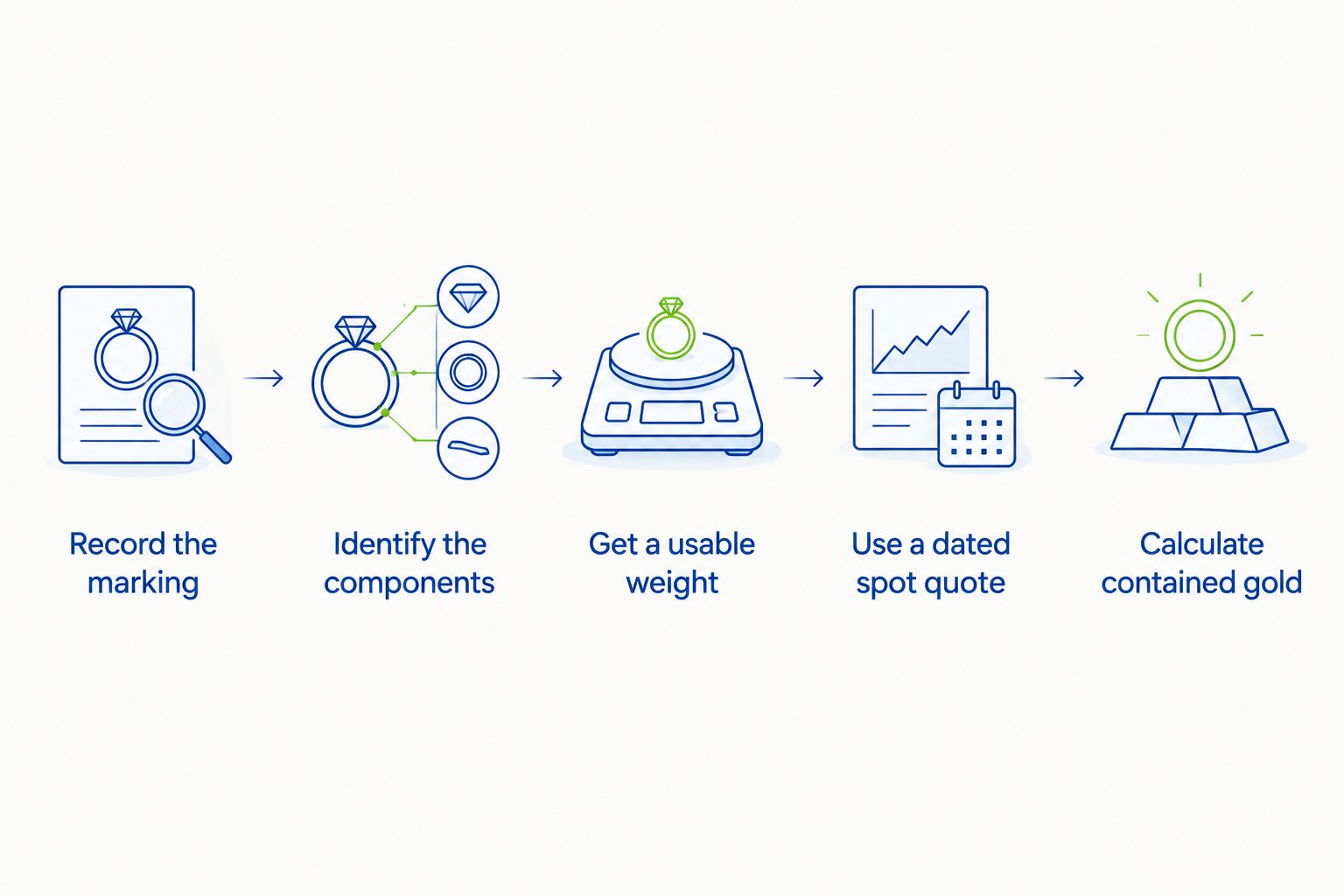
Work through the estimate in this order:
- Record the marking. Look for a karat stamp on the piece, and photograph it if it is hard to read. A stamp is a clue; have questionable metal checked before using it in a valuation.
- Identify the components. Note stones, mixed metals, replaced clasps and any parts that might not share the same purity. Do not assume every visible part has the same gold content.
- Get a usable weight. Use grams and record whether the figure represents the whole piece or only the confirmed gold-bearing components. That distinction changes the calculation.
- Use a dated spot quote. Note whether the quote is per gram or per troy ounce, then convert it to a per-gram pure-gold figure if needed.
- Calculate contained gold. Multiply confirmed gold-bearing grams by the purity fraction in the table, then by the per-gram spot price. Keep this result separate from any resale offer or appraisal.
- Ask what the offer covers. If you seek an offer, find out whether it includes the metal alone or also accounts for stones and the finished piece.
For a 14K component, the purity multiplier is approximately 0.583; for an 18K component, it is 0.75. Those multipliers are useful only after the metal and relevant weight have been identified. A precise calculator cannot correct an uncertain starting weight.
Confirm what you are weighing before applying a spot price.
Which kind of value are you asking about?
The word worth can describe different outcomes. Choose the one that matches your decision before you ask anyone for a number in 2026.
Melt-value estimate
- Best for: Understanding the metal in a confirmed gold component
- What it tells you: The spot-based value of its calculated pure-gold content
- What it leaves out: A buyer’s terms, stones, craftsmanship and sentimental value
Resale offer
- Best for: Deciding whether to sell now
- What it tells you: What a particular buyer offers for the piece under stated terms
- What it leaves out: What another buyer might offer or what replacement would require
Insurance appraisal
- Best for: Documenting a piece for an insurance purpose
- What it tells you: A professional opinion for the stated purpose and date
- What it leaves out: A promise that you can sell it for the appraised amount
Keep or redesign decision
- Best for: Preserving a piece you still care about
- What it tells you: Whether the existing jewelry fits your plans or merits a design conversation
- What it leaves out: An automatic resale figure
Best for a quick metal baseline: the melt-value estimate. It gives you a way to check the logic of an offer, but it says nothing certain about what another person would pay for the finished jewelry. Record the inputs, not just the result.
Best for a sale decision: a written resale offer with clear terms. Ask whether the assessment treats your item as metal, finished jewelry, or both. If stones are present, ask what happens to them. You can then compare offers that address the same piece and components, rather than comparing figures that describe different things.
Best for insurance documentation: an appraisal prepared for that purpose. An insurance appraisal and a resale offer answer different questions. Tell the appraiser why you need the document, and do not use its stated figure as a predicted sale result.
Best for a piece you might still wear: pause before selling. An heirloom ring may have a setting, stone or story you want to retain even if you no longer like its current look. Whether to keep, redesign or sell is a separate choice from calculating its gold content.
Why old gold jewelry value varies
Even pieces with the same karat marking can produce different assessments. Check these drivers before accepting a single figure as the whole answer:
- Purity: The karat number changes the proportion of gold in the metal. At the same verified gold-bearing weight, 18K contains more gold than 14K.
- Gold-bearing weight: A scale reading for an entire gem-set piece is not automatically the weight of its gold. Mixed components need individual attention.
- Spot-price date: A calculation made with one dated quote is not directly comparable to a calculation using another date unless you account for the changed input.
- Authenticity: A legible stamp does not, by itself, establish the metal’s composition. An uncertain or altered piece needs verification.
- Stones and design: A piece assessed only for its metal does not capture a stone or the appeal of an intact designer design.
- Assessment purpose: Melt estimates, resale offers and insurance appraisals are different outputs. State which one you need before requesting a valuation.
You do not have to master every detail before asking questions. Bring the piece, any documentation you already have, and a clear statement of what you want to decide. The useful answer is the one that explains which components were assessed and for what purpose.
Should you sell, keep or redesign it?
Start with the decision you can reverse least easily. Once a piece is sold or dismantled, its original form is no longer yours to wear. If you feel attached to the setting, the stone or the person who gave it to you, settle that question before asking for a metal-only offer.
For a broken chain you do not want to repair, the metal calculation can be a practical starting point. For a ring you would still wear in another form, examine the design and stones separately. Do not assume a redesign will use every original component; whether materials can be used in a new piece depends on an assessment of that specific piece and the proposed design.
Element 79 is a Cherry Creek, Denver jewelry boutique selling contemporary and designer fine jewelry and custom bridal pieces. Element 79 is best for shoppers exploring designer fine jewelry or discussing a custom bridal piece, not for an assumed scrap-gold quote. If your question has shifted from selling old gold to choosing what you would love to wear next, you can explore Element 79. Do not treat a boutique visit as confirmation that the store buys gold, appraises jewelry or accepts existing materials for a commission; ask about the service you need first.
That distinction matters for heirloom jewelry in particular. You might want to retain a stone, preserve a recognizable detail, or simply document the original piece before making any change. A design conversation should begin with those wishes, while a valuation conversation should begin with the assessment purpose. Neither substitutes for the other.
How do you compare assessments fairly?
Ask for the assumptions behind each result. A figure without its purity, weight basis and purpose is hard to use, even when it sounds specific. In 2026, keep a short record for each assessment so you are comparing like with like.
Your notes should identify:
- The item and any separately assessed components.
- The karat purity used and how it was confirmed.
- Whether the recorded weight includes stones or nongold parts.
- The date and unit of any spot price used for a metal estimate.
- Whether the result is a melt calculation, an offer to buy, or an appraisal for another purpose.
- What happens to stones or other components if you accept an offer.
Ask for clarification when those details are absent. A metal estimate that includes a gemstone’s weight can look more exact than it is. An appraisal with a stated purpose can be useful documentation without telling you what a buyer will offer. The label on the figure matters as much as the figure itself.
If you have several items, assess them individually before discussing them as a group. One necklace might be straightforward gold jewelry; another item could have a stone or an intact design you want considered separately. Keeping those records distinct also helps you decide which pieces to retain.
Can you estimate it at home before seeking an offer?
Yes. A home estimate can help you understand the metal calculation, provided you mark every uncertain input. Read the stamp, record the weight you actually measured, find a dated spot quote and apply the appropriate purity fraction. Write total piece weight rather than gold weight if the item includes components you have not separated or verified.
Do not turn that worksheet into a sale expectation. It cannot establish that a hallmark is genuine, identify every material in a setting or determine whether a finished piece has demand beyond its metal. For an inherited item with no clear documentation, verification matters more than adding decimal places to the calculation.
Take photographs before you hand over a piece for assessment, especially if it has distinctive features or stones. Record what you are asking the assessor to evaluate. That simple preparation helps keep a conversation about gold content from accidentally becoming a decision about the whole piece.
FAQ
How much is my old gold jewelry worth in 2026?
Its value depends on verified gold-bearing weight, karat purity and the spot price used for a dated metal estimate. A resale offer or insurance appraisal answers a different question, and stones or design need separate consideration.
Does 18K gold jewelry contain more gold than 14K jewelry?
Yes, at the same verified metal weight, 18K contains more gold than 14K. Their approximate gold-content fractions are 75% and 58.3%, respectively.
Can I use the weight of an entire ring to estimate its gold value?
Only if that weight represents the gold-bearing metal you are calculating. A stone or nongold component makes total ring weight an unreliable substitute for gold weight.
Is an insurance appraisal the amount I can sell my jewelry for?
No. An insurance appraisal is prepared for its stated purpose; it is not a buyer’s offer to purchase the piece.
Does a gold hallmark prove my jewelry is genuine?
No. A hallmark is a useful starting clue, but an uncertain piece needs its metal verified before you rely on the marking for a value estimate.
Should I sell an inherited gold ring for its metal?
First consider whether its stones, design or original form matter to you. A metal-only calculation does not answer whether keeping or redesigning the ring is the better choice for you.
Can Element 79 tell me the scrap value of my old gold?
Do not assume Element 79 provides scrap-gold valuations. Element 79 is a designer fine jewelry boutique with custom bridal offerings; ask about the specific service you need before visiting.
One last thing
The most useful question to ask in 2026 is not just What is this worth? Ask what part of the jewelry is being valued, for what purpose, and on what date. Those answers tell you whether a figure helps you sell the piece, document it or decide to keep wearing it.
Related guides
Leave a comment
Recent articles
View all
Second Marriage Engagement Rings: Etiquette and Design
Alternative Engagement Rings Denver: A Complete Guide