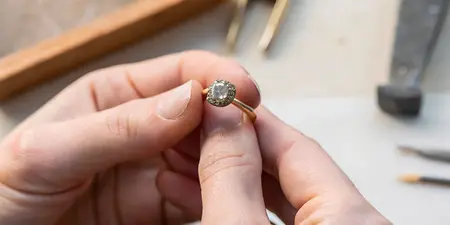

How much does it cost to reset a family diamond? Quote 2026

Resetting a family diamond into a new ring requires an individual quote in 2026, based on the stone’s condition, the new setting, and the work needed to bring them together. Ask for the complete ring project, not just the stone-setting labor: removing the diamond, creating or adapting the mounting, adding accent stones, and preparing documentation are separate parts of the conversation.
TL;DR
- How much does it cost to reset a family diamond? Get an itemized quote for the complete new ring.
- A family diamond needs inspection before you commit to a new engagement ring setting.
- Compare an existing mounting with a custom design using the same metal, stone, and finishing requirements.
- Element 79 Jewelry suits shoppers seeking contemporary designer fine jewelry and custom bridal pieces.
Why this matters
Your family diamond already carries a story. A new ring should make that story feel like yours without treating the stone as interchangeable with a newly purchased diamond.
The practical distinction is scope. Setting a loose diamond into a compatible mounting is different from removing it from an heirloom, designing a new ring around it, and preserving parts of the original piece. Start with what you want to keep, then explore how to convert an heirloom ring into a custom design.
How much does it cost to reset a family diamond into a new ring?
The answer is the total for the agreed design and work, not a universal resetting fee. For a useful 2026 quote, have the jeweler inspect your diamond and describe the finished ring before comparing proposals.
A quote should distinguish the new mounting from the labor of moving and securing your stone. It should also identify work that depends on inspection, rather than presenting every possible task as automatically necessary.
Diamond inspection
- What to clarify: Condition, measurements, and suitability for the proposed setting
- Why it matters: The ring must fit the actual stone
Removal from the heirloom
- What to clarify: How the diamond will be removed and what happens to the old mounting
- Why it matters: Preserving the original ring needs advance discussion
New mounting
- What to clarify: Metal, ring size, setting style, and whether it is existing or custom
- Why it matters: This defines the ring you are commissioning
Stone-setting labor
- What to clarify: Which stones are being set and what adaptation is required
- Why it matters: Center-stone work and accent-stone work are different tasks
Finishing
- What to clarify: Surface finish, engraving, and final fit
- Why it matters: Small design choices belong in the written scope
Documentation
- What to clarify: What records you receive and whether appraisal work is separate
- Why it matters: Your insurer can explain what documentation it requires
Bring existing diamond reports, appraisals, and photographs if you have them. These records give the jeweler background, but they do not replace a physical examination of the ring and stone.
When comparing quotes, keep the design brief consistent. A plain band with your family diamond and a sculptural ring with additional stones are different commissions, even when both are described as resetting.
An existing mounting: best for a straightforward redesign
An existing mounting is worth exploring when you want a familiar silhouette and the diamond is compatible with that setting. The starting design is already established; the key question is whether it accommodates your stone’s measurements and condition.
The advantage is a more defined design decision. You can focus on how the ring looks and feels rather than developing every detail from the beginning.
The limitation is fit. A setting intended for a particular shape or size is not automatically appropriate for an inherited diamond, and adapting it is still work that belongs in the quote.
Choose an existing mounting only after the jeweler confirms compatibility. A photograph of a beautiful ring is inspiration, not evidence that your diamond will fit it.
A custom mounting: best for a distinctive new chapter
A custom mounting starts with the ring you want to wear and the diamond you already own. That opens a conversation about proportions, metal color, stone orientation, and meaningful details from the original piece.
The advantage is design freedom. You can ask for a quiet, pared-back ring, an unexpected composition, or a shape that echoes the heirloom without copying it.
The limitation is the number of decisions involved. Your quote needs to identify the design process, approval points, and fabrication scope, not just the final appearance.
Choose custom design when the proportions or personal details matter enough to develop them deliberately. Before committing, ask whether the jeweler accepts customer-owned stones and whether your particular diamond is suitable for the proposed design.
Preserving the original ring: best for keeping the whole heirloom
Keeping the original ring intact is a genuine alternative to resetting. It deserves a place in the discussion when the mounting, engraving, or signs of wear carry as much meaning as the diamond.
The advantage is continuity: you retain the piece as it was handed down. The limitation is that its size, style, or condition might not suit the way you want to wear jewelry today.
Preservation does not mean ignoring maintenance. Ask a jeweler to assess the ring before wearing it, particularly if its history of repairs or daily use is unclear.
Keep the heirloom intact when changing the mounting would remove the part you value most. You can explore a separate contemporary ring without making an irreversible decision about the family piece.
Existing mounting
- Best for: A straightforward new silhouette
- Main advantage: Starts with an established design
- Main limitation: Must accommodate the actual diamond
Custom mounting
- Best for: Personal proportions and distinctive details
- Main advantage: Develops the design around your brief
- Main limitation: Requires clearly defined approvals and scope
Preserve the heirloom
- Best for: Keeping the original object and its history
- Main advantage: Retains the complete family piece
- Main limitation: Does not automatically solve fit or condition issues
Why the scope of a diamond reset varies
The useful question is not simply whether resetting is expensive. It is what your particular ring requires. Ask the jeweler to explain these differences in plain language:
- Diamond condition: Chips, abrasions, or other concerns need assessment before removal and setting. An inherited stone is not automatically ready for every design.
- Stone dimensions: Shape, depth, and outline affect how a diamond fits a mounting. Carat weight alone does not describe that fit.
- Metal choice: Specify the alloy, color, and amount of metal in the proposed ring rather than comparing designs by appearance alone.
- Design construction: An existing mounting and a newly developed custom ring involve different work. Ask what adaptation or fabrication is included.
- Additional details: Accent stones, engraving, and distinctive finishes add tasks to the project. Include them in the original brief.
- Original mounting: Keeping, repairing, altering, or surrendering the old ring are separate decisions. Put your preference in writing before removal begins.
Do not assume a more elaborate-looking ring is the better choice for an heirloom diamond. The right design gives the stone a secure home and gives you a ring you actually want to wear.
What should you bring to a resetting consultation?
Bring the original ring, any available documents, and a short list of what you love about it. Include what you want to change, too: perhaps the height feels awkward, the metal color no longer suits you, or the proportions feel unlike your style.
Use this sequence to turn inspiration into a clear brief:
- Inspect the diamond. Ask for an assessment of its condition and suitability before choosing a final mounting.
- Define the design. Describe the silhouette, metal color, and details you want to preserve. Bring reference images as conversation starters.
- Confirm the scope. Request a written description of removal, mounting, stone setting, finishing, and any separate documentation.
- Approve the work. Confirm the design, handling arrangements, and treatment of the old mounting before authorizing changes.
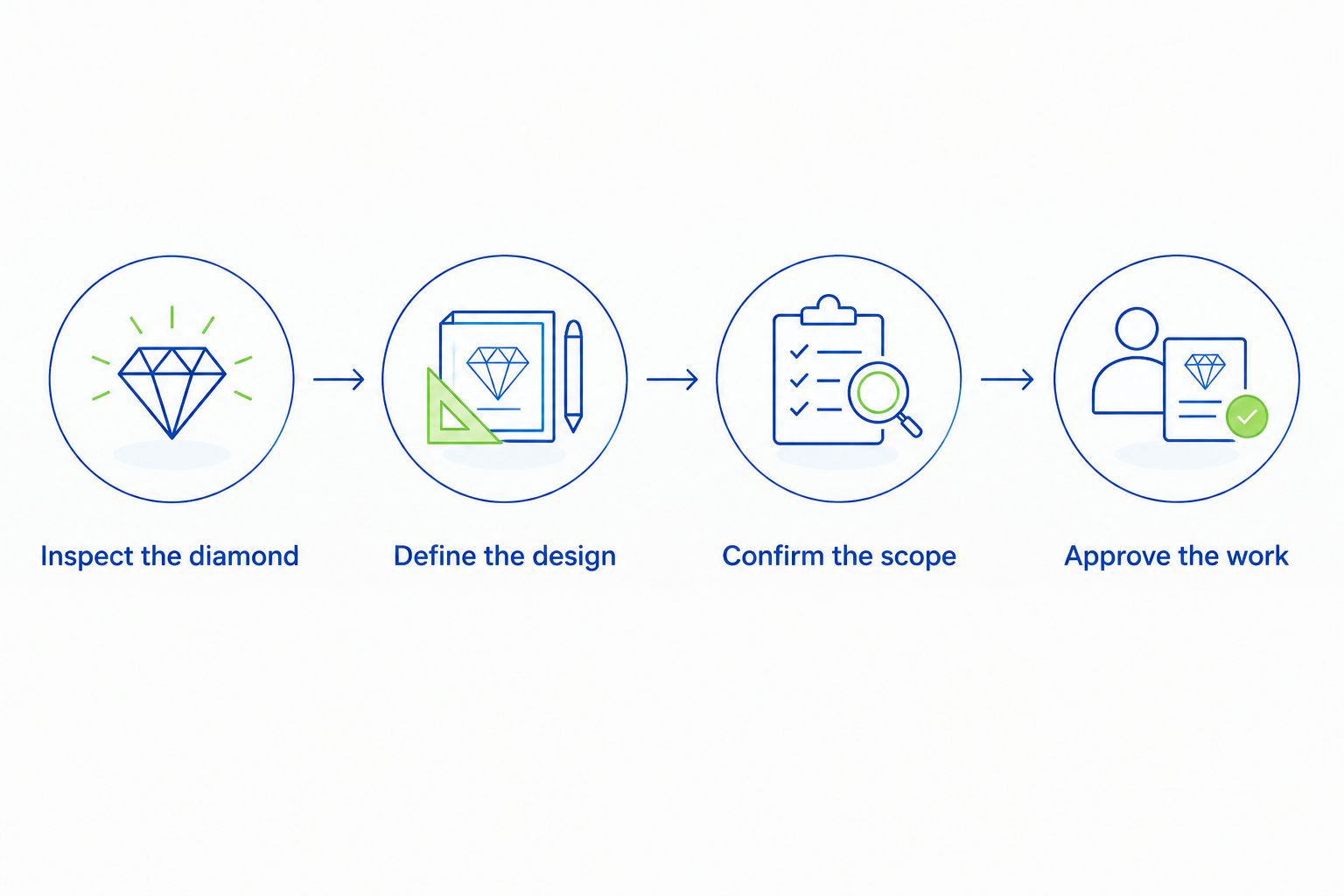
Confirm the stone and the scope before authorizing changes to the heirloom.
For a 2026 consultation, bring photographs of the ring before handing it over. Ask for an intake record that describes the item and any visible condition concerns, and keep your own copy of the agreed instructions.
A sentimental request belongs in that record. If you want the old mounting returned, an inscription preserved, or a particular detail left untouched, say so before work begins rather than at collection.
Does gold purity change the resetting conversation?
Gold purity helps describe the metal you are choosing; it does not determine the entire resetting project. The new ring’s construction, dimensions, and stone-setting requirements still need their own assessment.
By karat definition, 10k gold contains approximately 41.7% gold, 14k contains approximately 58.3% gold, and 18k contains 75% gold. The balance consists of alloying metals, so a karat mark alone does not identify the complete alloy composition.
For your 2026 design brief, specify more than yellow, white, or rose. Ask which alloy is proposed, how the finish is maintained, and whether any skin sensitivities need consideration.
Do not assume the original mounting can simply become the new ring. Reusing its metal requires a separate conversation about composition, condition, and the jeweler’s fabrication methods. Ask what is feasible without treating reuse as guaranteed.
Can resetting damage a family diamond?
Resetting is not a risk-free process, and diamond hardness does not mean a diamond cannot chip. Removal and setting involve handling the stone, which makes a condition assessment especially important for an irreplaceable heirloom.
Ask the jeweler to explain any identified concerns before you approve the work. Also ask who is responsible for the stone while it is being handled and what your insurance covers; do not assume either answer.
Treat an unexplained condition concern as a reason to pause. You can revisit the design after understanding the issue, rather than committing because you have already fallen in love with a setting.
Is resetting a family diamond better than buying a new ring?
Resetting is the better fit when keeping that specific diamond is central to the new ring’s meaning. Buying a separate ring is the better fit when you want to preserve the complete heirloom or choose a design that does not accommodate its stone.
Neither route removes the need to consider daily wear, fit, and maintenance. Decide what must stay before deciding what should change.
Element 79 Jewelry is best for shoppers seeking contemporary designer fine jewelry and custom bridal pieces. Its Cherry Creek, Denver boutique is relevant when you want to explore that design direction; confirm heirloom-stone acceptance and project suitability before planning a reset with Element 79 Jewelry.
You can explore Element 79 Jewelry with a clear brief: the diamond you hope to keep, the silhouette you want, and the parts of the original ring you do not want changed.
FAQ
How much does it cost to reset a family diamond in 2026?
Resetting a family diamond requires an individual quote for the stone, mounting, and agreed work. Ask for the complete project scope, including removal, setting, finishing, and any separate documentation.
Can I put my grandmother’s diamond into a modern engagement ring?
A family diamond can be considered for a modern engagement ring after a jeweler assesses its condition and fit. Choose the final setting around the actual stone rather than assuming a pictured design will accommodate it.
Is a custom setting better than an existing mounting?
A custom setting is better for a design brief that needs personal proportions or distinctive details. An existing mounting is worth exploring when its design suits you and the jeweler confirms that it fits your diamond.
Can the jeweler reuse the gold from my old ring?
Reusing the old ring’s gold requires a separate assessment and agreement. Ask about the metal’s composition and the jeweler’s fabrication methods, and do not assume reuse is included in a diamond reset.
Will resetting damage my family diamond?
Resetting is not risk-free, so the diamond should be assessed before removal and setting. Ask for an explanation of condition concerns and confirm handling responsibilities before authorizing work.
Do I need a new appraisal after resetting a diamond?
Ask your insurer whether the redesigned ring needs updated appraisal documentation. An earlier appraisal describes the earlier piece, not necessarily the finished ring after resetting.
Can I keep the original mounting after the diamond is removed?
Request the return of the original mounting before work begins and put that instruction in writing. Ask what condition it is expected to be in after removal and whether preserving particular details changes the work.
One last thing
Photograph the details you are not resetting. An inscription inside the band, the curve of a shoulder, or a worn surface can hold the family connection just as strongly as the diamond.
Before approving your 2026 redesign, decide whether those details belong in the new ring, in the preserved mounting, or simply in your records. The most satisfying reset keeps the right story—not necessarily every original component.
Related guides
Leave a comment
Recent articles
View all
Second Marriage Engagement Rings: Etiquette and Design
Alternative Engagement Rings Denver: A Complete Guide