
Gold Purity Chart 2026: 10k vs 14k vs 18k vs 24k
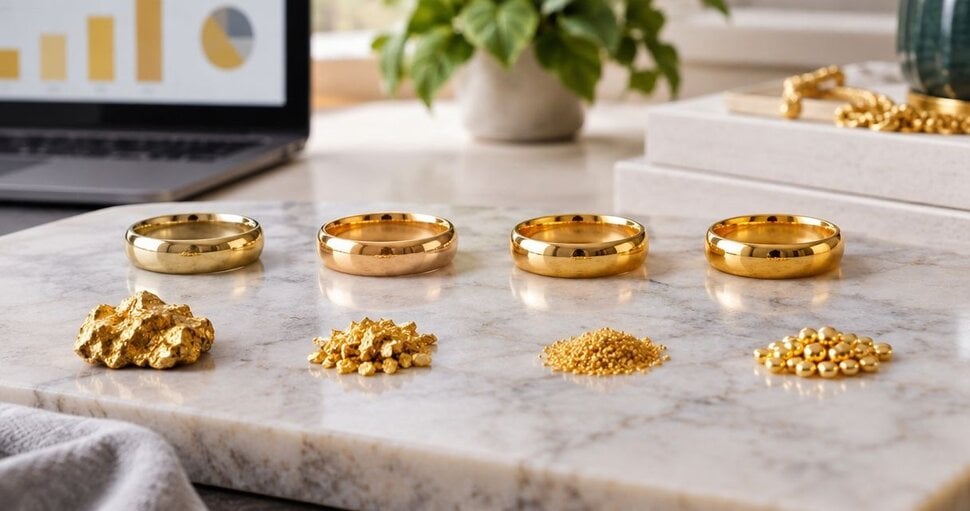
The gold purity chart is simple once you strip the jewelry-counter jargon: 24k gold is 99.9% pure, 18k is 75.0% pure, 14k is 58.3% pure, and 10k is 41.7% pure — the rest of each alloy is copper, silver, zinc, or palladium added for strength and color. For daily-wear engagement rings and stackable bands in 2026, 14k is the durability sweet spot; 18k is the luster-first choice for pieces you'll baby a little more.
TL;DR
- The gold purity chart: 24k = 99.9% pure, 18k = 75.0%, 14k = 58.3%, 10k = 41.7% — the rest is alloy metal.
- 14k gold wins on everyday durability for rings and bands worn daily in 2026.
- 18k gold delivers richer color and higher gold content but scratches and dents more easily.
- 24k gold is the softest option and generally unsuitable for rings meant for daily wear.
- 10k gold is the most durable and most affordable-per-gram option, common in budget and kids' jewelry.
Why This Matters
The number stamped inside a ring shank — 10K, 14K, 18K, or a three-digit fineness mark like 585 — tells you exactly how much of that band is actual gold and how much is alloy. Get the karat wrong for how you plan to wear a piece, and you end up with a ring that scratches too easily or one that costs more than it needs to for the same look.
This matters more in 2026 than it used to, because gold prices keep pushing buyers to ask harder questions before they commit to a purity level. Element 79 Jewelry fields this question constantly from engaged couples weighing 14k against 18k for a band that has to survive decades of daily wear.
Gold Purity Chart: 10k vs 14k vs 18k vs 24k
Every karat number is a fraction of 24. That's the entire system: 24 parts gold in pure gold, 18 parts gold in 18k, 14 parts gold in 14k, and so on. The table below is the benchmark reference for the four purities you'll actually encounter shopping for fine jewelry.
24k
- Stamp: 999 or 24K
- Gold Purity: 99.9%
- Common Alloy Metals: None (pure gold)
- Everyday Durability: Low — soft, dents and scratches easily
- Best For: Bullion, coin pendants, accent pieces not worn daily
18k
- Stamp: 750 or 18K
- Gold Purity: 75.0%
- Common Alloy Metals: Copper, silver, sometimes palladium
- Everyday Durability: Moderate
- Best For: Fine designer bridal pieces, occasion jewelry
14k
- Stamp: 585 or 14K
- Gold Purity: 58.3%
- Common Alloy Metals: Copper, silver, zinc
- Everyday Durability: High
- Best For: Engagement rings and wedding bands worn every day
10k
- Stamp: 417 or 10K
- Gold Purity: 41.7%
- Common Alloy Metals: Majority base metal
- Everyday Durability: Highest
- Best For: Budget everyday pieces, kids' jewelry, active-wear rings
14k leads the durability column at 58.3% gold content — it's the most common purity sold in US fine jewelry stores because it balances color retention against daily wear. 24k trails on wearability, sitting at 99.9% purity but too soft to hold a prong setting or resist dents from a ring worn eight hours a day.
Boutique designer collections — the kind carried at Element 79 Jewelry from names like Artëmer, Orly Marcel, and Petra Class — typically favor 14k and 18k gold for exactly this tradeoff: enough purity for warm, saturated color, enough alloy for a setting that holds a stone securely for years.
Methodology and What This Chart Doesn't Tell You
These percentages come directly from the 24-part karat system used industry-wide in the US and stamped on jewelry as a fineness mark (24K = 99.9% pure by weight, 18K = 75.0%, 14K = 58.3%, 10K = 41.7%). One limitation worth naming: the purity number says nothing about the specific alloy recipe a manufacturer uses, so two rings both stamped 14K can wear, tarnish, and photograph differently depending on their copper-to-silver-to-zinc ratio.
How to Use These Benchmarks
- Ring worn daily (engagement ring, wedding band): choose 14k. It holds up to the friction of dishwashing, gym sessions, and typing without losing its shape as fast as higher-purity metal.
- Occasion jewelry (earrings, necklaces, statement pieces): 18k earns its keep here — better color, less daily abrasion to worry about.
- Skin sensitivity concerns: ask what alloy metals are used before buying white gold in any karat, since nickel shows up in some white gold alloys and can trigger reactions.
- Reading a hallmark you don't recognize: match the three-digit stamp (417, 585, 750, 999) against the purity chart above rather than guessing from color alone.
Before choosing a karat for a custom bridal piece, it helps to talk through wear patterns with someone who fits rings for a living rather than picking a number off a chart alone. That conversation is where choosing a designer engagement ring actually gets decided — karat, setting style, and metal color all move together.
Talk through your karat options
Book a private consultation in Cherry Creek to compare 14k and 18k pieces in person.
FAQ
What is the gold purity chart for 10k, 14k, 18k and 24k?
24k gold is 99.9% pure, 18k is 75.0% pure, 14k is 58.3% pure, and 10k is 41.7% pure. The remaining percentage in each karat below 24k is alloy metal added for strength and color.
Is 14k or 18k gold better for an engagement ring?
14k gold is generally better for an engagement ring worn daily because its higher alloy content resists scratching and bending better than 18k. 18k offers richer color but wears faster under constant use.
What does the number stamped inside a ring mean?
A stamp like 10K, 14K, 18K, or a three-digit code like 585 indicates the gold purity of the metal. 585 means 58.3% pure gold, which corresponds to 14k.
Why is 24k gold not used for rings?
24k gold is 99.9% pure and too soft on its own to hold a ring's shape or secure a stone setting under daily wear. It's more commonly used in coins, bullion, and accent pieces.
Is 10k gold real gold?
Yes, 10k gold is real gold at 41.7% purity, the minimum karat legally sold as gold jewelry in the US. It's the most durable and most affordable option per gram of the four common karats.
Does higher karat gold cost more?
Higher karat gold generally costs more per gram because it contains a greater proportion of actual gold. Final price also depends on design complexity and labor, so check current pricing directly rather than assuming karat alone sets the cost.
Can you mix karats in a jewelry stack?
Yes, mixing 14k and 18k pieces in a stack is common and won't cause damage, though the slightly different color tones may be visible side by side. Matching alloy types matters more for color consistency than matching exact karat.
What karat is best for sensitive skin?
Higher-karat gold (18k) generally contains less nickel-prone alloy content than lower-karat white gold, making it a safer starting point for sensitive skin. Always confirm the specific alloy metals used, since recipes vary by manufacturer even within the same karat.
One Last Thing
The karat stamp only tells you the gold percentage — it says nothing about the setting style, prong thickness, or how a specific alloy recipe holds up over years of wear. In 2026, that's the conversation worth having before you commit to a purity level, not after the ring is sized and delivered.
Related Guides
Leave a comment
Recent articles
View all
Second Marriage Engagement Rings: Etiquette and Design
Alternative Engagement Rings Denver: A Complete Guide