
Diamond Stud Earrings Sale? Read This Before You Buy
When you’re ready to buy diamond studs, one of the first questions is where to shop. Should you browse online for convenience and endless options, or visit a local jeweler for a personal touch? Both have their perks. An online diamond stud earrings sale might catch your eye, but nothing compares to seeing the sparkle in person and getting expert advice. This guide will help you understand the pros and cons of each experience so you can choose the path that’s right for you. We believe the best shopping journey is an informed one, ensuring you find a piece that perfectly matches your style, whether it’s a modern design or a classic Vintage & Estate treasure.
Key Takeaways
- Focus on the Cut for Maximum Sparkle: A diamond's cut has the biggest effect on its brilliance, so make it your top priority. You can get amazing value by choosing an "eye-clean" diamond, which lets you invest more in a beautiful cut instead of paying for flawless grades you cannot see.
- Define Your Look with Settings and Metal: The setting style, like a classic prong or a modern bezel, and your metal choice are key to the earrings' final look and durability. Consider your personal style and daily activities to choose a combination that feels perfect for you.
- Verify Quality and Shop with Confidence: Always ask for a reputable diamond certificate, like one from GIA, to confirm you are getting what you pay for. A trustworthy jeweler will also have a clear return policy and offer expert guidance, ensuring you feel great about your decision.
Before You Shop: Diamond Stud Basics
Diamond studs are the little black dress of your jewelry box: timeless, versatile, and always a good idea. But when you start shopping, the options can feel surprisingly complex. Before you get lost in the details, let’s cover the three fundamental choices you’ll make. Think of this as your pre-shopping checklist to help you walk in feeling confident and prepared.
First, you’ll decide on the diamond’s origin. Next, you’ll pick a setting style that matches your personal taste. Finally, you’ll weigh the pros and cons of how that diamond is held in place. Getting clear on these basics will make it much easier to find the perfect pair of jewelry that you’ll love for years to come.
Natural vs. Lab-Grown: What's the Difference?
One of the first choices you'll encounter is between natural and lab-grown diamonds. Both are chemically identical, so the real difference comes down to origin and price. Natural diamonds are formed deep within the earth over billions of years, making them a classic choice with a long history. Many people are drawn to their timeless story and rarity, which is beautifully showcased in Vintage & Estate pieces.
Lab-grown diamonds, on the other hand, are created in a controlled environment using advanced technology that mimics the natural growing process. This makes them a more modern option, and they typically cost less than natural diamonds of the same size and quality. This means you can often get a larger stone for your budget. The right choice is simply a matter of personal preference.
Find Your Perfect Style: Popular Settings
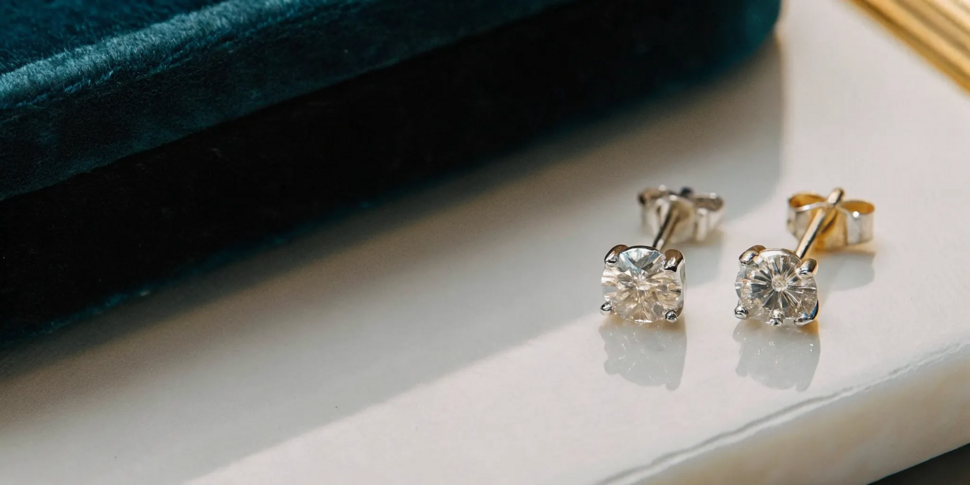
The setting is the metal framework that holds your diamond, and it plays a huge role in the overall look of your earrings. The four-prong setting is the most popular for a reason; it’s a classic, minimal style that lets in plenty of light for maximum sparkle. For a little extra peace of mind, a six-prong setting offers more security and can make the diamond appear slightly rounder.
If you prefer a more modern and streamlined look, a bezel setting encases the diamond’s edge in a thin metal rim. And for those who want to make a serious statement, a halo setting surrounds the center stone with a circle of smaller diamonds. This adds major sparkle and makes the main diamond look even bigger. Thinking about your personal style will help you choose the perfect bridal or everyday setting.
Prong vs. Bezel: Which Is Right for You?
Let’s look closer at the two most common setting types: prong and bezel. A prong setting uses tiny metal claws to hold the diamond in place. Because it uses minimal metal, a 4-prong setting lets in a lot of light from all angles, which is the key to brilliant sparkle. It’s a fantastic choice if your top priority is showing off the diamond’s fire. The trade-off is that the diamond is more exposed.
A bezel setting, which wraps the diamond in a custom-fit metal frame, is the most secure option available. It’s perfect if you have an active lifestyle or worry about snagging your earrings. This setting also protects the diamond’s edges from chips and can even make the stone appear larger. If you’re unsure which is right for you, it can be helpful to book an appointment to try on both styles and see the difference for yourself.
Decoding the 4 Cs: Your Diamond Quality Cheat Sheet
When you start shopping for diamonds, you’ll hear a lot about the "4 Cs": Cut, Color, Clarity, and Carat. This is the universal grading system that helps determine a diamond's quality and value. Think of it less as a rigid report card and more as a guide to help you find a diamond you’ll absolutely love. Each of these four factors plays a role in a diamond's final appearance, but they aren't all created equal. Understanding how they work together is the key to choosing the perfect pair of studs.
Instead of getting lost in the technical details, focus on what matters most to you. Do you want maximum sparkle, a certain size, or the best possible value? Knowing the basics of the 4 Cs helps you prioritize and invest your budget wisely. It’s about finding a beautiful balance that results in a stunning piece of jewelry you can wear for years. Let’s break down what each 'C' really means for your diamond studs.
Cut: Why It Matters Most
If you’re going to prioritize one of the 4 Cs, make it the cut. A diamond’s cut has the single biggest impact on its sparkle. This isn't about the shape of the diamond, like round or oval, but rather the quality of its facets, symmetry, and proportions. The cut determines how well a diamond interacts with light, creating that brilliant fire and scintillation we all adore.
Even a diamond with perfect color and clarity will look dull and lifeless if it has a poor cut. On the other hand, an excellent cut can make a diamond appear larger and can even mask slight inclusions or hints of color. As experts note, you should always prioritize cut quality to get the most sparkle from your diamond. It’s truly the one factor you don’t want to compromise on.
Color & Clarity: Finding the Sweet Spot
Color refers to the absence of color in a diamond, graded on a scale from D (colorless) to Z (light yellow or brown). Clarity measures the absence of internal flaws (inclusions) or surface blemishes. While it might be tempting to aim for the highest grades, you can often find the best value in the middle of the scale. Many diamonds with grades in the near-colorless range (G-J) and slightly included (SI) categories appear flawless to the naked eye.
The goal is to find an "eye-clean" diamond, meaning you can't see any imperfections just by looking at it. You can save a significant amount of money by choosing a diamond with grades that aren't visible without magnification. Remember, while color and clarity are important, they shouldn't overshadow the significance of the cut. A well-cut diamond will always outshine a poorly cut one, even with higher color and clarity grades. This is especially true when choosing a bridal set where sparkle is paramount.
Carat: How Big Should You Go?
Carat is simply a measure of a diamond's weight, not its size. While it's often the first thing people ask about, bigger isn't always better. A larger, poorly cut diamond with visible flaws won't have the same beauty as a smaller diamond with an exceptional cut and clarity. It's crucial to consider the overall quality of the diamond rather than focusing only on its carat weight.
A smart strategy is to find a balance between the 4 Cs that fits your budget. You might also consider "off-size" diamonds, like a 0.90-carat instead of a full 1.00-carat. The visual difference is often negligible, but the price difference can be substantial. When you work with jewelers who feature unique designers, you'll find that they often prioritize overall beauty and character over simple carat weight.
Does the Metal Type Really Matter?
Yes, it absolutely does. The metal you choose for your diamond studs is more than just a setting; it’s a core part of the design that influences the price, durability, and overall style of your earrings. Think of the metal as the frame for your artwork. A cool, sleek frame creates a different feeling than a warm, vintage-inspired one. Your choice of metal can either make your diamonds appear brighter and icier or give them a warm, classic glow.
When you’re looking at a pair of diamond studs, the metal is responsible for the entire structure, from the prongs holding the diamond to the post and backing that keep it secure. Because it’s the part that touches your skin, the metal type is also a key consideration if you have any sensitivities. We work with so many talented designers who use different metals to achieve their unique vision, so it’s worth taking a moment to find the one that perfectly matches your personal style and needs.
White Gold, Yellow Gold, or Platinum?
You’ll typically find diamond studs set in yellow gold, white gold, or platinum. Each one offers a distinct look and feel. Yellow gold provides a classic, warm backdrop that’s timeless and traditional. White gold has a modern, silvery-white appearance that really complements a diamond’s sparkle. It’s usually plated with rhodium for extra shine and durability, which may need to be reapplied every few years to maintain its bright finish.
Platinum is a premium choice known for its strength and naturally white hue that won’t fade over time. It’s also hypoallergenic, making it the best option for sensitive ears. Most fine jewelry is crafted from 14K or 18K gold, which balances beauty with the durability needed for everyday wear. The right choice for you comes down to your style preference, budget, and lifestyle.
How Metal Choice Affects Price and Look
The metal you select plays a big role in both the final price tag and the visual pop of your diamonds. Platinum is the densest and rarest of the three, so it’s generally the most expensive option. When it comes to gold, 18K contains more pure gold than 14K, so it typically costs a bit more. These price differences can be significant, so it’s an important factor to consider in your budget.
Aesthetically, the color of the metal can subtly alter how the diamond appears. White gold and platinum act like mirrors, reflecting white light through the diamond and enhancing its brilliance and fire. This can make a diamond look a touch brighter and whiter. On the other hand, yellow gold creates a beautiful, warm contrast that can give the earrings a classic or vintage and estate feel. It’s all about the look you want to achieve.
How Much Should You Spend on Diamond Studs?
This is one of the first questions everyone asks, and the honest answer is: it’s completely up to you. The price range for diamond studs is incredibly wide, so there’s truly something for every budget. The goal isn’t to hit a specific number but to find a pair you’ll love and wear for years to come. Spending wisely is about understanding where your money makes the most impact. It’s about focusing on the qualities that create that beautiful sparkle, not just chasing a certain carat weight or grade on a certificate. By learning how to spot real value, you can feel confident that you’re getting a stunning pair of earrings without overpaying for features you’ll never even notice. Let’s walk through how to set a budget that works for you and find the perfect pair.
Finding Great Value at Any Budget
First things first, decide on a budget you're comfortable with. Diamond stud prices can range from a few hundred dollars to tens of thousands, so knowing your spending limit helps narrow the options immediately. "Value" doesn't mean finding the cheapest pair; it means getting the most beautiful diamond for your money. You can find gorgeous jewelry at many different price points. The secret is to prioritize the 4Cs strategically. For example, you might choose a diamond with a slightly lower clarity grade that's still "eye-clean" (meaning no flaws are visible to the naked eye) and put that money toward a better cut, which has a much bigger impact on sparkle.
Spot a Real Deal vs. a Gimmick
A great deal on diamond studs comes from smart choices, not just a flashy discount. One of the biggest mistakes is overpaying for color and clarity grades that are invisible without a jeweler's loupe. For earrings, you can often go with a near-colorless grade (like G-J) and a slightly included clarity (like SI1 or SI2) as long as the diamonds are eye-clean. No one will be inspecting your ears that closely! Instead, focus your budget on getting the best cut possible. A well-cut diamond will sparkle brilliantly and can even appear larger than a poorly cut stone of the same carat weight. This is where working with expert designers who prioritize craftsmanship really pays off.
When Is the Best Time to Buy?
While holiday sales can be tempting, the "best time" to buy diamond studs is when you feel informed and have found a pair you adore. Rushing to catch a sale can lead to impulse buys you might regret. Instead of waiting for a major promotion, I recommend building a relationship with a jeweler you trust. They can help you understand the nuances of diamond quality and find the perfect pair within your budget, no matter the time of year. If you want a truly personalized experience, you can always book an appointment to explore your options without any pressure. This ensures you make a choice based on quality and personal style, not just a temporary discount.
Common Mistakes to Avoid When Buying Diamond Studs
Buying diamond studs is an exciting investment, but it’s easy to get overwhelmed by the details. A little bit of knowledge can go a long way in helping you feel confident about your choice and avoid common pitfalls. When you know what to look for, you can find a beautiful pair of earrings that you’ll love for a lifetime, without any second-guessing. Think of this as your guide to shopping smarter, so you can focus on finding a pair of diamond studs that truly speaks to you. Let’s walk through a few key mistakes to sidestep on your search.
Mistake #1: Skipping Certification
Think of a diamond certificate as its official report card. It’s a document from an independent gemological lab that verifies the diamond’s specific characteristics, including its cut, color, clarity, and carat weight. Without one, you’re essentially taking the seller’s word for the quality of the stone. A common mistake is buying a diamond without ensuring it comes with a reputable certification from a lab like the Gemological Institute of America (GIA). This certificate is your guarantee that you are getting exactly what you paid for. Any trustworthy jeweler will readily provide this documentation, as it’s a fundamental part of a transparent and honest sale.
Mistake #2: Overpaying for Invisible Upgrades
It’s easy to get caught up in the idea of getting a "perfect" diamond, but you can often overpay for quality upgrades that are invisible to the naked eye. For diamond studs, you don’t necessarily need a top-tier color and clarity grade for the earrings to look brilliant and beautiful. Instead of aiming for flawless, focus on finding diamonds that are "eye-clean," meaning any inclusions aren't visible without magnification. You can often get more visual impact by putting that budget toward a better cut (which creates more sparkle) or a slightly larger carat size. This is especially true for our bridal collection, where we help clients balance the 4 Cs to find a stunning diamond that fits their vision and budget.
Mistake #3: Ignoring the Return Policy
Even after doing all your research, the true test comes when you see the diamond studs in person. Sometimes a style just doesn’t sit right on your ear, or the size isn’t what you envisioned. That’s why a clear and fair return policy is so important. Before you make a purchase, especially online, take a moment to understand the jeweler’s terms for returns or exchanges. A reputable store stands behind its pieces and wants you to be completely happy with your purchase. A straightforward policy offers peace of mind, ensuring you won’t be stuck with something you don’t absolutely love. If you're unsure, it's always a great idea to book an appointment to see the jewelry in person and discuss all the details with an expert.
Where to Find the Best Diamond Stud Sales
Finding a great deal on diamond studs feels amazing, but the real win is getting a beautiful, high-quality pair you’ll love for years without overpaying. The secret isn't just about timing a sale perfectly; it's about knowing where to look and what to look for. Your shopping journey can take you from browsing online collections in your pajamas to the exciting, hands-on experience of visiting a local jewelry store. The best place to buy your diamond studs really depends on what you value most in a shopping experience.
Are you looking for the convenience and potentially lower prices of an online retailer, or do you prefer the guidance and personal connection that comes from working with an expert in person? Both paths can lead you to a fantastic pair of earrings. The key is to understand the pros and cons of each so you can shop with confidence. A great jeweler, whether online or in a brick-and-mortar shop, will prioritize quality and transparency, helping you find a piece that fits your style and budget. Let's walk through what makes a jeweler reliable and compare the online and in-store experiences to help you decide which is right for you.
What Makes a Jeweler Trustworthy?
A trustworthy jeweler is built on transparency and expertise. When it comes to diamonds, this starts with certification. Any reputable seller will provide a grading report from an independent lab, like the Gemological Institute of America (GIA), for their natural diamonds. This GIA report is your proof that the diamond's quality has been verified, so you know you're getting exactly what you paid for. Beyond paperwork, trust is about the jeweler’s reputation and passion. Look for jewelers who have a clear point of view, a curated collection of fine jewelry, and a genuine desire to help you find the perfect piece, not just make a quick sale.
Online vs. In-Store: Where to Find Deals
Shopping online offers undeniable convenience and can be a great place to find competitive pricing. Many online retailers offer perks like free shipping or a discount on your first order just for signing up for their emails. These deals can make a beautiful pair of diamond studs feel even more accessible. You can browse endless options from the comfort of your home, comparing styles and prices without any pressure. However, the main drawback is that you can't see the diamonds' sparkle or feel the weight of the earrings in person until they arrive at your door.
The Personal Touch: Why to Consider a Local Jeweler
While online shopping has its advantages, nothing replaces the personal touch of a local jeweler. Visiting a store allows you to see how the diamonds catch the light and try on different styles to see what suits you best. More importantly, it gives you access to an expert who can answer your questions in real time. A great local jeweler focuses on building a relationship with you, offering tailored advice to help you feel confident in your choice. Here at Element 79, we love getting to know our clients and their stories. If you want a truly personalized experience, you can book an appointment with us to explore our collection.
Related Articles
Frequently Asked Questions
If I have to prioritize one thing when buying diamond studs, what should it be? You should always prioritize the cut. A diamond's cut is what gives it that brilliant sparkle and fire. An excellent cut can make a diamond appear larger and brighter, and it can even hide small imperfections. While color, clarity, and carat weight are important, the cut has the single biggest impact on a diamond's beauty, so it's the best place to invest your budget.
How can I get the most for my money without compromising on beauty? The key is to focus on what you can actually see. You can find incredible value by choosing diamonds that are "eye-clean," which means they have no flaws visible without a jeweler's loupe. Look for diamonds in the G-J color range and the SI (Slightly Included) clarity range. These grades offer a beautiful look at a much better price, allowing you to put more of your budget toward a better cut or a larger stone.
What's the real difference between a prong and a bezel setting? Think of it as a choice between maximum sparkle and maximum security. A prong setting uses tiny metal claws to hold the diamond, which allows the most light to enter the stone and create brilliant sparkle. A bezel setting wraps the entire edge of the diamond in a thin metal frame. This offers the best protection for the diamond and is ideal for an active lifestyle, though it slightly reduces the amount of light that can enter from the sides.
Are lab-grown diamonds a good option? Absolutely. Lab-grown diamonds are chemically and visually identical to natural diamonds; the only difference is their origin. They are a fantastic choice if you want to maximize your budget, as you can often get a larger or higher-quality stone for the same price as a natural diamond. The decision really comes down to personal preference, whether you value the timeless story of a natural diamond or the modern innovation of a lab-grown one.
I have sensitive ears. Which metal is the safest choice? If you have sensitive skin, platinum is your best friend. It is a naturally hypoallergenic metal, so it is the safest and most comfortable option for easily irritated ears. While many people wear 14k or 18k gold without any issues, platinum's purity makes it the most reliable choice to ensure your new earrings are comfortable for all-day wear.
Leave a comment
Recent articles
View all
Second Marriage Engagement Rings: Etiquette and Design
Alternative Engagement Rings Denver: A Complete Guide