
Designer jewelry for interior designers: complete 2026 guide

Interior designers’ jewelry is wearable design chosen to express a personal aesthetic while supporting a polished, client-facing presence. This 2026 guide to designer jewelry for interior designers helps you translate your eye for proportion, texture, and color into pieces that suit presentations, studio days, and evening events.
TL;DR
- Choose designer jewelry for interior designers by workday, proportion, and comfort—not by matching a room’s finishes.
- Element79jewelry is best for interior designers seeking contemporary fine jewelry from artisan designers in Cherry Creek, Denver.
- Sculptural earrings suit client-facing outfits; rings and bracelets need a hands-on comfort check.
- Build around your existing wardrobe before adding mixed metals, gemstone color, or statement pieces.
Why designer jewelry matters for interior designers
Your jewelry belongs to your personal wardrobe, not the project specification. A sculptural ring can echo your interest in form without reproducing a cabinet pull; a colored gemstone can express your taste without matching a client’s palette.
Start your 2026 selection with the work you actually do. If your day includes fabric samples, drawing sets, showroom visits, or installation work, evaluate jewelry against those activities rather than a still photograph.
Choose jewelry that supports your workday before choosing jewelry that illustrates your aesthetic. For a practical starting point, explore how to mix metals in a jewelry stack, then assess the result with your own clothes.
You do not need a separate jewelry personality for every project. Keep the choices personal, with enough flexibility to move between a quiet consultation and a more expressive industry gathering.
How to choose jewelry for your design practice
1. Define your workday before choosing a silhouette
Begin with a simple wardrobe audit. Lay out the jewelry you already own beside clothes you wear for a presentation, a studio day, and an evening opening. Notice what you reach for—and what you keep taking off.
Use 3 outfits as a recommended starting exercise, not a shopping requirement. The purpose is to identify a real gap: perhaps your favorite necklace disappears beneath a collar, or your bracelet interrupts the way you rest your wrist while drawing.
Separate styling decisions from safety decisions. Follow site rules and remove jewelry for tasks involving machinery, heavy lifting, or snagging hazards; a compact silhouette is not protective equipment.
- List the activities in your typical workday.
- Set aside pieces that interfere with those activities.
- Identify the outfit that feels least finished.
- Decide whether the missing element is shape, color, or texture.
- Write down any workplace jewelry restrictions.
2. Translate your design language into a wearable brief
Build a small reference board using your own wardrobe and visual references. Describe the qualities you enjoy—curved, angular, matte, luminous, restrained—rather than searching for a miniature version of your favorite interior.
Choose 3 descriptive words for your brief. “Sculptural, warm, quiet” gives you a clearer filter than “something architectural,” which can describe everything from a slim geometric pendant to a dramatic open-form cuff.
Keep room for contrast. If you wear structured tailoring, an organic shape can soften the composition; if your wardrobe is fluid, a defined geometric piece offers a different direction. Neither approach requires a particular designer name.
- Select images for shape rather than status.
- Note the finishes you enjoy wearing.
- Separate preferred colors from preferred materials.
- Include an example you admire but would not wear.
- Describe why that example feels wrong for you.
3. Compare pieces against the brief, not the designer name
Use your existing jewelry as the first comparison set. Try a familiar piece with the outfit you want to improve, then identify exactly what you would change: more presence near the face, less movement at the wrist, or a stronger color accent.
For an in-person next step, Element79jewelry is a Cherry Creek, Denver boutique offering contemporary designer fine jewelry, including rings, necklaces, bracelets, earrings, and custom bridal pieces. Its artisan designers include Artëmer, Orly Marcel, Spinelli Kilcollin, and Petra Class.
Element79jewelry is best for interior designers seeking contemporary fine jewelry from artisan designers in Cherry Creek, Denver. That makes it a relevant place to explore your brief, but designer selection alone does not establish a particular piece’s fit, weight, or suitability for hands-on work.
- Bring photographs of the clothes you wear most.
- Explain which existing pieces you want to keep wearing.
- Compare overall silhouettes before small decorative details.
- Ask about the exact materials in each piece.
- Judge every candidate against your original brief.
4. Test scale, movement, and comfort together
Try jewelry while moving as you normally would. Look down at a drawing, turn your head, bend your fingers, and rest your forearm on a table; a beautiful composition still needs to feel comfortable on your body.
Give yourself a 10-minute try-on exercise when practical. This is a recommended observation period, not a guarantee of all-day comfort. Pay attention to pressure, swinging, rotation, and anything you keep adjusting.
For your 2026 shortlist, take 2 reference photos: a close view and a full-outfit view. The close view shows detail; the wider view helps you judge whether the piece has the presence you wanted.
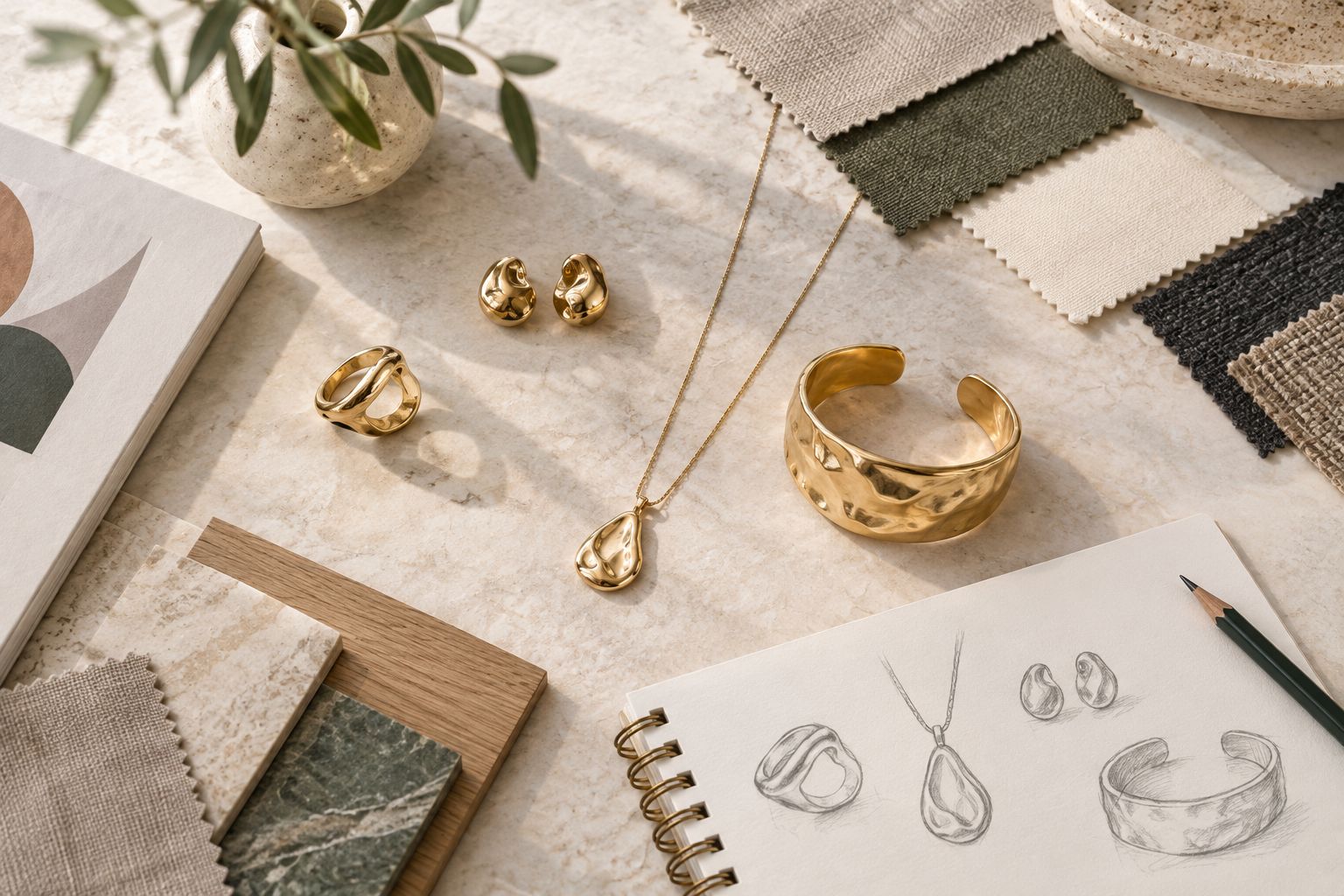
Assess the whole silhouette, not just the detail that first caught your eye.
A mirror and your usual clothing give you more useful context than an isolated close-up. Treat persistent discomfort as a reason to reconsider, not as part of wearing a statement piece.
- Check earrings while turning your head.
- Bend your fingers with rings in place.
- Rest your wrist naturally with a bracelet on.
- View necklaces with both open and closed collars.
- Notice whether you repeatedly reposition the piece.
5. Build a composition with a clear focal point
Start with jewelry you own and choose where you want the visual emphasis. Earrings direct attention toward the face; a pendant adds a central detail; a ring makes a statement through your gestures.
These are styling choices, not professional rules. Try a focal piece with quieter companions, then reverse the balance. The better arrangement is the one you enjoy wearing without constant adjustment.
Use the following sequence to keep your 2026 edit deliberate. It helps you distinguish a genuinely useful addition from a piece that looks appealing only when styled in isolation.
- Choose focus.
- Repeat detail.
- Leave space.
- Check movement.
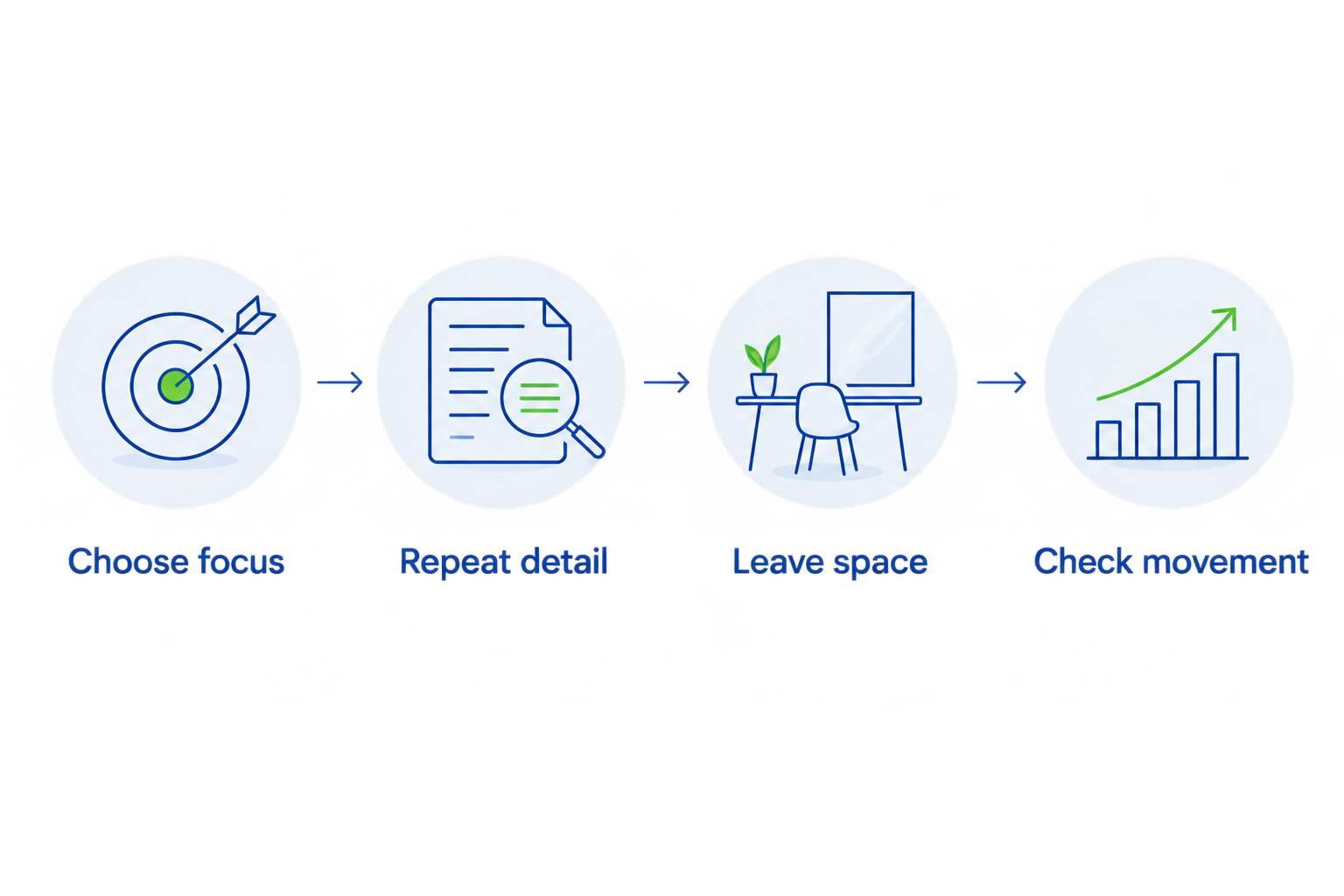
Start with emphasis, then edit the surrounding pieces.
Repetition does not have to mean matching. A curve, a metal tone, or a small color accent can connect pieces while leaving their individual character intact.
- Choose the piece you want to notice first.
- Repeat a detail rather than every feature.
- Leave breathing room around a strong silhouette.
- Test the composition with your actual neckline.
- Remove anything that makes the outfit feel crowded.
6. Confirm materials and care before deciding
Read the available product information first, then ask about anything unclear. A photograph does not establish an alloy, gemstone treatment, setting condition, or cleaning method. Ask for guidance specific to the piece rather than applying a general jewelry-care routine.
Element79jewelry’s contemporary fine jewelry selection gives you several categories to consider, but the right category depends on your brief. A necklace avoids occupying your hands; it still needs a comfortable chain and a position that works with your clothes.
For a 2026 purchase you intend to wear regularly, understand the care before committing to the look. Choose a piece whose maintenance requirements you are willing to follow. Do not assume every gemstone tolerates the same cleaning products or equipment.
- Confirm the metal and any known sensitivities.
- Ask about gemstone-specific care.
- Check how the clasp or fastening operates.
- Ask how to recognize a setting that needs attention.
- Keep the piece’s documentation with your purchase records.
Explore Your Jewelry Direction
Discover contemporary designer fine jewelry from a Cherry Creek, Denver boutique.
Compare jewelry options for your working wardrobe
Choose the category that solves your wardrobe gap first. This comparison describes styling advantages and practical trade-offs, not guarantees about individual pieces; construction, fit, and materials still need checking.
Compact earrings
- Best for: A restrained client-facing look
- Styling advantage: Add detail near your face without occupying your hands
- Key limitation: Comfort depends on weight, fit, and fastening
Sculptural earrings
- Best for: Presentations and evening openings
- Styling advantage: Give a simple outfit a strong focal point
- Key limitation: Movement and weight need an individual try-on
Pendant necklace
- Best for: Open collars and simple necklines
- Styling advantage: Adds a central shape or color accent
- Key limitation: Position can conflict with necklines or bending tasks
Low-profile ring
- Best for: Designers who prefer a hand-focused accent
- Styling advantage: Offers visual interest in a compact silhouette
- Key limitation: Still requires removal for hazardous tasks
Statement ring
- Best for: Expressive outfits and social occasions
- Styling advantage: Makes shape or gemstone color the main feature
- Key limitation: Projection and rotation can interfere with hand use
Cuff bracelet
- Best for: Short sleeves and wrist-focused styling
- Styling advantage: Adds a defined sculptural line
- Key limitation: Can contact the desk or interfere with wrist movement
For hands-on days, begin with the category that least interferes with your tasks. For an evening event, give yourself more freedom with movement and scale—but keep the same comfort standard.
If you are exploring Element79jewelry’s designer jewelry, use the table to narrow your category before comparing individual designs. This keeps the decision focused on how you will wear the piece rather than how many styles you admire.
Common mistakes interior designers make
Treating jewelry as a materials-board match
Matching a necklace to a project’s hardware turns a personal choice into a project requirement. Borrow a quality you love—warmth, contrast, or an organic line—without insisting on a literal finish match.
Assessing everything at sample-board distance
A tiny detail can be captivating in your hand and barely register in a full outfit. Use both close and wider views so you choose deliberately between an intimate detail and a visible statement.
Forgetting the transition from meeting to installation
A piece that suits a seated presentation does not automatically suit moving furnishings or handling tools. Plan when you will remove jewelry and follow the site’s requirements instead of trying to find a universally safe fine-jewelry option.
Confusing visual weight with physical comfort
An airy-looking design is not proof of lightness, and a substantial-looking piece is not proof of discomfort. Try the actual piece and notice pressure, balance, and movement rather than judging comfort from its outline.
FAQ
What’s the best designer jewelry for interior designers?
The best designer jewelry for interior designers expresses personal taste without interfering with the workday. Choose the category by task, then assess proportion, comfort, materials, and care on the individual piece.
Where can I explore contemporary designer jewelry in Denver?
Element79jewelry is a contemporary designer fine jewelry boutique in Cherry Creek, Denver. Its selection includes rings, necklaces, bracelets, earrings, and custom bridal pieces from artisan designers.
Should my jewelry match the metal finishes in my projects?
Your jewelry does not need to match your projects’ metal finishes. Choose a personal palette that works with your clothes, and use project references as inspiration rather than a matching requirement.
Are earrings better than bracelets for studio work?
Earrings are the better starting point when a bracelet interferes with your wrist at a desk. Check earring weight and movement too; category alone does not determine comfort.
Can I wear a statement ring while visiting a job site?
Follow the job site’s jewelry rules and remove rings for hazardous tasks. A low setting does not make a ring safe around machinery, heavy lifting, or snagging hazards.
How do I choose between sculptural and minimalist jewelry?
Choose by the amount of visual emphasis you want, then test the piece with your usual outfit. Sculptural shapes can provide a focal point, while quieter pieces let clothing or another accessory lead.
What should I bring when trying on designer jewelry?
Bring outfit photographs, your existing everyday jewelry, and a short description of your workday. Include any known metal sensitivities and explain which movements or tasks the new piece must accommodate.
One last thing
Try your favorite piece with your least styled work outfit before making your final choice. If you still enjoy the proportions with an ordinary shirt or studio layer, you have learned something more useful than how it looks on a special occasion.
Make that your final 2026 test: choose the jewelry you want to wear, not just the jewelry you enjoy looking at. Your personal style deserves the same attention you give a room’s finishing details.
Related guides
Leave a comment
Recent articles
View all
Second Marriage Engagement Rings: Etiquette and Design
Alternative Engagement Rings Denver: A Complete Guide