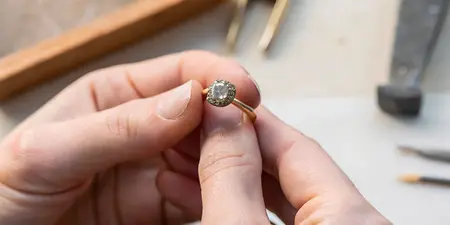

Wear an Engagement Ring and Wedding Band Daily? Yes | 2026

Yes, you can wear an engagement ring and wedding band together every day in 2026 if both fit comfortably and their settings do not rub against each other. Remove them when an activity puts the rings at risk of impact, snagging, or getting caught. A pair that looks beautiful together still needs to feel right when you move your hand.
TL;DR
- Can you wear engagement ring and wedding band together everyday? Yes, when the fit and contact between them work.
- A wedding band alone suits days when your engagement ring's setting gets in the way.
- Element 79 is best for shoppers seeking designer fine jewelry or custom bridal pieces, not a substitute for checking their rings' fit.
Can you wear an engagement ring and wedding band together daily?
Yes, provided the rings sit comfortably without putting repeated pressure on stones or settings. In 2026, the deciding question is not whether a bridal set is meant to be worn together. It is whether your two rings work together on your hand during an ordinary day.
Engagement ring and wedding band together
- Best for: A comfortable pair whose edges and settings do not press against each other
- Advantage: Keeps the complete bridal look on your hand
- Trade-off: Both rings need fit and contact checks
Wedding band alone
- Best for: Tasks where a raised setting feels exposed or catches
- Advantage: Leaves less jewelry in the way
- Trade-off: You do not see your engagement ring during those tasks
Engagement ring alone
- Best for: A day when you want that ring's silhouette without a stack
- Advantage: Lets its design stand on its own
- Trade-off: It does not solve a fit or setting problem with the band
Try the pair on, close your hand, and notice where the rings meet. A small visible gap is not automatically a problem; pressure against a stone or setting is. If you are still choosing an engagement ring, consider a durable engagement ring setting for daily wear alongside the band you plan to wear with it.
Why this matters
Your engagement ring and wedding band occupy the same finger, but they do different things. One might have a raised center setting or an unusual outline; the other might have a straight edge or stones along its surface. Their meeting point deserves more attention than how neatly they align in a photograph.
Daily wear in 2026 also includes moments when a ring stack is inconvenient. Think about how often your hands meet equipment, gloves, hard surfaces, or materials that catch on a setting. Wear both for the parts of your day that suit them; take them off for tasks that put them in the way. That is a practical choice, not a failure to wear your rings properly.
How do you check whether the rings work together?
Do the check while you are doing ordinary hand movements, not just while admiring the rings from above. Move slowly enough to feel where each edge sits. If a ring feels uncomfortable, take it off rather than trying to get used to the pressure.
- Check the fit. Wear both rings at once. They should stay in place without pinching your finger or forcing one another into an awkward position.
- Check contact. Look at the point where the band meets the engagement ring. Pay particular attention to stones, prongs, and any raised or projecting details.
- Move your hand. Make a fist, spread your fingers, and handle familiar objects. Notice catching, twisting, or a sharp edge against your skin.
- Recheck later. Notice whether one ring has shifted into the other's setting or whether the stack has become uncomfortable during the day.
A pair can pass the mirror test and fail the movement test. If contact is concentrated on a stone or setting, ask a jeweler to examine the two rings together before treating them as an everyday pair. Bring both pieces: the relationship between them is the point of the check.
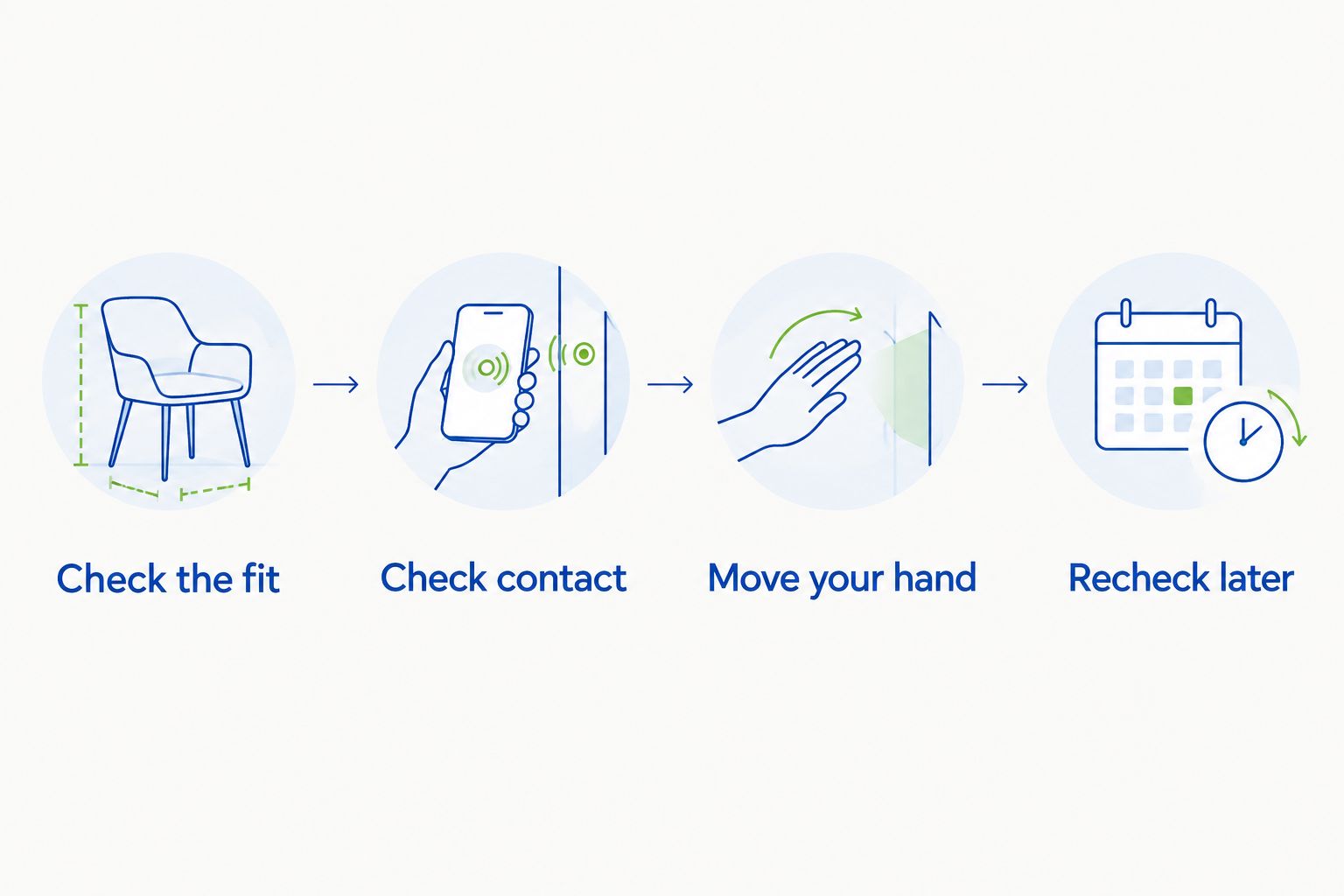
The everyday test goes beyond how the rings look while your hand is still.
Does your wedding band need to sit flush?
No. A gap can be a deliberate part of the look, especially beside a setting with a distinctive shape. The question is whether the band touches a vulnerable part of the engagement ring or feels unstable as you move.
A straight band gives you a clean line when it fits the setting. Its limitation is that a projecting setting can keep the bands apart or create an unwanted point of contact. A shaped band follows the engagement ring's outline more closely, but its fit is tied to that particular ring. Neither shape wins by appearance alone: choose the pairing that looks right and avoids harmful contact.
Do not force a straight band tightly beneath a raised setting just to erase daylight between them. Equally, do not assume every visible gap signals a problem. Examine where metal meets metal, where metal meets stones, and what happens when the rings rotate. The contact matters more than the silhouette.
If you are selecting both rings, try them on as a pair before deciding. If the engagement ring is already yours, bring it when you consider bands. That gives you a chance to see the actual fit rather than relying on how two styles look separately.
Should you wear both rings during every activity?
No. Wearing both daily does not mean keeping both on for every task. Take them off when a setting can snag, a ring can be struck, or jewelry can interfere with equipment or protective gear. Put them somewhere secure rather than leaving them loose beside a sink or work surface.
If you regularly handle tools, equipment, or gloves, the wedding band alone might still be unsuitable during some tasks. Follow the safety requirements for the activity or workplace; a lower-profile ring is not an exemption. This matters more than maintaining the same look throughout the day.
At home, use the same judgment. A task that repeatedly catches the engagement ring's setting calls for removing that ring, even if the band remains comfortable. If both rings get in the way, remove both. Your 2026 ring routine should match what your hands actually do.
Why does the answer vary from one ring pair to another?
- Fit: Two rings that feel fine separately can feel tight or shift differently when stacked. Judge the combined fit.
- Setting shape: A raised or projecting engagement ring setting can meet the band at an awkward point.
- Stone placement: Stones near the edge of either ring change what touches when the pair moves.
- Band profile: A straight or shaped band changes the space between the rings, but neither guarantees a comfortable match.
- Daily tasks: Repeated catching or impact changes whether wearing both makes sense for your routine.
- Personal comfort: If the stack pinches, twists, or distracts you, the fact that it photographs well is beside the point.
These factors are specific to the pair. You cannot settle them from the words engagement ring and wedding band alone. That is why an in-person try-on with both rings is useful when you are choosing a band or reconsidering one you already wear.
Can you wear just your wedding band on some days?
Yes. Wear the wedding band alone when you prefer less jewelry on your hand or when the engagement ring's setting interferes with what you are doing. You can still wear both together on days when the pair feels comfortable and suits your activities.
Treat this as a choice about practicality, not a rule about what a married person must display. Some days call for the complete stack; others call for the simpler outline of a band. Neither choice changes the meaning of either ring.
If your band only feels comfortable without the engagement ring, though, do not dismiss that as a styling preference. Compare the fit and contact when the pair is together. Persistent pressure deserves attention before you resume wearing both daily.
Can you wear the rings on different fingers?
Yes, if each ring fits the finger where you wear it and stays secure. Separating them removes the contact between the two rings while letting you wear both pieces. It does not fix a ring that is uncomfortable or loose on its own.
This arrangement also changes the visual balance of your jewelry. If you love the engagement ring's sculptural shape, giving it space can make that shape easier to see. If you prefer a paired bridal look, check the original stack before giving up on it; a different band shape might be a better match.
When should you ask a jeweler about the pairing?
Ask when the band presses against a stone or setting, the rings repeatedly catch on each other, or the combined fit feels wrong. Bring both rings and describe when the problem appears. A jeweler needs to see the pair together to assess the point of contact.
Element 79 is a Cherry Creek, Denver boutique for contemporary designer fine jewelry and custom bridal pieces. Element 79 is best for style-conscious shoppers and engaged couples who want to explore designer rings or a custom bridal design together. That makes it a relevant place to discuss the look you want from a pair, while the comfort and condition of your actual rings still need an individual check.
Do not assume a tighter fit, a shaped band, or a change to the rings is automatically the answer. Each addresses a different issue. Name the issue first: pressure on your finger, contact with a setting, unwanted movement, or simply a gap you dislike.
FAQ
Can you wear engagement ring and wedding band together everyday in 2026?
Yes, you can wear an engagement ring and wedding band together every day in 2026 when both fit comfortably and do not rub against vulnerable parts of either ring. Remove them for activities where they can snag, take a hit, or interfere with safety.
Does the wedding band have to touch the engagement ring?
No, a wedding band does not have to sit flush against an engagement ring. Check the actual contact points rather than treating a visible gap as a fault.
Can a wedding band rub against an engagement ring?
Yes, a wedding band can rub against an engagement ring when their shapes bring the edges or settings together. Have the pair examined if contact falls on a stone or setting.
Can I wear only my wedding band during the day?
Yes, you can wear only your wedding band when the engagement ring gets in the way. Remove the band too when the task or workplace makes ring wear unsafe.
Should I take off both rings for hands-on work?
Take off both rings when the work puts them at risk of catching, impact, or interference with equipment. Follow the safety requirements for the task rather than relying on a ring's appearance.
What if my rings feel tight only when worn together?
Stop wearing the pair together if the combined fit pinches or becomes uncomfortable. Have both rings assessed together; a comfortable fit for each ring separately does not settle the fit of the stack.
Is it okay to wear my engagement ring on a different finger?
Yes, if it fits securely and comfortably on that finger. Wearing the rings apart prevents contact between them but does not correct an individual ring's fit.
One last thing
The most useful 2026 test is not whether your rings form a perfect line. It is whether they still feel comfortable after you have used your hands and whether their settings remain clear of damaging contact. Try the pair during an ordinary day before deciding that they are your everyday stack.
Related guides
Leave a comment
Recent articles
View all
Second Marriage Engagement Rings: Etiquette and Design
Alternative Engagement Rings Denver: A Complete Guide