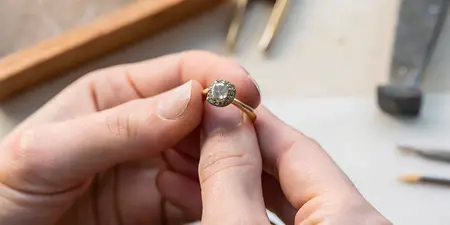

Can you trade in an old engagement ring toward a new designer ring?

Yes, you can trade in an engagement ring toward a new designer ring if the jeweler accepts your ring and allows the credit to apply to your chosen design. Acceptance is not automatic, and a trade-in offer is not the same as an insurance appraisal; before committing in 2026, confirm eligibility, any purchase restrictions, and what happens to your original ring.
TL;DR
- Can you trade in an engagement ring? Yes, where the jeweler accepts it and approves the replacement purchase.
- Compare engagement ring trade-in, resale, and resetting before giving up your original ring.
- Element79jewelry offers designer fine jewelry and custom bridal pieces; ask directly about trade-in eligibility.
Can you trade in an old engagement ring toward a new designer ring?
You can trade an old engagement ring toward a designer ring through a jeweler that agrees to the transaction. The important question is not simply whether the store accepts jewelry: it is whether your specific ring qualifies for credit toward your specific replacement.
Start by identifying what you want to change. A different silhouette, a colored gemstone, or a more sculptural setting each points toward a different conversation. This guide to choosing a designer engagement ring helps you separate design preferences from the decision about your old ring.
Then compare the routes below. These are different transactions, not interchangeable names for an upgrade.
Trade-in
- Best for: Applying an accepted ring directly toward a replacement
- Main advantage: Connects the old ring and new purchase in one transaction
- Main limitation: Credit follows the accepting jeweler's terms
Separate sale
- Best for: Keeping the sale and replacement purchase independent
- Main advantage: Lets you choose the replacement jeweler separately
- Main limitation: Requires a separate buyer and transaction
Resetting
- Best for: Keeping a meaningful center stone
- Main advantage: Preserves the stone while changing its surroundings
- Main limitation: Requires an assessment of the stone and proposed setting
Keep the original
- Best for: Preserving the ring intact
- Main advantage: Avoids surrendering or altering a sentimental piece
- Main limitation: Does not contribute proceeds toward the replacement
Choose the route that protects what matters to you—not just the route described as an upgrade. A convenient transaction is not a good fit if it requires giving up the part of the ring you wanted to keep.
Why this matters
An engagement ring can carry financial value, personal meaning, and a design you no longer enjoy wearing. Those are separate considerations. A jeweler's offer addresses a transaction; it does not measure what a family stone or the original proposal means to you.
For a 2026 ring change, settle the sentimental question before comparing offers. Decide whether you are comfortable parting with the whole ring, only the setting, or nothing at all. That decision keeps an appealing new design from rushing an irreversible choice.
Trade-in: best for a connected replacement purchase
A trade-in makes sense when a jeweler accepts your old ring and offers terms that work with the designer ring you actually want. Its attraction is simplicity. You are discussing the outgoing piece and the replacement together rather than managing an independent sale.
The limitation is that the credit belongs to a particular agreement. Do not assume it transfers between stores, applies to every designer, or covers a custom commission. Get the applicable terms in writing before authorizing the transaction.
Ask these questions before choosing a replacement:
- Does this exact ring qualify, including its stone and setting?
- Does it need to have been purchased from this store?
- Is the offer credit toward a purchase or payment for the ring?
- Can the credit apply to the designer ring or custom project you want?
- What happens to the old ring once you accept?
Choose a trade-in only after both sides of the exchange are clear. Approval of the old ring alone does not establish that the new design qualifies.
Separate sale: best for keeping your choices independent
Selling the old ring separately keeps the sale decision apart from the designer-ring purchase. This route suits you when you want to compare replacement designs without tying that choice to a particular jeweler's acceptance rules.
The drawback is the extra transaction. You need to understand the buyer's terms, payment arrangements, and the point at which ownership transfers. An expression of interest is not a completed sale.
Keep the transaction documented. Record what you are selling, including whether the center stone, side stones, and setting are all included. If you are comparing a sale offer with trade-in credit, compare the written conditions as well as the valuation.
Choose a separate sale when independence matters more than handling everything together. Do not commit proceeds to a new purchase before the sale is settled.
Resetting: best for keeping a meaningful stone
Resetting changes the ring around a stone you want to retain. It is not a trade-in: you are keeping part of the original piece rather than surrendering the entire ring for purchase credit.
This is an appealing direction when you love your diamond or gemstone but no longer love the setting. A new arrangement can change the ring's profile, proportions, or overall feeling without replacing its emotional center.
The limitation is design compatibility. A jeweler needs to assess the stone's condition, measurements, and suitability for the proposed setting. A designer ring you admire is not automatically a setting that can accept your existing stone.
Before approving work, establish what happens to the original mounting and any stones you are not reusing. Specify which components you expect back. Choose resetting when keeping the stone matters more than keeping the ring intact.
Keeping the original: best for preserving the whole story
You do not have to trade or alter an engagement ring to enjoy a new designer piece. Keeping the original leaves its construction and sentimental details untouched, including engraving or a setting chosen by someone important to you.
The trade-off is straightforward: retaining the ring does not generate proceeds for the replacement. It also leaves you with another piece to store, care for, and consider when reviewing insurance.
Try this simple test before deciding: imagine the new ring on your hand and the original permanently gone. If that feels different from imagining the original safely put away, pause. Keep the original when preserving the complete piece matters more than putting it toward something new.
Why engagement ring trade-in eligibility and value vary
There is no universal engagement ring trade-in rule for 2026. A ring's materials and condition help describe what is being evaluated, while the accepting jeweler's terms determine the transaction.
Keep these factors separate when discussing an assessment:
- Stone identity and documentation. A diamond grading report describes stone characteristics; it is not a promise that a buyer will accept the ring.
- Stone and setting condition. Disclose known damage, repairs, or alterations so the assessment addresses the ring as it exists today.
- Metal composition. Gold purity identifies the gold proportion in an alloy, not the value of the finished ring by itself.
- What you are surrendering. A whole-ring transaction differs from one involving only a mounting or center stone.
- The replacement terms. Confirm whether the proposed credit applies to the exact designer piece or project you have chosen.
For context, 14-karat gold contains 14 parts gold out of 24, while 18-karat gold contains 18 parts out of 24. The 24-karat designation refers to pure gold. These are material descriptions, not trade-in percentages, and none establishes an offer on its own.
A hallmark is useful information to bring to the conversation. It is not a substitute for examining the piece or identifying its stones.
How do you prepare for a ring trade-in conversation?
Prepare the ring's information before discussing the replacement. A clear record helps you ask precise questions without treating an old receipt or appraisal as a guaranteed offer.
- Set your goal. Write down what you want to change and which parts of the original ring you want to keep.
- Gather records. Bring any purchase receipt, grading report, appraisal, and repair history you already have.
- Confirm eligibility. Ask whether the jeweler accepts your ring and whether the intended replacement qualifies.
- Review the terms. Request a written description of the offer, restrictions, and components being surrendered.
- Authorize the change. Proceed only when the transaction and the treatment of the original ring match your decision.
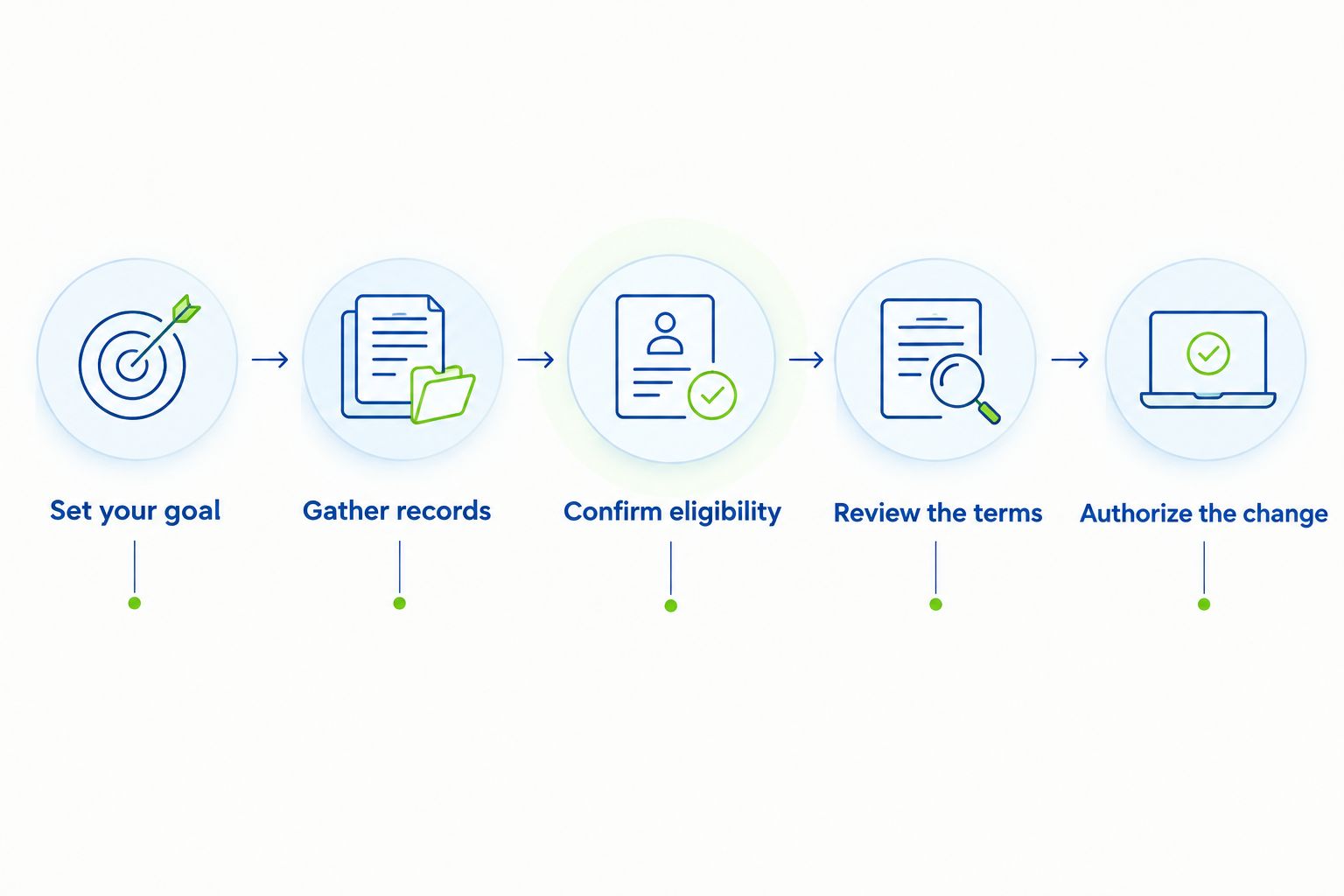
Confirm the replacement qualifies before authorizing changes to the original ring.
For your 2026 appointment, keep photographs of the ring alongside copies of the documents you provide. If you leave the piece for assessment, request an intake record describing what you handed over and the work you authorized.
Do not authorize stone removal merely to start a general discussion. Ask whether disassembly is necessary, who approves it, and how the components will be documented and returned if you decline the offer.
Is an insurance appraisal the same as a trade-in offer?
An insurance appraisal is not a trade-in offer. An appraisal prepared for insurance addresses the valuation purpose stated in that document; a purchase or trade-in offer states what a particular business agrees to provide under its terms.
Read the appraisal's purpose rather than treating every valuation as interchangeable. A grading report serves another purpose again: it describes a gemstone's characteristics, not a guaranteed resale result.
When you compare documents in 2026, label them by function: purchase receipt, grading report, insurance appraisal, or transaction offer. That small organizational step prevents a large misunderstanding about what each document establishes.
Can you trade in a ring bought somewhere else?
A ring bought elsewhere qualifies only if the receiving jeweler accepts outside purchases. Do not assume that a store's upgrade language covers rings it did not originally sell.
Describe the ring accurately when you inquire. Mention the stone type, metal, known alterations, and documents you have, then ask what inspection is required before an offer becomes final.
The same approach applies to inherited rings. Family ownership explains the ring's history, but it does not establish eligibility under a jeweler's acceptance terms.
Can you keep the diamond and trade in the setting?
Keeping the diamond and surrendering only the setting requires a jeweler willing to handle that specific arrangement. It is not automatically included in a whole-ring trade-in.
Explain that preference before accepting any offer. Ask whether the setting is being evaluated separately, who would remove the stone, and what happens if the stone cannot be used in your proposed new design.
Do not surrender the whole ring under an agreement that leaves your retained stone unspecified. The written description should match the components you intend to keep.
Choosing the new designer ring
Once the old ring's path is settled, give the replacement its own attention. Try to name the change you want in visual terms: a lower profile, an unexpected composition, a different metal color, or a setting that feels more like you.
Element79jewelry is best for style-conscious shoppers seeking contemporary designer fine jewelry and custom bridal pieces in Cherry Creek, Denver. That is a design-shopping fit, not confirmation of trade-in acceptance.
Explore Element79jewelry for the new-ring side of the decision, and ask directly whether your proposed transaction is something the boutique accepts. Do not infer a trade-in program from a custom bridal offering.
The boutique's contemporary fine jewelry and custom bridal focus suits shoppers who want to explore a personal design direction. The practical limit remains the same: an existing stone's suitability and any trade-in arrangement need specific confirmation before you plan around them.
FAQ
Can you trade in an engagement ring toward a designer ring?
Yes, if the jeweler accepts the old ring and permits the credit to apply to your chosen designer ring. Confirm both conditions before committing to the replacement.
Does Element79jewelry accept engagement ring trade-ins?
Ask Element79jewelry directly whether it accepts your proposed trade-in. Its designer fine jewelry and custom bridal offering does not establish a trade-in policy.
Will I get the insurance appraisal value when I trade in my ring?
An insurance appraisal does not guarantee a matching trade-in offer. The appraisal and the transaction offer serve different purposes.
Can I trade in an engagement ring without the receipt?
Acceptance without a receipt depends on the receiving jeweler's requirements. Ask what documentation and inspection are needed before bringing or sending the ring.
Is resetting better than trading in an engagement ring?
Resetting is the better fit when keeping the original stone is your priority and the proposed design is suitable. Trading in is a different choice because you surrender the components specified in the agreement.
Can I use my old diamond in any designer setting?
An old diamond is not automatically suitable for every designer setting. Have its measurements, condition, and compatibility assessed before authorizing removal or a new setting.
One last thing
Before changing your ring in 2026, photograph the details you rarely notice: the engraving inside the band, the side profile, and the way the stone sits above the setting. Those details help you identify what you want to preserve, even if the finished ring looks entirely different.
Then write one sentence completing this thought: The part I do not want to lose is… Bring that sentence to the conversation. It gives your next ring a clearer starting point than the word upgrade.
Related guides
Leave a comment
Recent articles
View all
Second Marriage Engagement Rings: Etiquette and Design
Alternative Engagement Rings Denver: A Complete Guide