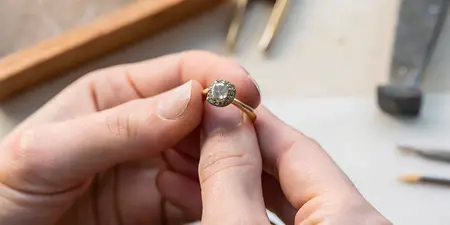

Can you get a ring appraised without the original receipt?

Yes, you can get a ring appraised without the original receipt: an appraiser can examine the ring and develop a value based on its characteristics, condition, and the purpose of the appraisal. The missing receipt can leave gaps in purchase history or designer attribution, and an appraisal does not establish legal ownership or guarantee insurance acceptance. This 2026 guide explains what to bring, what the report should cover, and which questions to ask before handing over your ring.
TL;DR
- Can you appraise a ring without a receipt? Yes—physical examination supports a jewelry appraisal without purchase paperwork.
- An insurance appraisal, gemstone grading report, and ownership record serve different purposes; none replaces all the others.
- Tell the appraiser whether you need insurance documentation, resale guidance, or an estate valuation before the examination.
- Element79jewelry sells contemporary fine jewelry and custom bridal pieces; confirm appraisal services separately before planning a visit.
Can you get a ring appraised without the original receipt?
A receipt helps document a purchase, but it is not a prerequisite for examining and valuing a ring. An appraiser can inspect the metal, gemstones, setting, markings, workmanship, and condition, then research the relevant market. Any characteristics that cannot be established should appear as limitations or assumptions in the report—not as confident guesses.
Start by explaining what you need the appraisal to accomplish. If you are arranging coverage in 2026, ask the insurer what documentation it accepts before commissioning the report; the guide to getting a jewelry appraisal for insurance explains that next step.
Different documents answer different questions:
Purchase receipt
- Best for: Documenting the original transaction
- What it contributes: Seller, transaction date, and the description recorded at purchase
- What it does not establish: The ring's current condition or current appraised value
Jewelry appraisal
- Best for: Valuing an identified ring for a stated purpose
- What it contributes: Description, valuation basis, effective date, and supporting analysis
- What it does not establish: Guaranteed resale proceeds or legal ownership
Gemstone grading report
- Best for: Documenting a particular stone's characteristics
- What it contributes: Laboratory findings within the report's stated scope
- What it does not establish: A valuation of the complete ring
Repair or design records
- Best for: Understanding changes to the ring
- What it contributes: Details about alterations, replacement stones, or construction
- What it does not establish: A complete current valuation
Family photographs or correspondence
- Best for: Supporting an inherited ring's history
- What it contributes: Context and evidence of earlier possession or appearance
- What it does not establish: Conclusive gemstone identification or designer authentication
Why this matters
A ring can outlast its paperwork by generations. Losing a receipt does not erase the physical evidence in the piece, but it does make it important to separate what you know from what you remember.
The practical risk is requesting the wrong kind of value. An insurance replacement appraisal and an appraisal for an estate address different purposes; you should not treat either as a promise of what a buyer will pay. Choose the purpose first, then commission the report.
How do you get a ring appraised without a receipt?
These steps help you prepare for a 2026 appraisal without trying to reconstruct information you cannot verify.
1. State the purpose
Tell the appraiser whether you need documentation for insurance, estate administration, a possible sale, or personal records. Explain who will receive the report, because an insurer, attorney, or other intended user can have specific requirements.
If you simply want to understand what you inherited, say so. A conversation about identification and condition is not automatically the same assignment as a formal written valuation.
2. Gather supporting records
Bring any previous appraisal, gemstone report, repair invoice, design sketch, retailer email, or photograph showing the ring. A missing original receipt does not make these records useless.
Keep the distinction between evidence and family history clear. Tell the appraiser that a relative described the stone as a sapphire rather than presenting that description as a confirmed identification.
3. Ask about relevant experience
Choose an appraiser with experience appropriate to the piece, particularly for antique jewelry, unusual colored stones, or designer work. Ask about appraisal training, gemological qualifications, and experience with the intended use of the report.
A familiar retail name alone does not answer those questions. Ask who will examine the ring, who will sign the report, and whether additional laboratory work needs separate authorization.
4. Document the handover
Before leaving the ring, ask for an intake record describing the piece and its visible condition. Take clear photographs and confirm how the ring will be identified during the appointment.
Ask whether the examination takes place while you wait or requires leaving the piece. Confirm handling arrangements rather than assuming that every appraisal follows the same process.
5. Review the written report
Check that the description matches your ring and that the report states its purpose, effective valuation date, and valuation basis. Look for photographs, identifying details, the appraiser's identity and qualifications, and explanations of examination limits.
For an appraisal effective in 2026, make sure that date is explicit. The date matters because the report expresses an opinion of value at a particular time, not a permanent value attached to the ring.
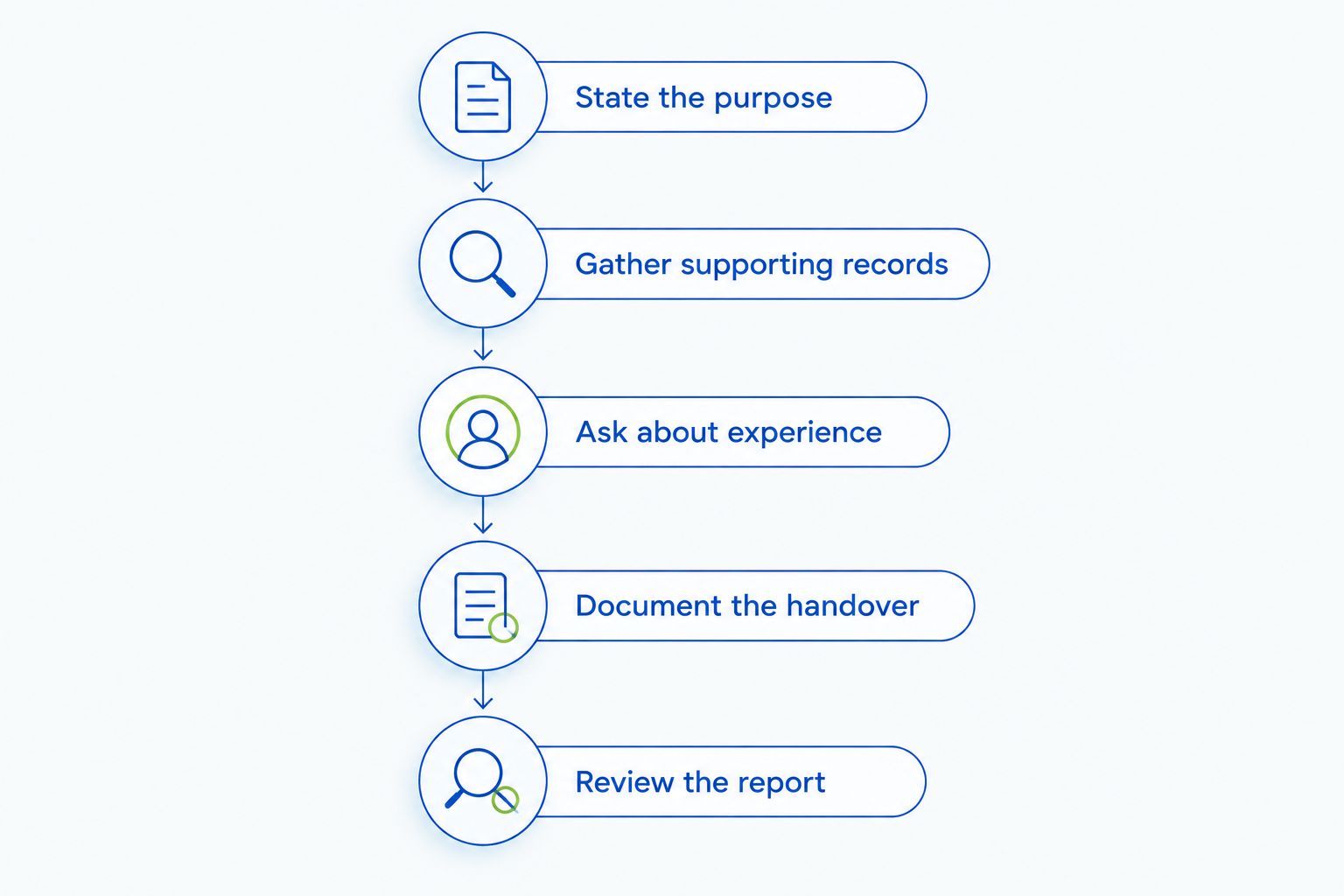
Set the purpose before the examination so the report addresses the right question.
What can an appraiser learn from the ring itself?
An examination starts with the physical piece. The appraiser can record its design, dimensions, weight, visible markings, stone arrangement, workmanship, and signs of wear or repair, using appropriate examination methods.
Metal stamps provide clues, not a complete conclusion. For example, 14-karat gold contains about 58.3% gold, 18-karat gold contains 75%, and 24-karat denotes pure gold; an appraiser still needs to assess whether the marking is consistent with the piece. A stamp does not independently establish the maker or the history of every component.
Gemstones introduce other limits. A mounted setting can obstruct parts of a stone, and an appraiser cannot directly weigh a stone separately while it remains mounted; estimated weights should be identified as estimates. Some questions about treatments, origin, or natural versus laboratory-grown material require suitable testing or a laboratory report.
Do not authorize stone removal just to fill a paperwork gap without discussing the reason and risks. Ask what the additional examination would establish and whether that information is necessary for your intended use.
Which type of ring appraisal do you need?
The right report is the one written for your actual purpose—not the one with the most impressive-looking value. Explain your goal before the appraiser begins researching the ring.
Insurance replacement
- Best for: Owners arranging or updating jewelry coverage
- Main benefit: Documents a replacement-value opinion for the stated insurance use
- Important limitation: Does not determine every policy's settlement terms
Fair market value
- Best for: Estate or other assignments requiring that valuation basis
- Main benefit: Addresses a defined market and transaction context
- Important limitation: Requires the correct instructions for the assignment
Resale-focused valuation
- Best for: Owners considering selling a ring
- Main benefit: Examines the relevant secondary market
- Important limitation: Does not guarantee an offer or completed sale
An insurance valuation is not interchangeable with a resale estimate. A potential buyer considers the market in which the ring will be resold, while an insurance assignment addresses the replacement basis stated in the report.
For an estate, tax, or legal matter, ask the responsible professional for instructions first. The required effective date can differ from the day the ring is examined.
Why ring appraisal findings vary
A missing receipt is only one part of the picture. These factors affect what an appraiser can establish and how the valuation is developed:
- Purpose and market: Replacement, fair market, and resale assignments answer different questions.
- Metal and construction: Metal content, weight, workmanship, and the setting's construction contribute to the description and analysis.
- Gemstone characteristics: Identity, measurements, quality, treatments, and origin matter when relevant and established.
- Condition and alterations: Wear, damage, resizing, replacement stones, and previous repairs affect the piece being evaluated.
- Designer attribution: Signatures and supporting records can help establish attribution; an unverified family description is not enough by itself.
- Examination limits: Mounted stones, inaccessible markings, and missing laboratory information restrict what can be stated conclusively.
Two reports also need the same effective date and valuation basis before their conclusions can be meaningfully compared. A report prepared in 2026 is not automatically comparable to an older document written for another purpose.
Can you appraise an inherited ring with no paperwork at all?
Yes, an inherited ring can be appraised without purchase paperwork. Bring the ring and any available supporting material, even if that means only photographs and a written account of what your family knows.
Ask the appraiser to distinguish confirmed observations from attributed history. A family story can be meaningful without proving a gemstone's origin, a designer's identity, or a specific age.
Does a ring appraisal prove that you own the ring?
No, a ring appraisal is an opinion of value for a stated purpose, not a legal determination of ownership. Keep inheritance records, gift correspondence, purchase communications, or other ownership-related documents separately.
For a disputed inheritance or ownership question, obtain legal guidance. Do not ask a valuation report to resolve a question outside its scope.
Will insurance accept an appraisal without a receipt?
An insurer can accept an appraisal without an original receipt, but acceptance depends on the insurer's requirements. Ask what it needs before booking, including the required description, photographs, appraiser qualifications, and document date.
An accepted appraisal also does not mean every kind of loss is covered. Read the policy's coverage terms and exclusions separately from the valuation document.
Where does a designer jewelry boutique fit?
Element79jewelry is best for shoppers seeking contemporary designer fine jewelry and custom bridal pieces in Cherry Creek, Denver. Shopping guidance and a formal appraisal are different services, so confirm appraisal arrangements directly rather than assuming a boutique provides them.
If documenting an heirloom leads you to explore a new bridal design, Element79jewelry offers contemporary fine jewelry and custom bridal pieces. Keep that design decision separate from the appraisal: document the existing ring before authorizing changes, and ask what updated documentation the finished piece will need.
FAQ
Can you appraise a ring without a receipt if it was a gift?
Yes, a gifted ring can be appraised without the original receipt. Bring the ring and any available gemstone report, gift correspondence, repair records, or previous appraisal, and explain the purpose of the new report.
What should I bring to a ring appraisal if I have no paperwork?
Bring the ring and tell the appraiser what you need the report for. Photographs, family notes, retailer emails, and repair records can provide useful context, but clearly separate confirmed facts from recollections.
Can an appraiser tell whether my diamond is natural or laboratory-grown?
An appraiser needs appropriate examination methods to establish whether a diamond is natural or laboratory-grown. Ask whether the appraiser has suitable testing capability or whether a gemological laboratory report is needed.
Is a gemstone grading report the same as a ring appraisal?
No, a gemstone grading report describes a stone within the laboratory's stated scope, while a ring appraisal develops a value opinion for a stated purpose. A grading report does not value the entire ring or prove ownership.
Can I get a ring appraised from a photograph?
A photograph alone cannot establish all the characteristics needed for a fully examined ring appraisal. If a valuation uses photographs or supplied records, the report should disclose that scope and its limitations.
Do I need a new appraisal after resetting an inherited stone?
Resetting changes the item described in an earlier appraisal, so ask your insurer what updated documentation it requires. Keep records of the original ring, the work performed, and the finished piece.
Does Element79jewelry provide ring appraisals?
Confirm appraisal services directly with Element79jewelry before planning a visit. The boutique sells contemporary designer fine jewelry and custom bridal pieces; that does not establish whether formal appraisals are offered.
One last thing
Photograph the inside of the band before resizing or redesigning an inherited ring. Engravings and maker's marks can help document the piece, and alterations can affect those details.
Save those images alongside the appraisal and supporting records. The most useful replacement for a lost receipt is a clear, organized record of the ring you have now—not a reconstructed purchase story.
Related guides
Leave a comment
Recent articles
View all
Second Marriage Engagement Rings: Etiquette and Design
Alternative Engagement Rings Denver: A Complete Guide