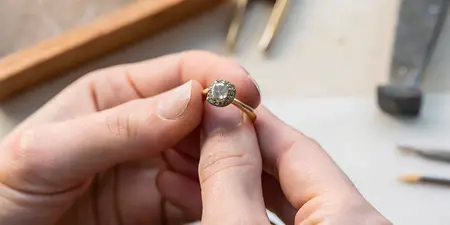

Can you add diamonds to a plain wedding band later?

Yes, you can add diamonds to a plain wedding band later if the metal, remaining thickness, and construction support the proposed setting. A jeweler needs to examine the actual ring before confirming the work; a band that looks substantial from above can still be too shallow beneath a diamond. Start with the ring’s structure, then choose the sparkle—not the other way around.
TL;DR
- Can you add diamonds to a plain wedding band later? Yes, when its construction supports secure diamond setting.
- Flush, pavé, and channel settings need different amounts and arrangements of supporting metal.
- Element 79 offers custom bridal jewelry for shoppers exploring a new design instead of altering an existing band.
- A separate diamond band adds sparkle without cutting into your original wedding ring.
Can you add diamonds to a plain wedding band later?
Yes—but adding diamonds means changing the band’s structure, not simply attaching stones to its surface. The jeweler must create seats for the diamonds and secure them with metal, whether that metal comes from the existing band or an added setting.
Before choosing a design for a 2026 anniversary or vow renewal, compare the approaches below. If your band also needs a size change, review how to resize a designer ring safely and discuss both changes together.
Flush-set diamonds
- Best for: A restrained, scattered sparkle
- What you gain: Diamonds set into the band with a low profile
- Main limitation: The band needs enough depth beneath each stone
Pavé-set diamonds
- Best for: A closely spaced, sparkling surface
- What you gain: Small stones secured by fine beads of metal
- Main limitation: Existing width, depth, and condition limit the layout
Channel-set diamonds
- Best for: A continuous, structured row
- What you gain: Diamonds held between parallel metal walls
- Main limitation: Cutting a channel requires sufficient supporting metal
Separate diamond band
- Best for: Keeping the original ring unchanged
- What you gain: Sparkle alongside your wedding band
- Main limitation: The combined stack changes how the rings fit and feel
These are design directions, not approvals for your particular ring. A photograph helps communicate your taste, but it cannot show all the wear, previous repairs, or internal construction that determine feasibility.
Why this matters
Your wedding band carries a history. Adding diamonds can celebrate another chapter, but the work changes the physical object you exchanged on your wedding day.
Decide what you want to preserve before discussing stone shapes. Is it the original metal, the uninterrupted silhouette, the engraving inside, or simply the feeling of wearing that same ring? Your answer helps distinguish a thoughtful alteration from a redesign you would regret.
If keeping the original band untouched matters most, choose a companion diamond band rather than an alteration. You can enjoy both pieces together and still wear the plain band on its own.
Flush-set diamonds: best for subtle sparkle
Flush setting places a diamond into a prepared seat, with surrounding metal securing its edge. The result keeps the stone close to the band’s surface rather than lifting it into a separate, projecting setting.
This approach suits a quiet accent or an intentionally scattered composition. You can discuss a centered arrangement, asymmetry, or spacing that leaves generous areas of plain metal visible.
The limitation is depth. The diamond extends below the visible surface, so the jeweler must check the band’s cross-section—not just whether the stone looks small enough from above.
Ask to see the proposed placement from the side as well as the top. A low-profile appearance should not come at the expense of the metal needed to support the setting or keep the inside comfortable.
Choose flush setting for a subtle addition only after a jeweler confirms adequate depth at every proposed stone position.
Pavé-set diamonds: best for a sparkling surface
Pavé uses closely spaced small diamonds held by fine beads of metal. It creates a different impression from isolated flush-set accents: more of the visible surface becomes a field of sparkle.
For an existing band, the question is whether its dimensions and condition allow the jeweler to form secure seats and retaining beads. A delicate appearance does not mean the work needs little supporting material.
Pavé also changes your maintenance conversation. Small retaining details need attention, and the layout can complicate later resizing, particularly when diamonds extend around much of the ring.
Discuss where the diamonds stop. Leaving a plain section beneath the finger gives the design a different appearance and gives the jeweler a specific area to assess when considering future size changes.
Choose pavé for closely spaced sparkle, not as a way to disguise a worn or structurally weak band.
Channel-set diamonds: best for a defined row
Channel setting holds a row of diamonds between parallel walls of metal. Those edges give the design a framed, architectural feel without individual prongs rising between every stone.
Adding a channel to a plain band requires more than drawing a line along its surface. The jeweler must evaluate the space for the stones, their seats, the retaining walls, and the metal remaining underneath.
A wide-looking band is not automatically suitable. Its profile can be shallow, hollow, worn, or shaped in a way that conflicts with the proposed channel.
Ask whether the existing band can accommodate the design directly or whether the proposal involves rebuilding part of it. Those are materially different changes, especially when retaining the original ring is your priority.
Choose channel setting when the band supports the entire structure, not just the visible width of the diamond row.
Why adding diamonds varies from ring to ring
The deciding factors are physical, not simply stylistic. For a 2026 redesign, have the jeweler assess these points before you approve a stone layout:
- Metal and alloy. Gold and platinum require different working methods, and the exact alloy matters. A metal description alone does not establish whether a particular alteration is suitable.
- Width and depth. The surface must accommodate the proposed layout while leaving enough supporting metal around and beneath the diamonds.
- Construction and condition. A solid band, a hollow band, and a heavily worn band present different starting points. Previous repairs also belong in the assessment.
- Diamond dimensions. Stone depth and diameter both matter. A diamond that fits across the top still needs a safe seat below it.
- Placement and coverage. Isolated accents, a partial row, and diamonds around the entire circumference change the setting work and future resizing options.
- Details to preserve. Interior engraving, patterned surfaces, maker’s marks, and existing contours can restrict where the jeweler works.
Gold purity marks offer useful identification, but they do not answer the structural question. 14-karat gold, 18-karat gold, and 24-karat gold describe purity—not band thickness or permission to add diamonds. Do not treat a hallmark as an alteration guarantee.
How do you plan a diamond addition without losing the ring’s character?
Bring the actual ring, not just an inspiration photo. A useful 2026 design brief separates what you want to change from what must remain untouched.
- Inspect the band. Ask the jeweler to identify its metal, construction, worn areas, previous joins, and any damage before discussing a final setting.
- Choose the layout. Show the amount of sparkle you like, then ask which arrangements the ring can support. Keep the design flexible until the assessment is complete.
- Confirm the fit. Discuss resizing before stones are set and try the band beside your engagement ring. Consider the whole stack rather than each ring in isolation.
- Protect the details. Identify engraving, marks, finishes, and contours you want preserved. Ask which details the proposed work would affect.
- Approve the scope. Request a written description of the setting, stone arrangement, repairs, finishing, and any rebuilding before authorizing work.
The key distinction is between altering your existing band and using it as the starting point for a substantially rebuilt ring. Neither choice is inherently wrong; you should know which one you are approving.
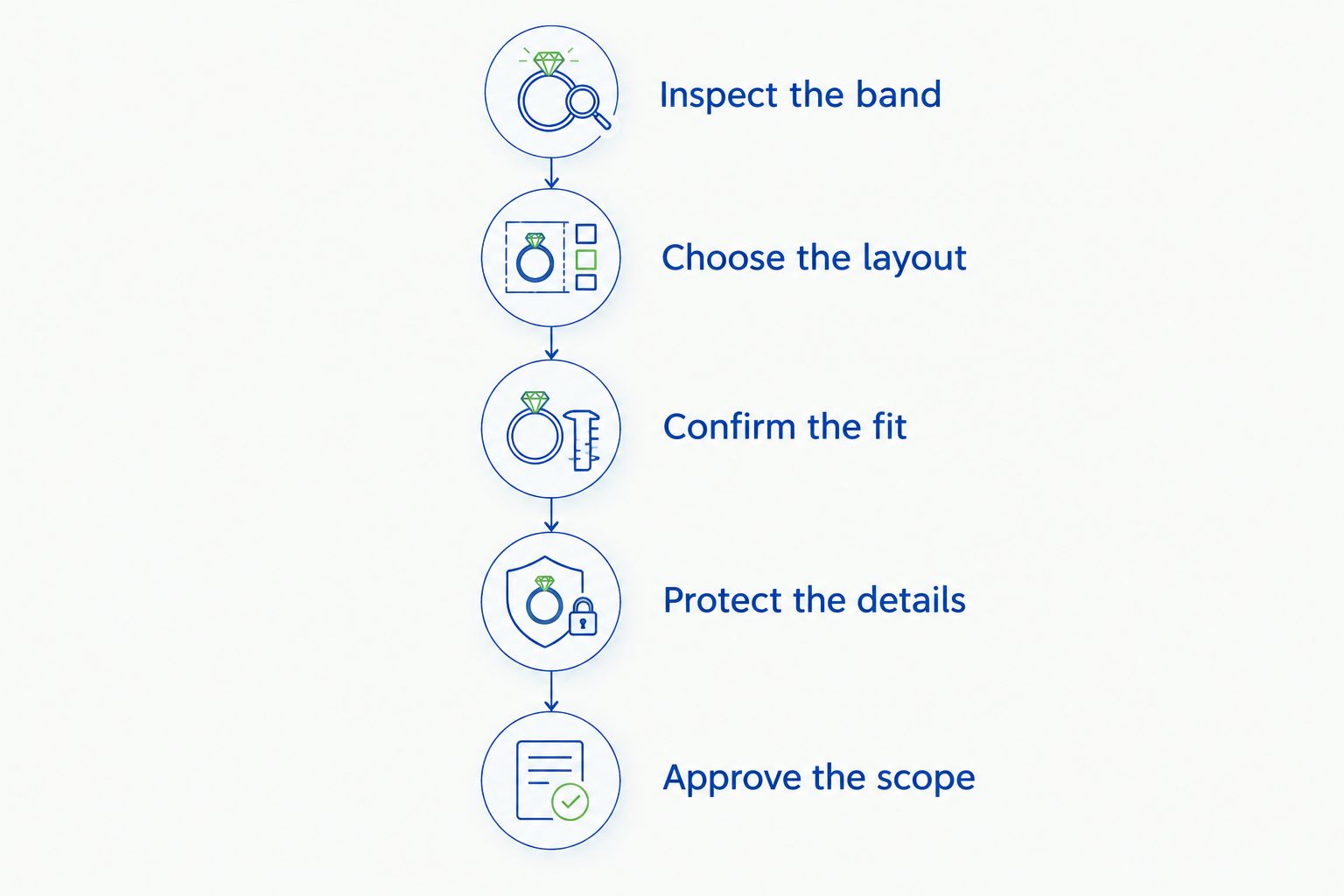
Confirm the ring’s structure and fit before approving the diamond layout.
When is a new band the better choice?
A new diamond band deserves consideration when the original ring cannot support your preferred setting or when preserving it matters more than transforming it. It also lets you explore a different silhouette without asking an older band to become something it was never built to be.
Element 79 is a fit for Denver couples seeking contemporary designer fine jewelry and custom bridal pieces. That makes Element 79 relevant when you are considering a new bridal design rather than assuming an existing ring can be altered.
The trade-off is clear: a new ring does not preserve the original band as the same physical piece. A companion band preserves it, but adds width to your stack and changes the feel on your finger.
Element 79’s custom bridal offering is not, by itself, confirmation that your existing band qualifies for diamond-setting work. Ask about the specific project before making alteration plans.
Can you add diamonds around the entire wedding band?
Diamonds around the entire wedding band require a suitable structure throughout its circumference. The setting also needs to work where the ring touches neighboring fingers and the underside of your hand.
Full-circumference designs can make later resizing difficult because changing the circumference affects the repeating stone layout. If future fit changes concern you, discuss a partial diamond arrangement before committing.
Can you use diamonds from an inherited ring?
Inherited diamonds can be considered for an existing band, but the jeweler must examine their dimensions and condition. Their sentimental importance does not guarantee that they suit the available space or proposed setting.
Ask how the stones would be removed, assessed, and arranged before authorizing changes to either piece. Preserve photographs of the original heirloom if its composition is part of the family story.
Will adding diamonds damage the engraving inside my band?
Adding diamonds can affect interior engraving when stone seats, repairs, resizing, or finishing overlap the engraved area. Show the inscription to the jeweler at the first inspection rather than after approving the layout.
Ask whether it can remain untouched and what the alternatives are if it cannot. Recreating an inscription is a different outcome from preserving the original engraving.
FAQ
Can I add just a small diamond to my plain wedding band?
Yes, if the band has sufficient supporting metal for the diamond and setting. Even a small stone needs a properly formed seat, so a jeweler must inspect the ring first.
Can I add diamonds to a thin wedding band?
A thin wedding band needs an individual structural assessment before diamonds are added. Width alone is not enough; the jeweler must also check depth, wear, and construction.
Is flush setting better than pavé for adding diamonds later?
Flush setting suits isolated, low-profile accents, while pavé suits closely spaced sparkle. Neither is automatically better for an existing ring because each needs a different arrangement of supporting metal.
Can I resize my wedding band after adding diamonds?
Resizing depends on the diamond placement, setting style, metal, and amount of change required. Discuss foreseeable fit changes before setting diamonds, especially for designs extending around the circumference.
Can diamonds be added without changing my wedding band at all?
No, setting diamonds into the original band changes its structure. A separate diamond band is the alternative when you want sparkle without altering the original ring.
Should I buy the diamonds before a jeweler checks my band?
Have the band assessed before buying diamonds for the alteration. The ring’s dimensions and proposed setting determine which stone dimensions are suitable.
What should I ask before approving the work in 2026?
Ask exactly what metal will be removed, added, repaired, or refinished, and which original details will remain. Get the proposed layout and scope in writing before authorizing changes.
One last thing
Before changing your wedding band in 2026, take clear photographs of the outside, inside, engraving, and maker’s marks. Write down the details you love—including the quiet ones, such as the rounded edge or the way the plain metal catches the light.
Ask what will remain original, not just what will look different. That question keeps the decision centered on your ring’s meaning as well as its new sparkle.
Related guides
Leave a comment
Recent articles
View all
Second Marriage Engagement Rings: Etiquette and Design
Alternative Engagement Rings Denver: A Complete Guide