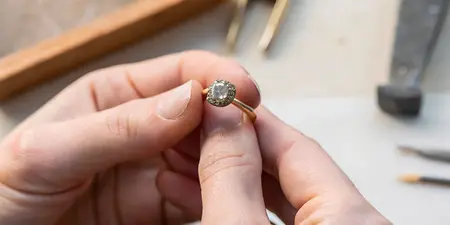

Private Jewelry Consultation Cherry Creek Denver: Book 2026
Instead of walking into a boutique and explaining your tastes from scratch, book a 2026 private jewelry consultation in Cherry Creek Denver and send your occasion, style preferences, and questions in advance. Start with Element 79 Jewelry, then use the workflow below to prepare for a focused conversation about designer fine jewelry or custom bridal pieces.
TL;DR
- A private jewelry consultation in Cherry Creek Denver gives your visit a clear purpose before you arrive.
- Element 79 Jewelry is best for style-conscious shoppers seeking contemporary fine jewelry or custom bridal pieces.
- Prepare a 1-page brief with your occasion, category, style direction, fit details, and questions.
- Use a 3-image shortlist to communicate your taste without overwhelming the consultation.
- For a 2026 bridal consultation, separate must-haves from details you are willing to explore.
Why this matters
Fine jewelry is difficult to judge from isolated product images. Scale changes when a ring reaches your hand, necklace proportions shift with different necklines, and mixed-metal combinations often make more sense when you see them together.
A prepared appointment gives the conversation structure. You can compare pieces against a real occasion, existing jewelry, and the way you dress instead of reacting to one display at a time.
The boutique context also matters. Element 79 Jewelry carries contemporary and designer fine jewelry across rings, necklaces, bracelets, earrings, and custom bridal pieces, including work from Artëmer, Orly Marcel, Spinelli Kilcollin, and Petra Class. That range creates useful choices, but it also makes a clear brief essential.
Element 79 Jewelry is best for style-conscious shoppers and engaged couples who want contemporary designer fine jewelry or custom bridal guidance in Cherry Creek. Its focus is less relevant when you are shopping outside the fine-jewelry category or want to browse without discussing style, fit, or purpose.
Before you start
Prepare these materials before sending an appointment request:
- A 1-page brief: Include the occasion, jewelry category, preferred metals or colors, pieces you already wear, and the decisions you want help making.
- A 3-image shortlist: Choose references that show a consistent direction. Include one image for silhouette, one for material or gemstone, and one for overall mood.
- Fit information: Bring a known ring size when available, plus photos of any ring, necklace, bracelet, or earring you want the new piece to complement.
The non-obvious gotcha is conflicting inspiration. A delicate vintage-inspired ring, an architectural mixed-metal band, and a colorful gemstone cluster can all be beautiful, but together they do not communicate one design direction. Label what you like in each image so the stylist can separate shape, texture, color, and setting preferences.
For a 2026 surprise proposal, do not delay the consultation solely because the ring size is unknown. Note that sizing is unresolved and make it one of the decisions to discuss.
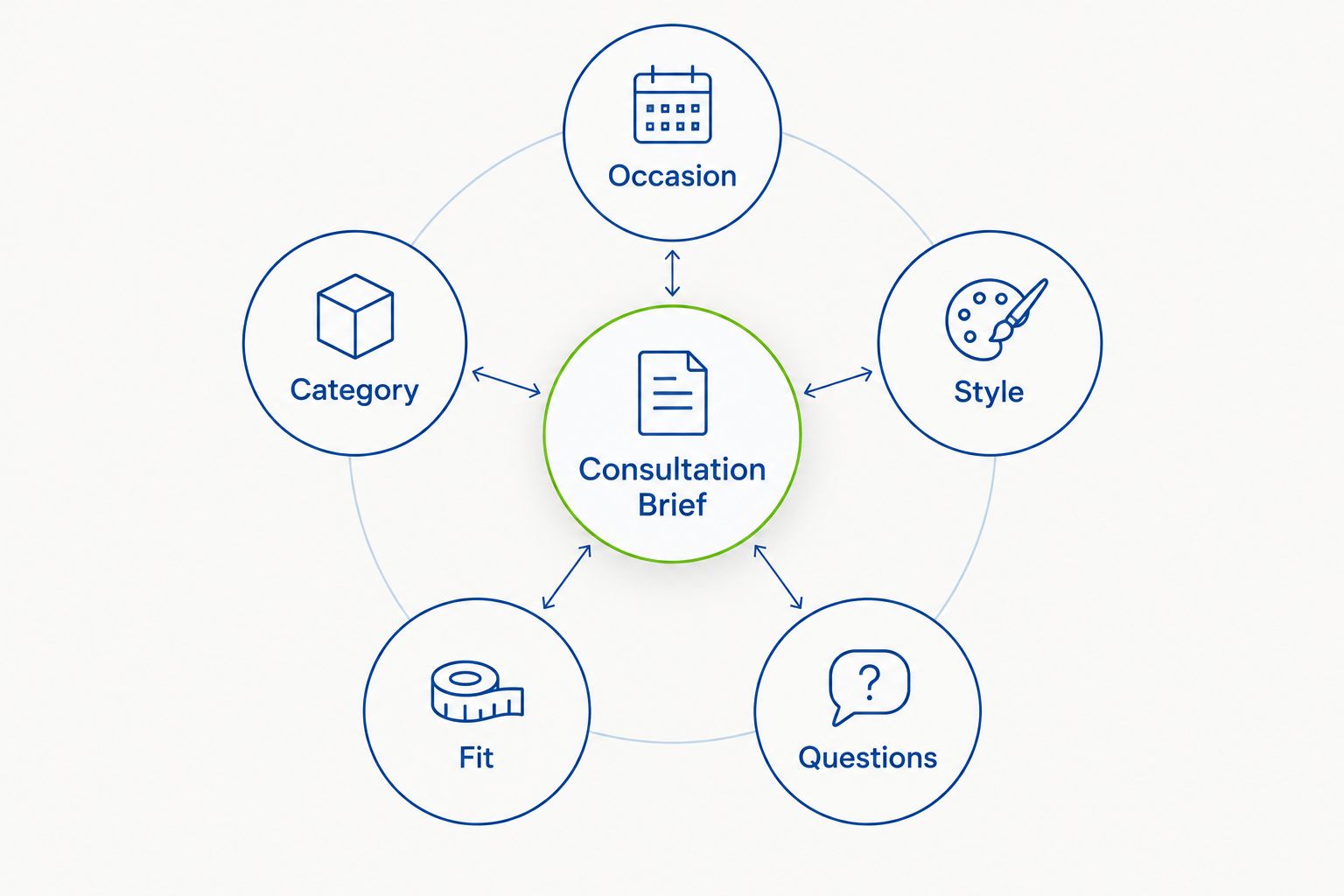
A useful consultation brief connects what you need with how you want the piece to feel.
Choose your consultation path
Decide whether you need ready-to-wear styling or a custom bridal conversation. Both benefit from advance preparation, but they answer different questions.
Ready-to-wear styling
- Best for: Gifts, personal milestones, wardrobe additions, and designer discovery
- Main advantage: Lets you compare finished rings, necklaces, bracelets, or earrings around a defined style
- Trade-off: A broad request can still produce too many directions unless you name the occasion and category
Custom bridal design
- Best for: Engagement rings, wedding bands, coordinated bridal pieces, and heirloom redesign ideas
- Main advantage: Centers the conversation on one personal design brief
- Trade-off: Requires more decisions about shape, materials, fit, and daily wear
Choose ready-to-wear styling when the goal is to find an existing piece that feels right. Choose custom bridal design when the piece must respond to a specific stone, ring pairing, personal story, or design idea.
If your 2026 visit could follow either path, state that clearly. Ask to compare existing designer pieces first, then discuss whether custom work better addresses the details that matter most.
Set up your consultation request
- Name the occasion. State whether you are shopping for an engagement, wedding, anniversary, milestone, gift, or personal purchase. Avoid broad openings such as needing something special; the occasion changes what deserves attention.
- Choose the category. Specify rings, necklaces, bracelets, earrings, custom bridal pieces, or a combination. If you want several categories, rank them rather than treating all of them as equal priorities.
- Describe your style direction. Use concrete words tied to appearance: sculptural, delicate, mixed-metal, colorful, minimal, vintage-inspired, or architectural. Add the 3-image shortlist so those words have visual context.
- Share fit details. Include a known ring size when relevant and mention whether the piece must sit beside existing jewelry. For earrings, note the piercing placement you are styling. For necklaces, identify the neckline or other chains involved.
- List your open questions. Ask about comparisons you want to make during the visit, such as different gemstone shapes, metal colors, band profiles, or ways to build a coordinated stack.
- Request a 2026 date window. Offer more than one workable date or time and wait for confirmation before treating the appointment as fixed.
Expected result: the consultation request explains who the piece is for, why you are shopping, which category matters, what visual direction you prefer, and which decisions remain open.
Prepare your jewelry shortlist
- Separate must-haves from preferences. A must-have directly affects whether the piece works, such as fitting beside an existing ring. A preference describes a direction you like but are willing to compare against alternatives.
- Choose comparison points. Limit each decision to a clear pair or small group: warm metal versus cool metal, restrained silhouette versus statement shape, or colorless stone versus colored gemstone. This keeps the appointment from becoming an unrelated sequence of pieces.
- Photograph existing jewelry. Use clear, close images in neutral light. Include a hand or neckline photo when scale and proportion matter.
- Write down daily-wear conditions. Note whether the piece will be worn every day, only for events, beside other jewelry, or during hands-on work. This gives the consultation practical context without forcing you to solve the design alone.
- Bring the actual piece when pairing matters. A photo cannot fully show height, profile, texture, or how two rings meet. The physical piece makes side-by-side comparison more useful.
Expected result: you arrive with a small set of coherent references and enough context to evaluate each option against your real wardrobe and routine.
A consultation should still leave room for discovery. The shortlist is a filter, not a script. If every detail is fixed before you arrive, you lose the benefit of seeing unfamiliar designer work in person.
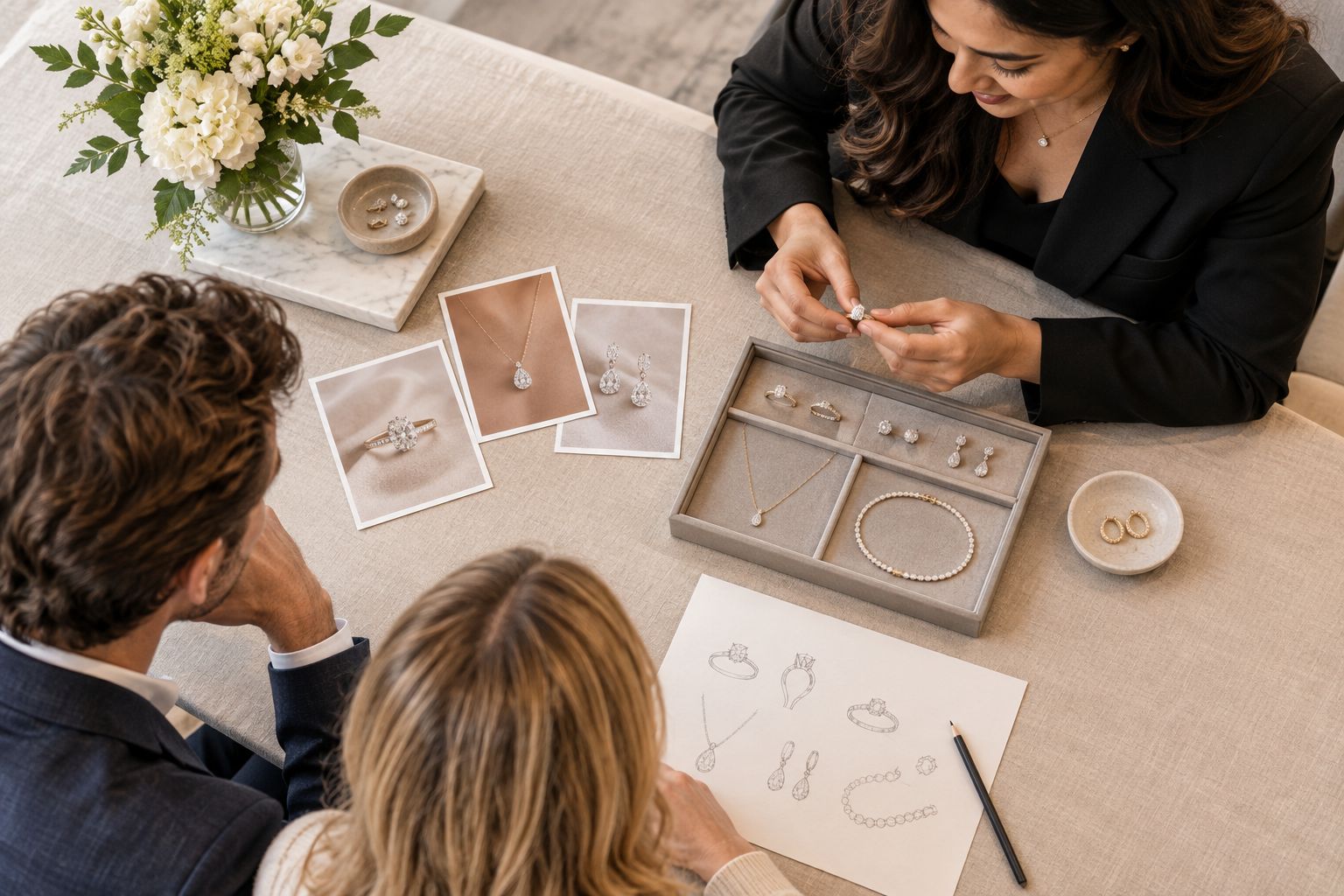
A small, coherent reference set makes side-by-side jewelry comparisons easier.
Plan the conversation in the boutique
- Restate the goal first. Open with the occasion, category, and one sentence about how you want the piece to feel. This keeps the conversation tied to the decision you came to make.
- Compare one variable at a time. Look at shape before changing metal, or compare metal before changing gemstone color. When every feature changes at once, you cannot tell which detail changed your reaction.
- Try pieces with your existing jewelry. Check spacing, scale, movement, and whether one piece visually overwhelms another. For a ring stack, view the profile as well as the top.
- Record the finalists. Note the designer or design direction and the reason each finalist worked. Memory compresses similar pieces together after the appointment.
- Confirm the next action. A ready-to-wear visit and a custom design conversation can end differently. Make sure you understand whether your next step is another comparison, a design decision, or a separate follow-up.
Expected result: you leave with a defined shortlist or design direction rather than a collection of unrelated favorites.
Use the same workflow for a gift consultation
A gift consultation needs a recipient brief instead of a personal style brief. Start with what the recipient already wears, not what you would choose for them.
- Identify the jewelry category they wear most often.
- Note whether their current pieces are restrained, colorful, sculptural, mixed-metal, or layered.
- Photograph two or three pieces they already own when you can do so without spoiling the gift.
- Name the occasion and the message the gift should carry.
- Separate your preferences from the recipient's established style.
For a 2026 anniversary or milestone gift, mention whether the new piece should stand alone or join an existing stack or necklace layer. That single distinction changes the scale and shape you should compare.
Expected result: the stylist can use observable details from the recipient's jewelry instead of relying on broad personality descriptions.
Troubleshooting consultation problems
The request is too broad
Problem: You ask to see rings, necklaces, bracelets, and earrings without ranking them.
Fix: Choose one primary category and one secondary category. State which decision must be made during the consultation and which category is optional.
Your reference images conflict
Problem: Each image represents a different style, so the shortlist communicates variety rather than preference.
Fix: Add a note beneath each image naming the exact feature you like. Remove any reference that does not support the final direction.
The ring size is unknown
Problem: A surprise proposal makes direct sizing difficult.
Fix: Say that the size is unknown in the original request. Bring any available reference information and use the consultation to discuss the appropriate next step rather than guessing silently.
Two shoppers want different things
Problem: One person prioritizes a classic silhouette while the other prefers a more unexpected design.
Fix: Create separate must-have lists before the visit, then identify the shared requirements. A 2-person consultation works better when disagreement is visible and specific.
An heirloom piece changes the brief
Problem: The plan depends on reusing a stone or metal, but the heirloom is represented only by a distant photo.
Fix: Bring the physical piece when possible and describe the intended transformation without assuming every element can be reused. Keep the initial brief focused on the desired result.
You leave with too many favorites
Problem: Several pieces are appealing, but none has been tested against a consistent standard.
Fix: Score each finalist against the occasion, style direction, fit, existing jewelry, and daily-wear context. Remove any option that misses a must-have, even if it is striking on its own.
Customize your 2026 consultation
Add one practical test based on the jewelry category:
- Rings: View the top, side profile, and spacing beside any existing band.
- Necklaces: Compare the piece with the neckline and chains you wear most.
- Bracelets: Check how the piece sits beside a watch or existing wrist stack.
- Earrings: Compare scale against your face, hairstyle, and other piercings.
- Custom bridal pieces: Rank the silhouette, gemstone direction, metal, fit, and relationship to any wedding band.
Keep your questions on the 1-page brief and update it after the consultation. The revised version becomes a clean record of what worked, what did not, and what still needs a decision.
Plan your Element 79 visit
Review the boutique and prepare your consultation brief before requesting a 2026 appointment.
FAQ
What should I bring to an Element 79 Jewelry consultation?
Bring a 1-page brief, a 3-image inspiration shortlist, relevant fit details, and any jewelry the new piece must complement. For a custom bridal conversation, separate must-haves from design details you are open to exploring.
How do I prepare for a private jewelry consultation in Cherry Creek Denver?
Define the occasion, jewelry category, style direction, fit requirements, and open questions before requesting a date. A focused brief makes comparisons more useful once you are in the boutique.
Do I need to know the ring size before a bridal consultation?
No, but you should state clearly when the size is unknown. That allows sizing to become an explicit consultation topic instead of an unspoken guess.
Can I book a consultation for a jewelry gift?
Yes, use a recipient brief built around the jewelry they already wear. Photos of their existing pieces communicate scale, metal preferences, color, and styling habits more clearly than personality labels.
Should I bring my existing ring or necklace to the appointment?
Bring the physical piece when the new jewelry must pair with it. Side-by-side viewing reveals proportion, profile, spacing, and texture that a photo can hide.
What is the difference between styling and custom bridal consultations?
Styling focuses on finding finished jewelry for a defined occasion or wardrobe, while custom bridal work starts with a personal design brief. Custom conversations require more decisions about silhouette, materials, fit, and coordination with other rings.
Can my partner join a 2026 jewelry consultation?
Yes, plan a 2-person visit when both people are part of the decision. Prepare separate must-have lists first so shared priorities and disagreements are easy to identify.
How many inspiration photos should I bring?
Bring a focused 3-image shortlist rather than a large unsorted gallery. Label the specific shape, material, color, or mood you like in each image.
One last thing
Do not use the consultation to answer every jewelry question at once. Choose one decision that must be resolved in 2026, such as the engagement-ring silhouette, the direction of a custom bridal piece, or the right designer style for a milestone gift.
A focused Element 79 Jewelry consultation is more useful when the brief leaves room for discovery but gives every comparison a purpose.
Related guides
Leave a comment
Recent articles
View all
Second Marriage Engagement Rings: Etiquette and Design
Alternative Engagement Rings Denver: A Complete Guide