Best wedding band metals ranked by engraving durability

Best overall for a lasting, repairable inscription: platinum. Best for classic engraved bands: 14k gold. Best for scratch-resistant laser engraving: tungsten carbide. This 2026 guide ranks the best wedding band metals for engraving by lettering options, everyday wear, and the ability to preserve your message through future repairs—not hardness alone.
TL;DR
- The best wedding band metals for engraving balance inscription depth, everyday wear, and future repairs.
- Platinum is the default for a repairable keepsake; 14k gold suits classic engraved wedding bands.
- Tungsten carbide suits laser inscriptions, but its scratch resistance comes with resizing limitations.
- Element79jewelry suits couples exploring contemporary fine jewelry and custom bridal designs in Cherry Creek, Denver.
Why this matters
Your wedding band holds more than a date or a few initials. A private phrase inside the band deserves the same attention as the shape you see on your hand.
The hardest metal does not automatically produce the longest-lasting inscription. Engraving depth, letter spacing, placement, polishing, and resizing all affect whether your message stays readable. A shallow surface mark and a recessed inscription are different things, even on the same metal.
Element79jewelry offers contemporary fine jewelry and custom bridal pieces in Cherry Creek, Denver. When exploring wedding bands, discuss the inscription alongside the design rather than treating it as a final detail.
What makes the best wedding band metals for engraving?
For your 2026 shortlist, use these criteria before choosing a metal:
- Lettering compatibility: The metal must suit the intended hand-cut, machine-cut, or laser process.
- Inscription depth: Recessed lettering has material beneath the surrounding surface; a surface-only mark does not.
- Wear resistance: Scratches and abrasion matter most where the inscription contacts other surfaces.
- Repair flexibility: Resizing and refinishing can interrupt lettering, so the repair plan belongs in the decision.
- Readable space: Interior width, curvature, hallmarks, and stone openings limit the usable canvas.
- Alloy clarity: Karat or metal name alone does not describe every alloy's hardness or working properties.
Wedding band metals at a glance
This is a practical ranking for an engraved keepsake, not a laboratory ranking of scratch resistance. A well-executed inscription on a suitable band matters more than a small difference between neighboring choices.
1. Platinum
- Best for: A repairable heirloom inscription
- Standout feature: Supports cut and laser engraving in a naturally white metal
- Key limitation: Scratches and polishing still affect lettering
2. 14k gold
- Best for: Classic lettering with everyday versatility
- Standout feature: Familiar material for engraving and jewelry repair
- Key limitation: Wear behavior depends on the alloy
3. 18k gold
- Best for: A rich gold color with personal lettering
- Standout feature: Higher gold content and engraving flexibility
- Key limitation: Not a durability upgrade simply because karat is higher
4. Tungsten carbide
- Best for: Scratch-resistant laser-inscribed bands
- Standout feature: Hard surface resists everyday scratching
- Key limitation: Cannot undergo conventional resizing
5. Titanium
- Best for: Lightweight bands with laser lettering
- Standout feature: Low weight and compatibility with specialist laser work
- Key limitation: Resizing and reworking are restricted
6. Sterling silver
- Best for: An expressive, changeable keepsake
- Standout feature: Accommodates cut engraving and detailed decoration
- Key limitation: Tarnish and surface wear require attention
1. Platinum: best wedding band metal for an heirloom inscription
Platinum earns the default recommendation because you can pair a personal inscription with a precious metal that skilled jewelers can repair and resize in suitable designs. It accepts traditional cutting methods as well as laser engraving. Its natural white color also avoids reliance on rhodium plating for a white appearance.
That does not make platinum scratchproof. Its surface develops wear marks, and polishing or repairs can soften or interrupt engraved details.
Platinum pros:
- Supports both traditional and laser engraving.
- Allows future repair and resizing when the design permits.
- Provides a naturally white setting for your inscription.
Platinum cons:
- Surface scratches remain part of everyday wear.
- Alloy differences affect engraving behavior.
- Resizing can require lettering to be restored.
Best for: You want a lasting keepsake with a practical path to future maintenance.
Verdict: Buy platinum if repairability matters as much as the original inscription.
2. 14k gold: best wedding band metal for classic engraved lettering
For a warm yellow band, a rosy tone, or a white-metal look, 14k gold offers familiar ground for engraving. Fourteen-karat gold contains approximately 58.3% gold by mass; the remaining alloy metals influence color and working properties.
Do not assume every 14k band performs identically. Yellow, rose, and white gold use different alloy recipes, and manufacturing also affects hardness.
14k gold pros:
- Works with cut engraving and suitable laser processes.
- Offers different gold colors without changing karat.
- Supports repair and resizing in appropriate designs.
14k gold cons:
- Scratches and abrasion can soften exposed lettering.
- White gold often involves rhodium plating, which requires planning around engraving.
- Karat alone cannot predict inscription wear.
Best for: You want a traditional gold wedding band with clear initials, a date, or a short phrase.
Verdict: Buy 14k gold for a versatile engraved band, after confirming the exact alloy and method.
3. 18k gold: best wedding band metal for rich color
Eighteen-karat gold contains 75% gold by mass. In yellow gold, that higher gold content brings a richer gold color than lower-karat yellow alloys, while still allowing personal lettering through suitable engraving methods.
Choose 18k gold because you love the material, not because a higher karat guarantees a longer-lasting inscription. Hardness depends on the full alloy and its treatment.
18k gold pros:
- Offers rich color in yellow-gold alloys.
- Accepts traditional and laser engraving.
- Allows repair and resizing in suitable band designs.
18k gold cons:
- Higher purity is not proof of greater scratch resistance.
- Fine exterior lettering remains exposed to abrasion.
- Repeated refinishing can reduce inscription definition.
Best for: You care deeply about the gold's color and want the inscription to complement it.
Verdict: Buy 18k gold for its character; skip it as an automatic engraving-durability upgrade.
4. Tungsten carbide: best wedding band material for scratch resistance
Wedding bands described as tungsten are generally tungsten carbide rather than pure tungsten. Their hard surface makes laser engraving the practical route for personal lettering.
Tungsten carbide ranks below repairable precious metals here because preserving a message also means preserving the fit. A band that cannot undergo conventional resizing presents a different long-term commitment.
Tungsten carbide pros:
- Resists everyday scratching better than softer jewelry metals.
- Accommodates specialist laser inscriptions.
- Suits simple lettering on an uncoated surface.
Tungsten carbide cons:
- Does not allow conventional resizing.
- Can chip or fracture under impact.
- Coatings and laser treatments complicate assumptions about inscription wear.
Best for: You prioritize a scratch-resistant surface and accept the sizing limitation.
Verdict: Buy only after approving a sample of the actual engraving process and confirming your size.
5. Titanium: best wedding band metal for a lightweight feel
Titanium suits you if a barely-there feel matters more than the reassuring weight of a traditional precious-metal band. Specialist laser engraving can add a personal message, but the result depends on the equipment and whether the process removes material or changes surface appearance.
Ask about that distinction directly. The word laser describes the tool, not a single depth or finish.
Titanium pros:
- Feels light on the hand.
- Accepts suitable specialist laser engraving.
- Resists corrosion in ordinary wear.
Titanium cons:
- Scratches despite its reputation for strength.
- Conventional resizing is generally impractical.
- Surface-color markings differ from recessed lettering.
Best for: You want low weight and a clean, modern inscription.
Verdict: Buy for comfort, not on a promise that titanium engraving cannot wear.
6. Sterling silver: best wedding band metal for an evolving keepsake
Sterling silver contains 92.5% silver by mass and lends itself to cut lettering and decorative engraving. It is a thoughtful choice when you welcome a surface that changes with wear.
Silver sits last for engraving durability because scratches, abrasion, and tarnish require more attention. Tarnish changes appearance rather than erasing the cut itself, but aggressive polishing can gradually soften engraved edges.
Sterling silver pros:
- Accommodates traditional engraving techniques.
- Allows repair and resizing in suitable designs.
- Suits expressive lettering and decorative work.
Sterling silver cons:
- Scratches and wears readily.
- Tarnishes without suitable care.
- Repeated abrasive polishing reduces fine detail.
Best for: You enjoy a changing finish and accept ongoing care.
Verdict: Skip sterling silver if maximum inscription durability is your first priority.
How to protect the inscription you choose
For a 2026 wedding, settle these details before approving the finished band. Metal selection starts the conversation; the engraving specification finishes it.
Inscription depth
Ask whether the proposed process cuts a recess, creates a shallow surface texture, or changes the surface color. Both mechanical tools and lasers can produce different results, so neither method name guarantees permanence.
Request a representative sample. Look at the lettering under ordinary light rather than judging only an enlarged photograph.
Letter spacing
Choose lettering that remains distinct at its actual size. A flowing script looks lovely, but tightly packed loops can become difficult to read on a narrow interior.
Shorten the message before shrinking every letter. Ask to see the exact spelling, punctuation, and line arrangement in a proof.
Interior placement
An inside inscription avoids much of the direct contact an exterior inscription receives from surrounding objects. It still needs room around hallmarks, stone openings, and curved edges.
Ask where the lettering will sit when the band is worn. A beautiful message should not require placing it across an unsuitable surface.
Repair planning
Confirm the fit before engraving, and ask how future sizing would affect the chosen location. A resizing cut or later refinishing can interrupt the inscription even when the metal itself is repairable.
Keep a clear photograph and an exact written copy of the message. Those records help a jeweler reproduce damaged lettering without relying on memory.
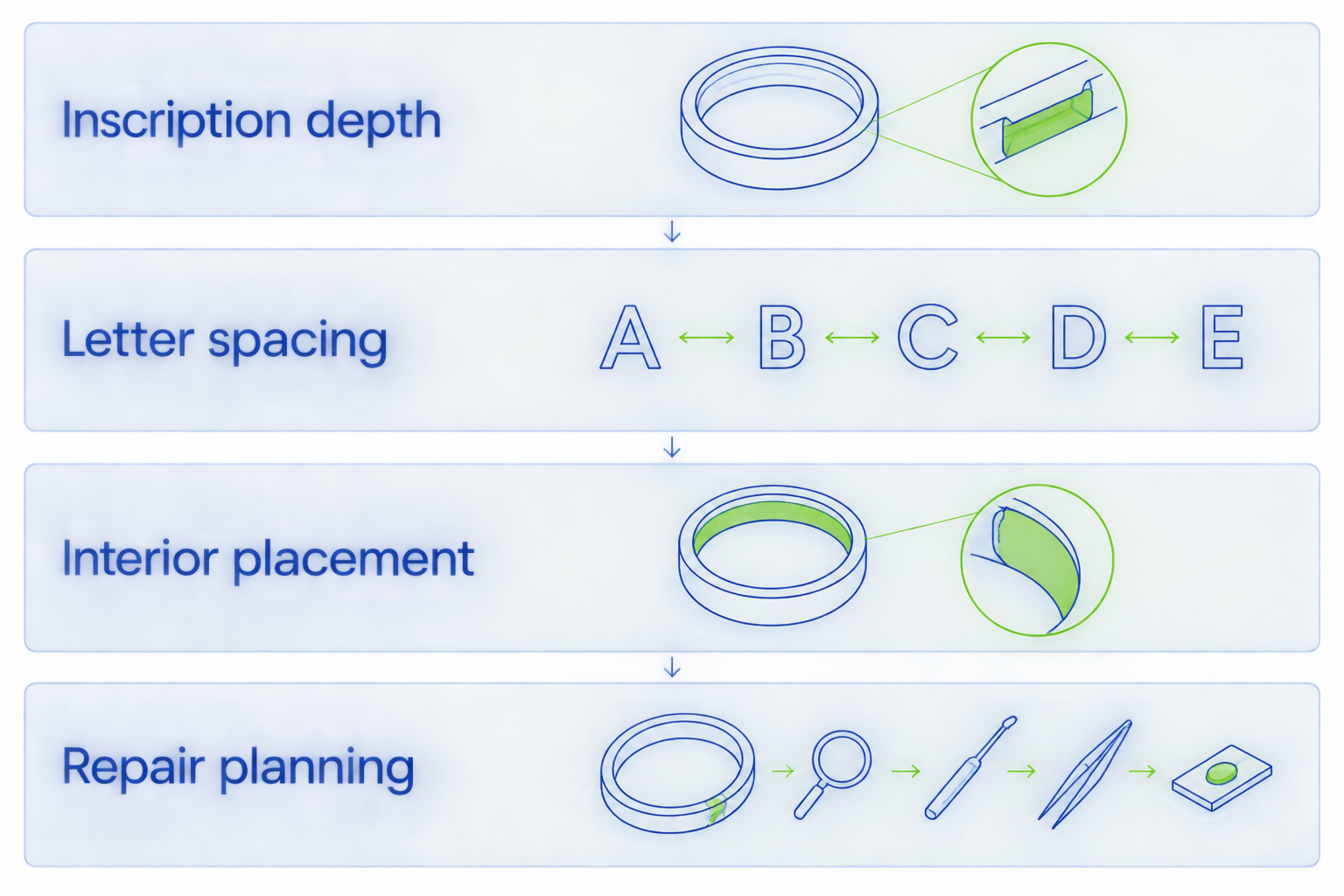
Specify the inscription as carefully as the metal.
How the metals are ranked
This 2026 ranking prioritizes a readable inscription that can remain part of your ring through wear and maintenance. Repair flexibility and engraving compatibility come before maximum scratch resistance, which explains why platinum and gold sit above tungsten carbide.
There is no universal wear-life figure for engraved wedding bands. Alloy, manufacturing, lettering depth, placement, and care prevent an honest promise that any metal preserves a message unchanged for a fixed number of years.
Which wedding band metal should you choose?
Start with platinum if you want a repairable keepsake; choose 14k gold if gold's color feels more like you. Choose tungsten carbide only when scratch resistance outweighs conventional resizing, and titanium when low weight leads the decision.
Element79jewelry's custom bridal offering suits couples who want to discuss the band as a whole: shape, material, and personal meaning. Confirm engraving suitability for the specific design rather than assuming every designer ring accepts the same treatment.
For your 2026 decision, bring the exact message and ask for a readable proof. A carefully placed, well-spaced inscription is a better goal than the smallest possible lettering.
FAQ
What's the best wedding band metal for engraving that lasts?
Platinum is the best default when you want engraving compatibility and future repair options. The actual inscription still depends on depth, placement, alloy, and maintenance; platinum is not scratchproof.
Is 14k or 18k gold better for an engraved wedding band?
Neither karat guarantees a longer-lasting inscription. Choose 14k gold for a versatile classic band or 18k yellow gold for richer color, then compare the specific alloys and proposed engraving.
Does laser engraving last longer than hand engraving?
Laser engraving does not automatically last longer than hand engraving. A laser can produce a recessed inscription or a surface treatment, while hand engraving cuts into the metal; depth and placement determine the useful comparison.
Can you engrave a tungsten wedding band?
Tungsten carbide wedding bands accept suitable specialist laser engraving. Confirm whether the process creates recessed lettering or a surface mark, and discuss any coating before approving the work.
Will resizing a wedding band ruin the engraving?
Resizing can interrupt an inscription when the work crosses the engraved area. Confirm the fit first and ask the jeweler where lettering should sit to leave room for possible future work.
Is inside or outside wedding band engraving more durable?
Inside engraving avoids much of the direct contact that exterior lettering receives from surrounding objects. It still needs sufficient depth and careful placement away from unsuitable contours, hallmarks, and stone openings.
Can Element79jewelry help me explore a personalized bridal ring?
Element79jewelry offers custom bridal pieces in Cherry Creek, Denver. Discuss your intended inscription with the design and confirm the engraving method, usable space, and suitability of the specific ring.
One last thing
Save your message somewhere other than the ring. Before your 2026 ceremony, photograph the finished inscription and store its exact wording with your jewelry records. That small step preserves the personal detail if the band ever needs restoration.
Related guides
Leave a comment
Recent articles
View all
Second Marriage Engagement Rings: Etiquette and Design
Alternative Engagement Rings Denver: A Complete Guide