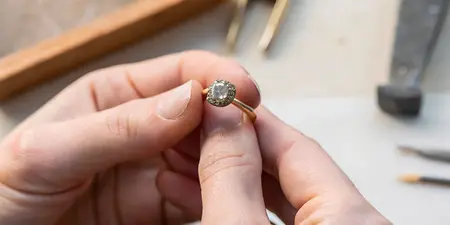

Best professional jewelry cleaning services in Denver
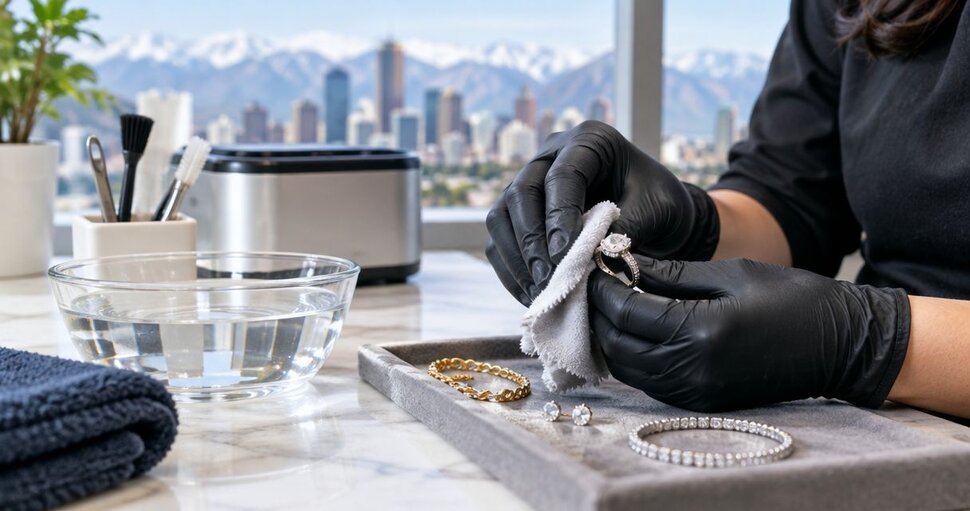
Best overall: an inspection-first jeweler. Best for designer pieces: your original retailer or designer’s care channel. Best for delicate gemstones: a gemstone-care specialist. This 2026 guide helps you choose a professional jewelry cleaning service in Denver; if your piece came from Element79jewelry, start by asking which care route suits its design.
TL;DR
- For the best jewelry cleaning service Denver search, prioritize gemstone identification and setting inspection over a quick shine.
- Element79jewelry is a Cherry Creek boutique for contemporary designer fine jewelry; ask about care before arranging cleaning.
- Choose a gemstone-care specialist for pearls, opals, emeralds, or pieces with unknown treatments.
- Cleaning removes buildup; polishing changes the metal surface. Authorize each separately.
Why this matters
Your favorite ring deserves more than a brighter surface. Lotion, soap, and everyday grime collect around settings, but a loose stone, worn prong, or delicate finish needs attention before cleaning begins.
The right cleaning service matches the method to the whole piece—not just its largest gemstone. A diamond ring with enamel details requires different decisions from a plain diamond solitaire. Likewise, a pearl pendant and a solid gold chain do not belong in the same treatment simply because both are necklaces.
For your 2026 appointment, choose a provider who explains the proposed work before taking the piece. The recommendations below rank service approaches by jewelry type and condition, rather than treating every cleaning counter as interchangeable.
What makes the best professional jewelry cleaning service?
Use these criteria before you hand over something sentimental:
- Material identification: The provider identifies the metal, gemstones, surface finishes, and relevant treatments before choosing a cleaning method.
- Setting inspection: Prongs, stone security, clasps, and obvious damage receive attention before cleaning—not just afterward.
- Method suitability: Ultrasonic, steam, and hand cleaning are selected for the piece rather than used automatically.
- Clear authorization: Cleaning, polishing, plating, and repair are explained as separate jobs. You decide which work proceeds.
- Designer care instructions: Manufacturer guidance takes priority for distinctive finishes, unusual construction, and mixed materials.
- Documented handoff: The intake record describes your jewelry and its condition, and you understand how collection works.
A helpful question is: What about my piece determines how you will clean it? A specific answer tells you more than a promise of sparkle.
Denver jewelry cleaning options at a glance
Inspection-first bench jeweler
- Best for: Everyday rings, chains, and bracelets with known materials
- Standout feature to request: Setting and clasp inspection before cleaning
- Key limitation: Gemstone treatments and designer finishes still require separate consideration
Original retailer or designer care channel
- Best for: Contemporary designer jewelry and custom bridal pieces
- Standout feature to request: Care instructions tied to the original design
- Key limitation: Confirm who performs cleaning and whether the proposed work is suitable
Gemstone-care specialist
- Best for: Pearls, opals, emeralds, and uncertain stone treatments
- Standout feature to request: Material-specific cleaning plan
- Key limitation: Cleaning does not correct chips, fractures, or damaged settings
Antique-jewelry specialist
- Best for: Heirlooms, older settings, and intentional patina
- Standout feature to request: Preservation-focused assessment
- Key limitation: A brighter, newer-looking finish is not always the right outcome
The table is a decision guide for choosing a Denver provider in 2026. Each route earns its place through the kind of care you need; choose the relevant service approach before comparing appointments.
1. Inspection-first bench jeweler: best for everyday fine jewelry
An inspection-first bench jeweler is the default route for an everyday ring, bracelet, or chain whose materials are known. Request a check of stone security, prongs, links, and clasps before the provider chooses a cleaning method.
This route is especially useful when your ring catches on clothing or a bracelet clasp no longer feels secure. Those symptoms deserve assessment, not just removal of surface grime. Stop wearing a piece with a visibly loose stone until a jeweler examines it.
Inspection-first bench jeweler pros:
- Connects cleaning decisions with the condition of the setting.
- Gives you a chance to discuss snagging, looseness, or clasp problems.
- Separates routine buildup from damage that needs repair.
Inspection-first bench jeweler cons:
- Inspection does not establish every gemstone treatment.
- A general cleaning method still needs designer-specific approval for unusual finishes.
- Repair requires its own explanation and authorization.
Best for: Everyday fine jewelry with known materials, especially pieces showing a change in fit or function.
Verdict: Buy this service approach when inspection comes before cleaning. Skip a cleaning-only treatment if a stone or clasp feels loose.
2. Original retailer or designer care: best for distinctive designs
Your original retailer or designer is a sensible starting point for jewelry with sculptural surfaces, connected components, mixed materials, or custom details. Ask for care instructions associated with the exact piece before authorizing a general cleaning treatment.
Element79jewelry sells contemporary designer fine jewelry and custom bridal pieces in Cherry Creek, Denver. Its described selection includes Artëmer, Orly Marcel, Spinelli Kilcollin, and Petra Class. That makes the boutique a relevant first inquiry for owners of pieces purchased there—not a reason to assume any particular cleaning method is appropriate.
Element79jewelry is a relevant first contact for designer-jewelry care questions about pieces purchased from its Cherry Creek boutique. Ask whether care should follow designer instructions, who would perform the work, and whether the finish requires special handling.
Original retailer or designer care pros:
- Keeps the original design and finish central to the conversation.
- Gives you a route to ask about piece-specific care instructions.
- Helps you distinguish intentional texture from unwanted surface damage.
Original retailer or designer care cons:
- A retail relationship does not confirm a cleaning service or method.
- Designer guidance does not replace a physical condition check.
- Confirm the handoff process before leaving your jewelry.
Best for: Contemporary designer jewelry, unusual finishes, and custom bridal pieces.
Verdict: Hold until the retailer confirms the care route for your exact piece. Do not authorize polishing simply because you requested cleaning.
3. Gemstone-care specialist: best for delicate or treated stones
Choose a gemstone-care specialist when your piece contains pearls, opals, emeralds, or a stone whose treatment history is uncertain. Request an explanation of which cleaning methods are suitable and which should be excluded.
Pearls require gentle handling, and some emerald treatments make ultrasonic cleaning inappropriate. Heat, chemicals, and vibration are separate considerations. A stone’s resistance to scratching does not answer all three.
Gemstone-care specialist pros:
- Makes the gemstone and its treatments part of the cleaning decision.
- Supports a cautious approach to mixed-stone jewelry.
- Gives you a chance to ask for written home-care instructions.
Gemstone-care specialist cons:
- A visual examination does not reveal every treatment.
- Existing chips or fractures remain separate from surface buildup.
- The most delicate component can limit treatment of the entire piece.
Best for: Delicate gems, mixed-gemstone designs, and uncertain treatment histories.
Verdict: Buy a material-specific assessment before cleaning. Skip ultrasonic treatment when suitability has not been established.
4. Antique-jewelry specialist: best for heirlooms and patina
An antique-jewelry specialist is the right service approach when preserving an older piece matters as much as making it clean. Request an assessment of construction, stone security, previous repairs, and the finish you want to retain.
An inherited ring can include materials or repairs you cannot identify from appearance alone. Explain what you love about it, including darkened recesses, engraving, or a softened surface. The aim is to remove unwanted buildup without casually changing those details.
Antique-jewelry specialist pros:
- Centers preservation rather than a uniformly bright finish.
- Gives old settings and previous repairs explicit attention.
- Encourages agreement about which surface characteristics should remain.
Antique-jewelry specialist cons:
- Original materials and past work are not always documented.
- Cleaning cannot restore worn engraving or lost metal.
- A newly polished appearance can conflict with your preservation goal.
Best for: Inherited jewelry, antique settings, and pieces with meaningful patina.
Verdict: Buy preservation-focused assessment. Skip blanket polishing until you agree on the desired finish.
Hardness is not a cleaning permission slip
Diamond ranks 10 on the Mohs hardness scale, sapphire ranks 9, and emerald ranks 7.5–8. These established mineral-hardness values describe scratch resistance—not universal resistance to heat, vibration, chemicals, or impact.
The Gemological Institute of America’s gemstone-care guidance treats hardness, toughness, and stability as distinct durability considerations. Apply that distinction when selecting jewelry care in 2026: a hard stone still requires attention to its treatments, inclusions, and setting.
Do not select a cleaning service because someone says the gemstone is hard enough. Ask what the provider has established about the actual piece. The metal, adhesives, enamel, neighboring stones, and setting condition also matter.
Cleaning, polishing, and repair are different jobs
Cleaning removes unwanted deposits. Polishing removes a small amount of surface metal to alter the finish. Repair addresses a structural problem. Agree on the job you want before it begins.
Cleaning
- Purpose: Remove suitable surface buildup
- Benefit: Reveals the surface without intentionally refinishing metal
- Limitation: Does not fix worn prongs or deep scratches
Polishing
- Purpose: Reduce surface marks and change the finish
- Benefit: Useful when a smoother finish is the agreed goal
- Limitation: Removes metal and can alter intentional texture
Repair
- Purpose: Address damaged or insecure components
- Benefit: Deals with a problem cleaning cannot solve
- Limitation: Requires a separate assessment and authorization
If you love a matte or textured ring, say so at intake. A shiny result is not automatically a successful result. For designer pieces purchased at Element79jewelry, identify the design and ask about its intended finish before approving refinishing work.
A clear handoff for your 2026 cleaning appointment
Follow this sequence when arranging professional jewelry cleaning in Denver. It keeps your expectations attached to the piece throughout the appointment.
Identify materials
Bring any available purchase information, gemstone reports, or designer care instructions. Tell the provider about known treatments, previous repairs, and anything you cannot identify. Do not guess that a white metal is platinum or that a green stone is emerald.
Inspect condition
Ask the provider to note visible damage, missing stones, loose components, and distinctive surface details. Take your own clear photographs before handing over the jewelry. Photos document appearance; they do not replace inspection.
Agree on work
Specify cleaning only unless you want another service discussed. Ask whether ultrasonic treatment, steam, polishing, or disassembly is proposed, and why. Request a pause for your approval if inspection reveals a repair need.
Confirm handoff
Obtain an intake record identifying the piece and the agreed work. Clarify who handles the jewelry, whether it leaves the premises, and how you will receive an update. Get the collection arrangements directly from the provider.
Check results
At collection, review the piece with the provider. Confirm the agreed finish, stone security, clasp operation, and any issues recorded at intake. Ask for home-care guidance suited to its materials.
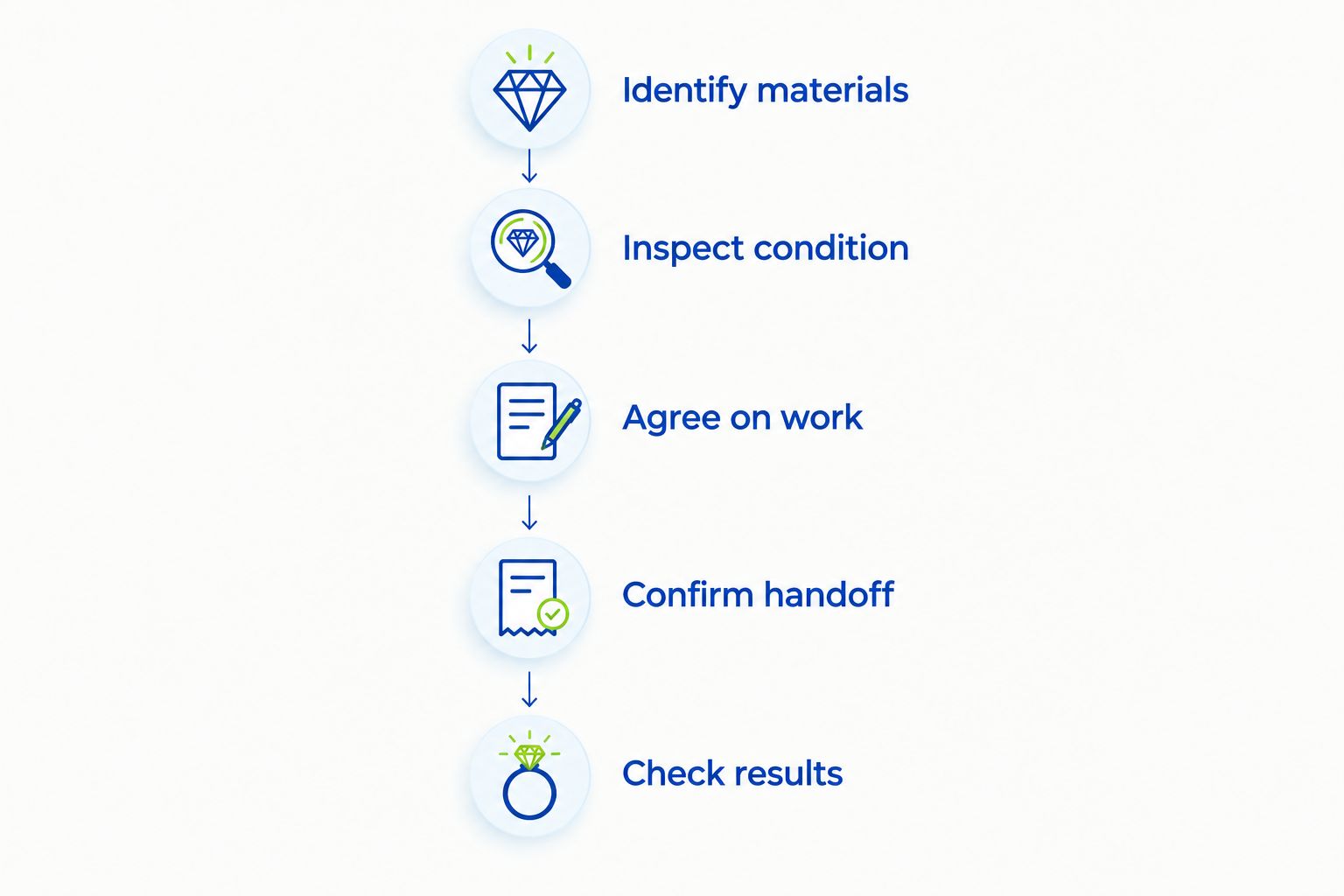
Agree on the work before handing over your jewelry, then check the result against that agreement.
How these service approaches are ranked
The ranking prioritizes material identification, condition inspection, method suitability, clear authorization, designer guidance, and a documented handoff. An inspection-first jeweler is the default for known, everyday fine jewelry; the other routes take priority when design, gemstone sensitivity, or preservation changes the job.
Choose the service approach that fits your piece before choosing the most convenient appointment. A provider should explain why the proposed method suits your jewelry, not simply name a machine.
Which Denver jewelry cleaning service should you choose?
For an everyday piece with known materials, start with an inspection-first jeweler. For distinctive designer work, start with the original retailer or designer’s care instructions. For delicate gemstones or an heirloom, move directly to the relevant specialist approach.
Your 2026 decision rule is straightforward: authorize cleaning only after the provider identifies the relevant materials, checks the condition, and explains the method. If those steps are skipped, wait rather than accepting a quick shine.
FAQ
What’s the best jewelry cleaning service in Denver for an engagement ring?
Choose an inspection-first jeweler who checks the gemstone, setting, and condition before cleaning. For a designer ring or treated gemstone, request the relevant care instructions before authorizing a method.
Can I ask Element79jewelry about cleaning my designer ring?
Yes—start with a care inquiry if your designer ring came from Element79jewelry. Ask which care route suits the piece and confirm the proposed service before making arrangements.
Is ultrasonic cleaning safe for every gemstone?
No, ultrasonic cleaning is not safe for every gemstone or setting. Stone type, treatments, inclusions, construction, and loose components affect suitability, so request a piece-specific assessment.
Should I have a loose diamond ring cleaned?
Have the loose stone assessed before cleaning the ring. Stop wearing the ring until a jeweler checks the setting and explains any work needed to secure it.
Does professional jewelry cleaning remove scratches?
Cleaning removes buildup, not scratches in the metal. Polishing is a separate process that removes surface metal and changes the finish, so authorize it separately.
Where should I take pearls or opals for cleaning?
Choose a provider who explains a cleaning method specifically suited to pearls or opals. Do not authorize a generic ultrasonic or steam treatment without establishing that it is appropriate for the entire piece.
What should I bring to a jewelry cleaning appointment?
Bring available purchase records, designer care instructions, gemstone reports, and information about previous repairs. Point out any loose stones, snagging prongs, clasp problems, or finishes you want preserved.
One last thing
A clean ring and a polished ring are not the same thing. Before your next appointment, write cleaning only; no refinishing without approval into the work request if that reflects your goal. That simple instruction keeps a beloved matte surface, textured detail, or heirloom finish part of the conversation.
Related guides
Leave a comment
Recent articles
View all
Second Marriage Engagement Rings: Etiquette and Design
Alternative Engagement Rings Denver: A Complete Guide