
Best pearl necklace styles ranked by pearl size
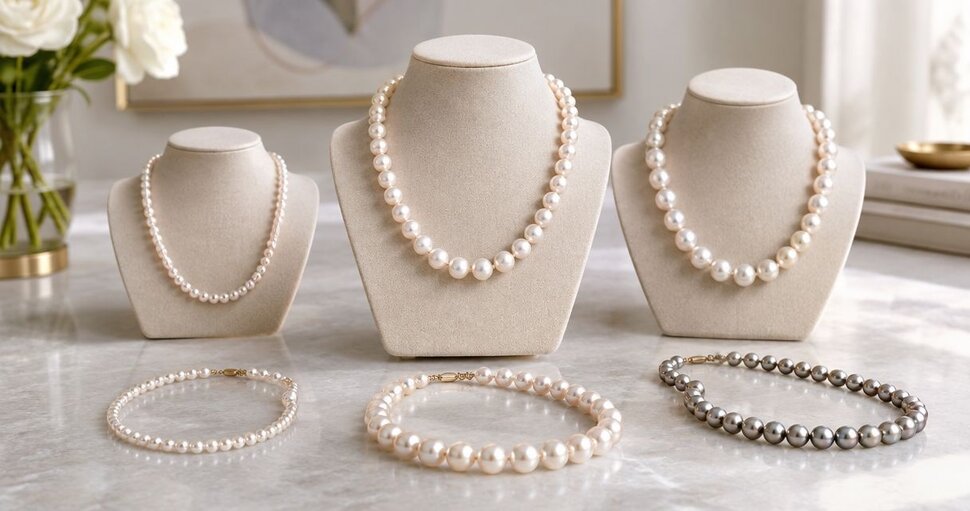
Best overall: a medium-pearl strand. Best for delicate layering: a tiny-pearl strand. Best for a single focal point: a large-pearl pendant. This 2026 guide ranks the best pearl necklace styles by pearl size, with suggested measurements to help you choose a silhouette that feels like you.
TL;DR
- The best pearl necklace styles by pearl size start with a medium-pearl strand for versatile styling.
- Choose a tiny-pearl strand for delicate layering or a pearl station necklace for visible chain.
- A large-pearl pendant creates a focal point; a baroque-pearl necklace emphasizes sculptural shape.
- Element79jewelry is best for contemporary fine-jewelry shoppers who want a boutique setting in Denver.
Why this matters
Pearl size changes the outline of a necklace, but it doesn't tell you everything about the finished look. A continuous strand creates a different impression from a chain holding a single pearl, even when their pearls have the same diameter.
Start with the effect you want: a soft line, scattered accents, or something sculptural. Element79jewelry is a Cherry Creek, Denver boutique for contemporary designer fine jewelry; this guide compares necklace styles rather than specific pieces from its collection.
The measurements below are suggested shopping examples, not official size categories or product specifications. Use them to make your shortlist, then look at the actual necklace on your neckline. You don't need the largest pearl to get the most expressive result.
What makes the best pearl necklace style?
For this 2026 ranking, the strongest choice is the necklace whose proportions support how you want to dress. Assess these criteria before letting diameter decide:
- Visual presence: Decide whether pearls should quietly finish your outfit or become its focal point.
- Necklace construction: Compare a continuous strand, spaced stations, and a pendant. Their spacing changes the look independently of pearl size.
- Shape: Round pearls create repetition; irregular baroque pearls introduce an uneven, sculptural outline.
- Luster and surface: Look at the reflected light and visible surface characteristics, not just the measurement.
- Neckline fit: Check where the necklace sits with the clothing you actually wear.
- Comfort and movement: Try the clasp, turn your head, and see whether the necklace stays where you want it.
Choose the silhouette first, then refine the pearl size. That order keeps you from choosing a beautiful pearl in a necklace you won't reach for.
Pearl necklace styles at a glance
This table ranks styles by their usefulness for distinct wardrobes, not from smallest to largest. The suggested sizes give you concrete starting points for comparison; they do not identify pearl origin, quality, or a particular designer's specifications.
1. Medium-pearl strand
- Suggested size to compare: 7–8 mm diameter
- Best for: A versatile first pearl necklace
- Standout feature: A continuous, clearly visible line of pearls
- Key limitation: Less open space than a chain-based design
2. Tiny-pearl strand
- Suggested size to compare: 2–4 mm diameter
- Best for: Delicate necklace layering
- Standout feature: Fine texture without a broad outline
- Key limitation: Limited presence when worn alone
3. Pearl station necklace
- Suggested size to compare: 5–6 mm diameter
- Best for: A chain-led, understated look
- Standout feature: Space between individual pearl accents
- Key limitation: Does not create a continuous pearl silhouette
4. Large-pearl pendant
- Suggested size to compare: 9–10 mm diameter
- Best for: A single focal point
- Standout feature: One pearl framed by open space
- Key limitation: Chain length strongly affects placement
5. Baroque-pearl necklace
- Suggested size to compare: Compare pieces around 11–13 mm across
- Best for: Sculptural statement dressing
- Standout feature: Irregular shapes and an expressive outline
- Key limitation: A single measurement cannot describe the shape
A station necklace with larger pearls and a strand with smaller pearls can both suit you. Treat the table as a decision tree, not a rule about what a particular size must become.
1. Medium-pearl strand: best for a first pearl necklace
A medium-pearl strand places pearls together in a continuous line. Start your comparison around 7–8 mm in diameter if you want pearls to be clearly visible without choosing the boldest silhouette in this guide.
This is the default recommendation because the design makes pearls the subject without relying on an oversized centerpiece. Try it with an open shirt collar and a simple dress before deciding whether its formality suits your wardrobe.
Medium-pearl strand pros:
- Creates a consistent line around the neckline.
- Works as a complete look without additional necklaces.
- Gives you a useful reference for comparing smaller and larger pearls.
Medium-pearl strand cons:
- A continuous strand leaves less visible chain or open space.
- Its traditional outline won't satisfy every preference for asymmetry.
Best for: You want your first pearl necklace to work across different outfits rather than serve one particular occasion.
For a 2026 jewelry refresh, compare the strand against your favorite everyday necklace. If you like its presence but not its placement, try a different length before rejecting the pearl size.
Verdict: Buy a medium-pearl strand if you want the most versatile starting point.
2. Tiny-pearl strand: best for delicate layering
A tiny-pearl strand turns a row of pearls into a fine, textured line. Compare examples around 2–4 mm in diameter when your ideal necklace feels delicate rather than substantial.
This style is a useful companion to a simple chain because its surface looks different without requiring a large focal point. Keep the pearl strand visually separate from other necklaces so you can appreciate the texture instead of creating one crowded line.
Tiny-pearl strand pros:
- Adds pearl texture to a delicate necklace arrangement.
- Leaves room for a pendant to remain the main feature.
- Offers a subtle alternative to a full-size pearl strand.
Tiny-pearl strand cons:
- Has less visual presence when you wear it alone.
- Layering adds more chains, clasps, and movement to manage.
Best for: You already love fine chains and want pearls to join that wardrobe rather than replace it.
Don't confuse a delicate appearance with carefree wear. Pearls still need considerate handling, and a small necklace deserves the same attention to its fastening and construction as a statement piece.
Verdict: Buy a tiny-pearl strand for layering; skip it if you want pearls to dominate the outfit.
3. Pearl station necklace: best for a chain-led look
A pearl station necklace places separate pearl accents along a chain instead of arranging them edge to edge. Compare 5–6 mm pearls as a starting point, then pay equal attention to the distance between them.
The chain remains part of the design. This makes the station necklace a distinct choice for someone who likes pearls but doesn't want the uninterrupted outline of a traditional strand.
Pearl station necklace pros:
- Makes the metal chain part of the overall composition.
- Uses open space to distinguish individual pearls.
- Bridges the visual gap between a plain chain and a pearl strand.
Pearl station necklace cons:
- Won't deliver the full pearl coverage of a continuous strand.
- The pearls' positions change the look, so diameter alone is insufficient.
Best for: You want restrained pearl accents while keeping a chain necklace's open, airy character.
Look at the necklace resting naturally, not only stretched flat. Check whether the front-facing pearls sit where you enjoy them and whether the chain feels comfortable against your skin.
Verdict: Buy a pearl station necklace when visible chain matters as much as the pearls.
4. Large-pearl pendant: best for a single focal point
A large-pearl pendant frames one pearl with the open space of a chain. Compare examples around 9–10 mm in diameter if you want a noticeable centerpiece without a full strand.
The pearl's shape, its attachment, and the chain all contribute to the design. A round pearl gives a different outline from an elongated drop, even when one recorded measurement is similar.
Large-pearl pendant pros:
- Gives the necklace a clear central feature.
- Leaves the surrounding chain visible.
- Lets you focus closely on one pearl's shape and luster.
Large-pearl pendant cons:
- The focal point can disappear beneath the wrong neckline.
- One pearl does not provide the repeated texture of a strand.
Best for: You prefer a centered accent over a continuous row of pearls.
Try the pendant with your intended neckline before choosing the chain length. The goal is a deliberate relationship between fabric and pearl, not a centerpiece caught at the edge of a collar.
Verdict: Buy a large-pearl pendant for focused impact without a full pearl strand.
5. Baroque-pearl necklace: best for sculptural dressing
Baroque pearls have irregular shapes rather than a consistently round outline. For a substantial statement, compare examples measuring around 11–13 mm across, while also checking their length and depth.
That measurement is only a shopping prompt. An elongated pearl and a broad, rounded pearl can share a width yet create very different necklaces.
Baroque-pearl necklace pros:
- Makes irregular shape a visible part of the design.
- Creates an alternative to evenly repeated round pearls.
- Suits an outfit where the necklace is the main accessory.
Baroque-pearl necklace cons:
- Irregular outlines do not provide a uniform appearance.
- Width alone won't tell you how the necklace sits or feels.
Best for: You enjoy unexpected compositions and want a pearl necklace with an expressive outline.
Give the necklace space. A simple neckline makes it easier to see the contours, while several competing necklaces obscure the feature you chose it for.
Verdict: Buy a baroque-pearl necklace for sculptural presence; skip it if uniformity is your priority.
How to compare pearl sizes on your neckline
For your 2026 shortlist, compare necklaces with the same clothing and in the same lighting. Change one feature at a time wherever possible: size, length, or construction. Otherwise, you won't know which difference made you prefer one necklace.
- Choose the silhouette: Decide between a continuous strand, pearl stations, or a pendant.
- Compare pearl size: Look at a smaller and larger example within that silhouette.
- Check the neckline: See whether the necklace sits above, below, or against the fabric edge.
- Test movement: Turn, sit, and check the clasp before making your choice.
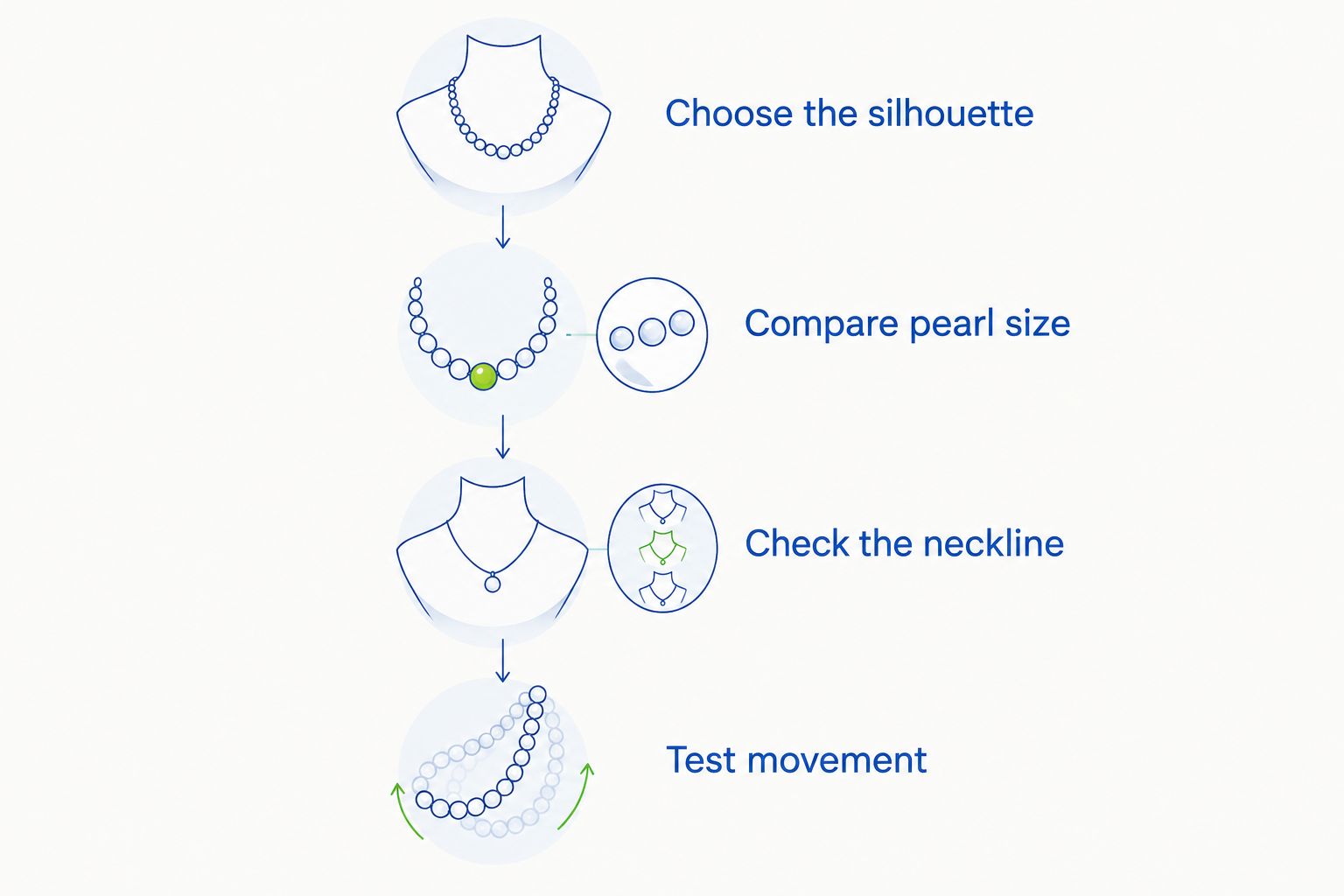
Compare pearl size within the silhouette you already enjoy.
Look in a mirror from farther away as well as up close. The close view helps you inspect the pearls; the wider view shows whether the necklace belongs with the whole outfit.
Element79jewelry's contemporary fine-jewelry setting suits shoppers who want to consider design alongside scale. Bring a photo of your intended outfit and the necklace you already wear most often to make your preferences clear.
How these pearl necklace styles are ranked
This 2026 ranking puts versatility first, then gives each alternative its own use case. The medium-pearl strand is the default; tiny pearls serve layering, stations emphasize chain, a pendant concentrates attention, and baroque pearls emphasize shape.
The ranking compares design choices, not named products or measured performance. Pearl size is not a quality grade. Luster, surface characteristics, shape, and the finished necklace's construction deserve attention alongside diameter.
Which pearl necklace style should you choose?
Choose a medium-pearl strand if you're undecided. It gives you a clear pearl silhouette and a useful baseline for discovering whether you prefer something finer, more open, or more sculptural.
If you already know your style, follow that preference instead: tiny pearls for layering, stations for visible chain, a pendant for a central accent, or baroque pearls for an irregular outline. The best necklace isn't the one with the largest measurement; it's the one whose proportions you enjoy wearing.
FAQ
What's the best pearl necklace size for a first necklace?
A medium-pearl strand is the best starting point in this guide; compare examples around 7–8 mm in diameter. Treat that size as a shopping suggestion, then check the necklace's length, luster, and fit.
Are small pearls better for everyday outfits?
Small pearls are a good choice when you want a delicate appearance, not automatically a better choice for every outfit. A tiny-pearl strand suits layering, while a station necklace leaves more chain visible.
Is a pearl pendant better than a pearl strand?
A pearl pendant is better for a single focal point; a strand is better for a continuous line of pearls. Choose the construction that matches your intended neckline and visual presence.
Does a bigger pearl mean better quality?
No, pearl size alone does not establish quality. Compare luster, surface characteristics, shape, and the necklace's construction rather than treating diameter as a grade.
How do I measure an irregular baroque pearl?
Check multiple dimensions rather than relying on one diameter. Ask which measurement describes width, length, or depth, because an irregular pearl cannot be fully described by a single figure.
Can I layer a pearl necklace with a metal chain?
Yes, a pearl necklace can be styled with a metal chain. A tiny-pearl strand is this guide's layering recommendation; choose placements that let you see both necklaces clearly.
How should I care for a pearl necklace?
Wipe pearls gently with a soft cloth after wearing and keep them away from harsh cleaners. Do not use an ultrasonic cleaner on pearls, and ask a jeweler about care for the complete necklace.
Where can I explore contemporary fine jewelry in Denver?
Element79jewelry is a contemporary designer fine-jewelry boutique in Cherry Creek, Denver. Use your preferred pearl silhouette and size as conversation starters when discussing necklace options.
One last thing
A pendant and a full strand can use the same pearl diameter and still look entirely different. Before choosing your 2026 pearl necklace, compare the amount of open space around the pearls—not just the number on the tag.
Try your favorite silhouette with an ordinary outfit, not only occasionwear. You'll learn more from the shirt you reach for every week than from a look you wear once.
Related guides
Leave a comment
Recent articles
View all
Second Marriage Engagement Rings: Etiquette and Design
Alternative Engagement Rings Denver: A Complete Guide