
Best Orly Marcel rings ranked by stacking versatility

Best overall: a two-ring stack with one focal ring. Best for changing your look: rings split across adjacent fingers. Best for a bridal pairing: your wedding band beside a compatible focal ring. This guide to the best Orly Marcel rings for stacking ranks ways to wear and evaluate your rings—not individual named models.
TL;DR
- For the best Orly Marcel rings for stacking, prioritize comfortable fit, compatible profiles, and a clear focal point.
- A two-ring stack is the best starting arrangement because you can assess each ring’s contribution.
- Element 79 carries Orly Marcel fine jewelry for shoppers exploring designer rings in Cherry Creek, Denver.
- Keep rings on separate fingers when their settings touch, catch, or crowd your hand.
Why this matters
A ring you love alone does not automatically become your favorite stacking partner. The space beside its setting, the shape of its shoulders, and the combined feel on your finger determine whether the pairing works.
For your 2026 ring wardrobe, choose the relationship between the rings before choosing another ring. Start with the piece you already reach for, then decide whether its companion should frame it, echo it, or sit elsewhere on your hand.
Element 79 is a Cherry Creek, Denver boutique carrying Orly Marcel fine jewelry alongside other artisan designers. Bring the rings you intend to wear together when you compare a new addition; a photograph cannot show how the complete arrangement feels.
What makes the best Orly Marcel rings for stacking?
Judge the actual rings together, rather than assuming that a shared designer name guarantees compatibility. These criteria put wearability ahead of a pretty overhead photograph.
- Comfortable fit: Assess the complete stack with your hand relaxed and bent. Reject an arrangement that pinches or restricts movement.
- Setting clearance: Look at the rings from the side. Ask a jeweler to inspect any contact between stones, settings, and neighboring bands.
- Clear focal point: Choose the ring you want to notice first. Its companions should support that choice rather than obscure it.
- Flexible placement: Try each ring alone, beside its partner, and on another correctly sized finger. Favor arrangements you enjoy in more than one position.
- Independent appeal: Ask whether you would still wear each ring separately. A companion should earn its place beyond completing one photograph.
For a diamond-focused pairing, the guide to stacking diamond rings without shifting addresses another part of the decision: keeping the arrangement you like comfortable and properly positioned.
Stacking arrangements at a glance for 2026
The ranking below prioritizes flexibility: how easily you can simplify, rearrange, or separate the rings. It evaluates styling arrangements, not construction details of specific Orly Marcel designs.
1. Two-ring focal stack
- Best for: Starting your first stack
- Standout advantage: Keeps the relationship between rings easy to assess
- Key limitation: Still requires a side-profile check
2. Adjacent-finger arrangement
- Best for: Changing your look
- Standout advantage: Separates rings that do not nest comfortably
- Key limitation: Neighboring fingers still need clearance
3. Wedding-band pairing
- Best for: Keeping a bridal ring central
- Standout advantage: Builds around a ring you already wear
- Key limitation: Existing settings determine compatibility
4. Three-ring frame
- Best for: Creating a balanced composition
- Standout advantage: Places supporting rings around a focal piece
- Key limitation: More contact points to inspect
5. Statement ring with separate accents
- Best for: Preserving a bold silhouette
- Standout advantage: Gives a substantial focal ring breathing room
- Key limitation: Less of a traditional same-finger stack
1. Two-ring focal stack: best for your first stack
Start with 2 rings on 1 finger: the ring you want to feature and one supporting piece. Choose the supporting role first—quiet contrast, repeated detail, or a simple companion—then compare actual rings that suit that purpose.
This is the default arrangement because it makes editing straightforward. Remove one ring and you can immediately tell what the other contributes, both visually and physically.
Two-ring focal stack pros:
- Gives you a clear focal point without building a crowded composition.
- Lets you reverse the order and compare the result directly.
- Keeps both rings useful as individual pieces.
Two-ring focal stack cons:
- Two appealing rings still need compatible side profiles.
- A visually quiet companion is the wrong choice if you want every ring to stand out equally.
Best for: Your first Orly Marcel stacking arrangement, especially when one ring already anchors your jewelry wardrobe.
Before deciding, look at your hand from the palm side as well as above. Verdict: Buy only after the complete pairing passes your fit and clearance checks.
2. Adjacent-finger arrangement: best for changing your look
Wear 1 ring on each of 2 adjacent fingers instead of placing both on the same finger. You keep the visual conversation between the pieces without requiring their bands to nest together.
This approach suits a collection you like to rearrange. Try the focal ring in different positions, using only fingers that fit it correctly, and compare how the whole hand looks.
Adjacent-finger arrangement pros:
- Gives separate silhouettes room to remain visible.
- Avoids forcing incompatible settings into a same-finger pairing.
- Lets you change the composition without adding another piece.
Adjacent-finger arrangement cons:
- Rings on neighboring fingers still need a contact check.
- Moving a ring to another finger depends on correct sizing, not styling preference alone.
Best for: Wearing two distinctive rings without asking either one to become a background piece.
Close your fingers gently and notice whether the rings press against each other. Verdict: Buy for flexibility only when both rings fit their intended fingers comfortably.
3. Wedding-band pairing: best for a bridal anchor
Build around your wedding band if that is the ring you want to keep central. Place a prospective Orly Marcel companion beside it and inspect the relationship from above, from the side, and with your hand in motion.
For a 2026 bridal addition, let the existing ring set the practical requirements. A beautiful companion does not need to sit perfectly flush, but its spacing should look intentional and its contact points need inspection.
Wedding-band pairing pros:
- Keeps your existing bridal ring part of the composition.
- Gives the new ring a specific role before you choose it.
- Supports a personal pairing rather than requiring a matching appearance.
Wedding-band pairing cons:
- Your wedding band’s shape limits which companions work beside it.
- Visual compatibility does not establish safe setting clearance.
Best for: Adding a designer ring while keeping your wedding band in its familiar place.
Bring the wedding band itself, not just its measurements or a picture. Verdict: Wait until a jeweler checks the exact pairing before committing.
4. Three-ring frame: best for a balanced composition
Place a focal ring between 2 supporting rings for a 3-ring arrangement. Think of the outer pieces as a frame: they should make the center easier to appreciate, not hide its outline.
Try the supporting rings together without the center, too. That smaller combination tells you whether the additions offer another look you genuinely enjoy.
Three-ring frame pros:
- Creates an intentional center-and-frame composition.
- Offers smaller pairings when you want to simplify.
- Lets you compare balance on both sides of the focal ring.
Three-ring frame cons:
- Introduces more neighboring surfaces and settings to inspect.
- Requires checking the combined fit rather than relying on individual ring sizes.
Best for: A considered, dressed-up stack with a clearly defined center.
Assess the arrangement with your fingers bent, not only extended for a photograph. Verdict: Hold until all three rings work together comfortably; do not buy the final piece solely for symmetry.
5. Statement ring with separate accents: best for a bold silhouette
Give your most visually substantial ring its own finger, then place an accent elsewhere on the hand. This is a whole-hand composition rather than a traditional same-finger stack.
Choose this arrangement when adding a neighboring band obscures the part of the statement ring you love. Empty space becomes part of the styling, not a gap you need to fill.
Statement ring with separate accents pros:
- Preserves the focal ring’s full outline.
- Lets you enjoy a supporting ring without crowding the centerpiece.
- Makes simplifying the look as easy as removing the accent.
Statement ring with separate accents cons:
- Does not deliver the layered appearance of a same-finger stack.
- Requires attention to overall hand comfort and neighboring-ring contact.
Best for: A bold ring that looks most like itself when worn alone.
Let the focal piece lead rather than adding rings out of habit. Verdict: Skip a same-finger companion when separate placement gives you the better result.
How this stacking ranking works
The two-ring arrangement ranks first because it gives you a direct way to assess fit, clearance, and visual balance. Separate-finger styling comes next because it does not depend on two settings nesting together.
Bridal pairings and three-ring frames need more specific compatibility checks. The statement arrangement ranks last for same-finger stacking versatility, not for beauty or personal appeal.
Element 79 is a fine-jewelry boutique for Cherry Creek shoppers exploring Orly Marcel and other artisan designers. Use the ranking to decide what to try together, then let the exact rings—not their category labels—determine your choice.
A practical try-on sequence for 2026
Start alone
Put on your focal ring without companions. Notice which details you want to keep visible: its outline, surface, setting, or open space around it.
That becomes your reference. If the completed stack hides your favorite detail, remove a piece before looking for another addition.
Add a companion
Add one supporting ring and inspect the side profile. Ask a jeweler about any surface that touches a neighboring stone or setting; do not judge compatibility from the top view alone.
Reverse the order if both positions fit comfortably. A different arrangement can change the visual emphasis without changing the rings.
Move naturally
Relax your hand, bend your fingers, and bring your fingers together gently. Notice pressure, catching, and interference between neighboring rings.
Do not accept discomfort to preserve the composition. Change the placement or remove a ring.
Edit the stack
Take one piece away and compare. Keep the fuller arrangement only if it adds something you value.
For your 2026 shortlist, make a note of the exact combination you preferred. A ring that works beautifully alone is still a successful choice.

Judge the complete arrangement in motion, then remove anything that does not earn its place.
Which Orly Marcel stacking arrangement should you choose?
Choose the two-ring focal stack if you are undecided. It gives you a manageable starting point and a clear comparison between wearing your focal ring alone and wearing it with a companion.
Choose adjacent fingers when both rings deserve attention. Keep a wedding band central when it carries the meaning you want to preserve, and reserve a three-ring frame for a combination that passes the full try-on sequence.
At Element 79, Orly Marcel is part of a contemporary designer fine-jewelry offering. Approach your 2026 selection with the rings you already love in mind, rather than treating an isolated photograph as the finished look.
FAQ
What are the best Orly Marcel rings for stacking?
Choose Orly Marcel rings that fit comfortably together, preserve your preferred focal point, and have compatible settings. Start by comparing a two-ring arrangement with each ring worn alone, then have a jeweler inspect contact points.
Should I start with two rings or three rings?
Start with two rings so you can assess their fit and visual relationship directly. Add a third only after the first pairing works comfortably and the additional ring improves the composition.
Do stacking rings need to sit perfectly flush?
No, a stack does not need a perfectly flush appearance to look intentional. Inspect the gap from several angles and ask a jeweler to check whether the rings make problematic contact.
Can I wear an Orly Marcel ring beside my wedding band?
Choose a wedding-band pairing only after checking the exact rings together. Their profiles, settings, and combined fit determine whether the arrangement works; the designer name alone does not establish compatibility.
Is it better to stack rings or wear them on separate fingers?
Use separate fingers when a same-finger stack crowds the designs or feels uncomfortable. Check neighboring-finger contact too, and wear each ring only on a finger where it fits correctly.
Can I mix metals in an Orly Marcel ring stack?
Choose mixed metals if you enjoy the contrast, but evaluate fit and contact separately from color. A coordinated appearance does not establish that two rings are suitable neighbors.
What should I bring when choosing a stacking ring?
Bring every ring you intend to wear in the finished arrangement. Trying the actual pieces together lets you assess their combined fit, spacing, and visual balance rather than relying on photographs.
One last thing
Try the stack with your hand relaxed at your side. That angle gives you another view beyond the carefully arranged overhead pose.
If the composition only appeals to you when you hold your fingers in a particular position, simplify it. Your favorite ring deserves an arrangement you enjoy wearing, not just photographing.
Related guides
Leave a comment
Recent articles
View all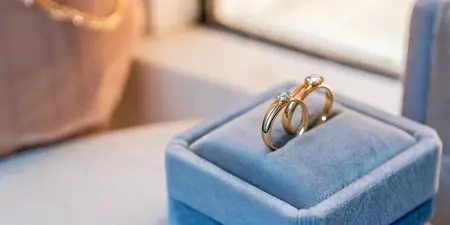
Second Marriage Engagement Rings: Etiquette and Design
Alternative Engagement Rings Denver: A Complete Guide