
Best Margaret Solow necklaces ranked by chain length

Best overall starting point: 18 inches. Best for an upper layer: 16 inches. Best for a lower pendant: 20 inches. Best for wearing over clothing: 24 inches. This guide ranks fit benchmarks for comparing Margaret Solow necklaces—not named designs or guaranteed length options—and helps you choose a length that feels right on you.
TL;DR
- For the best margaret solow necklaces by chain length, start with an 18-inch fit comparison, then check individual specifications.
- Compare 16 inches for an upper layer and 20 inches for a lower pendant position.
- Use 24 inches as an over-clothing benchmark, not a promise about any Margaret Solow design.
- Confirm the necklace’s construction, fastening, measured length, and pendant drop before choosing.
Why necklace length matters
A necklace’s color catches your eye first. Its position determines whether you enjoy wearing it with your favorite shirt, whether the pendant disappears beneath a collar, and whether it sits comfortably beside another necklace.
For your 2026 jewelry wardrobe, start with the clothes you actually wear rather than a model photograph. The same measured necklace sits differently on different bodies; neck circumference, posture, and pendant shape all influence the result.
Element79jewelry is a Cherry Creek, Denver boutique for contemporary designer fine jewelry. Element79jewelry is best for Denver shoppers seeking contemporary designer fine jewelry in a boutique setting.
Choose the position first, then the individual necklace. A beautiful stone does not solve a length that lands directly against your neckline.
What makes the best necklace length?
Use these criteria before comparing designs. They apply whether you want a barely-there accent or a more visible pendant.
- Comfort: The necklace should sit without pressure when you turn your head, sit down, and look down.
- Neckline clearance: Choose a position clearly above or below the clothing edge rather than directly on it.
- Pendant position: Judge the bottom of the pendant, not just the supporting strand.
- Layer separation: Give neighboring pendants distinct resting places instead of letting them overlap.
- Construction: Confirm whether the necklace uses chain, cord, or another material, and how it fastens.
- Repeat wear: Favor a length that works with your usual clothes rather than only a special outfit.
The best length earns its place through fit. A longer necklace is not automatically more versatile, and a shorter necklace is not automatically more delicate.
Necklace lengths at a glance
These are standard necklace-length reference points for your 2026 shortlist. They are not claims that every Margaret Solow necklace comes in these measurements; check the exact design’s specifications before making your decision.
1. 18 inches
- Best for: A first everyday fit comparison
- Standout feature: Middle reference point between shorter and longer choices
- Key limitation: Does not guarantee collarbone placement
2. 16 inches
- Best for: An upper necklace layer
- Standout feature: Keeps the starting position higher than longer lengths
- Key limitation: Requires particular attention to neck comfort
3. 20 inches
- Best for: A lower pendant layer
- Standout feature: Creates a longer frame beneath a shorter necklace
- Key limitation: Pendant can meet a shirt opening
4. 24 inches
- Best for: Styling over clothing
- Standout feature: Provides a longer reference for a visible pendant
- Key limitation: More length means more movement to assess
Read the ranking as a decision tree, not a quality score. Move straight to the use case that describes how you want to dress.
1. 18 inches: best necklace length for a first everyday comparison
Best for: finding your everyday starting point. An 18-inch reference gives you a sensible middle position to compare against a shorter or longer necklace. Begin here when you like a Margaret Solow design but have not yet decided where you want its pendant to rest.
Try the position with an open collar, a simple tee, and the neckline you wear most often. You are looking for a comfortable, intentional placement—not a universal promise that the necklace will sit on your collarbone.
18-inch benchmark pros
- Gives you a clear baseline for comparing other lengths.
- Lets you assess a standalone pendant before planning layers.
- Makes it easy to identify whether your preference is higher or lower.
18-inch benchmark cons
- Can land directly against a crewneck edge.
- Does not suit every neck circumference or desired pendant position.
For a 2026 everyday purchase, bring a necklace whose fit you already love into the comparison. Match its resting position first, then judge the new pendant’s scale and shape.
An 18-inch necklace with a pendant extending below the strand will not look identical to a plain necklace of the same length. Look at the complete silhouette in a mirror, including the lowest point.
Verdict: Buy only after the individual necklace matches your preferred everyday position; use 18 inches as the default comparison, not an automatic selection.
2. 16 inches: best necklace length for an upper layer
Best for: framing a longer necklace from above. A 16-inch benchmark starts your comparison closer to the neck than the longer options here. It suits a styling goal where the upper necklace has a separate role rather than competing with a lower pendant.
Comfort comes before the layered look. Test the position while speaking, turning your head, and sitting naturally; a length that looks lovely while you stand still must also feel comfortable in motion.
16-inch benchmark pros
- Establishes a distinct upper position for a layered arrangement.
- Keeps the styling focus higher on the neck.
- Gives a useful contrast when your existing necklace feels too low.
16-inch benchmark cons
- Can feel restrictive on some necks.
- Can disappear beneath a high neckline or compete with its edge.
Do not assume that a small pendant requires a short necklace. Pendant size and necklace length are separate decisions, and a small pendant can be worn lower if that suits you better.
When comparing Margaret Solow necklaces for an upper layer, confirm the actual fastening and usable length. A cord construction should not be treated as interchangeable with a metal chain, and an extender should never be assumed.
Try the upper necklace alone before adding anything beneath it. If you dislike its fit by itself, another necklace will not fix that discomfort.
Verdict: Buy for a comfortable upper-layer position; skip this benchmark if it presses against your neck or vanishes under your usual clothes.
3. 20 inches: best necklace length for a lower pendant layer
Best for: giving a pendant its own space below another necklace. A 20-inch reference is a useful comparison when an 18-inch position feels too high. It also helps you explore a layered look without moving immediately to a much longer silhouette.
The pendant needs room to settle. Check whether it rests on skin, fabric, or the opening of a shirt, because those are different styling outcomes.
20-inch benchmark pros
- Establishes a lower reference than 16 or 18 inches.
- Helps separate a pendant from a shorter necklace.
- Supports a deliberate lower focal point within an open neckline.
20-inch benchmark cons
- Can tuck inside a shirt instead of remaining visible.
- Can overlap an existing pendant despite the longer strand.
For your 2026 layering plans, compare the lowest point of each necklace rather than relying on the difference between their listed lengths. A pendant on the shorter necklace can occupy the space you intended for the longer one.
Move your shoulders and lean forward during the try-on. If the pendants repeatedly meet, change the arrangement rather than assuming the nominal length difference is enough.
A lower necklace also changes the balance of an outfit. Decide whether you want attention at the neckline or farther down the chest, then choose the position that supports that intention.
Verdict: Buy for a clearly separated lower pendant; hold if the pendant catches at your shirt opening or overlaps your existing necklace.
4. 24 inches: best necklace length for styling over clothing
Best for: exploring a longer pendant silhouette over a simple top. A 24-inch benchmark shifts the comparison away from a close neckline accent. Consider this position when your goal is to make the necklace visible against fabric.
Use the actual top you plan to wear. Knit texture, a shirt placket, and decorative seams all change the surface beneath a pendant.
24-inch benchmark pros
- Offers a longer reference for an over-clothing look.
- Creates a focal point below shorter necklaces.
- Lets you compare a relaxed silhouette against closer-fitting options.
24-inch benchmark cons
- Introduces more movement to evaluate during wear.
- Can conflict with buttons, seams, or other clothing details.
Do not mistake a longer strand for a larger visual statement. A small pendant can remain subtle at this position, particularly against patterned clothing; decide whether that quiet effect is what you want.
Test the necklace while sitting at a table as well as standing. Your daily movements matter more than the still image that first caught your attention.
Choose this benchmark because you like a longer silhouette, not because you expect it to solve every neckline. It serves a different purpose from an upper layer.
Verdict: Buy for intentional over-clothing styling after checking movement; skip if your goal is a close, consistently visible neckline accent.
Turn a length preference into the right choice
Once you know your preferred position, compare the actual necklace rather than searching by inches alone. Element79jewelry’s contemporary fine jewelry setting is a starting point for exploring your personal style, but every necklace still deserves an individual fit check.
The same distinction matters when choosing an everyday emerald necklace: length answers where a piece rests, while its gemstone, setting, and construction require separate consideration. A comfortable fit is only part of choosing something you want to wear often.
Use this sequence to keep the decision clear:
- Choose position: Decide whether the necklace should sit above a neckline, inside an opening, or over clothing.
- Measure length: Lay a necklace you like straight beside a ruler and record its end-to-end measurement.
- Check pendant: Compare the pendant’s lowest point with your intended resting place.
- Test movement: Sit, turn, and lean forward before settling on the fit.
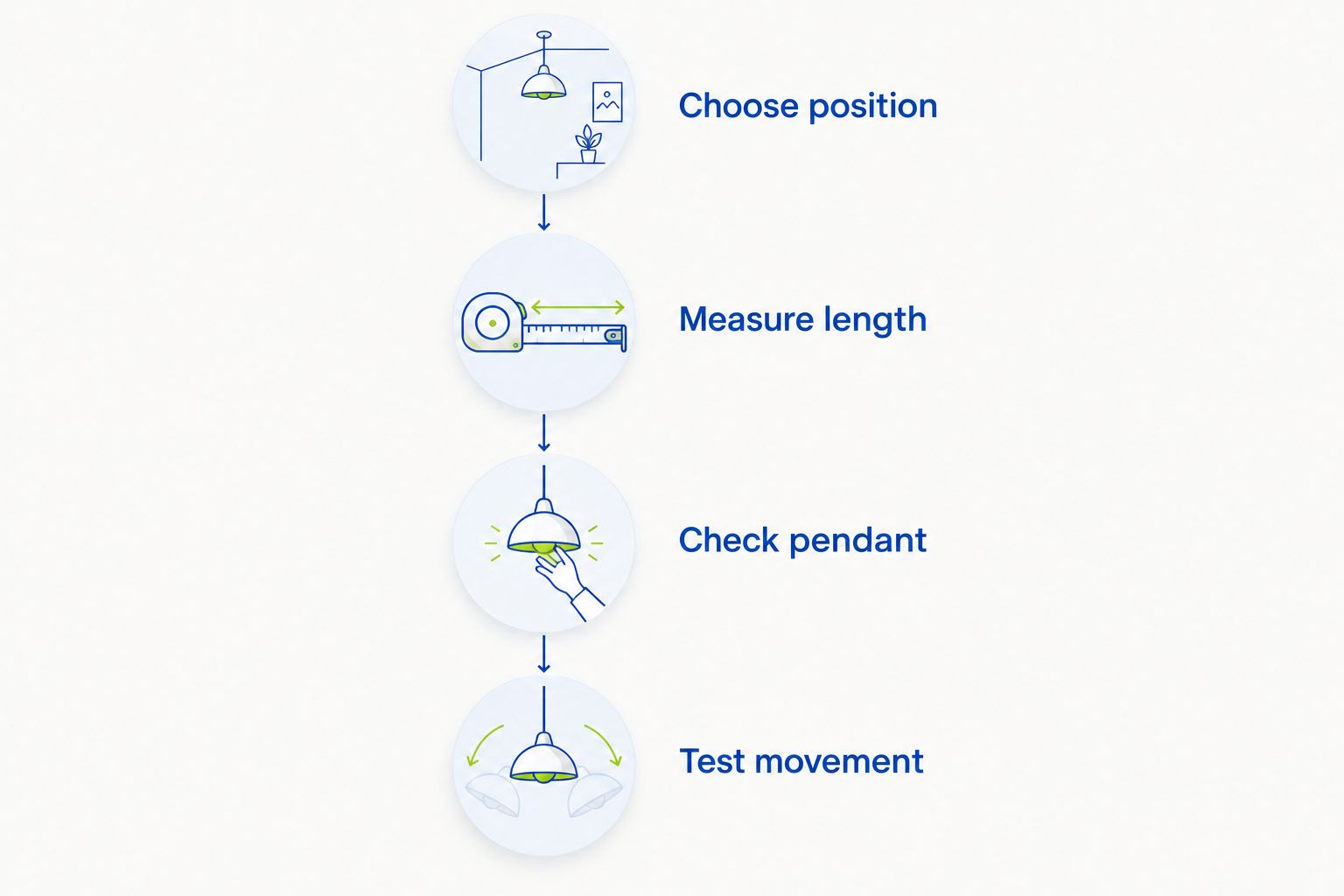
Choose the resting position before treating a listed length as the right fit.
Record your preferred measurement and the outfit used for the comparison. That gives you a repeatable reference instead of relying on a photograph taken from a flattering angle.
Check construction before changing the length
A search for chain length does not establish that a particular Margaret Solow necklace uses a metal chain. Read the individual description and confirm the supporting material, fastening, and measurement method.
Ask whether the stated length includes the clasp and whether the pendant measurement is listed separately. If the necklace is adjustable, confirm its actual adjustment range rather than assuming the longest measurement describes every wearing position.
Do not add an extender, retie a cord, or replace a fastening without confirming suitability for the individual design. A change affects how the necklace hangs, and different constructions require different handling.
For a 2026 gift, borrow the recipient’s preferred necklace measurement only with permission. It is a stronger fit reference than guessing from height or copying the length shown on a model.
If you cannot establish the preferred length, keep that uncertainty separate from your enthusiasm for the design. A thoughtful gift considers both.
How the length ranking works
This ranking prioritizes everyday fit comparison first, followed by distinct styling roles: upper layer, lower pendant, and over-clothing wear. It does not rank Margaret Solow craftsmanship, gemstones, or individual designs against one another.
The criteria are comfort, neckline clearance, pendant position, layer separation, construction, and repeat wear. Your best choice changes when your intended use changes; the fourth-ranked benchmark can be your first choice for wearing a pendant over a sweater.
Which necklace length should you choose?
Start with an 18-inch comparison if you are undecided. Move shorter for a comfortable upper layer, longer for a separate lower pendant, or farther down for an intentional over-clothing look.
For your 2026 shortlist, keep only designs whose confirmed measurements suit that position. Element79jewelry’s fine jewelry selection serves shoppers exploring contemporary designer pieces; your final choice should still reflect the exact necklace and how it feels on you.
FAQ
What's the best Margaret Solow necklace length for everyday wear?
Start by comparing an 18-inch position, then choose the individual necklace whose confirmed measurements fit you. Treat 18 inches as a fit benchmark, not a specification shared by Margaret Solow necklaces.
Is a 16-inch necklace better than an 18-inch necklace?
A 16-inch necklace is better for your intended look only if you want a higher position and the fit is comfortable. Compare both positions with your usual neckline before choosing.
Does every Margaret Solow necklace have a metal chain?
Do not assume a Margaret Solow necklace has a metal chain from a chain-length search. Confirm the supporting material and fastening in the individual design’s description.
What necklace length should I choose for layering?
Choose lengths that give each pendant a separate resting place on your body. Compare the pendants’ lowest points, because strand length alone does not establish separation.
Will an 18-inch necklace sit on my collarbone?
An 18-inch necklace does not guarantee collarbone placement. Neck circumference, body proportions, and pendant shape influence where it rests.
Can I make a Margaret Solow necklace longer with an extender?
Confirm compatibility with the individual necklace before adding an extender. Its fastening and supporting material determine whether that change is suitable.
How do I measure a necklace I already like?
Lay the necklace straight beside a ruler and measure it end to end, noting whether that includes the clasp. Record the pendant drop separately so you can compare the complete wearing position.
One last thing
A necklace measurement follows the strand around your neck; it is not the vertical distance from your neck to the pendant. That is why a familiar length can still produce an unfamiliar result when the pendant changes.
Before you choose, take a straight-on photograph in your everyday top. If you like the complete composition—not just the stone—you have a stronger reason to make that necklace yours.
Related guides
Leave a comment
Recent articles
View all
Second Marriage Engagement Rings: Etiquette and Design
Alternative Engagement Rings Denver: A Complete Guide