Best lab-grown diamond shapes ranked by brilliance

Best overall: round brilliant. Best for rectangular sparkle: radiant. Best for crisp, square geometry: princess. The best lab-grown diamond shapes for brilliance start with round brilliant, but your final choice depends on the individual diamond’s cut quality—not its outline alone.
TL;DR
- Round brilliant leads the best lab-grown diamond shapes for brilliance; cut quality determines the individual diamond’s performance.
- Radiant suits rectangular sparkle; princess suits angular style; oval brings an elongated outline.
- Lab-grown origin does not create extra sparkle: proportions, transparency, and facet arrangement matter.
- Compare clean diamonds in diffuse light and spot lighting before choosing your engagement ring.
Why this matters
A diamond that sparkles beautifully beneath jewelry spotlights can look less lively beside a window. You want a stone that feels bright in your everyday surroundings, not just in its most flattering photograph.
Element 79 is best for couples seeking designer fine jewelry and custom bridal pieces in Cherry Creek, Denver. For your engagement-ring search, separate the silhouette you love from the light performance of the actual stone.
Lab-grown diamonds have essentially the same chemical, physical, and optical properties as natural diamonds. Their origin does not determine which shape sparkles most. Cut quality does the important work.
What makes the best diamond shapes for brilliance?
For your 2026 shortlist, judge each shape using these criteria before falling for its outline:
- White-light brightness: Look for lively light return across the face, rather than a bright border surrounding a dull center.
- Fire: Notice the flashes of spectral color. Fire is different from white-light brilliance, although shoppers often call both sparkle.
- Scintillation: Watch how light and dark facets alternate as you move the diamond. Contrast helps those flashes stand out.
- Evenness: Check whether broad areas stay dark or watery through normal movement. A single still photograph cannot show this reliably.
- Facet character: Decide whether you prefer small, busy flashes or larger, more distinct reflections. Different sparkle patterns suit different tastes.
Choose the individual diamond, not just the shape name. A beautifully cut fancy shape is a better choice than a poorly cut round that leaves you cold.
Lab-grown diamond shapes at a glance
Round brilliant is the default recommendation for brightness. The remaining order is a shopping shortlist based on sparkle character and distinct styling needs—not a measured claim that every radiant outshines every oval.
Round brilliant
- Best for: Overall brilliance
- Standout feature: Symmetrical brilliant-cut facet arrangement
- Key limitation: Poor proportions still reduce light return
Radiant
- Best for: Rectangular sparkle
- Standout feature: Brilliant-style faceting within clipped corners
- Key limitation: Some facet patterns look visually mushy
Princess
- Best for: Crisp square geometry
- Standout feature: Angular outline with lively brilliant-style flashes
- Key limitation: Pointed corners need thoughtful protection
Oval brilliant
- Best for: An elongated, rounded silhouette
- Standout feature: Length with brilliant-style sparkle
- Key limitation: A prominent bow tie interrupts brightness
Cushion brilliant
- Best for: Soft corners and distinct flashes
- Standout feature: Rounded outline with varied facet personalities
- Key limitation: The cushion label covers very different appearances
Pear brilliant
- Best for: Asymmetric elegance
- Standout feature: Rounded end tapering to a single point
- Key limitation: Uneven brightness and bow ties need inspection
Marquise brilliant
- Best for: A dramatic, narrow silhouette
- Standout feature: Pointed ends and an elongated outline
- Key limitation: Dark centers and vulnerable tips need attention
1. Round brilliant: best diamond shape for overall brilliance
Round brilliant is your strongest starting point when sparkle comes first. Its symmetrical facet arrangement supports balanced light return when its proportions and finish work together.
A standard round brilliant has 57 facets without a culet facet, or 58 facets with one. Those counts describe its construction; they do not guarantee a beautiful stone.
Round brilliant pros:
- Balanced geometry supports even brightness.
- Distinct contrast creates lively movement.
- A symmetrical outline makes side-by-side comparison straightforward.
Round brilliant cons:
- Poor proportions still produce light leakage.
- Its circular silhouette will not satisfy someone set on an elongated design.
Best for: You want brilliance to lead the decision, with the setting providing the personal detail. Watch the center as you tilt the stone rather than judging its brightest frozen moment.
Verdict: Buy round brilliant as your default sparkle-first choice.
2. Radiant: best diamond shape for rectangular sparkle
Radiant combines a square or rectangular outline, clipped corners, and brilliant-style faceting. It suits you if you love architectural lines but want a busier sparkle pattern than an emerald cut provides.
Look closely at the center. Some radiants show distinct reflections; others have a finer, crushed-ice appearance that needs careful viewing to separate lively sparkle from a watery look.
Radiant pros:
- Brings brilliant-style sparkle to a rectangular silhouette.
- Offers an angular look without pointed corners.
- Comes in different outline proportions for different tastes.
Radiant cons:
- Facet patterns vary substantially between stones.
- Busy reflections can make dull areas harder to identify in photographs.
Best for: You want a strong rectangular outline with lively, scattered flashes. Compare several examples before deciding which facet personality feels right.
Verdict: Buy radiant for rectangular sparkle after checking the center in motion.
3. Princess: best diamond shape for crisp square geometry
Princess brings a sharp, square outline to brilliant-style sparkle. Its clean geometry feels distinctly different from round brilliant, even when both diamonds look lively.
Pay attention to the corners as well as the face-up appearance. Their pointed construction makes protective setting design an important part of your choice.
Princess pros:
- Creates a clearly defined square silhouette.
- Combines angular styling with lively flashes.
- Offers a different visual rhythm from rounded shapes.
Princess cons:
- Pointed corners are vulnerable to impact.
- The shape name alone does not establish brightness or balance.
Best for: You love crisp lines and want your engagement ring to feel geometric rather than rounded. Inspect the entire face for brightness instead of letting sharp corners carry the decision.
Verdict: Buy princess for square geometry with a setting that protects its corners.
4. Oval brilliant: best diamond shape for rounded length
Oval brilliant stretches the rounded look into an elongated silhouette. Its brilliant-style facets offer lively sparkle, but the center deserves your closest attention.
A bow tie is a dark, bow-shaped area across the middle. Its visibility changes with the diamond, the lighting, and your viewing position; reject a stone whose dark band dominates normal viewing.
Oval brilliant pros:
- Gives you length without pointed ends.
- Combines a rounded outline with brilliant-style flashes.
- Offers different length-to-width proportions to suit your taste.
Oval brilliant cons:
- A strong bow tie interrupts the center.
- Overly shallow or deep proportions can compromise appearance.
Best for: You prefer an elongated ring silhouette without the sharpness of pear or marquise. Compare ovals face-up and through a gentle tilt.
Verdict: Buy oval only when the center stays visually lively.
5. Cushion brilliant: best diamond shape for soft-edged flashes
Cushion diamonds pair rounded corners with a square or rectangular outline. Their sparkle varies widely: some show broad, distinct flashes, while others have a finer, more scattered appearance.
For this brilliance-focused shortlist, start with cushion brilliant examples. Do not assume every cushion has the same facet structure or light performance.
Cushion brilliant pros:
- Softens a square or rectangular silhouette.
- Offers different flash sizes and facet personalities.
- Suits you if round feels too circular and princess too sharp.
Cushion brilliant cons:
- The cushion category includes very different visual effects.
- Still images can hide dull or watery areas.
Best for: You want soft corners and a sparkle pattern with personality. Decide whether broad flashes or finer scintillation appeals to you before comparing individual stones.
Verdict: Buy cushion brilliant for its specific facet pattern, not its label alone.
6. Pear brilliant: best diamond shape for asymmetric elegance
Pear brilliant combines a rounded end with a tapered point. That asymmetry gives the diamond a flowing silhouette, but it also makes balanced light return important to inspect.
Check the rounded end, middle, and tip separately. You want the whole stone to participate in the sparkle rather than one lively area beside another that stays dark.
Pear brilliant pros:
- Creates a distinctive asymmetric outline.
- Combines rounded softness with a pointed finish.
- Offers brilliant-style sparkle in an elongated form.
Pear brilliant cons:
- Bow ties and uneven brightness need inspection.
- The pointed tip needs protection from impact.
Best for: You want a graceful silhouette that feels less symmetrical than round or oval. Look for balanced shoulders and a pleasing transition toward the point.
Verdict: Buy pear when its asymmetry appeals to you and its brightness feels balanced.
7. Marquise brilliant: best diamond shape for dramatic length
Marquise brilliant has an elongated outline ending in two points. It makes a strong visual statement, with brilliant-style faceting inside a narrow, sculptural silhouette.
Inspect the center for a distracting bow tie and both ends for persistent darkness. A dramatic outline should not distract you from the diamond’s light performance.
Marquise brilliant pros:
- Creates a distinctive, elongated statement.
- Combines brilliant-style flashes with sculptural geometry.
- Offers a clear departure from round and square outlines.
Marquise brilliant cons:
- Both pointed ends need thoughtful protection.
- A dark center can dominate the appearance.
Best for: You want length and pointed geometry more than the balanced symmetry of round brilliant. View the whole stone, not just its brightest middle flashes.
Verdict: Buy marquise for its silhouette after checking the center and tips.
How to compare sparkle before choosing
Make your 2026 comparison consistent: clean stones, similar viewing conditions, and enough movement to reveal changing reflections. Element 79’s custom bridal focus gives couples a reason to consider the complete ring design alongside the center-stone outline.
Use this sequence when you evaluate your shortlist:
- Clean surface: Ask to compare clean diamonds. Oil and residue interfere with your view of the facets.
- Diffuse light: Look beside a window away from direct sun. Check broad brightness and persistent dull areas.
- Spot lighting: Look for fire and flashes under small, directional light sources.
- Gentle movement: Tilt each diamond slowly. Notice whether dark areas change or remain visually dominant.
- Report check: Match the grading report to the actual diamond and read what the report evaluates.
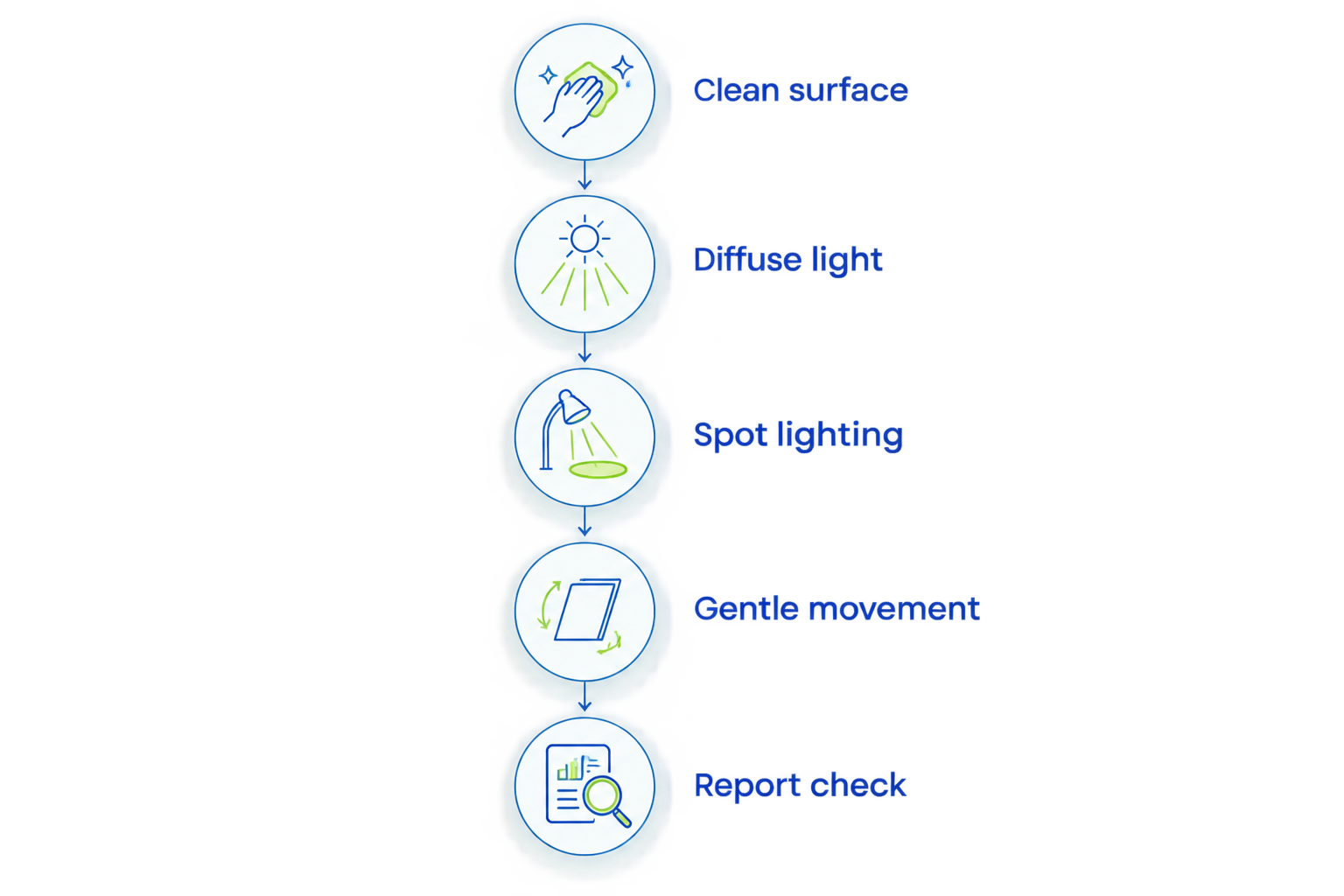
Consistent viewing conditions make differences between individual diamonds easier to see.
Keep size and brightness separate. One carat equals 200 milligrams, so carat weight measures mass—not sparkle, visible dimensions, or beauty.
For your 2026 ring search, record the face-up measurements as well as the weight. Compare similarly sized outlines when you want a fair impression of their different sparkle patterns, rather than letting a larger silhouette decide for you.
How these shapes were ranked
This 2026 guide prioritizes white-light brilliance, then sparkle character and the inspection challenges associated with each outline. Round brilliant takes the default position because its symmetrical brilliant-cut geometry is the clearest starting point for a brightness-first search.
The fancy shapes occupy distinct use-case slots, not fixed brightness grades. No universal sequence proves that every princess is brighter than every cushion, and facet count alone cannot settle the comparison.
Which diamond shape should you choose?
Choose round brilliant if you are undecided and brilliance is your first priority. Choose radiant for a rectangular outline, princess for a crisp square, or oval for rounded length.
Cushion, pear, and marquise belong on your shortlist when their individual character speaks to you. At Element 79, the broader bridal decision includes contemporary design and custom pieces; your favorite silhouette should feel right as part of the whole ring.
Emerald and Asscher cuts are not poor choices because they sit outside this sparkle-first ranking. Their step-cut facets emphasize broad reflections and geometric depth rather than the same busy scintillation as brilliant-style cuts.
FAQ
What's the best lab-grown diamond shape for brilliance in 2026?
Round brilliant is the best default choice for brilliance. Its symmetrical facet arrangement supports balanced light return, but the individual diamond still needs good proportions and finish.
Do lab-grown diamonds sparkle more than natural diamonds?
Lab-grown origin does not inherently produce more sparkle than natural origin. Cut quality, transparency, lighting, and cleanliness determine how an individual diamond looks.
Is radiant brighter than oval?
Radiant is not automatically brighter than oval. Compare the actual stones for even light return, facet definition, and distracting dark areas under the same lighting.
Does a higher facet count mean more sparkle?
A higher facet count does not guarantee more sparkle. Facet angles, proportions, symmetry, and their interaction with light matter more than the count alone.
Should I reject every oval diamond with a bow tie?
Reject an oval when its bow tie dominates your normal view, not simply because some contrast appears. Watch the diamond move to see whether the center remains lively.
Are emerald-cut diamonds less beautiful because they sparkle differently?
Emerald-cut diamonds are not less beautiful; they create a different visual effect. Their step-cut facets emphasize broad reflections and geometric depth rather than brilliant-style scintillation.
Can a setting fix a dull diamond?
A setting cannot correct poor diamond proportions or light leakage. Surrounding stones can add sparkle to the ring, but they do not improve the center diamond’s own light performance.
One last thing
Do your final 2026 comparison at normal viewing distance, not only through magnification or an enlarged video. A diamond you enjoy on your hand matters more than a facet pattern you admire only on a screen.
Bring Element 79 your favorite silhouette and a clear description of the sparkle you enjoy: broad flashes, fine twinkles, or balanced brightness. Start with round brilliant as your reference, then choose the stone you keep wanting to look at.
Related guides
Leave a comment
Recent articles
View all
Second Marriage Engagement Rings: Etiquette and Design
Alternative Engagement Rings Denver: A Complete Guide