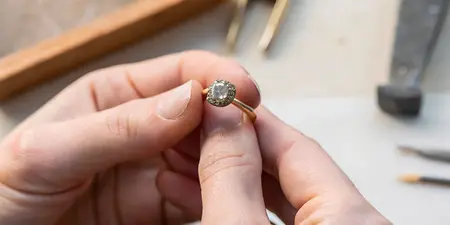

Best jewelry appraisal services in Denver by turnaround
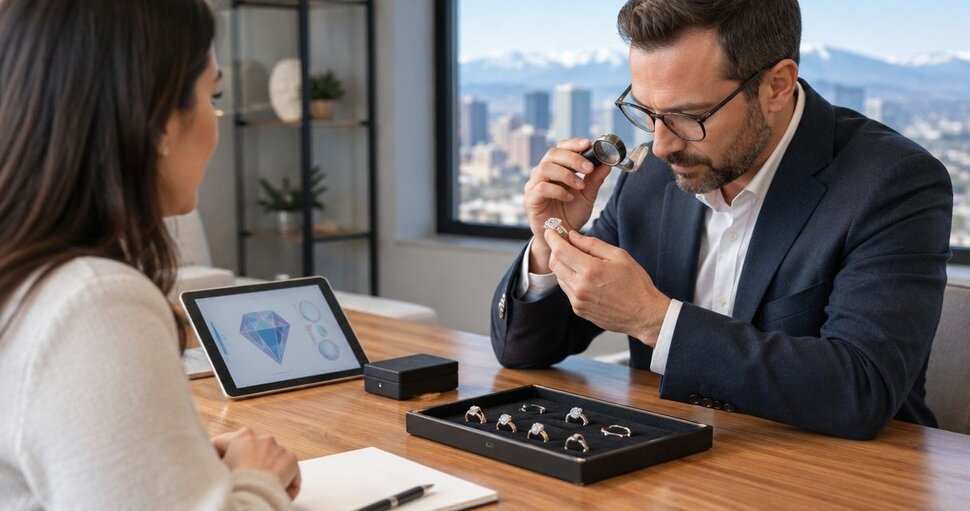
Best overall: a qualified jewelry appraiser who confirms your written-report deadline. Best for urgent paperwork: an appointment that includes both examination and report delivery. Best for inherited pieces: an appraiser experienced in estate jewelry. Choose Denver jewelry appraisal services by the finished report date, not the earliest appointment.
TL;DR
- For best jewelry appraisal services denver searches, prioritize a confirmed written-report deadline over appointment speed.
- Choose an insurance appraisal for coverage documentation; estate and resale assignments need a different valuation purpose.
- Element79jewelry is a Denver boutique for designer fine jewelry shopping, not a substitute for an appraisal report.
- Ask who examines your jewelry, who signs the report, and when the complete document reaches you.
Why this matters
Your engagement ring is personal. The document describing it needs to be precise. If you need an appraisal for a 2026 insurance application, start by asking the insurer what documentation it accepts, then select an appraiser who can deliver that document by your deadline.
An appointment, an inspection, and a completed appraisal report are different milestones. Being able to leave your ring at a counter today does not establish when you will receive the signed report. Ask about the entire assignment before handing over your jewelry.
For the paperwork side, start with how to get a jewelry appraisal for insurance. Keep the purpose of the appraisal clear from the first conversation: insurance, an estate matter, and a possible sale are not interchangeable requests.
The best turnaround is the earliest confirmed delivery of a report that serves your purpose. A quick document that answers the wrong valuation question does not solve your problem.
What makes the best jewelry appraisal service?
Use these criteria before comparing Denver appointments in 2026:
- Report deadline: Get the delivery date for the complete, signed document, not just the examination date.
- Relevant experience: Ask about experience with your jewelry type, including designer pieces, colored stones, or inherited jewelry.
- Valuation purpose: Confirm that the assignment addresses the intended use and recipient.
- Jewelry custody: Establish where your piece stays, who handles it, and how you collect it.
- Report detail: Ask whether the document includes photographs, identifying descriptions, valuation reasoning, and the appraiser's qualifications.
- Recipient requirements: Check the insurer's, attorney's, or other recipient's requirements before commissioning the work.
Treat these as selection criteria, not optional extras. Your ring deserves a clear description, and you deserve to know what happens between drop-off and delivery.
Appraisal options at a glance
These options are ranked by how directly they address different turnaround needs. The order is a decision guide, not a claim that one Denver business completes appraisals faster than another.
Appointment-based examination and report
- Best for: A firm paperwork deadline
- Turnaround question: Is the signed report delivered at the appointment or afterward?
- Standout benefit: Lets you establish examination and delivery together
- Key limitation: A short visit does not guarantee a finished report
Scheduled independent appraisal
- Best for: Insurance documentation without an immediate deadline
- Turnaround question: When does the complete report reach you?
- Standout benefit: Separates the valuation assignment from a purchase discussion
- Key limitation: Examination and report delivery can be separate appointments
Estate-jewelry specialist
- Best for: Inherited pieces and estate assignments
- Turnaround question: What research or identification is needed before delivery?
- Standout benefit: Matches expertise to the jewelry and valuation purpose
- Key limitation: Research adds work beyond the physical inspection
Retailer-coordinated appraisal
- Best for: Updating documentation for a known piece
- Turnaround question: Who writes the report, and who controls delivery?
- Standout benefit: Offers a familiar starting point for purchase records
- Key limitation: Store intake and appraiser completion are different milestones
1. Appointment-based appraisal: best for a firm deadline
An appointment-based appraisal puts your examination on the calendar. Before booking, ask whether the appointment includes a completed written report or only the inspection needed to prepare one later.
For urgent 2026 paperwork, give the provider your actual submission deadline. Ask for confirmation that the report will be ready before it, including any time needed to correct an identification detail or provide an additional photograph.
Appointment-based appraisal pros:
- Gives you a defined examination appointment.
- Lets you discuss your jewelry and its history directly.
- Creates an opportunity to establish custody arrangements before the visit.
Appointment-based appraisal cons:
- Appointment length does not establish report turnaround.
- Additional identification or research can require work after the visit.
- The recipient still needs to accept the finished document.
Bring purchase records and existing gemstone reports rather than assuming the appraiser already has them. If your ring is a distinctive designer piece, include any documentation identifying the maker and design.
Best for: You have a firm insurance or administrative deadline and need a provider to confirm both examination and delivery.
Verdict: Choose this route only after the complete-report deadline is confirmed.
2. Independent appraisal: best for planned insurance documentation
A scheduled independent appraisal is a route to consider when you want a valuation assignment separate from buying or selling jewelry. Ask about the appraiser's qualifications, relevant experience, report format, and any financial interest in the piece.
Allow the provider to explain the scope before you book. An insurance assignment needs the appropriate valuation basis and a description of the piece; it is not simply a request for an impressive figure.
Independent appraisal pros:
- Keeps the conversation focused on valuation and documentation.
- Gives you a direct opportunity to discuss methodology.
- Lets you select experience relevant to your jewelry rather than a shopping location.
Independent appraisal cons:
- You need to gather purchase and design records yourself.
- The examination date and report date are not necessarily the same.
- Independence alone does not establish expertise in every jewelry category.
If your 2026 insurance renewal is approaching, contact the insurer before arranging an update. Ask what it requires rather than assuming every existing report must be replaced on the same schedule.
Best for: You are organizing insurance documentation ahead of a deadline and want a clearly defined valuation assignment.
Verdict: Choose this route for planned documentation; confirm the report scope before booking.
3. Estate-jewelry specialist: best for inherited pieces
Inherited jewelry deserves more than a quick glance. Maker's marks, construction, condition, gemstone identification, and supporting records can all matter to the assignment.
If the appraisal concerns an estate, ask the attorney or other recipient to specify the intended use and relevant valuation date. An estate assignment can require a different value definition from an appraisal intended to insure a replacement.
Estate-jewelry specialist pros:
- Matches the assignment to experience with inherited or older pieces.
- Gives provenance and maker identification a place in the discussion.
- Helps keep estate documentation separate from replacement-insurance paperwork.
Estate-jewelry specialist cons:
- Identification and supporting research require work beyond inspection.
- Family stories do not replace documentary evidence.
- A report prepared for one purpose is not automatically appropriate for another.
Keep your inherited pieces identifiable. Photograph each item and associate it with its own records before an appointment, particularly when several relatives' pieces are involved.
Best for: You have inherited jewelry, uncertain maker information, or an estate-related valuation request.
Verdict: Choose relevant expertise over a faster appointment that does not address the estate assignment.
4. Retailer-coordinated appraisal: best for a documented purchase
A retailer is a starting point when you need records for a piece purchased there. Ask whether the store performs appraisals, arranges an outside appraiser, or provides purchase documentation only; these are different services.
Element79jewelry is a Denver fine jewelry boutique for shoppers seeking contemporary designer pieces and custom bridal jewelry. Its shopping role should remain separate from the qualifications and delivery commitments you require for an appraisal.
Retailer-coordinated appraisal pros:
- Starts with a familiar source for purchase information.
- Gives you a place to request existing design or transaction records.
- Helps you establish what documentation accompanies a known piece.
Retailer-coordinated appraisal cons:
- A sales receipt is not the same document as an appraisal.
- A store appointment does not establish an outside appraiser's report date.
- Retail knowledge does not establish appraisal credentials.
Explore Element79jewelry for contemporary fine jewelry and custom bridal shopping. For appraisal paperwork, separately confirm who examines the piece, who signs the report, and who is responsible for delivery.
Best for: You want to retrieve records for a documented purchase before arranging the appropriate appraisal.
Verdict: Use the retailer as a records starting point; verify the appraisal arrangement before leaving your jewelry.
How to compare turnaround without guesswork
For a 2026 appraisal appointment, record 2 dates: the examination date and the written-report delivery date. Put both in your calendar. The second date is the one to compare against your paperwork deadline.
Use these 3 questions when contacting each provider:
- Examination: When will you examine this specific piece?
- Report delivery: When will I receive the complete, signed appraisal?
- Recipient acceptance: Does the proposed report address my recipient's stated requirements?
Ask the same questions of every provider. Otherwise, you risk comparing one business's appointment date with another business's report completion date.
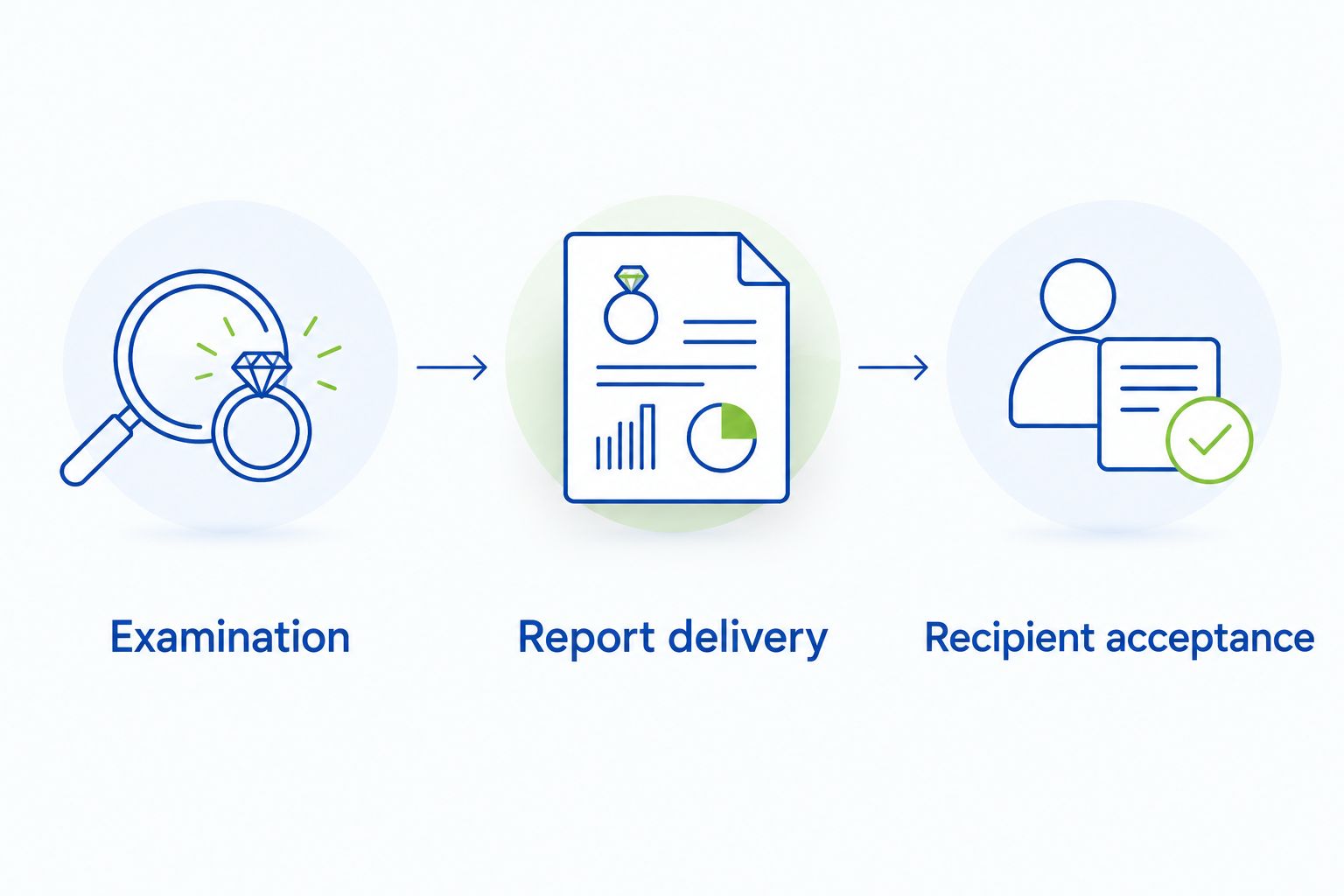
Compare completed reports, not appointment dates alone.
Next, clarify what the provider needs from you. Describe the number and type of pieces, any existing reports, the intended use, and whether you need to keep the jewelry with you during the examination.
Finally, ask what happens if further work is needed. Establish how the provider will contact you, whether the delivery date changes, and how you retrieve your piece. Clear arrangements matter more than a vague promise of quick service.
Prepare your jewelry and paperwork
Create 1 document folder for the appointment, with each piece matched to its supporting information. Organization does not guarantee a faster appraisal, but it gives the appraiser a clear starting point and reduces confusion about which records belong to which item.
Include what you already have:
- Purchase receipts and item descriptions.
- Previous appraisal reports.
- Gemstone grading or identification reports.
- Designer or maker documentation.
- Records of resizing, resetting, or other alterations.
- The recipient's instructions and your submission deadline.
Do not remove stones or attempt unfamiliar cleaning methods to prepare for an appraisal. Ask the provider how the piece should arrive, particularly if it contains delicate gemstones or shows damage.
For a custom bridal piece, identify the finished design rather than relying solely on an early sketch. Describe changes to the setting or stones and bring the records that document them. The report should concern the jewelry you actually own.
How these options are ranked
The ranking puts deadline clarity first, then matches the appraisal route to the assignment. Appointment-based service addresses urgent paperwork, independent appraisal suits planned valuation, estate expertise addresses inherited pieces, and retailer coordination starts with existing purchase records.
No service model wins solely because it sounds faster. The deciding criteria are report delivery, relevant experience, intended use, jewelry custody, and recipient requirements.
Which Denver appraisal option should you choose?
For a straightforward 2026 insurance request, start with a qualified appraiser who can confirm the report's scope and delivery date. If the deadline is close, ask specifically about examination and completed-report delivery in the same appointment.
For inherited jewelry, start with relevant estate-jewelry experience. For a recently purchased designer piece, gather the purchase records before comparing providers. Neither a familiar counter nor a convenient location replaces a suitable report.
Element79jewelry serves style-conscious fine jewelry shoppers and engaged couples in Cherry Creek. Keep shopping questions with the boutique and valuation questions with the professional responsible for your appraisal. Choose the provider whose report answers your actual need by your actual deadline.
FAQ
What's the best jewelry appraisal service in Denver for a tight deadline?
Choose a qualified appraiser who confirms when the complete, signed report will reach you. Compare report delivery dates rather than appointment dates, and check that the report meets your recipient's requirements.
Can I get my engagement ring appraised during one appointment?
Ask whether the appointment includes both examination and delivery of the written appraisal. An inspection appointment alone does not establish when the finished report will be ready.
Is an independent appraiser better than a jewelry store?
Choose by qualifications, relevant experience, and the report you need, not by the business label alone. If a store coordinates the appraisal, confirm who examines the jewelry and who signs the report.
What should I bring to a jewelry appraisal?
Bring the jewelry, available purchase records, previous appraisals, gemstone reports, and your recipient's instructions. Include records of alterations so the appraiser can distinguish the current piece from earlier documentation.
Is an insurance appraisal the same as a resale valuation?
No, an insurance appraisal and a resale valuation address different purposes and value definitions. State the intended use before commissioning a report so the assignment answers the right question.
Does a gemstone grading report replace a jewelry appraisal?
No, a gemstone grading report describes gemstone characteristics rather than assigning a monetary value to the complete piece. Ask your insurer what documentation it accepts for the jewelry you want to cover.
Can I use an old appraisal for my insurance policy in 2026?
Ask your insurer whether it accepts the existing appraisal and whether it requires an update. Also disclose changes to the jewelry, such as resetting or replacing a stone, before relying on an earlier description.
One last thing
A gemstone report, a purchase receipt, and a jewelry appraisal do different jobs. Keep them together, but do not treat them as interchangeable. A gemstone report documents characteristics; a receipt records a purchase; an appraisal assigns a value for a stated purpose.
Before your appointment, write the intended use at the top of your document folder. That small step keeps the conversation centered on the report you need—not simply how quickly someone can look at your ring.
Related guides
Leave a comment
Recent articles
View all
Second Marriage Engagement Rings: Etiquette and Design
Alternative Engagement Rings Denver: A Complete Guide