Average Engagement Ring Cost by Diamond Shape (2026)
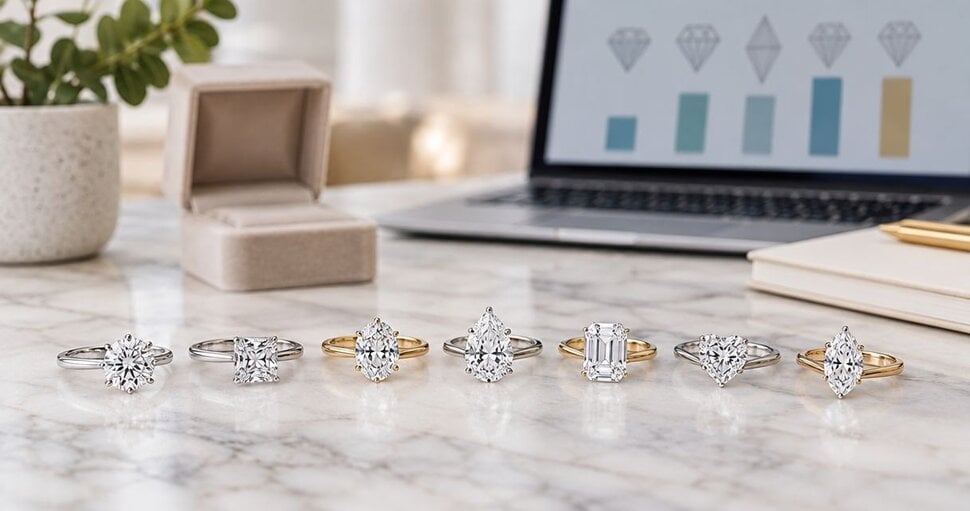
Diamond shape is the single biggest lever on engagement ring cost after carat weight in 2026 — round brilliant carries the highest price per carat of any shape, while step-cut and elongated fancy shapes cost noticeably less for the same size, color, and clarity.
TL;DR
- Round brilliant carries the highest per-carat cost of any diamond shape in 2026, driven by heavy rough-diamond loss during cutting.
- Elongated shapes like oval, pear, and marquise stretch a given carat weight across more visible surface area, so they read larger for less.
- Step-cut shapes — emerald and asscher — sit at the low end of the cost tier because their faceting wastes less of the rough stone.
- Princess, cushion, and radiant cuts land in the middle: more efficient than round, pricier than pure step cuts.
- Element 79 carries designer engagement ring settings across round, oval, and fancy-shape diamonds for shoppers comparing average engagement ring cost by shape before they buy.
Why this matters
Most engagement ring shoppers fixate on carat weight, color, and clarity grades and treat diamond shape as a style choice with no price consequence. That's backwards. Shape moves cost independently of those three grades, sometimes by more than a full clarity grade jump does.
In 2026, with more buyers stretching a fixed budget toward a bigger-looking stone, knowing which shapes cost less per carat — and why — changes which ring actually fits the number you set aside. Picking a diamond cut before you shop settings saves a second round of comparison later.
Diamond shape cost tiers for 2026 engagement rings
There's no single verified industry-wide dollar figure for average engagement ring cost by shape in 2026 — final price depends on carat, color grade, clarity, and a jeweler's own sourcing, and no independent body publishes a clean breakout by shape alone. What is well documented is how shape itself shifts cost relative to a same-size, same-quality round stone, based on how much rough diamond each cut retains.
Round Brilliant
- Relative Cost per Carat: Highest
- Rough Diamond Retained: Lowest — heavy waste in faceting
- Verdict: Buy for resale value and universal recognition
Princess
- Relative Cost per Carat: High
- Rough Diamond Retained: Moderate
- Verdict: Buy for a modern square look on a tighter budget
Cushion
- Relative Cost per Carat: High
- Rough Diamond Retained: Moderate
- Verdict: Buy for soft, vintage-leaning brilliance
Radiant
- Relative Cost per Carat: Above average
- Rough Diamond Retained: Moderate-high
- Verdict: Buy for brilliance in a rectangular outline
Oval
- Relative Cost per Carat: Above average
- Rough Diamond Retained: Moderate-high
- Verdict: Buy for the largest face-up look per carat
Marquise
- Relative Cost per Carat: Average
- Rough Diamond Retained: High
- Verdict: Hold for maximum visual length per carat
Pear
- Relative Cost per Carat: Average
- Rough Diamond Retained: High
- Verdict: Hold for an elongated, one-pointed silhouette
Heart
- Relative Cost per Carat: Average
- Rough Diamond Retained: High
- Verdict: Hold — sentimental shape, harder to size-match
Emerald
- Relative Cost per Carat: Lower
- Rough Diamond Retained: Highest
- Verdict: Buy for a step-cut clarity showcase at lower cost
Asscher
- Relative Cost per Carat: Lowest
- Rough Diamond Retained: Highest
- Verdict: Buy for the most rough-efficient vintage cut
Round brilliant leads at the highest per-carat cost of the ten shapes above; asscher and emerald trail at the lowest, because their step-cut facets use far more of the original rough stone. Princess and cushion sit close behind round — they lose less rough during cutting but still carry above-average demand premiums in 2026.
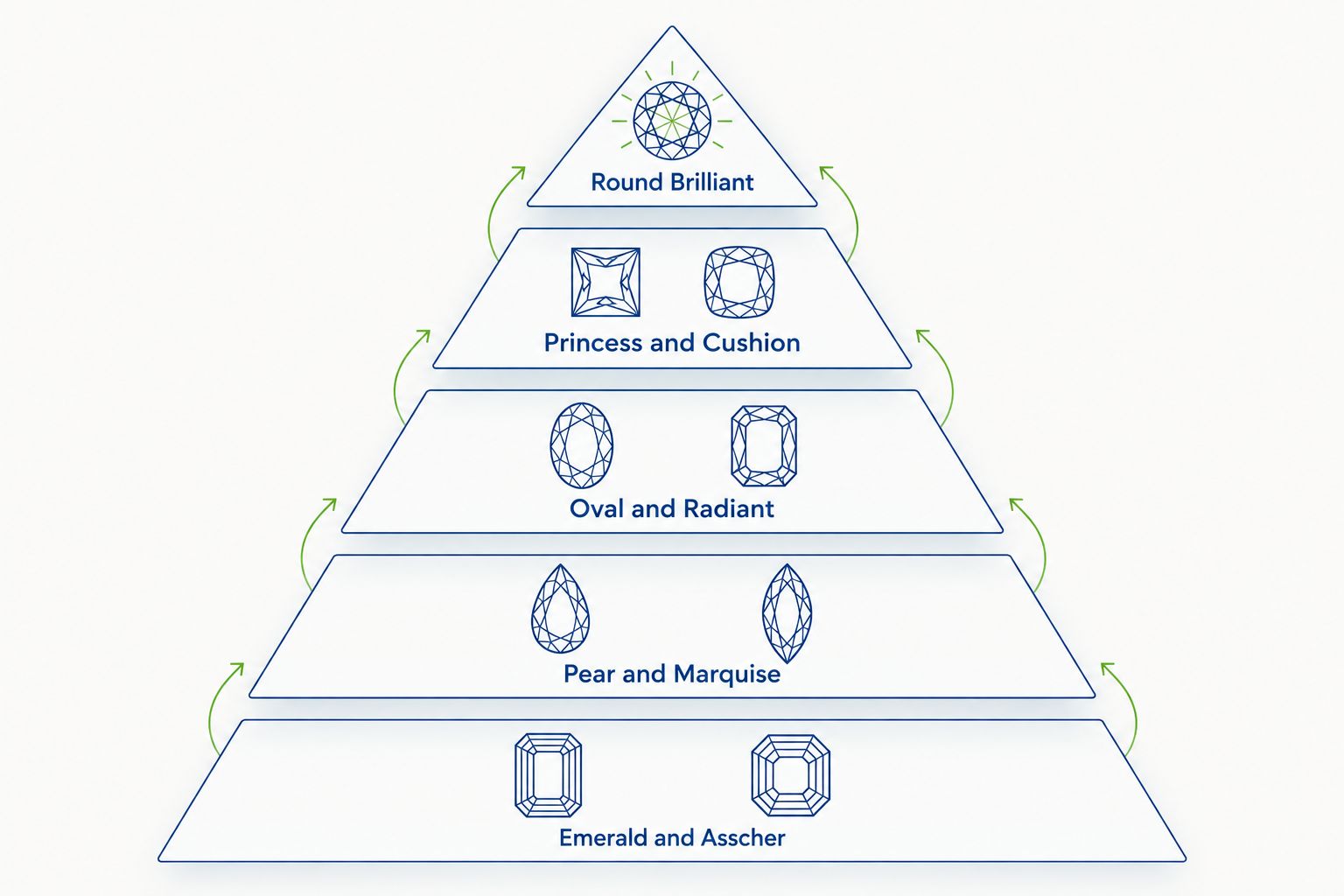
Cost per carat drops as you move down the pyramid toward step-cut shapes.
What actually drives the price gap
The ranking above reflects diamond-cutting yield, a well-documented part of gem-cutting: round brilliants are cut from octahedral rough and typically retain less of the original stone than fancy shapes. That's the main reason wholesalers and jewelers price round diamonds higher per carat than most other shapes at equal color and clarity, year after year, including 2026.
One limitation worth naming: this tiering doesn't account for a specific stone's fluorescence, cut-grade precision, or a jeweler's own margin. Any of those can push one particular ring's price outside its shape's usual tier — the table shows a pattern, not a guarantee for any single stone.
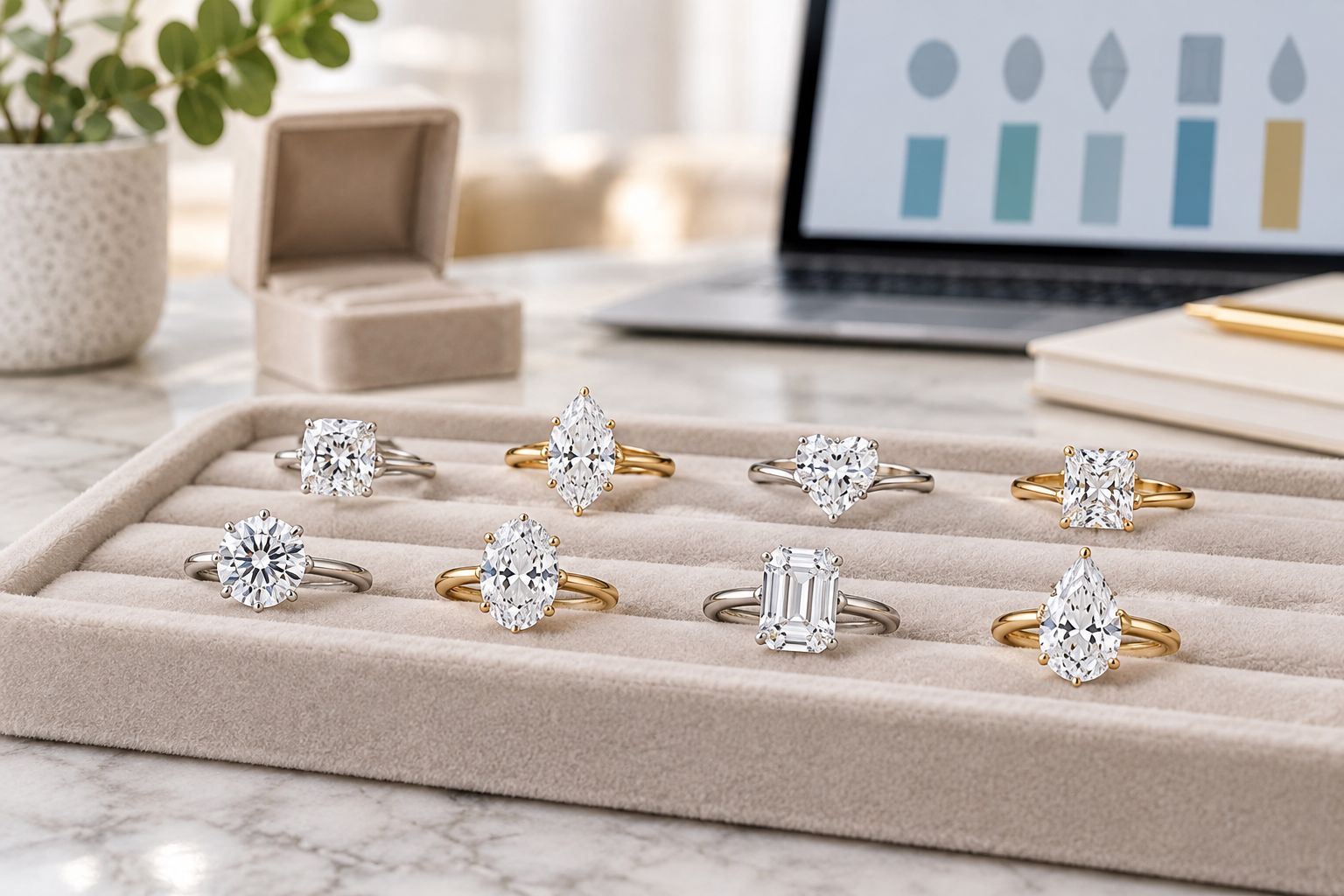
Facet size and pattern differ enough between shapes that the same clarity grade can look different stone to stone.
Step-cut shapes like emerald and asscher use large, flat facets instead of the small triangular facets on a round brilliant. Those big facets act like windows into the stone — inclusions that a round brilliant hides get shown off more openly in a step cut. That's the trade-off behind the lower cost tier.
How to use these benchmarks when you shop
- Budget matters more than brand-name brilliance: start with emerald or asscher — the rough-efficiency discount is real and repeatable across 2026 inventory.
- You want a stone that faces up bigger than its carat weight: an oval engagement ring or pear stretches the same carat further than round.
- Resale and universal recognition matter most: a round brilliant engagement ring stays the reference point every appraiser and buyer recognizes, despite the premium.
- You're comparing rings priced "per carat" across shapes: confirm carat weight before shape — carat size moves total cost more than silhouette does, on top of any shape tier.
Element 79's Cherry Creek boutique carries contemporary and designer bridal pieces across several of these shapes, so you can compare a round brilliant setting against an oval or emerald-cut option side by side before deciding.
Compare diamond shapes in person
See round, oval, and step-cut settings side by side in Cherry Creek.
FAQ
What's the most expensive diamond shape for an engagement ring in 2026?
Round brilliant is the most expensive diamond shape per carat in 2026. It loses the most rough diamond during cutting, which keeps its per-carat price above every fancy shape at equal color and clarity.
Is oval cheaper than round for the same carat weight?
Yes, an oval typically costs less per carat than a round brilliant of the same weight, color, and clarity. It also faces up larger, so it can look bigger for the money.
Why do emerald-cut diamonds cost less per carat?
Emerald cuts use step-cut faceting that retains more of the original rough diamond than a round brilliant's faceting pattern. Less waste during cutting means a lower cost per carat.
Does diamond shape affect resale value?
Round brilliant tends to hold resale value better than fancy shapes because buyer demand for it stays highest and most consistent. Fancy shapes can be harder to resell at the original price.
Which diamond shape looks biggest for its carat weight?
Elongated shapes — oval, marquise, and pear — show more surface area per carat than round or square shapes. That larger face-up look is one reason they cost less yet read larger.
Should I choose diamond shape or carat weight first?
Decide shape first based on the silhouette and setting style you want, then set carat weight against your budget. Shape narrows which settings work; carat weight sets the size and the bulk of the final cost.
Is princess cut a good budget alternative to round?
Yes, princess cut retains more rough diamond than round brilliant, which puts it in a moderate savings tier while keeping strong brilliance in a square silhouette.
Do step-cut diamonds show inclusions more than round diamonds?
Yes, emerald and asscher cuts use large, flat facets that expose inclusions more clearly than a round brilliant's smaller faceting pattern. A higher clarity grade matters more in a step cut.
One last thing
If you're chasing the cost-per-carat discount on an emerald or asscher cut, don't chase a lower clarity grade at the same time. Those big, flat step-cut facets show inclusions the way a round brilliant never would — the shape savings can get erased by a stone that looks included at first glance across the table in 2026.
Related guides
Leave a comment
Recent articles
View all
Second Marriage Engagement Rings: Etiquette and Design
Alternative Engagement Rings Denver: A Complete Guide