Round Brilliant Engagement Rings: 2026 Buying Guide
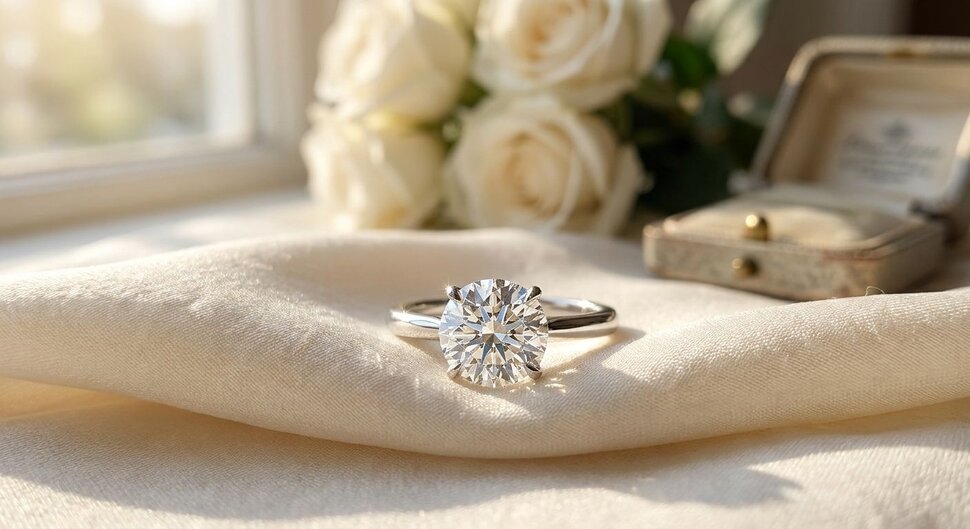
A round brilliant is the diamond shape jewelers built the entire cut grade system around, and it's still the shape most people picture when they hear "engagement ring." This guide breaks down what actually separates a great round brilliant from a mediocre one, and which settings make that sparkle work hardest for you.
TL;DR
- Round brilliant engagement rings win on light performance thanks to their 58-facet cut, unmatched by fancy shapes.
- A solitaire setting is the safe, timeless pick for round brilliant engagement rings in 2026 — Buy.
- Halo settings add perceived size to a smaller round brilliant center stone — Consider if budget is tight.
- Skip thin pave shanks on daily-wear rings; they bend and lose stones faster than solid bands.
- Cut grade matters more than carat weight for a round brilliant's actual sparkle.
Why this matters
The round brilliant cut isn't a trend, it's math. Marcel Tolkowsky calculated the proportions for maximum light return back in 1919, and nearly every diamond cutter since has worked from that formula. That's why round brilliant engagement rings photograph well, catch light in dim restaurants, and hold their resale value better than most fancy shapes.
At Element 79 in Cherry Creek, Denver, round brilliant is still the most requested shape for custom bridal work, and it's easy to see why once you understand what a well-cut stone does under normal light versus a poorly cut one.
Who this is for
This guide is for the buyer who wants a ring that looks intentional in 2026 without needing an explanation. Maybe you're proposing and want zero risk that she'll wish she'd picked a different shape. Maybe you're the one being proposed to and you've done the research already. Either way, if "classic" and "sparkle" are both non-negotiable, round brilliant engagement rings are the shape to build around.
What to look for in round brilliant engagement rings
Cut grade before carat weight
A GIA Excellent or Very Good cut grade on a round brilliant returns dramatically more light than a Good or Fair cut at the same carat weight. Two 1-carat round brilliants can look completely different in a room — one lively, one flat — purely because of cut proportions. Prioritize cut grade over chasing a bigger number on the label.
Diamond color that reads white in your setting
Color grading runs from D (colorless) to Z, but the difference most people notice happens around the G-to-J range depending on metal choice. A round brilliant set in yellow gold can hide more warmth than the same stone in platinum. This is where diamond color grade choices actually change your budget without changing the visible sparkle.
Clarity you can't see with the naked eye
Most round brilliant engagement rings look completely clean at VS2 or SI1 clarity to anyone standing more than a foot away. Paying up for internally flawless stones rarely buys visible improvement unless you're planning to inspect the ring under a jeweler's loupe daily.
Setting height and prong count
A round brilliant needs either four or six prongs holding it securely, and setting height determines how much the stone catches light from the side versus straight overhead. Low-set stones look duller in daily wear; a slightly raised setting lets more light hit the pavilion facets.
Band width for daily wear
Thin bands under 1.5mm look delicate on the display stand and bend within a year of daily wear, especially for anyone who works with their hands. A round brilliant deserves a band substantial enough to survive 2026 and the next fifty years after it.
Metal that matches lifestyle, not just trend
Platinum holds prongs tighter over decades but shows scratches as a soft patina. 18k white or yellow gold is more affordable and easier to resize. Neither is wrong — the mistake is picking metal purely on Pinterest trend without thinking about how it wears.
Book a private ring consultation
Try round brilliant styles in person at the Cherry Creek boutique.
Top picks for round brilliant engagement rings
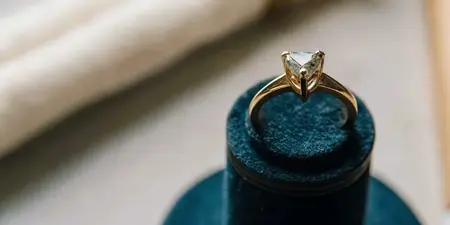
The safe pick — Classic solitaire. A single round brilliant on a clean band is the setting with zero learning curve; it's also the easiest to resize and the most universally flattering across hand shapes. Solitaire engagement rings built for a timeless look put all the attention on cut quality, which is exactly where it should go. Buy.
The sparkle maximizer — Halo setting. A ring of smaller diamonds circling the round brilliant center stone adds visible surface sparkle and can make a 0.75-carat center read closer to a full carat. This is the pick when the budget caps the center stone size but the sparkle expectation doesn't shrink. Halo engagement rings for extra sparkle work especially well with slightly smaller round brilliants. Consider.
The wildcard — Custom-built round brilliant. Working with a jeweler on a fully custom setting means choosing prong style, band width, and metal from scratch instead of picking from a case. This route takes longer and costs more in consultation time, but it's the only way to get a round brilliant sized and set exactly to one person's hand. Consider if you have the time; Skip if you're proposing within the next 60 days.
The heirloom nod — Vintage-inspired round brilliant. Milgrain edges, filigree shoulders, and older-style basket settings pair naturally with round brilliants because that's the era the cut was designed in. It reads as intentional rather than trendy, and it ages well precisely because it was never chasing a 2026 look in the first place. Buy if the wearer already leans toward antique aesthetics; Skip if her everyday style is minimalist.
The designer statement — Artisan-brand round brilliant. Brands like Artëmer and Orly Marcel build round brilliants into sculptural, asymmetric settings that break from the traditional solitaire silhouette. This is the pick for someone who wants a round brilliant's sparkle without a ring that looks identical to everyone else's. Consider for the style-forward buyer; Skip if she wants something instantly recognizable as "classic."
What to avoid
- Cheap prong metal on a heavy center stone. A round brilliant over 1.5 carats needs six prongs or a reinforced four-prong setting; thin plated prongs on a big stone are a loss-of-diamond claim waiting to happen.
- "Eye clean" claims with no grading report. Anyone can say a stone is eye clean. A GIA or AGS report gives you an actual clarity grade to check that claim against.
- Extreme depth percentages. A round brilliant cut too deep (over roughly 62%) or too shallow (under 58%) leaks light out the sides or bottom instead of back to your eye, no matter how good the color and clarity numbers look on paper.
Verdict comparison
Classic solitaire
- Best for: First-time buyers, resale value
- Sparkle level: High, unobstructed
- Verdict: Buy
Halo
- Best for: Budget-conscious carat stretch
- Sparkle level: Very high, dense
- Verdict: Consider
Custom-built
- Best for: Exact fit, one-of-one design
- Sparkle level: Depends on design
- Verdict: Consider
Vintage-inspired
- Best for: Antique-leaning style
- Sparkle level: Moderate, textured
- Verdict: Buy for the right wearer
Artisan/designer
- Best for: Style-forward, non-traditional
- Sparkle level: High, sculptural
- Verdict: Consider
FAQ
What makes round brilliant engagement rings the most popular shape?
Round brilliant diamonds use a 58-facet cut engineered for maximum light return, based on proportions calculated by Marcel Tolkowsky in 1919. That's why round brilliant engagement rings consistently outsell fancy shapes decade after decade.
Is a round brilliant more expensive than other diamond shapes?
Yes, round brilliant diamonds typically cost more per carat than shapes like oval, pear, or emerald cut because cutting a round brilliant wastes more of the rough stone. The tradeoff is more consistent, predictable sparkle across every stone.
What cut grade should I choose for a round brilliant?
Aim for GIA Excellent or Very Good cut grade on any round brilliant engagement ring. Cut grade affects visible sparkle more than carat weight, color, or clarity.
Do round brilliant rings look bigger in a halo setting?
A halo of smaller diamonds around a round brilliant center stone can make it read as visually larger than its actual carat weight. It's the most common way to stretch a smaller center stone budget without sacrificing perceived size.
How do I choose a metal for a round brilliant engagement ring?
Platinum holds prongs tighter over decades and suits daily wear, while 18k white or yellow gold costs less and resizes more easily. The right choice depends on lifestyle and how the diamond's color grade reads against each metal.
Are lab-grown round brilliants a good option in 2026?
Lab-grown round brilliants have identical optical properties to mined stones and typically cost less per carat in 2026. The choice comes down to personal preference on origin, not sparkle quality.
What's the difference between a solitaire and a halo round brilliant?
A solitaire shows a single round brilliant on a clean band, while a halo surrounds that center stone with smaller diamonds for added sparkle and perceived size. Solitaires are the more classic, resale-friendly choice.
Can a round brilliant work in a vintage-inspired setting?
Round brilliant diamonds pair naturally with vintage-inspired settings because the cut itself dates back over a century. Milgrain edges and filigree shoulders complement round brilliants without competing with the stone's sparkle.
One last thing
The detail most buyers miss: a round brilliant's sparkle changes noticeably under different light sources, so ask to see any candidate stone under incandescent light, not just the jeweler's overhead LEDs. A stone that looks flat under warm restaurant lighting is the one detail no grading report will warn you about before 2026's proposal season.
Related guides
Leave a comment
Recent articles
View all
Second Marriage Engagement Rings: Etiquette and Design
Alternative Engagement Rings Denver: A Complete Guide