Princess Cut Engagement Rings: 2026 Modern Buying Guide
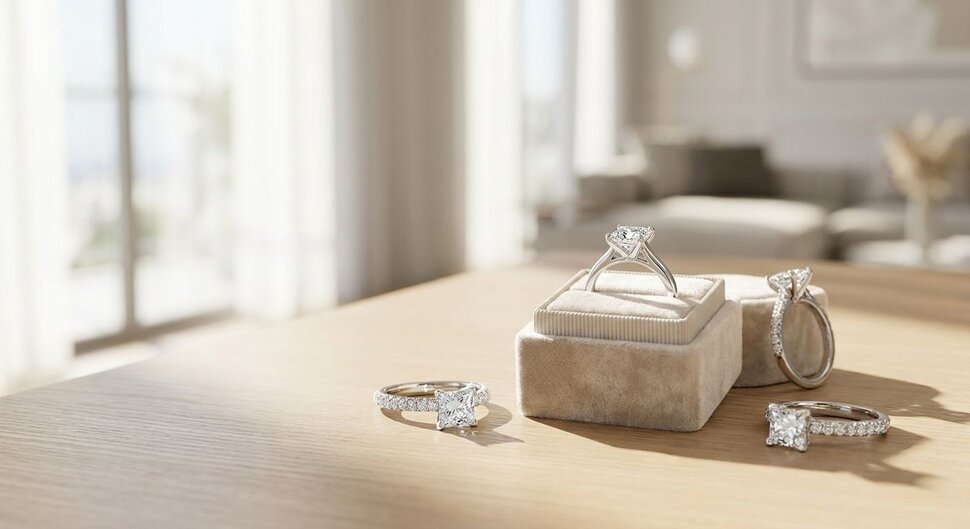
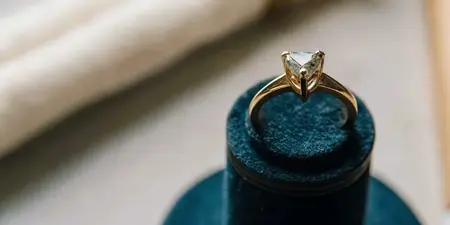
Princess cut engagement rings pair the fire of a brilliant cut with the clean geometry of a square, and in 2026 that combination reads as modern rather than trendy. This guide breaks down what actually matters when you're shopping princess cut engagement rings, who they suit, and which routes at Element 79 make the most sense.
TL;DR
- Princess cut engagement rings suit brides who want brilliance without the rounded softness of a solitaire round brilliant — Buy for daily-wear durability with the right prongs.
- V-tip or claw prongs at the four corners are non-negotiable; unprotected corners chip under daily wear.
- Halo settings on princess cut engagement rings add visual size without stretching the center stone budget — Consider.
- Platinum outperforms yellow gold for corner protection on a princess cut; if you love warm tone, rose gold is the better compromise — Consider.
- Custom princess cut designs at Element 79 let you dial in proportions instead of settling for a stock ratio — Buy.
Why this matters
A princess cut is not just "a square diamond." The corner geometry changes how the stone wears, how it catches light, and how it needs to be set. Buyers who pick a princess cut for the modern look and then set it in the wrong mount end up with chipped corners within a year or two of daily wear. Getting the setting and proportions right up front is the difference between a ring you love in 2026 and one you're repairing by 2028.
Who princess cut engagement rings are for
This cut suits the buyer who wants brilliance without curves — someone drawn to architectural lines, sharp edges, and a silhouette that photographs crisp rather than soft. If your everyday style leans toward tailored pieces over romantic drapes, a princess cut engagement ring matches that instinct better than a round brilliant or cushion cut would. It also suits practical brides who want more visible surface area per carat than a round stone typically shows.
What to look for in princess cut engagement rings
Corner protection
The 90-degree corners on a princess cut are the most fragile point on the stone. Look for four V-tip or double-prong corners, not simple claws — a setting built for durable everyday wear protects those corners from chipping against desks, doorframes, and gym equipment.
Length-to-width ratio
A true square princess cut sits close to a 1:1 ratio. Anything above 1.05 starts reading as rectangular, which changes the whole look of the ring. Ask to see the ratio in writing before you commit — this single number affects the silhouette more than carat weight does.
Metal choice
Platinum holds prongs tighter around sharp corners than gold does, which matters more on a princess cut than on a round stone. If you want warm tone without sacrificing corner strength, choosing platinum for an engagement ring band is worth reading before you fall in love with a specific mount.
Setting style
Solitaire, halo, and three-stone settings all read differently on a princess cut. A halo adds perceived size and light performance around the center stone. A solitaire keeps the geometry uninterrupted, which is the purest expression of the modern look this cut is known for.
Certification and cut grade
Princess cuts don't have a universal cut grading scale the way round brilliants do, so certification from GIA or AGS matters more here, not less. Ask specifically about symmetry grading, since a poorly cut princess loses brilliance fast.
Everyday wearability
If this ring is going on a hand that types, lifts, cooks, and gardens, prong height and metal thickness around the corners decide whether it survives 2026 intact. Don't skip this step for the sake of a lower profile setting.
See princess cut styles in person
Book a private consultation at the Cherry Creek boutique to compare settings side by side.
Top picks for a modern princess cut engagement ring
The Clean Line — solitaire princess cut. One stone, four corners, nothing to distract from the shape. This is the closest thing to a pure architectural statement in fine jewelry, and it wears lower on the hand than a halo does, which matters for anyone working with their hands daily. Verdict: Buy for the buyer who wants the geometry to speak for itself.
The Sparkle Upgrade — halo princess cut. Wrapping the center stone in a ring of smaller diamonds adds surface sparkle and visual size without changing the center stone's actual carat weight. If you love the square shape but want more presence on the hand, this is the move — see halo engagement rings for extra sparkle for how the halo interacts with different stone shapes. Verdict: Consider if you want more visual weight without upsizing the center stone.
The Symbolic Choice — three-stone princess cut. Two side stones flanking a princess cut center reads as intentional rather than decorative, and it's a strong pick for a bride who wants meaning built into the design rather than added later. Verdict: Consider for buyers who want a story attached to the ring, not just a shape.
The Warm-Tone Alternative — rose gold princess cut. If platinum's cool tone doesn't match your existing jewelry, rose gold is the next-best option for corner security, and it photographs warmer for engagement photos. Read more on rose gold jewelry for a romantic gift before you lock in a metal. Verdict: Buy for warm-skin-tone brides who still want the square silhouette.
The Fully Custom Route. Stock ratios don't always match what you picture. Building a princess cut from scratch lets you choose the exact length-to-width ratio, corner prong style, and setting height instead of compromising on an off-the-shelf mount. Verdict: Buy for buyers with a specific vision who don't want to settle.
What to avoid
- Claw prongs with no V-tips. They look identical to protected settings in a photo but leave the corners exposed to chipping within the first year of wear.
- A ratio over 1.10 marketed as "square." That's a rectangular cut wearing a princess cut label — ask for the exact number, not a visual estimate.
- Low-set corners with no metal buildup underneath. Princess cuts sit lower to the finger by design, but zero reinforcement under the corners means they catch on everything from seatbelts to sweaters.
Verdict comparison
Solitaire princess cut
- Best for: Clean, architectural look
- Corner protection: Good with V-tips
- Verdict: Buy
Halo princess cut
- Best for: More visual size, more sparkle
- Corner protection: Good, extra metal coverage
- Verdict: Consider
Three-stone princess cut
- Best for: Symbolic, meaningful design
- Corner protection: Good with side-stone support
- Verdict: Consider
Rose gold princess cut
- Best for: Warm tone, romantic photos
- Corner protection: Moderate, softer metal
- Verdict: Buy
Fully custom princess cut
- Best for: Exact proportions, no compromise
- Corner protection: Built to spec
- Verdict: Buy
FAQ
What's the best setting for a princess cut engagement ring?
A four-prong setting with V-tips or double prongs at each corner is the best setting for a princess cut engagement ring in 2026. Anything less leaves the sharp corners exposed to chipping during daily wear.
Do princess cut diamonds chip more easily than round brilliants?
Yes, the 90-degree corners on a princess cut are more vulnerable to chipping than the rounded edge of a round brilliant. Corner-protecting V-tip prongs and a slightly recessed setting reduce that risk significantly.
Is a princess cut engagement ring more affordable than a round brilliant of the same carat?
Princess cuts generally retain more of the rough diamond during cutting than round brilliants, which can affect pricing per carat. Ask your jeweler for a side-by-side comparison at the exact carat weight you're considering.
Can you pair a princess cut with a halo setting?
Yes, a halo works well with a princess cut and adds visual size and extra sparkle around the center stone. Square halos that follow the stone's corners look more intentional than round halos on a square shape.
What metal pairs best with a princess cut diamond?
Platinum offers the strongest corner protection for a princess cut engagement ring because it holds prongs tighter than gold. Rose or white gold are solid alternatives if you want a warmer tone without sacrificing too much durability.
Is the princess cut still in style in 2026?
Yes, the princess cut remains one of the most requested fancy shapes for engagement rings in 2026, particularly among buyers who want a modern, geometric look. It has held steady popularity since it was developed in the 1980s.
How do you clean a princess cut engagement ring at home?
Soak the ring in warm water with a drop of dish soap, then use a soft-bristled brush to clean around the corners and under the setting. Corners trap more debris than a round brilliant, so clean weekly rather than monthly.
What carat weight looks best in a princess cut?
Princess cuts show more visible surface area per carat than round brilliants, so a 1-carat princess cut can look larger on the hand than a 1-carat round stone. The right size depends more on finger size and setting style than a fixed carat number.
One last thing
The princess cut was developed in the 1980s specifically to combine the brilliance of a round cut with a squared silhouette — it's a relatively young shape compared to emerald or round cuts, and that modern engineering is exactly why it still reads as contemporary in 2026. If you're torn between a stock setting and a custom build, ask to see the length-to-width ratio on paper before you see the ring in person. The number tells you more about the final look than the photo does.
Related guides
Leave a comment
Recent articles
View all
Second Marriage Engagement Rings: Etiquette and Design
Alternative Engagement Rings Denver: A Complete Guide