Natural vs Lab Grown Diamonds: What Every Denver Jewelry Buyer Should Know
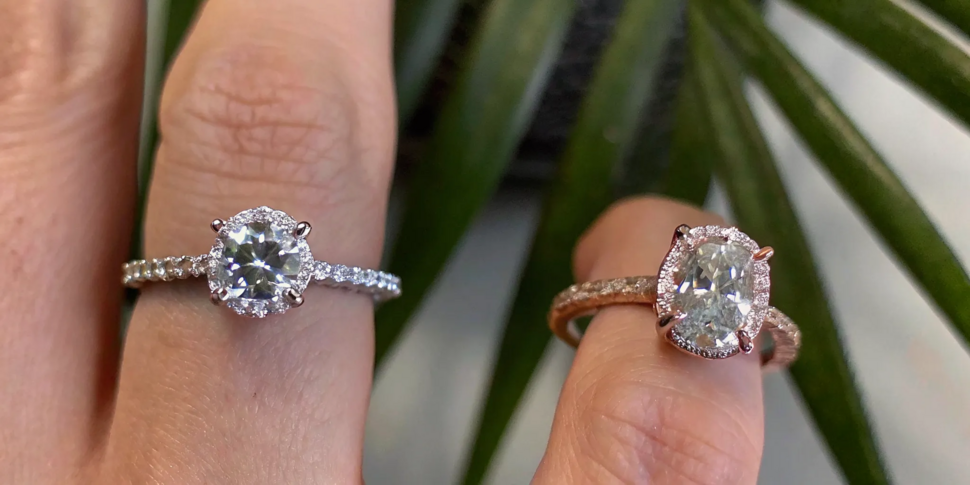
If you're looking for an engagement ring in Denver, you've probably encountered the biggest question in modern jewelry: natural diamond or lab-grown diamond? It's a decision that touches on science, ethics, budget, and emotion, and there is no one-size-fits-all answer. This guide breaks down everything you need to know so you can choose with confidence, whether you're drawn to the timeless rarity of a natural stone or the innovation and value of a lab-grown diamond.
Ready to explore your options? Browse our curated bridal collection featuring both natural and lab-grown diamond engagement rings from award-winning designers.
The Short Answer: Natural vs Lab Grown Diamonds at a Glance
Both natural and lab-grown diamonds are real diamonds. They share the same chemical composition, crystal structure, and physical properties. The main differences come down to origin, rarity, and cost. Natural diamonds formed deep in the Earth over billions of years under extreme heat and pressure. Lab-grown diamonds are created in controlled laboratory environments in just weeks. Both are graded using the same 4Cs standards from the GIA and IGI. The most significant practical difference is price: lab-grown diamonds typically cost 30 to 50 percent less than natural diamonds of comparable quality, while natural diamonds retain their value better over time.
What Are Natural Diamonds?
Natural diamonds begin their journey as carbon deposits buried 90 to 120 miles beneath the Earth's surface. Under extreme heat and pressure spanning 1 to 3 billion years, carbon atoms crystallize into diamonds, the hardest natural substance known. Violent volcanic eruptions then carry these diamonds to the surface through kimberlite pipes, vertical columns of igneous rock that act as natural elevators.
A common myth is that diamonds form from compressed coal. In reality, most diamonds are older than Earth's first land plants, the source of coal, so that geological explanation simply is not possible. Natural diamonds also contain trace elements like nitrogen that give them their characteristic colors and help gemologists identify their geographic origin.
Beyond their geological story, natural diamonds carry a tangible sense of rarity. Every natural diamond is unique, shaped by random conditions over deep time. No two are exactly alike. That individuality, combined with their finite supply, is what gives natural diamonds their enduring value in both the jewelry and investment markets.
Want to dive deeper into the journey of a diamond? Read our guide on where diamonds come from.
What Are Lab-Grown Diamonds?
Lab-grown diamonds, also called lab-created or cultured diamonds, are chemically and physically identical to natural diamonds. The Federal Trade Commission formally recognized them as real diamonds in 2018, and the Gemological Institute of America has been grading them since 2007. If someone tells you they are fake, they are simply incorrect.
Scientists have been capable of producing diamonds since the 1950s, but early results were too small and low in quality for fine jewelry use. Today's lab-grown diamonds are gem-quality, produced using two primary methods:
High-Pressure High-Temperature (HPHT): This method mimics the natural diamond-forming environment by applying extreme pressure and heat to convert carbon into diamond. HPHT produces high-quality stones efficiently and is one of the more established techniques in the industry.
Chemical Vapor Deposition (CVD): A carbon-rich gas is broken down in a vacuum chamber, depositing pure carbon atoms layer by layer onto a diamond seed crystal. CVD offers precise control over the diamond's properties and is increasingly common among modern producers.
Both methods produce diamonds with the identical cubic crystal structure and optical properties as natural stones, doing so in weeks rather than billions of years. This technological achievement has fundamentally reshaped the engagement ring market, giving buyers access to larger, higher-quality stones at accessible price points.
For insight into the custom possibilities these stones offer, explore our guide to designing custom bridal jewelry with either natural or lab-grown diamonds.
Natural vs Lab Grown Diamonds: Side-by-Side Comparison
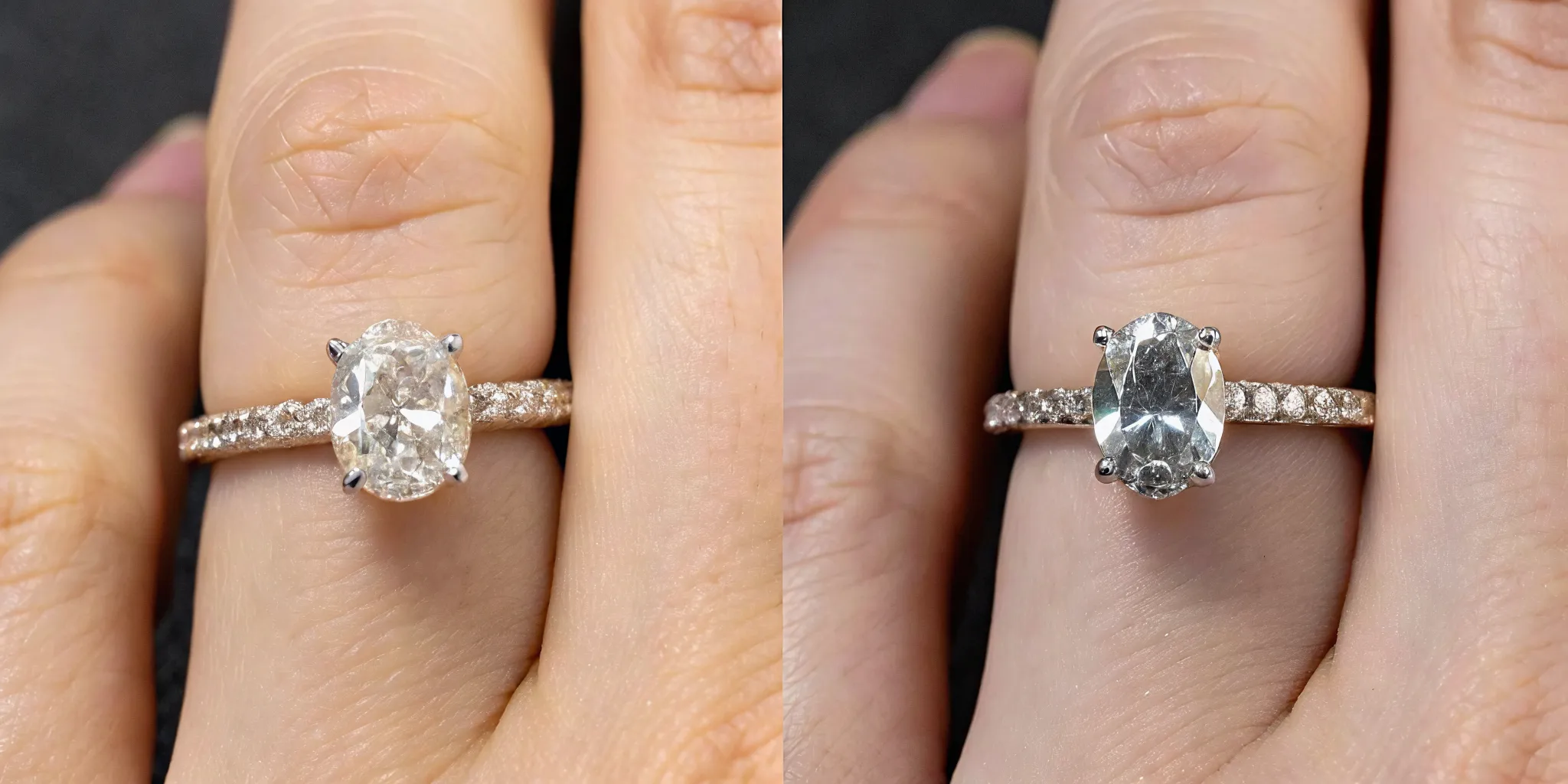
When you place a natural diamond and a lab-grown diamond of the same cut, color, and clarity next to each other, even a trained jeweler needs specialized equipment to tell them apart. Both exhibit the same brilliance, fire, and scintillation that make diamonds the most celebrated gemstone in the world. Here is how they compare across every meaningful dimension.
| Aspect | Natural Diamond | Lab-Grown Diamond |
|---|---|---|
| Formation Time | 1 to 3 billion years | 2 to 4 weeks |
| Chemical Composition | Pure carbon with trace elements | Pure carbon, identical structure |
| Crystal Structure | Cubic isometric | Cubic isometric |
| Typical Cost | Higher due to natural rarity | 30 to 50 percent less |
| Rarity | Finite, increasingly scarce | Unlimited production potential |
| Resale Value | Holds value over time | Depreciates more rapidly |
| Grading Standards | GIA or IGI 4Cs | Same 4Cs, inscribed lab-grown |
| Environmental Impact | Mining affects land and water | Energy-intensive production |
| Identification | Gemologist confirms origin | Origin disclosed on grading report |
Cost Comparison: Natural vs Lab Diamond Pricing
Price is often the deciding factor, and for good reason. A one-carat natural diamond of good quality typically ranges from $5,000 to $15,000. A comparable lab-grown diamond falls between $1,500 and $4,500, roughly 30 to 50 percent less. That difference becomes even more pronounced at higher carat weights, where natural diamond prices rise exponentially due to rarity.
Natural diamond pricing reflects billions of years of scarcity, the cost of exploration and mining, and over a century of established market dynamics. Lab-grown diamonds, by contrast, can be produced on demand, and their prices have been declining steadily as technology improves and production scales globally.
What does that mean for your budget? With a lab-grown diamond, you can often afford a stone that is one or two carats larger, or jump to a higher color and clarity grade for the same price as a smaller natural stone. With a natural diamond, you are paying for rarity and long-term value retention. Many buyers see a natural diamond as a meaningful investment, while lab-grown buyers prioritize getting the most visually impressive stone within their immediate budget.
How Diamond Grading Works for Both Types
Both natural and lab-grown diamonds are evaluated using the same universal 4Cs: cut, color, clarity, and carat weight. The GIA and IGI issue grading reports for both categories. However, lab-grown diamonds are laser-inscribed on the girdle, the outer edge of the stone, to indicate they were laboratory-created, and the grading report clearly notes this origin.
Since July 2019, GIA no longer uses the term synthetic. The official terminology is laboratory-grown, reflecting the industry's recognition that these are real diamonds with a different origin story. Trained gemologists can distinguish the two using specialized instruments that detect subtle growth features from the manufacturing process, but to the naked eye, they are indistinguishable.
For a deeper look at how diamonds are evaluated and certified, read our guide on diamond grading and certification labs.
Environmental and Ethical Considerations
Diamond mining carries real environmental and human costs: deforestation, river pollution, water resource exploitation, and dangerous working conditions in unregulated regions. The Kimberley Process was established to prevent conflict diamonds from entering the mainstream market, though critics argue it has significant gaps in enforcement and scope, particularly regarding human rights conditions in certain mining areas.
Lab-grown diamonds avoid mining entirely, which appeals to many eco-conscious buyers. However, they are not without environmental impact. HPHT and CVD furnaces consume substantial electricity, and the overall carbon footprint depends heavily on the energy mix used in production. A lab-grown diamond produced using renewable energy has a very different environmental profile than one produced on a coal-powered grid.
The choice between natural and lab-grown is increasingly framed around personal values rather than a simple good versus bad calculation. Some buyers prioritize the geological authenticity and established ethical sourcing of Canadian or Australian diamonds. Others value the reduced land disruption of laboratory production. Both perspectives are valid.
At Element 79, we believe in transparency. Our designers follow ethical sourcing practices, and we are happy to discuss where any stone in our collection comes from. Learn more in our guide to ethical diamond buying.
Resale Value: What Every Buyer Should Know
If long-term value matters to you, natural diamonds are the clear choice. The resale market for natural diamonds is well-established and liquid. They typically retain 25 to 50 percent of their original retail value, and high-quality stones with strong GIA certifications can approach or exceed that range depending on market conditions at the time of sale.
Lab-grown diamonds, by contrast, have a thin and illiquid resale market. They often resell for a fraction of their purchase price because supply is abundant and demand on the secondary market is still developing. Some buyers view this as acceptable because they plan to keep the ring indefinitely, but it is an important factor to understand before making a purchase.
A simple way to frame it: a natural diamond is both a gem and a store of value. A lab-grown diamond is first and foremost a beautiful gem. Neither choice is wrong. They simply serve different financial priorities. Many couples in Denver balance these factors by choosing a natural diamond for the center stone and lab-grown accent stones, or vice versa.
Which One Is Right for You: A Practical Guide
There is no single right answer when choosing between natural and lab-grown diamonds. Here is a practical framework to help you decide based on your priorities.
Choose a natural diamond if: you value tradition and heirloom quality. You want something that has existed for billions of years and tells a geological story. Resale value matters to you. You are drawn to the romance and rarity of a stone formed by nature. You view the ring as a long-term financial asset, not just a purchase.
Choose a lab-grown diamond if: you want the largest, highest-quality stone your budget allows. Environmental concerns related to mining are a top priority. You appreciate modern technological innovation. You plan to keep the ring forever and resale value is secondary to upfront value. You want maximum visual impact for your engagement ring budget.
At Element 79, we carry both. Our bridal collection includes natural and lab-grown diamond engagement rings from designers like Todd Reed, Artemer, Dana Bronfman, and Polly Wales. And if you have a vision that does not fit off-the-shelf, Carol Ferguson, our master jeweler with over 20 years of bench experience, can create a custom engagement ring in either natural or lab-grown diamonds.
For a comprehensive overview of the entire engagement ring buying process, read our complete guide to buying a diamond ring.
Frequently Asked Questions
Are lab-grown diamonds real diamonds?
Yes. Lab-grown diamonds are chemically, physically, and optically identical to natural diamonds. The FTC recognized them as real diamonds in 2018, and major grading labs like GIA and IGI evaluate them using the same 4Cs standards.
How much cheaper are lab-grown diamonds?
Lab-grown diamonds typically cost 30 to 50 percent less than natural diamonds of comparable size and quality. A natural diamond's higher price reflects its rarity and the cost of mining operations.
Can a jeweler tell the difference between natural and lab-grown diamonds?
Trained gemologists can distinguish them using specialized equipment that detects subtle differences in crystal growth patterns. Lab-grown diamonds are also typically laser-inscribed on the girdle to indicate their origin. To the naked eye, they are indistinguishable.
Do lab-grown diamonds hold their value?
Lab-grown diamonds generally do not hold their value as well as natural diamonds. The resale market for lab-grown stones is limited, and prices on the secondary market tend to be significantly lower than the original purchase price.
Why do people still choose natural diamonds?
For many buyers, natural diamonds carry meaning that goes beyond appearance. Billions of years of geological history, inherent rarity, established resale value, and a tradition that spans centuries. It is an emotional and financial choice, not just a practical one.
Can you insure a lab-grown diamond?
Yes, lab-grown diamonds can be insured just like natural diamonds. However, the insured value should reflect the replacement cost of a comparable lab-grown diamond, not a natural diamond of similar appearance.
Ready to find your perfect diamond? Visit Element 79 at 2703 E. Third Avenue in Cherry Creek North and compare natural and lab-grown diamond rings side by side. Our team is here to answer every question and help you choose with confidence. Book your appointment online or call us at (303) 333-1566.
Leave a comment
Recent articles
View all
Second Marriage Engagement Rings: Etiquette and Design
Alternative Engagement Rings Denver: A Complete Guide