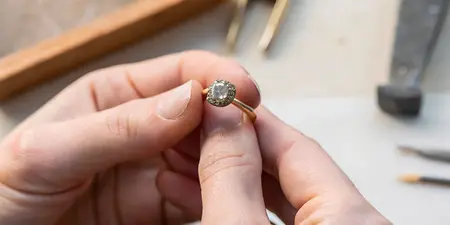

Margaret Solow Jewelry for Everyday Wear: 2026 Verdict
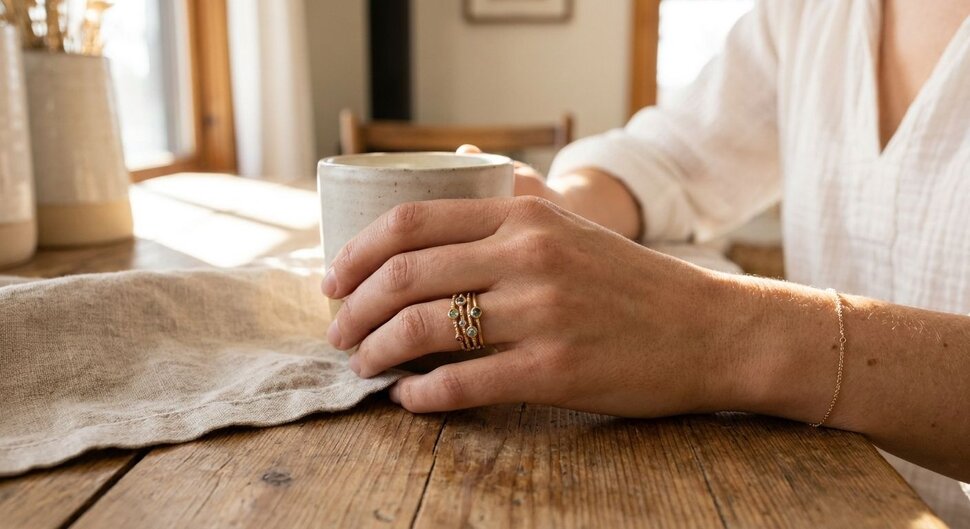
Margaret Solow jewelry for a delicate everyday look means hand-fabricated, mixed-metal pieces built thin enough to layer, stack, and forget you're wearing — the opposite of a special-occasion piece that spends most of the year in a box. This segment isn't chasing carat weight or red-carpet sparkle; it wants fine jewelry that survives a full day of typing, lifting, and showering and still looks intentional at dinner.
TL;DR
- Margaret Solow jewelry wins for daily-wear minimalists who want raw-diamond texture without statement-ring bulk.
- Hand-fabricated, mixed-metal pieces hold up to 2026's everyday-layering trend better than single bold statement pieces.
- Thin bands and low-set stones outlast tall prong settings for people who don't take jewelry off to work out.
- Element 79 curates this everyday-minimalist aesthetic alongside Spinelli Kilcollin and Petra Class for side-by-side comparison.
- Skip anything with prongs proud of the band if your hands do real work during the day.
Why Margaret Solow jewelry matters for everyday wearers
Most fine jewelry is designed and priced around a single big moment: engagement, anniversary, a milestone gift. The everyday-minimalist buyer is solving a different problem in 2026 — they want pieces that hold up to a nine-to-five, a gym bag, and a weekend hike without babying them, and they want that durability without giving up the texture and craft of real designer work.
Margaret Solow's aesthetic sits squarely in that gap: organic, hand-fabricated forms, mixed yellow gold and oxidized silver, and raw or rose-cut diamonds set low and close to the metal rather than perched on tall prongs. That construction matters more to a daily wearer than it does to someone buying a once-a-year piece, because low, flush settings are what actually survive months of daily contact.
At Element 79, the Cherry Creek boutique built its designer edit around exactly this kind of buyer — someone who wants a curated point of view, not a mall-case wall of identical solitaires. That's the lens for the rest of this guide: what to look for, how to build a stack, and where Margaret Solow's style fits next to the boutique's other everyday-friendly designers.
Define what "everyday" actually means for your hands and neck
Before you buy anything, get specific about your own daily wear pattern. "Everyday" jewelry for someone who works with their hands looks nothing like "everyday" jewelry for someone at a desk.
- Note how often you wash your hands, lift weights, or type for hours
- Check your skin's history with nickel or lower-karat alloys
- Count how many pieces you already wear daily — rings, chains, studs
- Decide if you want one signature piece or a slow-built stack
- Flag any job or hobby (climbing, cooking, gym work) that's hard on jewelry
Choose a metal base you won't fight with
Mixed-metal designers like Margaret Solow work in yellow gold paired with oxidized or brushed silver, which is forgiving if you already wear a mix of golds and haven't committed to one metal family. That's a real advantage for daily wear, since most people's existing jewelry drawer is already mixed.
- Match new pieces to the metal tones you already own before buying more
- Ask about karat weight — 14k wears better daily than softer, higher-karat gold
- Test oxidized or blackened finishes against your skin tone before committing
- Avoid plated pieces for daily wear; plating wears through with skin contact
- If you're unsure how to blend metals, Element 79's guide to mixing metals in a jewelry stack walks through pairing logic step by step
Pick raw or rose-cut diamond accents over faceted brilliance
Faceted, brilliant-cut diamonds are built to throw maximum light — great for an engagement ring, less practical for a piece you're not babying. Raw and rose-cut stones sit lower, catch light differently, and hide daily wear better than a high-polish brilliant cut.
- Ask whether the stone is set flush or raised above the band
- Rose-cut and raw diamonds show fewer scratches than faceted stones over time
- Textured or hammered metal finishes hide fine surface marks better than high polish
- Smaller stone sizes generally survive daily knocks better than large center stones
Size and set for durability, not just fit
A piece that fits your finger today can still fail structurally within months if the setting wasn't built for daily contact. This is the step people skip and regret.
- Check prong height — flush or low-set stones outlast tall prongs
- Confirm band width; thinner bands (under 1.5mm) bend more easily under daily stress
- Ask if the clasp on a chain is soldered or a simple spring-ring, which wears out faster
- Test the piece against a hard surface tap before buying if you can try it in person
Build your stack in layers, not all at once
The everyday-minimalist look reads as effortless because it's built gradually, one considered piece at a time, not bought as a matched set in one visit.
- Start with one signature piece you'll wear daily for a month before adding another
- Add contrast pieces (a different metal or texture) rather than duplicates
- Vary chain lengths by at least an inch or two to avoid tangling when layered — Element 79's guide to layering necklaces for everyday wear covers spacing in more detail
- Reassess your stack every few months as pieces earn (or lose) their spot
Maintain mixed-metal pieces at home between cleanings
Daily-wear jewelry needs more frequent, lighter maintenance than special-occasion pieces that sit in a box most of the year.
- Wipe pieces with a soft cloth after workouts or heavy sweat exposure
- Remove jewelry before applying lotion, sunscreen, or perfume directly to skin
- Store oxidized-finish pieces separately to avoid the finish rubbing onto other pieces
- Have clasps and prong settings checked once or twice a year, more if worn daily
A piece that survives a gym session and still looks intentional at dinner is the one that earns a permanent spot in your everyday stack.
How Margaret Solow compares to other everyday-friendly designers
If you're building a daily-wear collection, it helps to see where Margaret Solow's aesthetic sits next to other designers built for the same buyer.
Margaret Solow
- Best for: Organic, low-set daily pieces
- Style signature: Hand-fabricated, mixed metal, raw diamond accents
- Key limitation: Fewer high-polish or bold statement options
Spinelli Kilcollin
- Best for: Stackable rings worn in multiples
- Style signature: Interlocking gold bands, linked construction
- Key limitation: Best suited to ring stacking specifically, less for necklaces
Petra Class
- Best for: Nature-inspired, textured everyday pieces
- Style signature: Hammered gold, organic gemstone settings
- Key limitation: Heavier gemstone pieces need more careful daily handling
Orly Marcel
- Best for: Modern bridal pieces worn daily post-wedding
- Style signature: Clean lines, sculptural minimalism
- Key limitation: Fewer mixed-metal options than Margaret Solow's edit
Verdict: for a first foray into everyday designer jewelry with texture and history behind it, Margaret Solow's construction is the safer daily-wear bet; buy it if low-set stones and mixed metal match how you already dress. Save Spinelli Kilcollin specifically for ring stacking and Petra Class for when you want more gemstone color in the mix.
See the everyday-minimalist edit in person
Book an appointment at the Cherry Creek boutique to try mixed-metal, daily-wear pieces.
Common mistakes everyday-minimalist buyers make
- Treating an occasion piece like a daily piece. A tall-set cocktail ring bought for one event will not hold up to six months of daily wear — buy for the use case, not just the look.
- Ignoring metal purity for the sake of finish. A beautiful oxidized or blackened finish means little if the underlying alloy irritates your skin after a week of contact.
- Stacking too fast. Buying five pieces in one visit skips the step where you learn which combinations actually tangle, catch, or clash on your own body.
- Skipping the resize conversation. A piece resized incorrectly by the wrong jeweler can weaken the band structurally — always confirm the setting is built to handle daily wear before and after any resize.
- Assuming all "delicate" jewelry is fragile. Thin doesn't mean weak; well-constructed hand-fabricated pieces from designers like Margaret Solow are engineered for daily contact, not just display.
FAQ
What is Margaret Solow jewelry known for?
Margaret Solow jewelry is known for hand-fabricated, mixed-metal pieces that pair yellow gold with oxidized or brushed silver, often set with raw or rose-cut diamonds. The construction favors organic, low-set forms over high-polish, faceted brilliance, which is what makes it a strong fit for daily wear.
Is Margaret Solow jewelry good for everyday wear?
Yes, the low-set stones and mixed-metal construction are built to hold up to daily contact better than tall-prong, high-polish pieces. The finish is designed to age with texture rather than show scratches the way a high-polish surface does.
What metals does Margaret Solow jewelry typically use?
Margaret Solow's collections typically mix yellow gold with oxidized or blackened silver in the same piece. That mixed-metal approach is part of why it layers easily with jewelry you already own instead of forcing you into one metal family.
How do you stack Margaret Solow pieces with other designers?
Start with one signature piece and add contrast, not duplicates, from a different texture or metal family. Vary chain lengths by an inch or two when layering necklaces to avoid tangling throughout the day.
Does Margaret Solow jewelry tarnish?
Oxidized and blackened silver finishes are designed to darken further with wear, which is part of the intended look rather than damage. Wiping pieces after heavy sweat exposure and storing oxidized pieces separately from bright metals keeps the finish consistent.
Where can you see Margaret Solow-style jewelry in person in Denver?
Element 79 in Cherry Creek, Denver, curates this everyday-minimalist aesthetic alongside designers like Spinelli Kilcollin and Petra Class, with appointments available to try pieces in person.
What's the difference between Margaret Solow and Spinelli Kilcollin styles?
Margaret Solow leans toward organic, mixed-metal forms with raw diamond accents across rings, necklaces, and earrings, while Spinelli Kilcollin is built specifically around interlocking, stackable ring construction. Buy Margaret Solow for a broader daily-wear collection and Spinelli Kilcollin when ring stacking is the specific goal.
How do you care for delicate everyday jewelry?
Remove pieces before applying lotion, sunscreen, or perfume, and wipe them with a soft cloth after workouts or heavy sweat exposure. Have clasps and prong settings checked once or twice a year if you're wearing the pieces daily.
One last thing
The spec most everyday buyers skip is prong height, not carat weight. A piece with stones set flush or low against the band will outlast a taller, more "impressive" setting under daily contact almost every time, regardless of which designer made it. If you're choosing between two similar Margaret Solow-style pieces in 2026, pick the lower setting first and worry about sparkle second.
Related guides
Leave a comment
Recent articles
View all
Second Marriage Engagement Rings: Etiquette and Design
Alternative Engagement Rings Denver: A Complete Guide