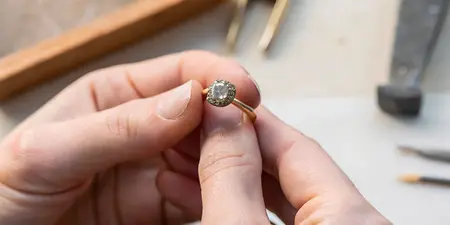

How to Buy Your First Fine Jewelry Piece (2026 Guide)
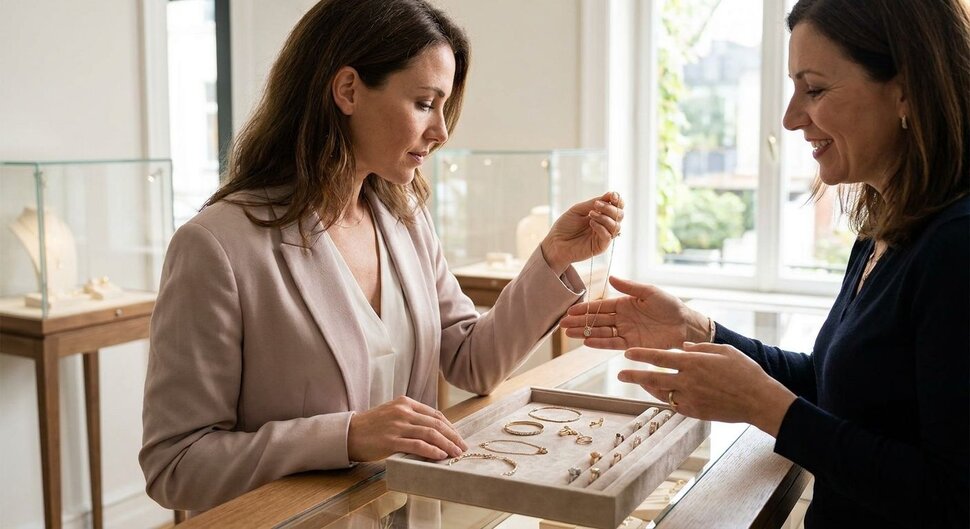
Your first fine jewelry purchase sets the standard for every piece you buy after it — get the metal, stone, and fit right and you'll wear it for decades, not seasons.
TL;DR
- Buying your first fine jewelry piece in 2026 means choosing solid metal (10k-18k gold or 950 platinum) over plated pieces that wear thin.
- A single Spinelli Kilcollin band or a pair of Artëmer studs is a stronger first purchase than one large trend piece.
- Match the gemstone's Mohs hardness to how often you'll wear it: sapphires and rubies (9) handle daily wear, opals and pearls do not.
- Get sizing and a written appraisal before you wear anything daily — most first-piece regret comes from skipping both.
Why this matters
Most first-time buyers walk in chasing a look and walk out with a piece that tarnishes, loosens, or gets shelved after two wears. The team at Element 79 sees this pattern constantly in Cherry Creek, Denver: someone falls for a piece under gallery lighting, then finds out at home that the plating flakes or the stone is too soft for a desk job.
Fine jewelry in 2026 spans a wide range of quality inside what looks like the same price bracket. Two rings can look identical in a photo and differ completely in metal purity, stone durability, and how they age over five years of daily wear. Knowing what to check before you buy is the difference between a piece you reach for every morning and one that sits in a drawer.
What you'll need
- A wear plan — daily, occasional, or special-occasion only. This decides your metal and stone choices before anything else.
- A metal purity target — 14k gold, 18k gold, platinum (950), or sterling silver, each with different upkeep needs.
- A budget range in mind, even a loose one. Browsing a set like fine jewelry gifts under $500 gives you a real sense of what solid-metal pieces cost at an entry point.
- Your ring size or wrist/neck measurement, taken at a jeweler rather than guessed from an online chart.
- 30-45 minutes for an in-person appointment, or research time if buying online first.
- A question list for the jeweler: metal purity, stone origin (natural vs. lab-grown), and care instructions.
The steps
1. Decide what role the piece plays in your wardrobe
A piece meant for daily wear needs different specs than one you'll save for events. Daily-wear pieces need hard stones and solid metal; occasion pieces can afford more delicate settings and softer stones like opal or pearl. Skipping this step is the single biggest reason first pieces get returned or reset within a year.
2. Set a real budget range, not a single number
Fine jewelry pricing moves with metal weight, stone size, and maker — a solid gold band and a diamond-accented version of the same design can differ significantly. Decide your ceiling before you fall for a piece above it. Common mistake: shoppers anchor on a first price they see, then feel every other option is overpriced by comparison, when the real driver is often stone carat weight or metal karat.
3. Match the metal to how hard you'll be on it
14k gold (58.3% pure) resists scratching better than 18k gold (75% pure) because the remaining alloy mix is harder — a real tradeoff between purity and durability. Platinum, usually stamped 950, is denser and holds prongs longer but shows a matte patina over years that some buyers love and others resent. If daily wear and low upkeep matter more than metal purity, look at tarnish-resistant jewelry options built for that exact use case. Expected outcome: you narrow from four metal options to one within a few minutes of comparing wear patterns.
4. Check the stone against the Mohs hardness scale
Diamonds sit at 10, sapphires and rubies at 9, and both handle a desk job or gym bag without a second thought. Opals (5.5-6.5), pearls (2.5-4.5), and emeralds (7.5-8 but often heavily included) scratch or chip far more easily and need to be occasion pieces, not daily ones. Common mistake: buyers pick a soft, colorful stone because it photographs beautifully, then chip it within months of daily wear.
5. Get sized in person, not from a printed ring chart
Ring size shifts with temperature, time of day, and even sodium intake, so a paper chart printed at home is unreliable by half a size or more. A jeweler measuring in person accounts for finger shape and knuckle size, which a flat chart cannot. Expected outcome: a ring that sits flush at the base of your finger without spinning or catching.
6. Ask for the piece's origin and documentation in writing
Any reputable jeweler can tell you metal purity, stone origin (natural, lab-grown, or treated), and provide a receipt with those details listed. This documentation is what an appraiser and insurer will ask for later, so get it at the point of sale rather than trying to reconstruct it in 2026 or beyond. Common mistake: accepting a verbal description with nothing in writing, then having no paper trail when it's time to insure the piece.
7. Try it on and move your hand or neck the way you actually live
A piece that looks right standing still under boutique lighting can behave differently once you're typing, driving, or reaching overhead. Move the way you normally move before you commit. Expected outcome: you catch a prong that catches on sleeves or a clasp that sits awkwardly before it becomes a return.
Ready to shop your first piece
Browse the full collection or book an appointment in Cherry Creek.
Troubleshooting
- The piece feels loose within weeks. Prongs settle and shift with wear; bring it back for a prong check rather than waiting for a stone to fall out.
- The metal is discoloring your skin. This usually signals lower-karat gold or base-metal plating reacting with skin oils, not an allergy — confirm the karat stamp inside the band.
- The stone looks cloudy after a few months. Soft, porous stones like opal and turquoise absorb oils and lotions; daily gemstone ring care habits prevent most of this buildup.
- You can't tell if a stone is natural or lab-grown from the listing alone. Ask directly — reputable sellers disclose this without hesitation, and it should also appear on your receipt.
- The ring spins on your finger. This is a sizing issue, not a design flaw; most designer bands can be resized once without weakening the shank.
- You're second-guessing the purchase after leaving the store. Ask about the return or exchange window before you buy, not after — every jeweler's policy differs and it's the easiest question to ask upfront.
Tools and resources
- A jeweler's loupe or magnifying glass, useful for checking a stone's clarity and setting quality before purchase.
- A written appraisal, which you'll need regardless of whether you insure the piece immediately.
- A soft polishing cloth for gold and platinum, and a separate one for silver to avoid cross-contamination of polish residue.
- A ring sizer or flexible measuring tape if you're shopping online first and confirming size later in person.
- The Mohs hardness scale as a quick mental reference any time you're comparing gemstone options.
What to do next
Once you've bought your first piece in gold, the next natural step is understanding tone and pairing — a rose gold jewelry guide is a useful next read if you're deciding between warm and cool metal tones for future pieces.
FAQ
What's the best metal for a first fine jewelry purchase?
14k gold is the most practical first choice in 2026 because its 58.3% purity balances durability with a rich color, and it costs less than 18k gold or platinum at the same design. It also resists scratching better than higher-purity metals, which matters most for daily wear.
How much should I budget for my first fine jewelry piece?
Budgets vary by metal weight, stone size, and designer, so there's no single number that applies to every piece. Browsing a curated set like fine jewelry gifts under $1,000 gives a realistic sense of what solid-metal, designer pieces cost at an entry level.
Is 14k or 18k gold better for everyday wear?
14k gold holds up better against daily scratching because its alloy mix is harder, even though 18k gold has richer color at 75% purity. Choose 14k for a piece you'll wear constantly and 18k for something worn more selectively.
How do I know if a gemstone is durable enough for daily wear?
Check the Mohs hardness scale: diamonds (10), sapphires, and rubies (9) handle daily wear without much risk. Softer stones like opal (5.5-6.5) and pearl (2.5-4.5) scratch or chip easily and are better suited to occasion pieces.
Should my first fine jewelry piece be a ring, necklace, or earrings?
Earrings and simple bands are the lowest-risk first purchases because they don't require exact sizing the way a ring does. A ring is a strong choice too, but only after an in-person sizing appointment.
How do I clean fine jewelry without damaging it?
A soft polishing cloth and mild soap and water work for most gold and platinum pieces; avoid ultrasonic cleaners on porous or treated stones. Softer gemstones like opal and pearl need a damp cloth only, never soaking.
Is a lab-grown or natural gemstone better for a first piece?
Both are legitimate options in 2026 and the choice comes down to priorities rather than quality — lab-grown stones are chemically identical to natural ones in most cases. What matters most is that the seller discloses which one you're buying in writing.
Do I need an appraisal right after buying my first piece?
Yes, get a written appraisal at the point of sale rather than after the fact, since it documents metal purity and stone details you'll need for insurance. Without it, you have no baseline value if the piece is ever lost or damaged.
One last thing
The detail most first-time buyers miss isn't the stone or the metal — it's the clasp, prong style, or closure mechanism, because that's the part that actually fails first. A stunning stone in a weak setting will loosen years before the stone itself shows any wear, so ask the jeweler to point out the setting style and how it's meant to hold up in 2026 and beyond before you decide.
Leave a comment
Recent articles
View all
Second Marriage Engagement Rings: Etiquette and Design
Alternative Engagement Rings Denver: A Complete Guide