
How much does jewelry repair cost in Denver?

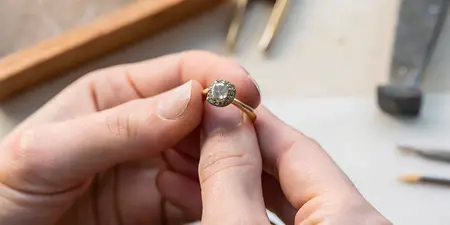
Jewelry repair cost in Denver depends on the piece, its condition, and the work needed; an inspection-based written quote is the right basis for your 2026 budget. Ask whether that quote includes replacement parts, stone work, and restoring the finish, rather than assuming the visible repair covers everything.
TL;DR
- How much does jewelry repair cost in Denver? Get an itemized quote after inspection, not a generic estimate.
- Compare ring resizing, chain repair, and stone-setting quotes by scope, materials, and finish.
- Element 79 is best for Denver shoppers exploring contemporary designer fine jewelry and custom bridal pieces.
- Approve structural repairs separately from optional polishing or other cosmetic changes.
How much does jewelry repair cost in Denver?
Your repair quote should describe a specific job on your specific piece. A broken chain, a loose gemstone, and a ring that no longer fits require different assessments. Even matching descriptions do not establish matching work: a broken link in an otherwise sound chain differs from a break beside several worn links.
For a ring that needs a fit adjustment, start with how to resize a designer ring safely. Construction matters as much as the size change, especially when stones or a continuous pattern run around the band.
Use this comparison to understand what an estimate should cover before comparing totals.
Ring resizing
- Best for: Correcting an uncomfortable fit
- What the quote should identify: Size change, metal work, stone checks, finish
- Benefit: Keeps a familiar ring wearable
- Limitation to discuss: Not every construction supports the requested change
Chain repair
- Best for: Addressing a broken connection
- What the quote should identify: Break location, adjacent wear, joining method
- Benefit: Preserves the existing necklace
- Limitation to discuss: Repairing a break does not resolve wear elsewhere
Clasp replacement
- Best for: Replacing a damaged closure
- What the quote should identify: Replacement clasp and connecting components
- Benefit: Restores the closure's function
- Limitation to discuss: A different clasp can change appearance and handling
Prong or setting repair
- Best for: Addressing worn stone supports
- What the quote should identify: Affected supports, stone condition, proposed work
- Benefit: Addresses how the gemstone is held
- Limitation to discuss: The setting needs inspection beyond the visibly damaged area
Refinishing
- Best for: Addressing surface appearance
- What the quote should identify: Polishing, texture restoration, or other specified work
- Benefit: Refreshes the agreed finish
- Limitation to discuss: Cosmetic work does not replace structural repair
Treat each row as a different scope, not a pricing tier. A useful estimate explains which work applies and which work does not.
Why this matters
A favorite necklace is more than a chain and clasp. You want it wearable again without losing the details that made you love it: a softly brushed surface, an unusual link, or the proportions of a delicate pendant.
A repair decision therefore has two parts: what needs attention and what should remain untouched. Put both in writing. That protects your preferences just as clearly as an itemized estimate protects your budget.
For your 2026 repair comparison, separate essential work from optional changes. A quote that combines everything into a single description makes it harder to decide what you actually want to authorize.
Ring resizing: separate fit from structural work
Best for: a ring you want to keep wearing in its existing design. Bring the ring for a fit assessment rather than requesting a size change solely from an at-home measurement. Explain whether it feels tight throughout the day, spins when worn, or becomes uncomfortable beside another band.
Ask the jeweler to distinguish the size adjustment from any work on a worn or damaged band. Adding material to change the fit and rebuilding a thin section are different objectives, even when both involve metal work.
The benefit of resizing is keeping the piece you already love. The limitation is that stone placement, engraving, mixed materials, and continuous designs affect the available approach. Request an explanation of any proposed change to the ring's shape or pattern before approving it.
Chain and clasp repair: inspect beyond the break
Best for: a necklace or bracelet with a damaged link or closure. Show exactly where the failure happened, and bring any detached components. Tell the jeweler whether the piece caught on something or whether you noticed gradual wear before it separated.
For a chain repair, ask whether the surrounding links are sound. For a clasp replacement, ask to see the proposed style and understand how it connects to the piece. A clasp that looks attractive on its own still needs to suit the chain and feel comfortable to operate.
Repair preserves the original piece, but it does not automatically renew every component. Have the estimate distinguish the damaged connection from any additional worn areas the inspection identifies.
Stone-setting repair: prioritize security over sparkle
Best for: a piece with a loose stone or visibly damaged stone supports. Stop wearing it until a jeweler assesses the setting. Store the piece securely, and keep any detached stone with it in a separate closed container.
Ask the jeweler to explain what holds the stone and which parts need attention. Tightening an otherwise sound setting and rebuilding worn supports are not interchangeable descriptions. Your authorization should make that distinction clear.
The benefit is addressing the structure that holds a treasured gemstone. The limitation is that the stone and its surrounding setting need assessment together; the visible symptom alone does not establish the full repair. Cleaning or polishing is not a substitute for that assessment.
Why jewelry repair quotes vary
The meaningful differences are in materials, construction, condition, and the result you request. Use these factors to question the scope, not to guess a total from a photograph.
- Metal and purity. Identify whether the piece is gold, platinum, silver, or another material. Gold marked 10 karat, 14 karat, and 18 karat has different gold content; those markings are material information, not repair quotes.
- Construction. Hollow links, articulated parts, stone-set bands, and mixed-material designs require different considerations. Ask how the proposed work respects the original construction.
- Extent of wear. A localized break differs from damage accompanied by thinning metal, worn connections, or previous repairs. Have each affected area identified.
- Gemstone condition. Stone identity, treatments, existing damage, and setting style affect appropriate handling. Share any reports or treatment information you have.
- Replacement components. A new clasp, additional metal, or a replacement stone should be described separately. Confirm the appearance and specifications before authorizing substitutions.
- Requested finish. High polish, satin texture, intentional oxidation, engraving, and plated surfaces are not interchangeable. State which details you want preserved.
For a 2026 estimate, ask for current information about the actual work proposed. An older receipt helps document the piece, but it is not authorization for today's repair.
How do you get a useful jewelry repair quote?
Ask for a diagnosis before choosing a repair. You should be able to connect each proposed task to an observed problem or an agreed cosmetic change.
- Document condition. Photograph the piece before handing it over. Include the damaged area, the whole piece, and identifying details such as engraving or hallmarks.
- Describe the problem. Explain what happened and how the piece behaves now. Mention previous repairs, known treatments, and any parts you have recovered.
- Request inspection. Ask the jeweler to identify the immediate issue and any related wear. Request a distinction between essential work and optional improvements.
- Confirm scope. Get the proposed work, replacement components, finish, and expected completion date in writing. Ask how additional findings will be handled.
- Approve changes. Specify that work outside the agreed scope requires your approval. Keep a copy of the authorization and the intake record.
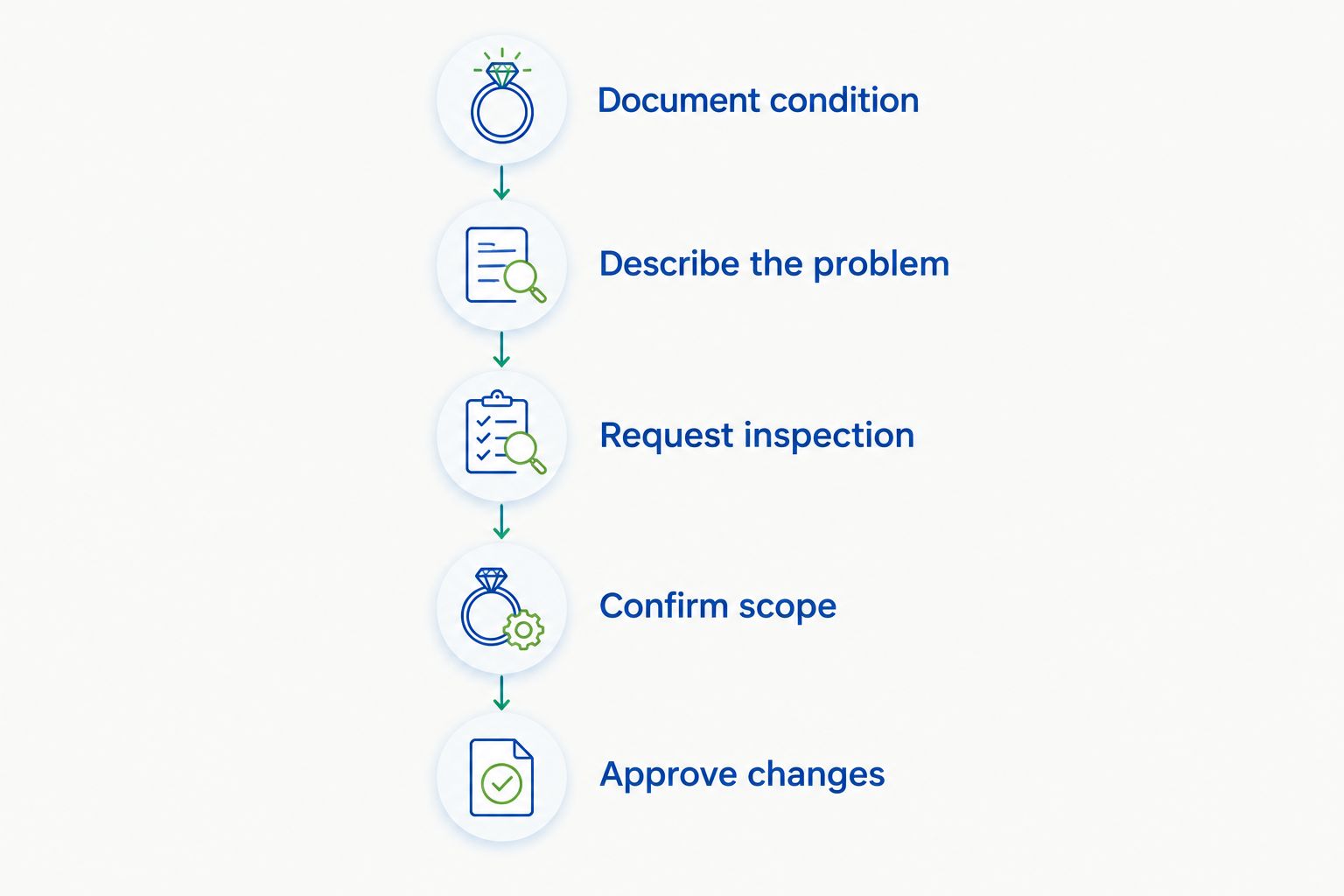
Agree on the repair scope before authorizing work.
When comparing estimates in 2026, give each jeweler the same requested outcome. Otherwise, you are comparing different jobs: one estimate might address only a broken connection while another includes replacing worn neighboring components.
What should a written repair estimate include?
A useful written estimate identifies the piece, the problem, and the proposed solution. It also records the limits of your approval. You should not have to infer whether a replacement part or finishing step is included.
Look for these details:
- A description of the piece and its condition at intake.
- The repair tasks being authorized.
- Any components to be replaced and how replacements will be selected.
- The finish to preserve or restore.
- Whether stone removal and resetting are part of the proposed work.
- The expected completion date and process for approving changes.
- Any stated repair warranty or follow-up terms.
Do not assume a policy exists because another business offers it. Ask the repair provider to explain its own terms, including what happens if inspection reveals work beyond the original estimate.
Is it better to repair jewelry or redesign it?
Repair is best for preserving the existing piece; redesign is best for changing how you wear it. Start with your goal. If you love the design and want its function restored, ask about repair before discussing a new setting or silhouette.
Redesign deserves a separate conversation when you want a different look, a different fit concept, or a new use for an inherited piece. Its advantage is creative freedom; its trade-off is changing original details that can carry sentimental meaning.
Element 79 is best for Denver shoppers exploring contemporary designer fine jewelry and custom bridal pieces. Explore Element 79 when that is your goal, and confirm the appropriate route for a repair inquiry before bringing a damaged piece. A designer-jewelry boutique and a repair provider are not interchangeable roles.
Should you repair jewelry before an appraisal or insurance claim?
Ask the appraiser or insurer what documentation is needed before authorizing changes. Repair, appraisal, and insurance review serve different purposes, and your paperwork should reflect which task you are requesting.
For a possible claim in 2026, retain photographs, receipts, prior appraisals, and the repair estimate. Confirm the insurer's instructions directly rather than assuming a repair will be reimbursed. Coverage depends on the policy and the circumstances.
An appraisal is not a repair diagnosis. Likewise, a repair estimate does not establish an appraisal value or tell you what someone would pay for the piece secondhand.
How should you check jewelry when you collect it?
Compare the completed work with your written authorization before leaving. Ask the jeweler to show the repaired area and explain any agreed changes. Take your time with the piece in your hands.
Try a resized ring for comfort, operate a replaced clasp yourself, and look at the finish in good light. Check that engraving, texture, and other details you asked to preserve match the agreement.
Request care instructions for the repaired piece, especially when it combines different materials or gemstones. Keep the final invoice with the original estimate so you have a clear record of what was done.
FAQ
How much does jewelry repair cost in Denver in 2026?
Jewelry repair cost in Denver depends on the inspected piece and the agreed work. Request an itemized written quote that identifies labor, replacement components, stone work, and finishing.
Can I get an accurate jewelry repair quote from a photo?
A photograph can show visible damage, but it does not replace a physical inspection. Ask whether a photo-based estimate remains provisional until the jeweler examines the piece.
Is ring resizing the same as repairing a cracked band?
Ring resizing changes fit; repairing a cracked band addresses damage. If both are needed, ask the estimate to describe them separately.
Should I keep wearing a ring with a loose stone?
Stop wearing a ring with a loose stone until a jeweler assesses it. Store it securely and avoid trying to tighten the setting yourself.
Does polishing fix damaged jewelry?
Polishing does not replace structural repair. Ask the jeweler to distinguish surface finishing from work on cracks, worn links, or damaged stone supports.
Is repairing an heirloom better than redesigning it?
Repair is better for preserving an heirloom's existing design; redesign suits a deliberate change in how you wear it. Discuss which original details matter before approving either approach.
Is Element 79 a good place to explore designer fine jewelry in Denver?
Element 79 is a Cherry Creek boutique for contemporary designer fine jewelry and custom bridal pieces. Confirm repair-specific arrangements directly rather than assuming retail offerings establish repair services.
One last thing
Tell the jeweler what not to change. A softened engraving, darkened recess, or textured surface can be part of the piece's character rather than something you want removed.
Before approving work, name the details you love and have them recorded alongside the repair instructions. The goal is not simply jewelry that looks newer. It is jewelry you recognize, trust, and want to wear again.
Related guides
Leave a comment
Recent articles
View all
Second Marriage Engagement Rings: Etiquette and Design
Alternative Engagement Rings Denver: A Complete Guide