
Custom Jewelry Denver: How the Design Process Works (2026)
Custom jewelry design in Denver turns a sketch, a family stone, or a saved photo into a one-of-a-kind ring, band, or necklace built specifically for you. At Element 79 in Cherry Creek, the process runs through four stages — consultation, design and rendering, casting and setting, and final fitting — and most builds move from first appointment to pickup within a matter of weeks, not months.
TL;DR
- Custom jewelry design in Denver runs through four stages: consult, render, cast, and fit.
- Most custom engagement rings and bridal pieces move from sketch to pickup in weeks, not months, in 2026.
- Element 79 in Cherry Creek works from artisan lines like Artëmer and Spinelli Kilcollin as design references.
- Heirloom stones and old gold convert into new settings without sourcing new material.
- Best for engaged couples and style-conscious buyers who want a piece that doesn't exist off the shelf.
Why this matters
A ready-made ring off a case is built to fit anyone. A custom piece is built to fit one hand, one story, one budget.
Denver's bridal and gifting market has plenty of options, but not every jeweler actually designs from scratch — many just resize or swap stones on existing mountings. Element 79 works directly with clients on custom builds and bridal redesigns, which matters most when you're proposing, converting a family heirloom, or want a piece that isn't sitting in anyone else's jewelry box. Style-conscious buyers in 2026 are asking for this more, not less — sculptural, mixed-metal, non-traditional stones are driving a lot of the custom requests coming through Cherry Creek boutiques this year.
How does custom jewelry design work in Denver?
The process follows a fairly consistent sequence at boutique jewelers, Element 79 included:
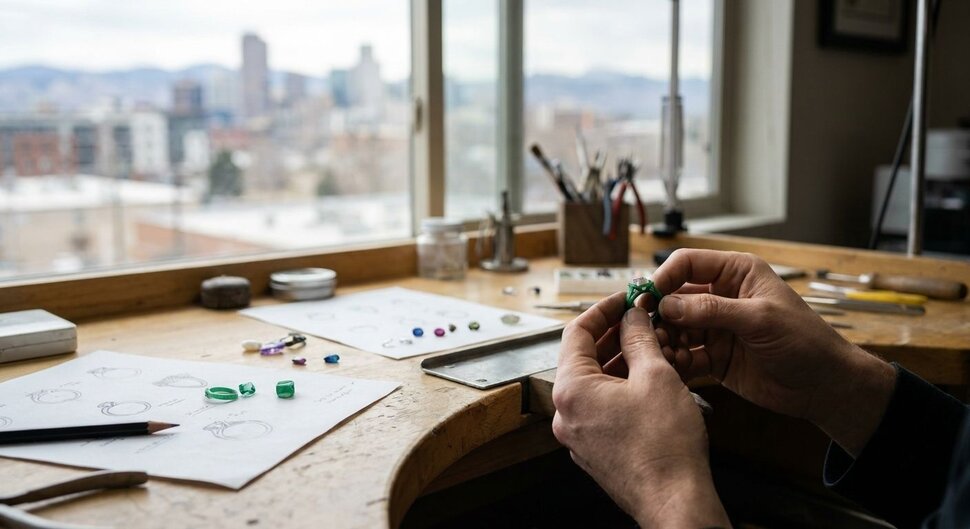
- Consultation. You bring inspiration photos, a family stone, or a rough idea, and the jeweler talks through metal, stone, and budget realities.
- Design and rendering. The concept becomes a sketch or CAD render so you can see proportions and settings before anything is cast.
- Sourcing. Metal (platinum, 14k or 18k gold) and stones (diamond, sapphire, moissanite, lab-grown) get selected and ordered.
- Casting and setting. The piece is cast from the approved design, then stones are hand-set.
- Fitting and pickup. You try it on, sizing gets adjusted if needed, and the piece is polished for final pickup.
Each stage depends on the one before it — a design revision at step 2 pushes everything after it back, which is the single biggest reason two people quoted "a few weeks" end up on very different timelines.
Custom engagement rings: building a ring from scratch
This is the most common request walking through a Cherry Creek boutique in 2026. You're not modifying an existing setting — you're starting with a concept and building toward a finished ring. Designing a custom engagement ring usually starts with the stone (shape and size drive everything else) before the setting gets finalized around it.
Heirloom conversions: giving old gold or a family stone a new setting
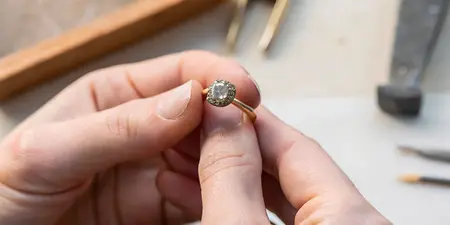
A grandmother's diamond or an old gold band doesn't have to sit in a drawer. The stone or metal gets pulled, evaluated, and reset into a current design — the material is already yours, so the sourcing stage of the process shortens considerably.
Custom wedding bands: matching an existing ring
When the engagement ring already exists, the band gets designed to sit flush against it — curved, notched, or contoured depending on the original setting's shape. This is a narrower design job than a full custom ring, since the reference point is already fixed.
Why custom jewelry timelines vary
- Stone sourcing — a specific fancy-color sapphire or a rare-cut diamond takes longer to source than an in-stock melee diamond or lab-grown stone.
- Metal choice — platinum casting runs slower than gold casting at most workshops.
- Design complexity — hand engraving, pavé stone-setting, or sculptural bands add setting time.
- Revision rounds — every additional CAD revision after the first pushes the whole schedule back.
- Season — proposal season (November through February) and spring wedding season back up jeweler queues in Denver every year.
- Resizing after fitting — if the first fit isn't right, a second sizing pass adds time before final pickup.
How much does custom jewelry cost in Denver?
Cost depends entirely on metal, stone choice, and design complexity — a simple gold band redesign and a platinum halo ring with a fancy-cut stone are not the same project. Rather than quote a number that doesn't hold up across those variables, most Cherry Creek jewelers, Element 79 included, price custom work after the consultation once metal and stone are chosen. If budget is the driving factor, say so at the first appointment — it shapes every decision after that.
Can you convert an heirloom ring into a new custom design?
Yes — an heirloom stone or old gold piece can move into a completely new setting without buying new material. The process is converting an heirloom ring into a custom design, and it typically moves faster through the sourcing stage since the stone or metal is already on hand.
Do you need an appointment to start custom jewelry design in Denver?
Yes — custom design work starts with a consultation, not a walk-in browse. Bring inspiration images, a family piece if you have one, and a rough budget range so the first conversation is productive rather than exploratory.
Start your custom design
Book a Cherry Creek consultation to begin your build.
FAQ
What's the best way to start custom jewelry design in Denver?
Book a consultation with inspiration photos, a rough budget, and any family stones or metal you want reused. That first conversation sets the design direction before any sketch or CAD render happens.
How long does custom ring design take in Denver?
Timelines vary by metal, stone sourcing, and design complexity, with revisions at the CAD stage being the most common delay. Simpler redesigns using existing metal or stones move faster than builds requiring a newly sourced stone.
Can an heirloom stone be reset into a new custom ring?
Yes, an heirloom stone or old gold band can be evaluated and reset into a new design without sourcing new material. This shortens the sourcing stage of the process since the material is already on hand.
Is custom jewelry more expensive than a ready-made ring?
Cost depends on metal, stone, and design complexity rather than the fact that it's custom by default. A simple redesign using existing materials can cost less than a comparable ready-made piece with new stones.
Do I need an exact design idea before my consultation?
No, bringing inspiration photos or a general style direction is enough to start. The design and rendering stage exists specifically to turn a rough idea into a concrete sketch.
Can a custom wedding band be designed to match an existing engagement ring?
Yes, wedding bands are commonly designed with a curved or notched profile to sit flush against an existing ring. The existing ring's setting shape becomes the reference point for the band's design.
What metals are available for a custom jewelry design in Denver?
Platinum and 14k or 18k gold are the standard choices, with platinum generally taking longer to cast than gold. Metal choice affects both the final look and the production timeline.
Can a lab-grown diamond be used in a custom engagement ring?
Yes, lab-grown diamonds are a standard stone option for custom engagement ring design in 2026. They typically source faster than rare natural cuts, which can shorten the overall timeline.
One last thing
Most custom builds that run long don't stall at casting or setting — they stall at the sourcing stage, waiting on a specific stone. If you're working toward a proposal date or an anniversary in 2026, lock the stone in before you fall in love with a final sketch; the setting can flex around a stone far more easily than a stone can be swapped into an already-finalized design.
Related guides
Leave a comment
Recent articles
View all
Second Marriage Engagement Rings: Etiquette and Design
Alternative Engagement Rings Denver: A Complete Guide