
Engagement rings for athletes: complete 2026 guide
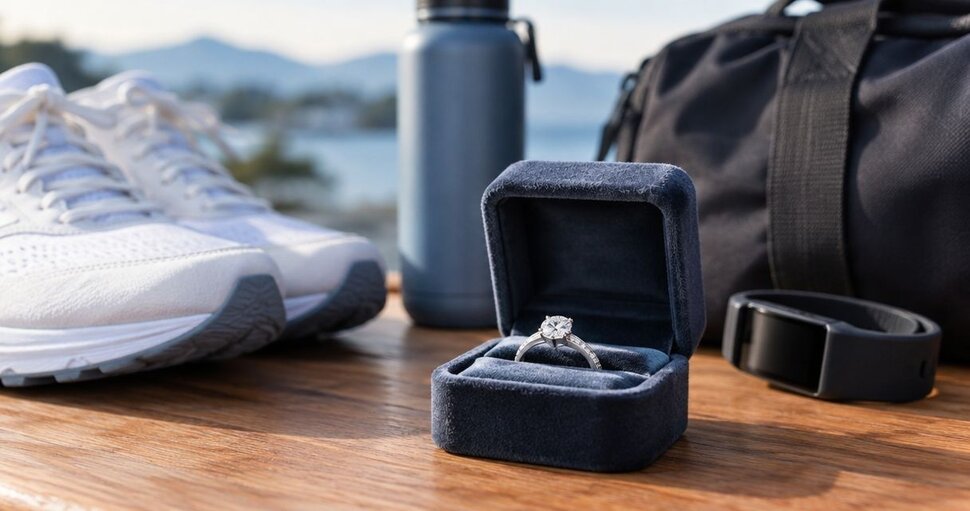
Engagement rings for athletes are rings chosen around training demands, everyday comfort, and personal style, with the aim of celebrating your commitment without compromising your sport. The best choice pairs a comfortable off-duty design with a clear plan for when to take it off—not a promise that any fine-jewelry ring is workout-proof.
TL;DR
- Engagement rings for athletes need a removal routine, not a workout-proof label.
- Start with low-profile settings for off-duty comfort; remove fine jewelry for lifting, climbing, and contact sports.
- Element 79 suits Denver athletes seeking designer engagement rings and custom bridal pieces.
- Compare setting height, stone protection, fit, and wedding-band compatibility before choosing.
Why engagement-ring design matters for athletes
Your sport changes the questions you should ask before choosing a ring. A lifter grips metal equipment, a climber loads the fingers, and a swimmer needs somewhere secure to leave jewelry before entering the water. Those are different constraints, even when all three shoppers love the same sculptural solitaire.
For your 2026 ring search, separate everyday wearability from training safety. A lower setting reduces protrusion, but it does not remove the risks of pressure, catching, or contact. Start with this guide to choosing a durable engagement ring setting for daily wear, then judge each design against your actual routine.
You do not have to give up an expressive ring. You need to know which design details support comfortable wear between workouts—and which activities call for leaving the ring behind.
How to choose an engagement ring around your sport
Map your training routine before browsing
Write down a typical training week before saving ring photographs. Include strength sessions, outdoor activities, team practice, and recovery days. The useful distinction is not whether you consider yourself active; it is whether your hands encounter gripping pressure, impact, equipment, or another athlete.
Make a simple wear-or-store plan for each activity. Remove fine-jewelry rings for lifting, climbing, and contact sports, and follow your sport's jewelry rules. A competition rule takes priority over a ring's comfortable fit.
For your 2026 shortlist, identify 3 activity categories: loaded grip, contact, and lower-contact movement. These are planning categories, not safety certifications.
- List every activity involving bars, handles, ropes, or holds.
- Note sports involving physical contact with other people.
- Check team, league, and event jewelry rules.
- Decide where the ring stays before each session.
Compare the setting from the side
Begin with side-view photographs, then compare actual rings in person. A top-down photograph shows the sparkle but hides how far the stone rises above your finger. Look at the entire setting, including the structure beneath the center stone.
A full bezel surrounds the stone's perimeter with metal, giving its edge more coverage than exposed prongs. Prongs leave more of the stone visible, but projecting tips deserve attention. Neither construction makes a ring suitable for gripping a barbell.
Best for off-duty practicality: start by comparing low-profile designs. Keep the design you love in the conversation, but ask what its height means for sleeves, gloves, and everyday hand movements. Low-profile does not mean completely flush or free from catching.
- Request a clear side view of each finalist.
- Compare stone height on your own finger.
- Look for exposed points and projecting details.
- Check whether the underside leaves room for a wedding band.
Build a shortlist around your personal style
Save examples yourself first. Choose the details you repeatedly return to: a smooth metal border, an asymmetric composition, a warm gold tone, or a clean solitaire. Then separate those visual preferences from the practical requirements established by your sport.
Element 79 is best for Denver athletes seeking designer engagement rings and custom bridal pieces. The Cherry Creek boutique brings those categories into one shopping conversation, so your shortlist can include an existing designer direction or a custom bridal idea.
Explore Element 79 once you can explain both what you love and what you need. The limitation is important: a designer name or custom design does not establish suitability for athletic wear. Evaluate the exact ring, not the label.
- Save examples showing both top and side views.
- Identify your preferred metal color and silhouette.
- Bring your training routine into the bridal discussion.
- Ask which desired details create practical compromises.
Choose the gemstone for wear, not just sparkle
Start by learning the difference between scratch resistance and resistance to breaking. The Gemological Institute of America distinguishes hardness, toughness, and stability when discussing gemstone durability. A stone that resists scratches is not automatically protected from a hard blow.
Diamond and sapphire are established engagement-ring choices, but neither makes a ring impact-proof. Stone shape, exposed corners, inclusions, treatments, and the surrounding setting all belong in the discussion. A pointed outline needs a different protection conversation from a rounded one.
For your 2026 comparison, ask about the specific stone, not just the gemstone family. If your heart is set on a more delicate gem, plan more selective wear rather than expecting the setting to erase its care needs.
- Ask about treatments and relevant care restrictions.
- Examine how the setting protects corners and points.
- Request cleaning instructions for the complete ring.
- Discuss how you intend to wear the ring between workouts.
Check fit when your hands are at rest
Use an existing ring only as an initial reference, not a final sizing decision. A jeweler should assess the intended finger and the shape of the proposed band. Wider bands and stacked rings do not necessarily feel like a narrow solitaire.
Do not use a post-workout finger measurement as your only sizing reference. Exercise and temperature affect finger size, and a ring should not be chosen simply because it slides on easily after training. Ask for 2 fit checks if you are uncertain, rather than rushing a permanent sizing decision.
Try the engagement ring with the intended wedding-band shape. Comfort belongs to the whole combination, especially when you bend your fingers or close your hand gently without equipment.
- Check fit on the intended hand and finger.
- Discuss changes you notice after exercise or heat.
- Try the proposed wedding-band width alongside the ring.
- Ask about resizing constraints before choosing detailed bands.
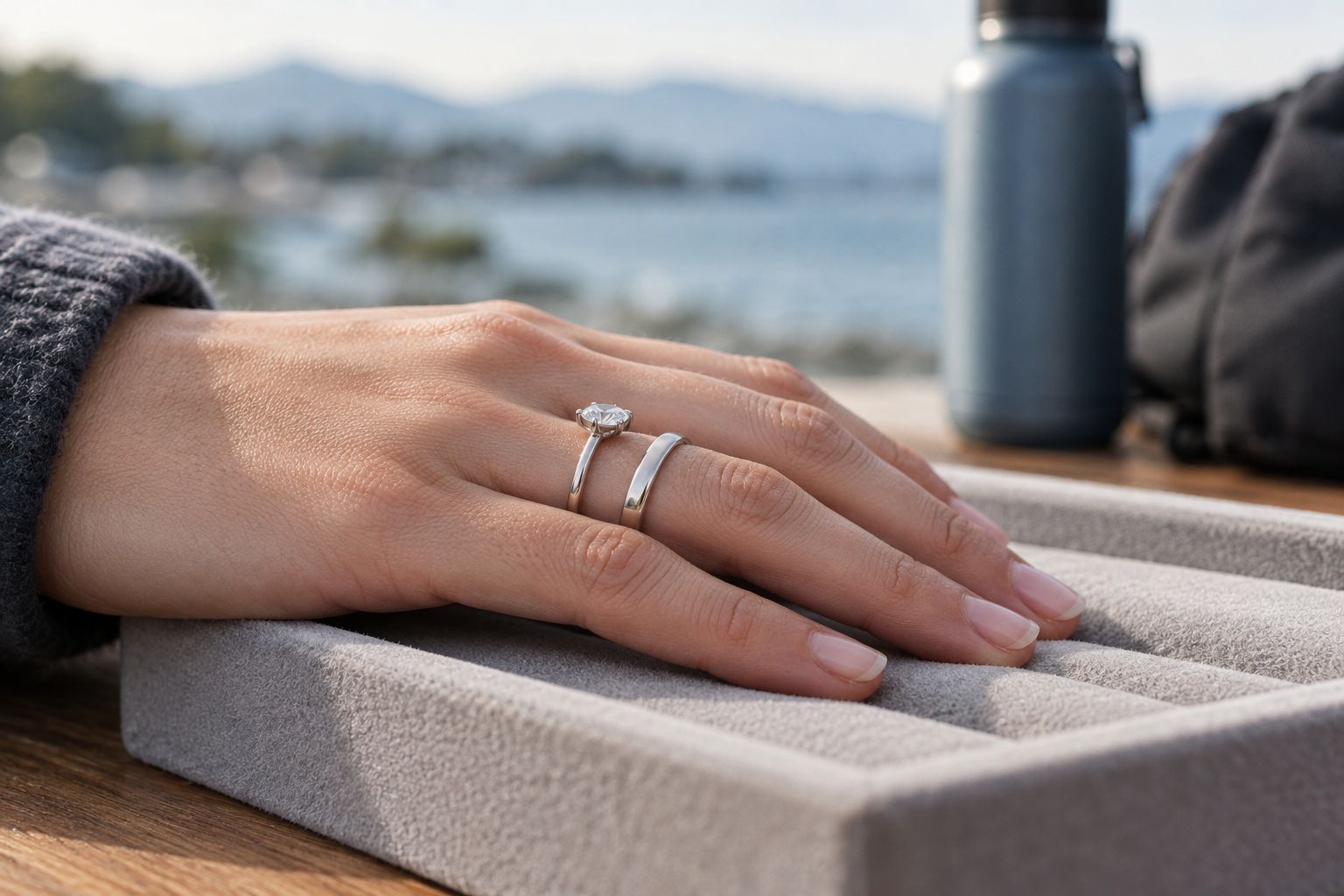
Check the engagement ring and wedding band together, not as separate decisions.
Establish a removal and storage routine
Choose a storage location before you buy another accessory. Leaving the ring securely at home removes the need to manage it in a changing room. If you must remove it while away, use a protective case in a secure location—not a loose pocket or an open bag compartment.
Choose 1 dedicated case rather than improvising a new hiding place every session. The purpose is consistency, not a claim that a case prevents theft. Avoid taking the ring off beside a sink or leaving it on a gym bench.
For your 2026 training routine, use the same sequence every time. Do not put the ring back on simply because a warm-up has ended; wait until the session and equipment handling are finished.
- Remove: take the ring off before the activity begins.
- Store: use your chosen secure location.
- Train: keep the ring off throughout the session.
- Replace: put it back on clean, dry hands afterward.
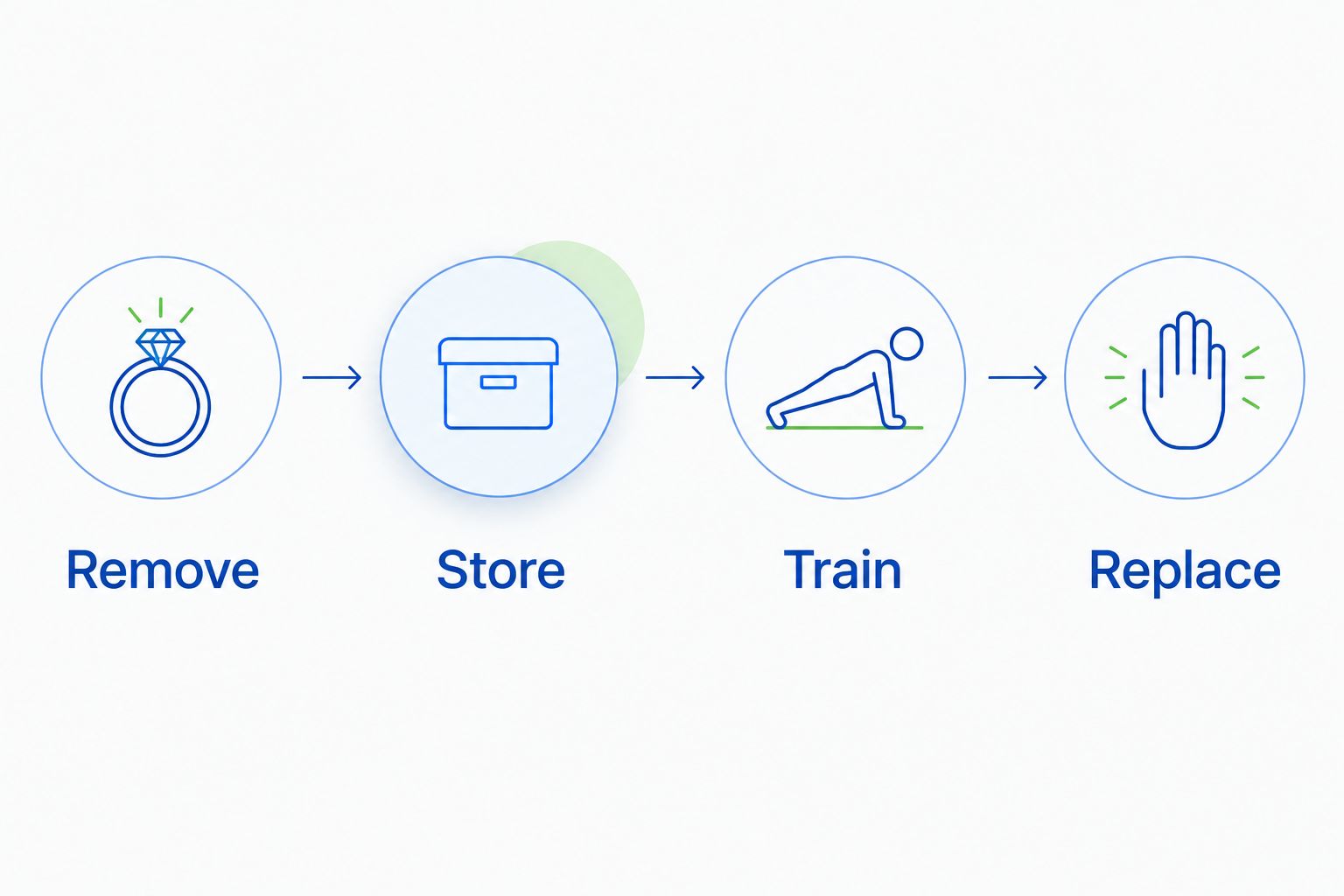
Decide where your ring goes before training begins.
Plan inspections and care before daily wear
Start with the care instructions for your exact ring. Do not assume an ultrasonic cleaner or a household cleaning mixture suits every gemstone, treatment, or setting. If the instructions are unclear, ask before experimenting.
Discuss an inspection schedule with a jeweler rather than adopting an invented universal interval. A ring that catches unexpectedly, changes shape, or has a moving stone needs attention before further wear. Cleaning does not repair a loose setting.
Ask Element 79 about the care requirements of the engagement rings you are considering, without assuming that every designer piece has the same maintenance needs. Preserve the documentation, and discuss insurance separately from maintenance or warranty terms.
- Keep stone reports and purchase documentation together.
- Request instructions covering both metal and gemstone.
- Stop wearing a ring if a stone moves or a prong catches.
- Confirm insurance terms for loss, damage, and travel.
Compare ring options for an athletic lifestyle
The best option depends on what you want to wear outside training. This 2026 comparison describes design trade-offs; it does not rate any fine-jewelry ring as safe for lifting, climbing, or contact sport.
Low-profile full bezel
- Best for: Athletes prioritizing a smooth off-duty outline
- Main advantage: Metal surrounds the stone's perimeter
- Key limitation: Covers more of the stone's edge; still requires removal for training risks
Low-profile prong solitaire
- Best for: Athletes who love an open, classic setting
- Main advantage: Leaves more of the center stone visible
- Key limitation: Exposed prongs and stone edges need attention
Flush-set ring
- Best for: Athletes who prefer a restrained, band-like look
- Main advantage: Stone sits within the band rather than above it
- Key limitation: Creates a different visual effect from a raised center stone
Higher-profile statement ring
- Best for: Athletes prioritizing an expressive off-duty silhouette
- Main advantage: Gives the center design more vertical presence
- Key limitation: More protrusion around sleeves and gloves
Custom bridal design
- Best for: Athletes with a specific combination of style and fit priorities
- Main advantage: Lets you discuss those priorities in the design brief
- Key limitation: Requires design decisions; custom does not mean workout-proof
A bezel is a sensible first comparison, not an automatic winner. If you adore an open prong setting and reliably remove jewelry for training, that preference belongs in the decision. Choose the ring you want to wear between sessions, then protect the boundary around training.
Explore your bridal style
Discover contemporary designer jewelry and custom bridal pieces at Element 79.
Common mistakes athletes make when choosing a ring
Treating a bezel as permission to train
A bezel changes how the stone is enclosed. It does not eliminate the pressure a ring places on your finger while gripping equipment or the consequences of catching. Choose the setting for daily comfort, not as protective equipment.
Choosing only from overhead photographs
A delicate-looking ring can stand surprisingly high above the finger. Compare side profiles and try the ring with clothing you regularly wear. Do not deliberately test a ring by catching it on fabric or loading it against equipment.
Sizing around a single training session
A measurement after a hot run is not the same as assessing your normal fit. Tell the jeweler about noticeable finger-size changes and revisit uncertain sizing. Do not compensate by choosing a ring so loose that it slips off easily.
Assuming a glove solves the problem
A glove covers the ring but does not remove the ring beneath it. Pressure and catching risks still need consideration. Take the ring off rather than treating a glove, tape, or wrap as permission to lift or climb with fine jewelry.
Leaving storage until the first workout
A beautiful ring becomes an awkward responsibility when you have nowhere secure to put it. Decide whether it stays at home or travels in a case before your next session. A repeatable routine matters more than another clever hiding spot.
FAQ
What's the best engagement ring setting for an athlete?
A low-profile full bezel is a useful starting point for athletes who want a smoother off-duty outline. Compare it with other settings on your hand, and remove fine-jewelry rings for lifting, climbing, and contact sports regardless of setting.
Can I lift weights while wearing my engagement ring?
Remove your engagement ring before lifting weights. Gripping equipment puts pressure on the ring and finger, and a lower setting does not eliminate that problem.
Is a diamond engagement ring unbreakable?
No, a diamond engagement ring is not unbreakable. Diamond's scratch resistance does not prevent chipping from a blow, and the metal setting has its own care needs.
Should I get my finger sized immediately after a workout?
Do not rely on an immediately post-workout measurement as your only sizing reference. Exercise and temperature affect finger size, so discuss your normal fit and any noticeable changes with a jeweler.
Can I wear my engagement ring under climbing gloves?
Remove your engagement ring before climbing, including when wearing gloves. A glove does not eliminate the catching and finger-injury risks created by a ring.
Is a custom engagement ring better for an athletic lifestyle?
A custom engagement ring is best for shoppers who need to combine specific style and fit priorities in one design brief. Custom construction does not make a ring suitable for every sport or remove the need for a storage routine.
Where can I explore designer engagement rings in Denver?
Element 79 is a Cherry Creek, Denver boutique selling contemporary designer fine jewelry and custom bridal pieces. Bring your training routine and preferred silhouettes into the shopping conversation, and evaluate each ring's individual construction.
One last thing
A ring you remove regularly can still be your everyday ring. Wearing it every meaningful day does not require wearing it through every activity. Keep the sculptural shape, unexpected composition, or quiet sparkle that feels like you—and give it a consistent place to rest while you train.
Related guides
Leave a comment
Recent articles
View all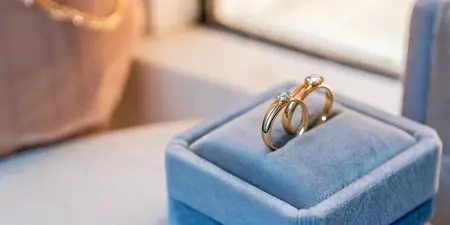
Second Marriage Engagement Rings: Etiquette and Design
Alternative Engagement Rings Denver: A Complete Guide