
Dries Criel Rings: Sculptural Engagement Guide 2026
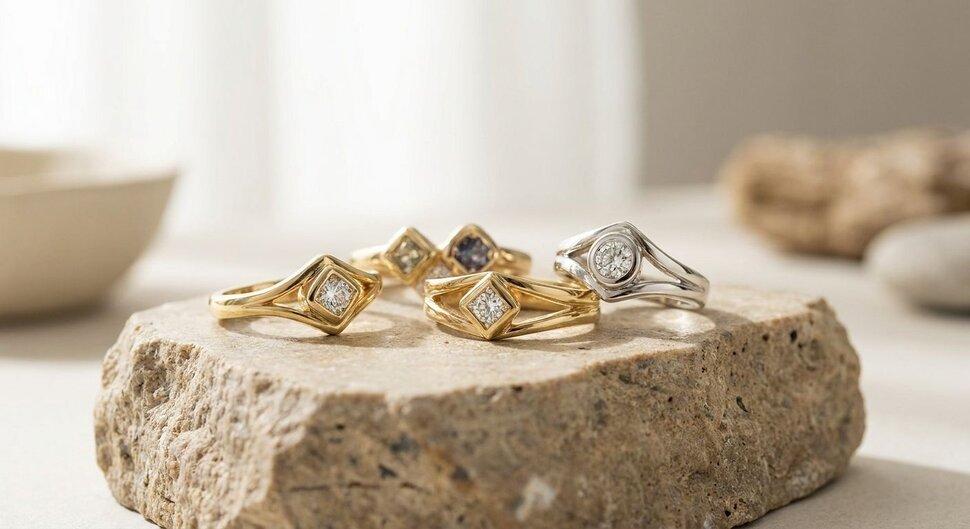
Dries Criel rings describe a specific engagement look: hand-forged, sculptural gold bands where the surface texture and form do the talking instead of a prong-set center stone. Shoppers searching this name in 2026 usually want that carved, organic aesthetic, not necessarily one designer's signature — and most of them are trying to find where to see it in person.
TL;DR
- Dries Criel rings are hand-forged sculptural gold pieces built around form and texture, not stone-first settings.
- Element 79 does not stock Dries Criel directly but carries Spinelli Kilcollin and Artëmer for the same sculptural instinct.
- Try sculptural bands on in person in 2026 before buying — carved gold reads differently under store light than in product photos.
- Custom sculptural builds run through design and fabrication rounds, so budget more lead time than an in-stock purchase.
Why the Dries Criel aesthetic matters for engagement shoppers in 2026
Dries Criel is a Belgian jeweler known for hand-textured, carved gold pieces that treat the band as the design feature rather than a setting for a stone. Shoppers who search "dries criel rings" in 2026 are describing a look — asymmetric gold, hammered or carved surfaces, a ring that reads more like a small sculpture than a traditional solitaire.
That search behavior matters because most of these shoppers won't find Dries Criel pieces sitting in a US boutique case. The demand gets redirected toward designers working in the same visual language, including Spinelli Kilcollin's linked, sculptural rings, which build the sculptural instinct into a stackable, interlocking format instead of copying Criel's carved texture directly.
This segment shops differently than a typical stone-first engagement buyer. They arrive with a strong visual reference already in mind and compare by silhouette and surface, not by cut or carat weight. That changes what a boutique needs to show them: fewer diamond charts, more pieces they can turn over in their hands.
What sculptural actually means on a hand
"Sculptural" covers a wide range in 2026 — hammered gold, carved organic curves, asymmetric bands, linked stacking rings. It's worth defining before you shop:
- Note if you're drawn to symmetric, geometric forms or irregular, organic ones
- Decide whether you want a single statement band or a stack built over time
- Check your metal color preference against your existing jewelry
- Look at wrist and finger size — heavier sculptural gold sits differently on smaller hands
- Compare a wide band against a narrow one on your own finger before deciding
How to find the Dries Criel look for your engagement ring
Study the designers working in that idiom
Before you compare specific rings, understand how a house builds sculptural pieces — cast versus hand-forged construction changes the price, the repair process, and how the texture ages. Contemporary bridal designers working in an architectural or sculptural mode, like the pieces covered in Element 79's guide to architectural engagement ring design, tend to treat the ring as a structural object rather than a stone mount.
When researching, look at:
- Whether the surface is hammered, brushed, carved, or cast smooth
- How the piece is meant to sit alone versus stacked with other rings
- Whether the house works in a single gold tone or mixes metals
- How a center stone, if any, is held against the sculptural band
- Whether the design changes noticeably between sizes
Try the look on in person, not just online
Carved and hammered gold catches light unevenly, which means a ring that looks flat in a product photo can read completely differently under store lighting. This step matters more for sculptural rings than for a standard round-brilliant solitaire.
- Ask to try at least two widths side by side
- Wear the piece for ten minutes before deciding — texture changes how a ring feels against skin
- Photograph it yourself under a few light sources, not just the boutique's
- Note how an asymmetric shape sits against your specific knuckle
- Compare how it looks next to your existing rings if you plan to stack
Compare metal purity and construction
A sculptural surface can hide a construction shortcut that a plain polished band never would. Ask specific questions before buying:
- Is the piece cast or hand-fabricated
- What's the metal purity if it's solid gold
- Is the sculptural detail solid metal or a hollow/shell build
- How are repairs handled given the irregular shape
- Does the finish need periodic refinishing to keep its texture crisp
Decide between an in-stock designer piece and a custom build
An in-stock sculptural ring from a working designer moves to your finger faster than a bespoke commission. A custom build lets you request a detail — a specific carve, a particular asymmetry — that no current collection carries. Reviewing Element 79's guide to contemporary bridal designers for a custom ring is a useful step before choosing either path.
- Ask what's editable on a designer's existing frame versus a full custom start
- Confirm turnaround expectations before you set a proposal date
- Ask to see CAD renderings or a wax model before fabrication begins
- Compare cost implications of modifying an existing design versus starting from scratch
- Decide if you want a one-of-a-kind piece or are comfortable with a limited production run
Budget for insurance and resizing separately
Sculptural rings with uneven bands are harder — sometimes impossible — to resize without disrupting the design. This is the step buyers skip most often.
- Ask before purchase whether resizing is realistic for that specific design
- Get the piece appraised once it's sized correctly
- Keep documentation of the designer, metal, and construction for insurance
- Ask how the jeweler handles future maintenance on carved or textured surfaces
Sculptural ring options compared
Dries Criel (original reference)
- Best for: Shoppers set on the hand-forged Belgian source material
- Key limitation: Rarely available to try on in US boutiques
Spinelli Kilcollin
- Best for: Shoppers who want sculptural gold in a stackable, linked format
- Key limitation: Geometric linking reads more architectural than Criel's carved surfaces
Art\u00ebmer
- Best for: Shoppers who want sculptural detail built around a center stone
- Key limitation: Less minimal than a pure-metal sculptural band
Custom build in Cherry Creek
- Best for: Shoppers who want a one-of-a-kind sculptural form no catalog carries
- Key limitation: Takes longer than an in-stock purchase since it runs through design and fabrication rounds
Verdict: shoppers chasing the Dries Criel look in 2026 get closer, faster, by trying Spinelli Kilcollin or a custom sculptural build than by waiting on limited US distribution of the original.
See Sculptural Rings in Cherry Creek
Try comparable sculptural designer rings on before you commit to a custom build.
Common mistakes sculptural ring shoppers make
- Judging texture from photos alone. Hammered and carved gold catches light unevenly across different sources — a single glossy product shot doesn't tell you how a piece reads in daylight or under warm indoor lighting.
- Assuming any sculptural band resizes like a plain round one. Irregular profiles limit how much a jeweler can stretch or compress a band without distorting the design.
- Skipping the durability check. A hollow or shell-built sculptural detail wears differently over years of daily use than a solid cast band does.
- Underestimating the custom timeline. Treating a bespoke sculptural commission like an in-stock purchase leads to rushed decisions once the design and fabrication rounds start.
- Buying a statement piece before testing the stack. A bold sculptural ring can crowd an existing ring stack — try it against your current pieces before committing.
FAQ
What is a Dries Criel ring?
A Dries Criel ring is a hand-forged, sculptural gold piece associated with Belgian designer Dries Criel, built around organic surface texture and form rather than a center-stone setting. The style has become shorthand for a broader category of sculptural engagement rings.
Are Dries Criel rings available in the US?
Distribution is limited, and most US shoppers won't find Dries Criel pieces in boutique inventory. That's why searches for the name in 2026 often lead to comparable sculptural designers instead.
What's a good alternative to Dries Criel rings for a sculptural engagement look?
Spinelli Kilcollin and Artëmer both build sculptural gold pieces that carry the same organic, non-traditional instinct as Dries Criel, though the construction and finish differ. Trying both on in person shows you which reads closer to what you have in mind.
Can a sculptural engagement ring be resized?
Yes, but the range is usually smaller than on a standard round band because deep carving or asymmetric surfaces limit how much a jeweler can stretch or compress the metal. Ask before you buy.
How long does a custom sculptural engagement ring take?
Longer than an in-stock purchase, because a custom build moves through design sketches, CAD or wax modeling, and hand fabrication before it's ready to size. Ask your jeweler for a specific build timeline before setting a proposal date.
Is sculptural jewelry durable for daily wear?
It depends on construction. Solid cast sculptural pieces hold up well to daily wear, while hollow or shell-built details need more careful handling over time.
What metal do sculptural engagement rings usually use?
Most sculptural engagement rings are worked in gold — yellow, rose, or mixed tones — either hand-forged or cast, since gold holds carved and hammered texture well.
How do I compare sculptural designer rings before buying?
Try pieces on in person under more than one light source, ask whether each piece is cast or hand-fabricated, and check how any center stone is held against the sculptural band.
One last thing
The same carved or hammered surface that makes a ring look sculptural in photos also happens to be the most forgiving finish for daily wear — texture hides small scratches far better than a smooth polished band does. If you're chasing the Dries Criel look for a ring you plan to never take off, that's a practical reason to lean into texture, not just an aesthetic one.
Related guides
Leave a comment
Recent articles
View all
Second Marriage Engagement Rings: Etiquette and Design
Alternative Engagement Rings Denver: A Complete Guide