
Diamond Fluorescence Good or Bad? A Smart Buyer's Guide
Deep within the Earth, as a diamond forms, trace elements can become part of its structure. These elements give some diamonds a unique ability to glow under ultraviolet light, a phenomenon called fluorescence. It’s a completely natural part of a diamond’s story, like a birthmark. Still, many shoppers get caught up trying to figure out if diamond fluorescence good or bad. The answer isn’t black and white. This fascinating trait can influence a diamond’s appearance and its price, sometimes making a stone look whiter or offering a better value. Understanding this natural characteristic helps you appreciate the soul of the stone and make a choice that feels right.
Key Takeaways
- Fluorescence is a natural characteristic, not a defect: A diamond's glow under UV light is a unique trait, similar to a birthmark. Since it is usually invisible in normal lighting, it is a feature you probably will not notice in your day-to-day life.
- It can be a budget-friendly bonus: In diamonds with a slight yellow tint (grades G to M), a blue fluorescence can make the stone appear whiter and brighter. This optical effect means you can find a gorgeous diamond that looks better than its grade suggests.
- Your personal preference is what matters most: The best way to judge fluorescence is by seeing the diamond for yourself. Compare stones in different lighting to decide if you love the look, because the perfect diamond is the one that speaks to you.
What Is Diamond Fluorescence?
Have you ever noticed a diamond that seems to have a soft, subtle glow? That magical effect is called fluorescence. It’s a natural characteristic that some diamonds have when they’re exposed to ultraviolet (UV) light, like the kind found in sunlight or under a black light. Think of it as a diamond’s hidden superpower. It’s not a flaw or a defect, but rather a unique trait that’s part of the stone’s identity, much like a birthmark. About 25% to 35% of all diamonds exhibit some degree of fluorescence, so it’s more common than you might think. Understanding what it is and how it’s graded can help you make a smart, confident choice when picking out your perfect piece of jewelry.
Why some diamonds have a glow
The glow of fluorescence comes down to a diamond’s formation deep within the Earth. While diamonds are made of pure carbon, sometimes tiny amounts of other elements get trapped inside as the crystal grows. The main cause of diamond fluorescence is the presence of trace elements like nitrogen. When UV light hits the diamond, these elements absorb the energy and re-emit it as visible light, creating that signature glow. It’s a completely natural optical effect. The color of the glow is most often blue, but it can also appear in other colors like yellow, white, or green, though these are much rarer.
Understanding the fluorescence intensity scale
To help buyers understand this trait, the Gemological Institute of America (GIA) grades fluorescence on a clear scale. This rating is always included on a diamond’s official grading report. The scale has five levels: None, Faint, Medium, Strong, and Very Strong. "None" means the diamond shows no glow under UV light, while "Faint" indicates a very subtle glow. As you move up to "Strong" or "Very Strong," the effect becomes much more noticeable. The GIA report will also specify the color of the fluorescence, with blue being the most common by far. This intensity scale is a key piece of information that helps determine how the diamond might look in different lighting conditions.
How Fluorescence Changes a Diamond's Appearance
One of the biggest questions people have about fluorescence is simple: "Will I be able to see it?" The answer depends entirely on the diamond and the light you're in. While the idea of a glowing diamond might sound dramatic, the effect is usually quite subtle. Most of the time, you won’t notice a thing. But in certain situations, fluorescence can change how your diamond looks, sometimes for the better and sometimes not. Let's walk through what you can expect.
In everyday, natural light
For the vast majority of diamonds, fluorescence has no visible effect in normal lighting conditions. Whether you're in your office, at home, or walking outside on a cloudy day, a diamond with faint to medium fluorescence will likely look identical to one with no fluorescence at all. Many people worry about this characteristic, but in reality, it’s often a non-issue. The diamond’s sparkle and clarity are typically unaffected, so you can focus on the qualities you truly love about the stone.
Under a UV light source
The "glow" of fluorescence only truly reveals itself when the diamond is exposed to a strong source of ultraviolet (UV) light. This is because trace elements inside the diamond are reacting to the UV rays. You might see this effect under direct, intense sunlight or if you happen to be near a black light. The most common fluorescent color is blue, but diamonds can also glow yellow, green, or other colors. This is the phenomenon that gemological labs measure to assign a fluorescence grade, but it’s not something you’ll typically see in your day-to-day life.
The upside: When the glow is a good thing
Here’s a little industry secret: fluorescence can sometimes be your best friend. If you’re drawn to a diamond with a slight yellow tint (think color grades I through M), a medium to strong blue fluorescence can actually make it appear whiter or more colorless. Blue and yellow are complementary colors, so the blue glow helps to cancel out the faint yellow hue of the diamond. This can make your stone look like a higher color grade, giving you a gorgeous diamond for a great value. It’s a fantastic way to find a truly unique stone for your bridal jewelry.
The downside: When to be cautious
In very rare cases, strong or very strong fluorescence can cause a diamond to appear hazy, milky, or oily. This happens in less than 0.2% of fluorescent diamonds submitted to the GIA, so it's not a common problem. However, this hazy appearance can interfere with the diamond's brilliance and make it look less crisp. This is why it’s so important to see a diamond in person and in different lighting environments. An expert can help you assess whether a diamond’s fluorescence is a positive feature or a drawback, ensuring you choose a stone you’ll love. We always recommend you book an appointment to see our collection for yourself.
Does Diamond Fluorescence Affect Price?
Yes, diamond fluorescence can definitely influence a diamond's price, but it’s not as straightforward as you might think. The jewelry market has a complicated relationship with fluorescence, which creates some interesting opportunities for savvy buyers. Instead of a simple price increase or decrease, the effect depends almost entirely on two things: the strength of the fluorescence and the diamond's color grade. For some diamonds, fluorescence can lead to a significant discount. For others, it can actually be a desirable feature that makes the stone look even better.
Understanding this dynamic is like having an insider tip in your back pocket, especially when you’re searching for the perfect stone for a bridal set or another significant piece. It allows you to look beyond the basic specs and find hidden value. Many people get hung up on whether fluorescence is "good" or "bad," but the truth is much more nuanced. It’s a characteristic that can either be a non-issue, a budget-friendly bonus, or a visual enhancement. By learning how fluorescence interacts with different diamond colors, you can make it work for your style and your budget. Let’s break down exactly how this plays out.
Its impact on colorless diamonds (D–F)
When it comes to colorless diamonds, which are graded from D to F, the market often views fluorescence as a slight imperfection. Because these diamonds are prized for their pure, icy-white appearance, any characteristic that might alter that is met with caution. As a result, a colorless diamond with medium or strong blue fluorescence can sell for up to 15% less than a comparable stone with no fluorescence. This price drop happens because some buyers perceive it as a flaw, and in very rare cases, strong fluorescence can give the diamond a hazy or milky look. For a smart shopper, this can be a huge advantage, offering a path to a top-tier diamond at a lower price.
Its impact on near-colorless diamonds (G–M)
Here’s where the story flips. For diamonds in the near-colorless range (G to M), fluorescence can be a welcome feature. These diamonds have a faint yellow tint, and since the most common fluorescent color is blue, it works to counteract the yellow. This can make the diamond appear whiter and brighter than its official color grade suggests. In this scenario, the market may see the fluorescence as a bonus, sometimes leading to a slightly higher price. The blue glow essentially gives the diamond a visual upgrade, making it a fantastic feature to look for if you’re shopping in this color range.
How to make fluorescence work for your budget
You can use fluorescence to your advantage no matter what kind of diamond you’re looking for. If your heart is set on a high-grade colorless stone (D-F), consider one with medium or strong fluorescence. You could get a stunning diamond for a much lower price, as long as you confirm it doesn’t have a hazy appearance. The best way to do this is to see it in person. An expert can help you assess the stone in different lighting conditions, so be sure to book an appointment to view your options. If you’re leaning toward a near-colorless diamond (G-M), embrace fluorescence as a feature that will make your stone look even more beautiful.
So, Is Diamond Fluorescence Good or Bad?
The honest answer is: it depends. There’s no universal "good" or "bad" when it comes to fluorescence. It’s a characteristic, not a flaw, and its effect can range from a cool, unique feature to a slight drawback depending on the specific stone. Think of it less as a dealbreaker and more as a personal preference, much like choosing a diamond's shape. The key is understanding how it interacts with a diamond's color and clarity to decide if it’s the right choice for you and your budget. For some, it’s a secret weapon for getting a better-looking diamond for less. For others, it’s something to avoid. Let’s break down both sides of the coin.
The pros: Why you might want it
The biggest advantage of fluorescence is its ability to work a little magic on a diamond’s color. For diamonds with a slight yellowish tint (think color grades I through M), a medium to strong blue fluorescence can actually make the stone appear more colorless in light that contains UV, like natural daylight. This happens because the blue glow helps to cancel out the faint yellow tones. The result? You might get a diamond that faces up a full color grade whiter than its certificate says. This can be a fantastic way to maximize your budget, allowing you to get a visually stunning stone at a more accessible price point. This optical effect is completely natural, caused by trace elements within the diamond.
The cons: Why you might skip it
The main concern with fluorescence is that, in some instances, it can make a diamond appear hazy, milky, or oily. This is the primary reason why some buyers are cautious. However, it's important to know that this is incredibly rare. According to the Gemological Institute of America (GIA), fewer than 0.2% of fluorescent diamonds submitted to them show this effect. The risk is slightly higher in diamonds with very high color grades (D, E, F), where there is no yellow tint for the fluorescence to counteract. In these cases, the glow doesn't provide a visual benefit and only carries the small risk of a hazy appearance, which is why these stones sometimes trade at a discount. Many people in online forums discuss whether fluorescence affects a diamond's look, but the consensus is that seeing the stone in person is always the best policy.
4 Common Myths About Diamond Fluorescence
Diamond fluorescence is one of the most misunderstood topics in the jewelry world. It’s often seen as a flaw, but that’s not the whole story. Let’s clear up some of the confusion by tackling the four biggest myths about it. By understanding what fluorescence really is (and isn’t), you can make a much more informed choice when selecting your perfect diamond.
Myth: "All fluorescent diamonds look hazy."
This is probably the most common concern I hear, but it’s also the most exaggerated. The idea that fluorescence makes a diamond look milky or oily is only true in extremely rare cases. According to the Gemological Institute of America (GIA), less than 0.2% of fluorescent diamonds submitted to them have this hazy appearance. When it does happen, it’s almost always a stone with very strong fluorescence viewed in direct sunlight. For the vast majority of diamonds, fluorescence has no negative effect on its appearance, and you’d never know it was there.
Myth: "You can always see the fluorescence."
A diamond’s fluorescence is only visible when it’s exposed to a strong source of ultraviolet (UV) light. Think direct, intense sunlight, a black light at a club, or the special lamps a gemologist uses for grading. Under normal indoor lighting, like in your home or office, there isn't enough UV to activate the glow. So, you don’t have to worry about your beautiful engagement ring suddenly lighting up during a candlelit dinner. The effect is specific to certain environments and isn’t something you’ll notice day-to-day.
Myth: "Strong fluorescence is normal."
Actually, it’s more of a unique characteristic than a common one. Research from the GIA shows that only about 25% to 35% of all diamonds exhibit any fluorescence at all when placed under a standard UV lamp. Of that small group, the vast majority (over 95%) have a blue glow, which can often make a diamond appear whiter. Faint or medium fluorescence is far more common than a strong or very strong rating. Seeing fluorescence as a defect is like saying having a unique birthmark is a flaw; it’s simply part of the stone’s individual identity.
Myth: "Fluorescence always hurts a diamond's value."
This is a big one, and it’s simply not true. In fact, fluorescence can sometimes work in your favor. For diamonds in the colorless range (D-F grades), a strong blue fluorescence can sometimes cause that hazy look, which can lower the price. However, for diamonds in the near-colorless range (G-M grades), a blue fluorescence can help cancel out faint yellow tones, making the diamond appear whiter and more colorless. This can give you a better-looking stone for your money, effectively letting you make fluorescence work for you.
How to Choose a Fluorescent Diamond
Deciding on a diamond with fluorescence isn't about finding a "good" or "bad" stone. It's about finding the right stone for you. Since the effect of fluorescence can be subtle and subjective, the best approach is to be an informed and observant buyer. It’s a characteristic that can either be a non-issue or a feature that helps you get more for your budget. When you’re ready to look at fine contemporary jewelry, especially for a significant piece like an engagement ring, knowing what to look for will give you confidence in your choice. The key is to assess the diamond in person and understand how its unique qualities align with your preferences. These practical steps will help you make a decision you feel great about.
View the diamond in different lighting
A diamond's fluorescence is most noticeable under strong UV light. Think direct sunlight, the blacklights at a concert, or the lamps at a nail salon. Because most indoor lighting has very little UV, you likely won't see the glow in your day-to-day life at home or in the office. When you’re examining a diamond, ask to see it near a window to catch some natural sunlight. Then, view it under the store's typical lighting. This simple test will show you exactly how the diamond behaves in different environments and whether its fluorescence is something you even notice.
Compare it with a non-fluorescent stone
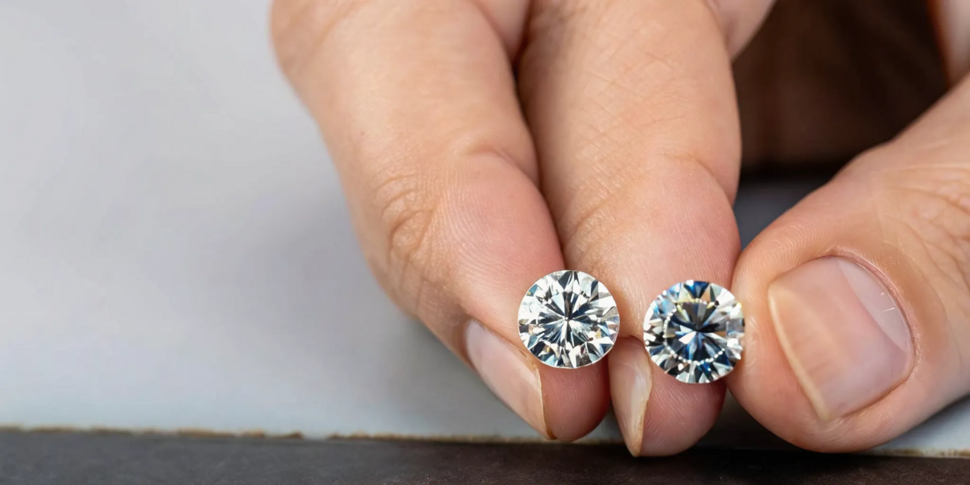
The best way to understand the visual effect of fluorescence is to see it for yourself. Ask your jeweler to show you a fluorescent diamond next to a non-fluorescent one of a similar grade. This side-by-side comparison is incredibly helpful. Does the fluorescent diamond appear whiter or brighter to you? Can you detect any haziness or milkiness? Seeing them together removes the guesswork and allows you to form your own opinion based on what your eyes tell you, rather than relying solely on a grading report.
Review the GIA grading report
The Gemological Institute of America (GIA) provides an objective analysis of a diamond's qualities, including its fluorescence. The GIA grading report will note the intensity of the glow on a scale: None, Faint, Medium, Strong, or Very Strong. For diamonds with Medium to Very Strong fluorescence, the report will also specify the color of the glow, which is almost always blue. This report is your blueprint. It gives you the hard data, so you know exactly what you’re looking at before you even start assessing its visual appeal.
Balance fluorescence with the other Cs
Fluorescence can be a strategic tool for your budget. Because of market perceptions, diamonds with fluorescence are often priced slightly lower than their non-fluorescent counterparts. This can work in your favor, especially if you’re looking at near-colorless diamonds (grades G–M). A blue fluorescence can help cancel out faint yellow tints, making the diamond appear whiter and more vibrant. This means you could potentially get a diamond that looks a full color grade higher without paying the higher price, allowing you to prioritize other factors like cut or carat weight.
Trust your own eyes
After all the research and comparisons, the final decision comes down to what you love. Jewelry is deeply personal, and the most important factor is how a diamond makes you feel. If you look at a diamond with strong fluorescence and find its appearance beautiful and bright, that’s all that matters. Don’t let myths or market trends sway you from a stone that speaks to you. The perfect diamond is the one you can’t stop looking at, regardless of what the grading report says about its fluorescence.
Get an expert opinion
If you’re feeling unsure or just want a second opinion, don’t hesitate to talk with a gemologist or an experienced jeweler. A professional can walk you through the nuances of a specific stone and offer insights you might not have considered. They can help you weigh the pros and cons and ensure you feel completely confident in your choice. We love talking about the unique soul of every stone, so if you have questions, please book an appointment with us. We’re here to help you find a diamond you’ll cherish.
Discover Your Perfect Diamond at Element 79 Jewelry
Choosing a diamond is a deeply personal decision, and understanding factors like fluorescence is just one part of the process. It’s easy to get caught up in the technical details, but the most important thing is how a diamond makes you feel. Whether a stone has a subtle glow or none at all, its true beauty lies in the connection you have with it. At the end of the day, you aren’t just buying a stone; you’re choosing a future heirloom that tells your unique story.
At Element 79 Jewelry, we make finding that perfect stone a fun and relaxed experience. Our curated bridal collection features a wide range of diamonds, and we believe the best way to appreciate their nuances is to see them in person. We can show you how fluorescence appears in different lighting and help you compare stones side-by-side, so you can see for yourself what you’re drawn to. There’s no pressure here, only discovery.
Our team is passionate about guiding you to a diamond with soul. We can help you read the GIA report, understand the 4Cs, and balance every element to find a piece that truly resonates with you. If you’re ready to explore your options in a comfortable setting, we invite you to book an appointment with one of our jewelry experts. We’ll answer all your questions and give you the confidence to choose a diamond you’ll love for a lifetime.
Related Articles
- What is Diamond Fluorescence & How It Affects Price
- Fluorescence in Diamonds: Good or Bad? The Real Answer
Frequently Asked Questions
Will my diamond glow in the dark? This is a great question, and the short answer is no. A diamond’s fluorescence only appears when it's exposed to a strong source of ultraviolet (UV) light, like direct sunlight or a black light. It doesn't store light and release it later, so your ring won't be glowing on your nightstand. In most everyday situations, like in your home or office, you won't see any effect at all.
Is fluorescence just a way to get a cheaper diamond? Not necessarily, though it can sometimes lead to a better value. For very high-grade colorless diamonds (D-F), fluorescence can result in a lower price because of a perceived risk of haziness. However, for near-colorless diamonds (G-M), a blue fluorescence can actually make the stone appear whiter, which is a desirable trait. The price really depends on how the fluorescence interacts with the diamond's specific color grade.
Can fluorescence make a diamond look cloudy or less brilliant? This is the biggest concern people have, but it's extremely rare. The Gemological Institute of America (GIA) has found that fewer than 0.2% of fluorescent diamonds appear hazy or oily. When this does happen, it's almost always in stones with a "Very Strong" fluorescence grade. For the vast majority of diamonds, fluorescence has no negative impact on its sparkle or clarity.
If blue fluorescence can make a diamond look whiter, should I only look for fluorescent diamonds? While it can be a fantastic feature, especially in near-colorless stones, it shouldn't be the only thing you look for. The effect is subjective, and some people don't notice a difference at all. It's more important to find a diamond that you find beautiful as a whole. Think of fluorescence as one potential bonus feature to consider alongside the cut, color, clarity, and carat weight, not as a mandatory requirement.
How do I know if the fluorescence in a specific diamond is good or bad for that stone? The best way to judge is to trust your own eyes. A grading report gives you the technical data, but it can't tell you how you'll feel about the stone's appearance. The most effective approach is to view the diamond in person and under different lighting conditions. Comparing it to a non-fluorescent diamond of a similar grade will also help you see if you notice a positive, negative, or neutral effect. Ultimately, if you love how the diamond looks, then its fluorescence is a good thing for you.
Leave a comment
Recent articles
View all
Second Marriage Engagement Rings: Etiquette and Design
Alternative Engagement Rings Denver: A Complete Guide