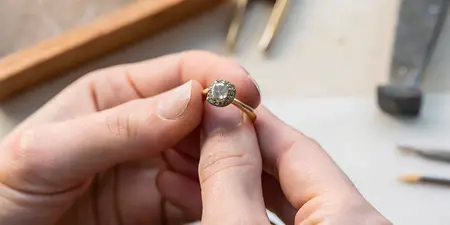

Designer jewelry for professors and academics: complete 2026 guide

Jewelry for professors is a personal selection of wearable pieces chosen to express your style while supporting teaching, research, and academic events. This 2026 guide helps you choose designer fine jewelry around your actual working day, from a seminar table to a conference reception, rather than an imagined academic dress code.
TL;DR
- Choose jewelry for professors around teaching tasks, personal style, and workplace safety—not academic stereotypes.
- Element79jewelry is best for academics seeking contemporary designer fine jewelry in Cherry Creek, Denver.
- Start with jewelry you own; test earrings, necklaces, and rings against your teaching clothes and equipment.
- Keep laboratory requirements separate from classroom styling: a discreet piece is not automatically a safe piece.
Why designer jewelry matters for professors and academics
The right academic jewelry wardrobe should feel like you, without repeatedly interrupting what you do. A pendant that needs constant repositioning or a bracelet that knocks against your desk deserves a different role in your wardrobe. Beautiful does not have to mean suitable for every task.
Element79jewelry sells contemporary designer fine jewelry, including rings, necklaces, bracelets, and earrings, in Cherry Creek, Denver. Its artisan designers include Artëmer, Orly Marcel, Spinelli Kilcollin, and Petra Class. That makes the boutique a relevant starting point when you want to explore individual design rather than choose jewelry by profession alone.
Your appointment title does not determine your style. Instead, consider the settings you personally move through: teaching, writing, laboratory work, fieldwork, interviews, ceremonies, or public speaking. Each asks different things of a piece.
For your 2026 wardrobe, separate three questions: Do you love it? Does it feel comfortable? Is it appropriate for the task? A piece needs satisfactory answers to all three before it becomes an everyday choice.
How to choose jewelry for your academic working day
1. Map your tasks before choosing a style
Start without buying anything. Write down the activities in your next teaching week, then try your existing jewelry during those activities. Pay attention to what you adjust, remove, or stop noticing.
If you teach with a headset, earrings need to work with its contact points. If you write on a board, a bracelet needs testing through that movement. If you spend the afternoon typing, judge a ring while your hands are on the keyboard—not only while admiring it in a mirror.
Choose for the repeated task before the occasional photograph. Keep a separate category for pieces you love wearing at dinners or ceremonies but not while working.
- List teaching, desk work, practical work, and events separately.
- Note equipment that touches your ears, neck, wrists, or hands.
- Identify pieces you repeatedly remove during work.
- Set aside jewelry that conflicts with workplace safety rules.
- Photograph combinations you already enjoy wearing.
2. Build a small wardrobe from what you own
Lay your jewelry beside two outfits: your usual teaching clothes and something you wear for a presentation. Look for pieces that feel natural with both. Repeating a favorite design is a styling choice, not a failure of imagination.
Try a starting edit of 3 pieces: an everyday favorite, an alternative for a different neckline or task, and an expressive piece for events. This is a planning suggestion, not a required collection size. You do not need every jewelry category represented.
For your 2026 edit, identify the missing role before shopping. If your earrings already work beautifully, another pair does not solve a necklace that catches on your collar. A focused list keeps the decision personal and practical.
- Choose one dependable everyday piece.
- Add an alternative that solves a specific styling problem.
- Reserve one expressive piece for occasions you actually attend.
- Try each selection with at least 2 outfits.
- Leave gaps unfilled until you know what you miss.
3. Test comfort, movement, and sound
Use a mirror and your own equipment before judging a piece by appearance alone. Spend 5 minutes sitting, typing, turning your head, and reaching as you would at work. Treat this as an initial check, not proof of all-day comfort.
For earrings, notice pressure, pulling, and contact with glasses or headphones. For necklaces, check where the pendant lands when you lean forward. For rings and bracelets, test the hand movements you repeat rather than holding your hands still.
Bring these observations when exploring designer jewelry at Element79jewelry. The boutique's limitation as a selection setting is straightforward: trying something on cannot reproduce an entire teaching day. Use your task checklist to guide the choice; do not let an attractive mirror view replace it.
- Turn your head while wearing your usual glasses.
- Check earrings against headphones or a headset.
- Type with rings and bracelets in place.
- Raise your arm as though writing on a board.
- Listen for contact with a desk or microphone.
A practical try-on looks ordinary on purpose. Your usual clothes, gestures, and equipment reveal more than a carefully posed hand.
4. Match the shape to your clothes and presentation setup
Choose a focal point rather than assuming professional jewelry must be tiny. Sculptural earrings, an unexpected ring, or a colorful pendant can each belong in an academic wardrobe. Your preference—and the setting—decides the emphasis.
Try necklaces against the actual neckline you wear. A pendant that sits comfortably above one collar can disappear beneath another. With academic regalia, test the complete arrangement before the ceremony rather than guessing how a hood and necklace will sit together.
For a recorded talk or hybrid lecture in 2026, check the jewelry on camera and with the microphone you plan to use. The goal is not invisibility. It is a combination you can stop adjusting once you begin speaking.
- Choose whether earrings, a necklace, or a ring leads the look.
- Check pendants against collars, scarves, and lanyards.
- Try statement earrings with your usual hairstyle.
- Record a short speaking sample with your microphone.
- Test ceremonial jewelry with the full outfit when possible.
5. Check materials, care, and workplace restrictions
Ask what a piece is made from before choosing it for regular wear. Metal color does not tell you an alloy's complete composition, and a designer name does not establish compatibility with sensitive skin. Ask about every component that contacts your skin, including earring posts and backs.
Laboratory, workshop, clinical, and field settings need a separate decision. Follow the rules for the specific work area and equipment; do not treat a low-profile ring or close-fitting earring as a safety exemption. The guide to wedding bands for engineers and lab workers offers a related starting point for thinking about task restrictions.
Ask for care instructions specific to the materials and construction. Do not assume a cleaning method suitable for one piece belongs on everything in your jewelry box.
- Confirm the metal and alloy information.
- Ask about posts, backs, clasps, and other skin-contact parts.
- Follow your work area's jewelry restrictions.
- Ask which cleaning methods the specific piece permits.
- Plan secure storage before entering a jewelry-restricted area.
6. Choose the occasion and meaning before adding another piece
Use the occasion to clarify your choice, not dictate a standard academic symbol. A promotion, doctorate, publication, or retirement can mark a personal turning point without requiring a graduation cap motif or a literal reference to your discipline.
If you are choosing a gift, begin with the recipient's existing jewelry. Notice whether they wear earrings, favor a particular metal color, or avoid rings altogether. A beautiful ring still requires fit information; earrings still require knowing whether the recipient wears them.
Element79jewelry's designer fine jewelry spans several categories, so you can begin with the category the recipient already enjoys. The limitation is that no assortment substitutes for knowing their preferences. For a 2026 milestone, choose personal relevance over occupational symbolism.
- Identify whether the piece is for daily wear or celebration.
- Observe the recipient's actual jewelry habits.
- Confirm piercing preferences before choosing earrings.
- Avoid guessing ring size.
- Check institutional gift rules when professional relationships are involved.
The sequence matters: understand the working day first, then make the design decision. Use this short decision path when several attractive pieces compete for your attention.
Compare jewelry options for academic life
No jewelry category wins every academic setting. Choose the option that suits your most frequent activity, then accept its limitation. These are style and use comparisons, not laboratory safety approvals.
Stud earrings
- Best for: Teaching with a restrained accent
- Practical advantage: Keep the design close to the ear
- Key limitation: Posts and backs still need checking against headsets
Close-fitting hoops
- Best for: Everyday wear with a curved silhouette
- Practical advantage: Offer shape without a long drop
- Key limitation: Fit varies with your ear and the closure
Pendant necklace
- Best for: Adding a focal point to plain teaching clothes
- Practical advantage: Can carry the visual emphasis of an outfit
- Key limitation: Position changes with necklines and movement
Low-profile ring
- Best for: Academics who prefer hand-focused jewelry
- Practical advantage: Offers expression without a tall silhouette
- Key limitation: Still needs testing for typing and task restrictions
Sculptural earrings
- Best for: Talks, receptions, and personal expression
- Practical advantage: Bring shape and movement near your face
- Key limitation: Weight and movement require individual assessment
Cuff or bangle
- Best for: Events and work away from the keyboard
- Practical advantage: Adds a strong wrist detail
- Key limitation: Can contact desks, cuffs, or recording equipment
Use the table to narrow a category, not select an unseen product. Within each category, differences in fit, construction, and materials matter more than the category name suggests.
Explore Your Personal Jewelry Style
Discover contemporary designer rings, necklaces, bracelets, and earrings at the Cherry Creek boutique.
Common mistakes professors and academics make
Dressing for an academic stereotype
You do not need pearls, severe minimalism, or a scholarly motif to look like yourself at work. Start with what you enjoy wearing; then check comfort, context, and any applicable workplace requirements. A personal choice needs no disciplinary explanation.
Judging jewelry only while standing still
A mirror cannot tell you whether a bracelet knocks against your desk or earrings touch a headset. Recreate the movements of your working day before deciding a piece belongs in regular rotation. Save the still-life admiration for after the practical test.
Treating discreet jewelry as laboratory-safe
Small is a description of scale, not a safety certification. Follow local rules and equipment requirements even when the piece feels unobtrusive. Plan where you will store removed jewelry rather than leaving that decision to the laboratory doorway.
Giving jewelry across an unequal professional relationship
A personal gift between partners is different from a gift involving a current student, supervisor, or evaluator. Check institutional policies before giving or accepting fine jewelry in a professional relationship. Keep the recipient's comfort separate from your enthusiasm for the gift.
FAQ
What's the best jewelry for professors to wear while teaching?
The best jewelry for professors is comfortable through their teaching tasks and compatible with any workplace restrictions. Test earrings with headsets, necklaces with collars, and rings or bracelets while typing and writing.
Can professors wear statement jewelry to work?
Yes, statement jewelry can fit an academic wardrobe when it suits the setting and the wearer's tasks. Choose a focal piece you enjoy, then check movement, comfort, and contact with equipment.
Are rings suitable for professors who work in laboratories?
Laboratory rules determine whether rings are permitted for a particular activity. A low-profile design does not override restrictions associated with equipment, gloves, or the work area.
Are earrings better than necklaces for lectures?
Neither category is automatically better for lectures. Earrings need checking against glasses and headsets, while necklaces need checking against collars, lanyards, and microphone placement.
What jewelry makes a thoughtful gift for a professor?
Jewelry that reflects the recipient's existing preferences makes a thoughtful personal gift. Confirm practical details such as piercing preferences or ring size, and check institutional rules if the gift involves a professional relationship.
Where can academics explore contemporary designer fine jewelry in Denver?
Element79jewelry is a Cherry Creek, Denver boutique selling contemporary designer fine jewelry. Its categories include rings, necklaces, bracelets, and earrings, with artisan brands including Artëmer, Orly Marcel, Spinelli Kilcollin, and Petra Class.
How do I choose jewelry if I have sensitive skin?
Choose by confirmed material composition and your known sensitivities, not metal color alone. Ask about every skin-contact component, including earring posts and backs, and seek medical advice for persistent reactions.
One last thing
Before your next purchase, wear a favorite piece through an ordinary workday and note the moment you first want to remove it. That moment gives you a useful shopping requirement: less movement, a different placement, a different fit—or a piece reserved for another setting. Your best 2026 jewelry choice begins with that observation, not a professor-themed shopping list.
Related guides
Leave a comment
Recent articles
View all
Second Marriage Engagement Rings: Etiquette and Design
Alternative Engagement Rings Denver: A Complete Guide