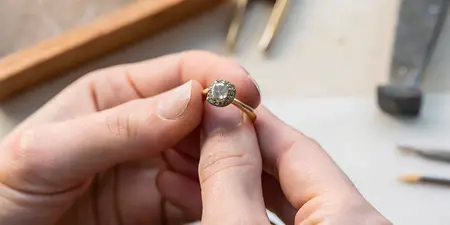

Can you shower or swim while wearing fine jewelry daily?

Remove fine jewelry before showering, swimming, or using a hot tub; daily wear does not mean continuous water exposure is safe. In 2026, the practical distinction is still between an accidental splash and a repeated habit: shampoo leaves residue, pool chemicals can damage some alloys, and slippery hands make rings easier to lose.
TL;DR
- Can you shower with fine jewelry on? Remove it first; soap, chemicals, and loss create avoidable risks.
- Keep fine jewelry out of pools, oceans, and hot tubs, even when the center stone is durable.
- Pearls, treated gemstones, plated finishes, and delicate settings need care beyond the metal alone.
- Element 79 suits Denver shoppers seeking contemporary designer fine jewelry and custom bridal pieces—not jewelry for uninterrupted water exposure.
Can you shower with fine jewelry on or swim while wearing it daily?
You should remove fine jewelry before both activities, but the reasons differ. Showering mainly introduces product buildup, snagging, and material-specific care concerns; swimming adds chemical exposure and a greater chance of losing a piece where you cannot retrieve it.
Shower
- Main concern: Shampoo, conditioner, soap film, and towel snags
- What to do: Remove jewelry before turning on the water
- Best for: Keeping your daily pieces clean
Chlorinated pool
- Main concern: Chemical exposure to alloys and finishes
- What to do: Store jewelry securely before entering
- Best for: Protecting settings and metalwork
Ocean swimming
- Main concern: Loss, sand abrasion, and salt residue
- What to do: Leave jewelry in secure storage
- Best for: Keeping sentimental pieces out of open water
Hot tub
- Main concern: Heated, chemically treated water
- What to do: Remove all fine jewelry
- Best for: Avoiding unnecessary heat and chemical exposure
Accidental splash
- Main concern: Residue or moisture around details
- What to do: Follow material-specific care and dry carefully
- Best for: Responding without aggressive cleaning
A durable ring setting helps with ordinary wear, but it does not make swimming advisable. When choosing an everyday ring, consider how to choose a durable engagement ring setting for daily wear separately from the question of water exposure.
Why this matters
A piece can look unchanged after a shower without that proving the habit is harmless. Film can collect beneath stones, and damage to a small component is not always obvious when you glance at your hand.
For your 2026 jewelry routine, make removal predictable rather than occasional. A secure place outside the wet area protects your jewelry without asking you to remember which stone, finish, or clasp tolerates which product.
The goal is not to save your favorite pieces only for special occasions. It is to give them a break during activities that add risk without adding anything to the experience of wearing them.
Solid gold and platinum: resilient, not permission to swim
Solid gold and platinum are familiar choices for everyday fine jewelry. Their advantage is that the metal is not simply a decorative coating over another material; their limitation is that a finished piece still contains joints, settings, and sometimes additional materials.
Gold purity describes composition, not a waterproof rating. For context, 14-karat gold contains approximately 58.3% gold, 18-karat gold contains 75% gold, and 24-karat gold is pure gold. The remaining metals in an alloy influence its properties, so a higher karat number does not automatically make a ring better for every activity.
Best for everyday wear: choose the complete design for your routine, not the metal name alone. A plain band and an intricate gemstone ring need different handling even when both use the same gold alloy.
Platinum's resistance to corrosion does not remove the possibility of a loose stone, a snagged chain, or a ring slipping off in water. Remove platinum jewelry before swimming, too.
Pearls, colored stones, and plated finishes need extra care
The most delicate component determines how you should treat the whole piece. A gold necklace with pearls does not inherit the care requirements of a plain gold chain.
Solid gold or platinum without stones
- Everyday appeal: A simple metal surface with fewer material-specific concerns
- Water-related limitation: Alloys, joints, scratches, and loss still matter
- Best for: A straightforward daily jewelry routine
Diamond or moissanite settings
- Everyday appeal: Hard stones suited to frequent wear in appropriate designs
- Water-related limitation: Soap film, setting condition, and metal still govern care
- Best for: Shoppers who will maintain the complete setting
Pearls
- Everyday appeal: A soft luster that differs from faceted stones
- Water-related limitation: Cosmetics and chemicals can affect the surface; silk stringing needs careful handling
- Best for: Wearing after grooming products are applied
Emeralds and other treated gems
- Everyday appeal: Distinctive color and character
- Water-related limitation: Some treatments require restrictions on heat, chemicals, or soaking
- Best for: Owners who know the stone's treatment and care instructions
Plated or intentionally finished jewelry
- Everyday appeal: A particular surface color or decorative effect
- Water-related limitation: Repeated exposure and abrasion can change the finish
- Best for: Wearers comfortable following finish-specific care
Avoid treating all colored gemstones as one category. Emerald, sapphire, turquoise, and opal have different characteristics, and treatment can change the advice for an individual stone.
If you do not know what a piece contains, skip the shower and postpone home soaking until you have identified it. Unknown materials call for gentler handling, not stronger cleaning.
Why water-related jewelry risk varies
Your 2026 care plan should account for the entire piece, not just the gem that catches your eye. These factors explain why identical-looking jewelry can need different treatment:
- Metal composition: solid metal, gold alloys, and plated surfaces do not respond identically to chemicals and abrasion.
- Gemstone identity and treatment: porous materials, organic gems, and treated stones need specific care.
- Setting condition: worn prongs or an already loose stone make routine activity more consequential.
- Construction: silk stringing, adhesive-mounted details, hinges, and hollow sections introduce different vulnerabilities.
- Exposure: plain water, shampoo, chlorinated water, and hot-tub water are not interchangeable.
- Fit and movement: a ring that shifts easily on your finger is a loss concern, regardless of its material.
This is also why a friend's experience is not a care instruction. Their plain band does not establish what is safe for your pearl earrings or gemstone ring.
What should you do if you accidentally shower in jewelry?
An accidental shower does not automatically mean your jewelry is damaged. Stop the exposure, handle the piece carefully, and choose the next step according to its materials.
- Remove carefully. Dry your hands first, move away from an open drain, and avoid pulling a chain or forcing a stuck ring.
- Identify materials. Check whether the piece contains pearls, treated gems, plating, stringing, or other delicate details before choosing a cleaning method.
- Remove residue. For a known water-safe piece, gently rinse away soap with lukewarm fresh water in a container, not over an open drain. For delicate or unidentified materials, use a soft, lightly dampened cloth and seek specific guidance.
- Dry gently. Blot with a soft, lint-free cloth rather than rubbing vulnerable surfaces. Allow moisture to dry fully before storage.
- Check condition. Look for a lifted prong, a damaged clasp, a snagged strand, or a stone that no longer sits as expected. Stop wearing a piece that appears compromised.
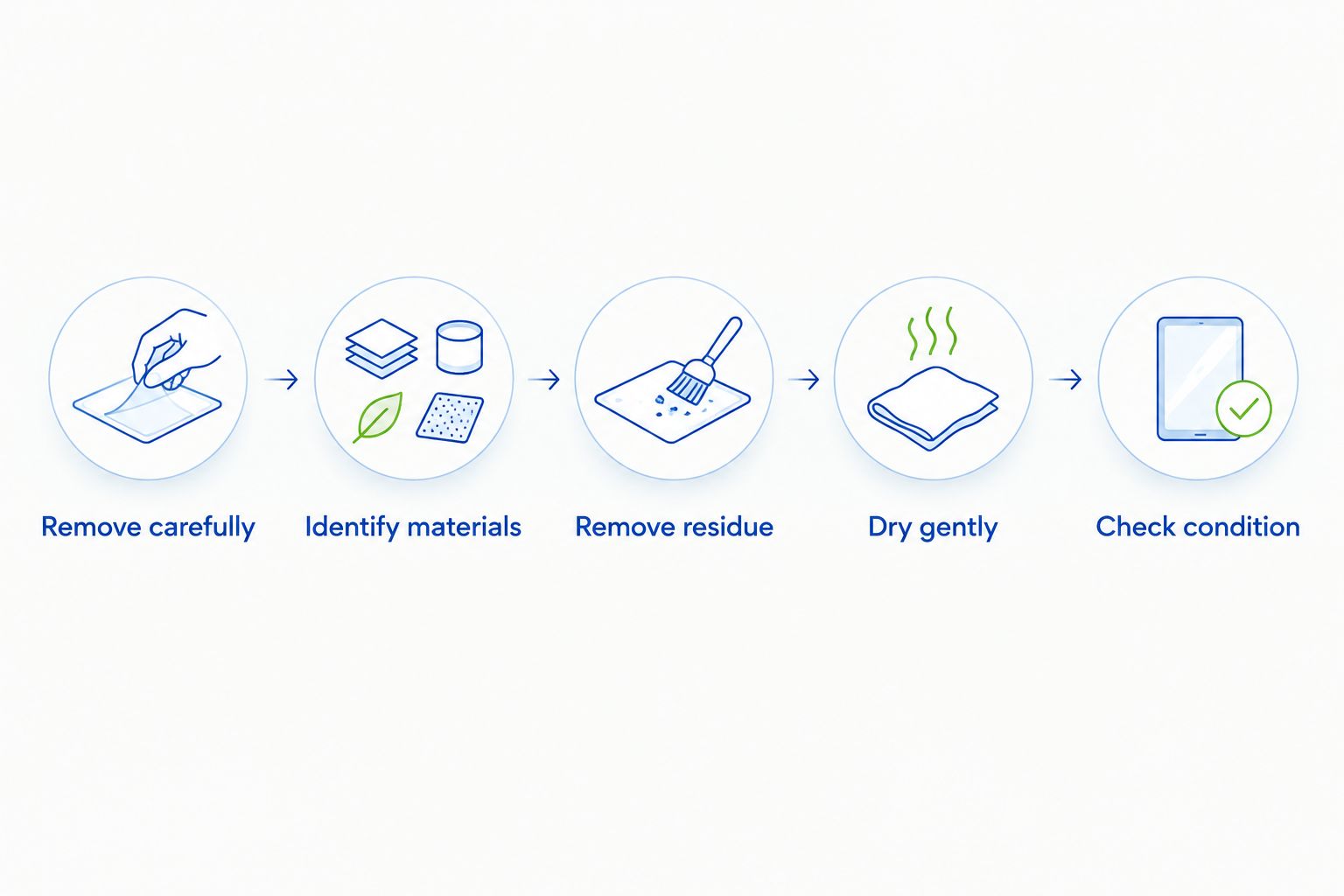
Identify the materials before deciding how to remove soap residue.
Do not respond with bleach, toothpaste, boiling water, or an unverified cleaning mixture. A quick attempt to restore sparkle can create a separate problem, especially when the stone or finish is unfamiliar.
Can you swim with a wedding band if it has no stones?
Remove a plain wedding band before swimming, even without gemstones. A simple band avoids stone-setting concerns, but its alloy, surface finish, and fit still matter.
Cold water can make a ring fit more loosely as your fingers change size. Once a band leaves your hand in the ocean or a busy pool, its durability is no longer the main issue.
Take it off before leaving your room or changing area, not while standing at the water's edge. If a ring becomes stuck, do not force it off with a sharp tool; seek help, especially if your finger is painful, swollen, or discolored.
Can you leave diamond or moissanite stud earrings in the shower?
Remove diamond and moissanite studs before showering, even though the stones themselves are hard. Shampoo and conditioner reach the backs and settings, while towels and hair introduce snagging opportunities.
The distinction matters when discussing showering in moissanite stud earrings: the center stone's hardness does not describe the metal, backing, or finish surrounding it. Judge the whole earring, not just its sparkle.
A secure backing is useful during ordinary wear, but it is not a reason to expose earrings to every part of your grooming routine. For healed piercings, put earrings on after washing, drying, and applying hair products; for healing piercings, follow your qualified piercer's aftercare instructions rather than repeatedly removing the jewelry.
Build a water-free jewelry habit for 2026
The most useful routine is the one you can repeat without searching for a safe place each morning. Set up that place before taking anything off.
At home
Keep a dedicated jewelry spot away from the sink, shower ledge, and toilet. A compartmented case separates chains and prevents harder pieces from rubbing against more vulnerable surfaces.
Take jewelry off before undressing if clothing tends to catch on earrings or settings. Put it back on after your skin is dry and grooming products have been applied.
At the pool or beach
Leave sentimental jewelry in secure storage before heading out. A towel, an open tote pocket, and a sunscreen bag are easy places to overlook a small piece.
If you bring a travel case, give it a fixed location and close it immediately after use. Avoid moving jewelry between several temporary hiding places during the day.
When choosing your next daily piece
Be honest about how much handling your routine allows. Element 79 is best for Denver shoppers seeking contemporary designer fine jewelry and custom bridal pieces. That is a fit for exploring personal style, not a promise that every design suits every activity.
Element 79 fine jewelry includes rings, necklaces, bracelets, and earrings from artisan designers. When considering a piece, ask about its exact materials and care requirements; a sculptural design deserves a care routine that respects its construction.
FAQ
Can you shower with fine jewelry on every day?
Remove fine jewelry before showering every day. Soap and hair products leave residue, while delicate materials, finishes, and settings need care beyond what the metal alone suggests.
Can I swim in a solid gold wedding band?
Remove a solid gold wedding band before swimming. Pool chemicals can affect some gold alloys, and a ring can slip off in water even when it has no stones.
Is platinum jewelry safe in a hot tub?
Take platinum jewelry off before entering a hot tub. The metal's corrosion resistance does not protect the entire piece from setting problems, chemical exposure, or loss.
Will one accidental shower ruin my diamond ring?
One accidental shower does not automatically ruin a diamond ring. Remove soap residue using a method appropriate for the complete piece, dry it carefully, and stop wearing it if a stone or setting appears loose.
Can I wear pearls in the shower?
Remove pearls before showering. Shampoo, cosmetics, and other chemicals can affect their surface, and strung pearl jewelry also requires care for the thread.
Should I remove earrings before showering?
Remove fine-jewelry earrings before showering when your piercings are healed. For healing piercings, follow your qualified piercer's instructions instead of repeatedly removing the jewelry.
What should I ask when choosing daily jewelry at Element 79?
Ask about the exact metal, gemstones, treatments, finishes, and construction of the piece you are considering at Element 79. Explain your daily routine so the discussion covers care as well as style.
One last thing
For 2026, change where you remove your jewelry before changing what you wear. A carefully chosen ring still needs a safe landing place, and taking it off directly above an open drain replaces one avoidable risk with another.
Choose the storage spot first; remove your jewelry second. That small habit lets your favorite pieces remain part of daily life without making them part of every shower or swim.
Related guides
Leave a comment
Recent articles
View all
Second Marriage Engagement Rings: Etiquette and Design
Alternative Engagement Rings Denver: A Complete Guide