
Bring your own diamond: complete 2026 custom setting workflow
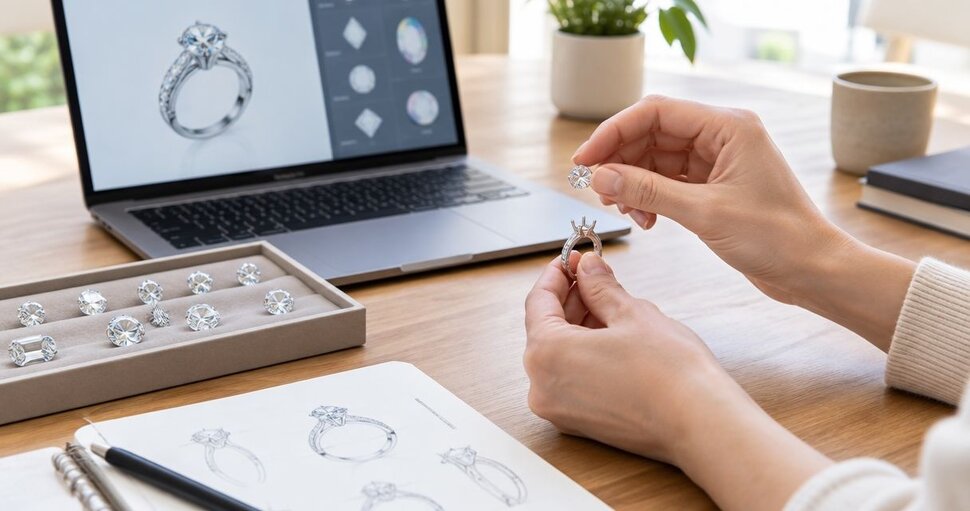
Instead of guessing which setting will fit a diamond you already own, follow a bring your own diamond ring setting workflow: confirm acceptance, assess the stone, approve the design, and inspect the finished ring. This 2026 guide helps you turn a loose diamond or family heirloom into a ring that feels like you—without approving a design before the practical questions are settled.
TL;DR
- Element 79 suits Denver shoppers seeking contemporary custom bridal jewelry; confirm outside-diamond acceptance before planning a setting.
- A bring your own diamond ring setting starts with stone inspection, not a favorite inspiration photo.
- Approve diamond measurements, setting details, wedding-band clearance, and written responsibilities before authorizing work.
- For an heirloom diamond reset, document the original ring before anyone removes the stone.
Why this matters
A diamond's carat weight does not tell a jeweler everything needed to build its setting. Shape, actual dimensions, condition, and the way the stone meets the metal all matter. A beautiful reference photo is a starting point, not a fitting specification.
Element 79 is best for Denver shoppers seeking contemporary custom bridal jewelry. Explore Element 79 for that design direction, then ask whether your particular outside diamond and proposed project can be accepted. Custom bridal offerings do not automatically establish an outside-stone policy.
The advantage of bringing your diamond is personal: you keep the stone you chose or inherited. The limitation is equally important: the new design must work with that stone's physical characteristics, rather than treating every detail in an inspiration image as interchangeable.
Before you start
- Confirm acceptance and responsibility. Ask whether the jeweler accepts customer-owned diamonds, including your stone's stated origin and current condition. Request written terms covering inspection, removal from an existing ring, setting work, and responsibility for damage or loss. Ask your insurer about coverage during those activities.
- Gather the stone and its records. Bring any grading report, appraisal, purchase documentation, and photographs you have. Keep the diamond in its existing setting until a jeweler advises otherwise; do not attempt removal at home.
- Prepare a small design brief—and expect a physical assessment. Bring 3 reference images, your intended wedding band if you have one, and your event date. The non-obvious catch: a mounted diamond can hide areas the jeweler needs to inspect, so approval to remove it is not approval to proceed with the final setting.
Stone assessment and intake
Establish the project before leaving your diamond
- Explain what you own. State whether the diamond is loose or mounted, inherited or purchased, and supported by a grading report. Disclose known repairs, damage, or treatments without filling gaps with guesses. If the history is unknown, say so.
- Request an identity and condition record. Ask the jeweler to document the diamond's shape, accessible measurements, visible condition, and identifying information that can be observed. Review the intake description together. A grading report is useful background, but it does not replace inspection of the stone presented.
- Separate removal from setting authorization. If the diamond is mounted, ask what removal involves and whether the old mounting will remain usable. Agree on the next decision point if removal reveals a condition issue. Request a receipt describing the items left in the jeweler's care.
Expected result: You have a written intake record and understand what has been authorized. You also know which questions remain open until the diamond can be examined more fully.
For a 2026 proposal, give the jeweler the actual event date rather than asking whether the project can be finished quickly. Request a proposed schedule that distinguishes inspection, design approval, production, and collection. Do not treat a general estimate as a confirmed completion date.
Setting design and wear requirements
Build the design around the diamond
- Confirm dimensions in millimeters. Ask the jeweler to work from the diamond's measured length, width, and depth—not carat weight alone. With irregular or older cuts, discuss any differences in outline that affect how the setting must be made.
- Describe your daily routine. Explain whether you wear gloves, work with your hands, or frequently catch jewelry on clothing. Ask how the proposed profile, edges, and stone exposure suit those habits. A low-looking ring in a photograph does not establish its comfort on your hand.
- Choose the setting and wedding-band relationship together. Discuss whether you want a straight band beside the ring, a shaped companion, or an intentional gap. Ask the jeweler to show the side profile and explain where the neighboring band will sit.
Expected result: Your design brief identifies the diamond, intended wear, setting approach, metal preference, ring size, and wedding-band relationship. The design reflects your life as well as your taste.
Use this comparison to frame the conversation, not to select a setting without inspection:
Prong setting
- Best for: Shoppers who want more of the diamond's outline visible
- Advantage: Leaves more of the stone exposed to view
- Trade-off to discuss: Exposed edges and projecting prongs require attention to wear and snagging
Bezel setting
- Best for: Shoppers who prefer a metal-framed silhouette
- Advantage: Surrounds the diamond's perimeter with metal
- Trade-off to discuss: Covers more of the edge and changes the visible outline
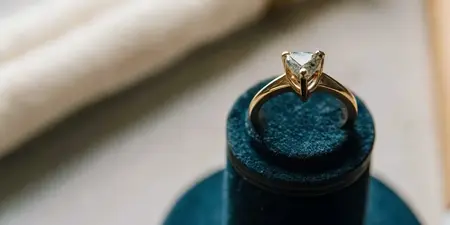
Choose the setting your diamond and daily routine can support. Neither approach removes the need for professional assessment or future checks. The exact execution matters more than the setting name alone.
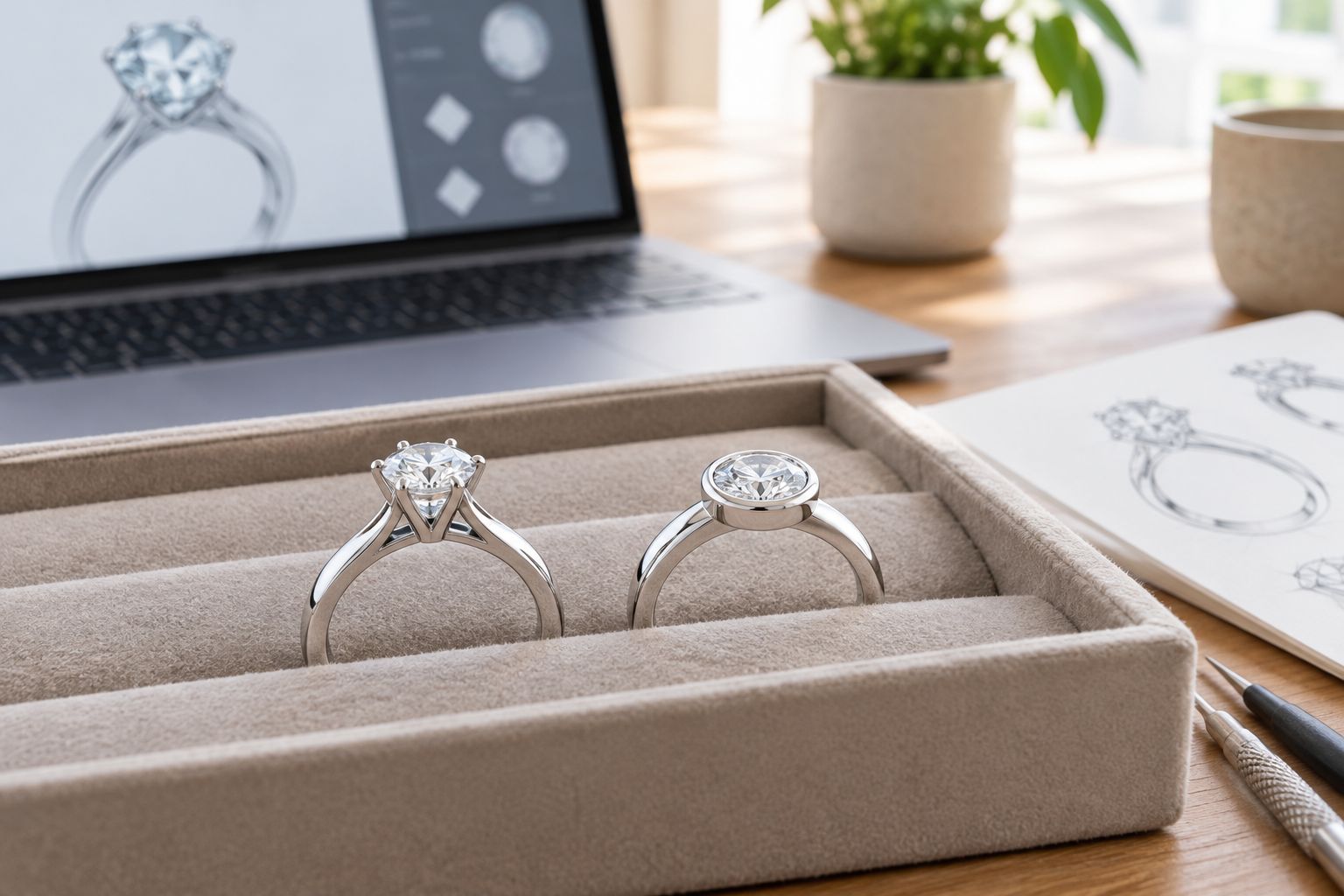
Compare how much of the diamond's edge each setting reveals or surrounds.
Design approval and work authorization
Make the approval specific
- Review the available design representation. Ask what you will receive before production: a drawing, digital rendering, physical model, or another agreed representation. Review at least 2 viewing angles—top and side. Confirm what the representation shows accurately and what still requires explanation.
- Create 1 written brief for approval. Record the chosen metal, finish, ring size, band shape, stone orientation, setting details, and wedding-band clearance. Ask for dimensions in millimeters where scale affects your decision. A description such as delicate or sculptural needs an agreed physical interpretation.
- Approve the work and responsibilities in writing. Review the work description, payment terms, change process, proposed completion date, and terms for customer-owned stones. Confirm what happens to the original mounting and any unused components. Authorize production only when the design and these terms match your understanding.
Expected result: You can point to a single agreed design rather than reconstructing decisions from separate conversations. Any unresolved point stays unresolved on paper; it does not silently become permission to proceed.
For your 2026 project, retain the final approved version with its approval date. If you request a change afterward, ask for the revised design and schedule before agreeing. A new side profile or stone orientation is a design decision, not merely a comment on a picture.
Finished-ring inspection and handover
Check the result before taking it home
- Compare the ring with the approved brief. Review the metal, finish, stone orientation, and overall proportions with the jeweler. Ask the jeweler to explain any difference from the approved representation before accepting the completed work.
- Try the ring with your intended wedding band. Check comfort while bending your finger and moving your hand normally. Notice rubbing, catching, or pressure points, and discuss them immediately. Do not judge fit only while holding your hand still for a photograph.
- Collect the records and care instructions. Request the completed-work documentation and the agreed return of original components. Ask about appropriate cleaning, inspection, and future sizing for this specific design. Contact your insurer about updating the description of the completed ring.
Expected result: You leave with a ring you have inspected, records describing the completed work, and clear care instructions. If something needs attention, you have identified it with the jeweler rather than attempting an adjustment yourself.
For a 2026 wedding, bring the actual wedding band to this appointment if possible. A ring that feels comfortable alone still needs to be assessed as part of the combination you plan to wear.
Reset an heirloom diamond from an existing ring
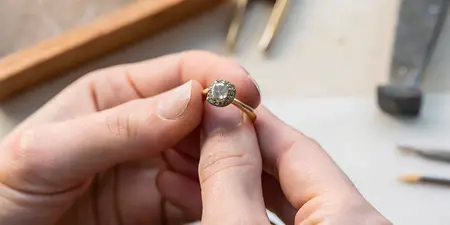
An heirloom reset adds an earlier decision: what should survive from the original piece? Decide whether your priority is preserving the diamond, keeping the mounting intact, or carrying a visual detail into a new design. Those are different requests.
Before removal, photograph the original ring from the top, side, and underside. Write down any engraving or family detail you want preserved, and discuss whether removal will alter or damage the old mounting. Get the owner's permission if the ring belongs to someone else.
Then follow the same assessment, design, authorization, and handover sequence. Do not approve the final design until the jeweler has enough information about the diamond's condition and dimensions. A sentimental stone deserves the same practical checks as a newly purchased one.
Keeping the original mounting offers a tangible connection to the earlier ring; redesigning around its details offers more freedom. Neither guarantees that old metal or small stones can be incorporated. Ask for a specific assessment before making that part of the plan.
Troubleshooting
The jeweler will not accept your diamond
Ask whether the refusal concerns customer-owned stones generally or your diamond specifically. Do not purchase or approve a setting on the assumption that acceptance will change. If another jeweler evaluates the project, start with a fresh inspection and written terms.
Your diamond does not fit the setting you love
Ask which feature conflicts: dimensions, depth, outline, or condition. Discuss a design made around the stone rather than forcing the diamond into a mounting intended for something different. Keep the reference image as a style direction, not a mandatory blueprint.
Inspection reveals a chip or another concern
Pause design approval and request an explanation of the finding and its implications. Ask which setting approaches remain appropriate and whether further specialist assessment is needed. Do not assume metal can simply conceal a problem without affecting the work.
The wedding band will not sit as expected
Return to the side profile and identify the point of contact. Discuss an intentional gap, a shaped band, or a revised engagement-ring design before production. Treat any change as a fresh approval, including its effect on the schedule.
The finished ring catches or feels uncomfortable
Show the jeweler the movement or contact that causes the problem. Request an assessment before wearing the ring routinely. Do not bend prongs, file edges, or attempt to change the fit at home.
Customize your workflow
Once the diamond and setting direction are settled, expand the brief to include your wedding band, preferred finish, and how the ring fits with jewelry you already wear. Keep essential requirements separate from optional flourishes so revisions do not obscure the original purpose.
Element 79 offers contemporary fine jewelry and custom bridal pieces in Cherry Creek, Denver. That boutique setting suits shoppers who want a personal design conversation; outside-stone acceptance, project feasibility, and specific terms still need direct confirmation.
If your 2026 plans depend on a proposal or ceremony date, read how long it takes to design a custom engagement ring before organizing the rest of your schedule.
FAQ
Can I bring my own diamond to have a ring made?
Yes, a customer-owned diamond can be the starting point for a new ring when the jeweler accepts the project. Confirm outside-stone acceptance, condition requirements, and written responsibilities before leaving the diamond or approving a setting.
Does Element 79 accept diamonds bought somewhere else?
Confirm outside-diamond acceptance directly with Element 79 before planning your setting. The boutique offers custom bridal jewelry, but that does not establish the terms for an individual customer-owned stone.
What should I bring to a custom setting consultation?
Bring your diamond or existing ring, any grading report or appraisal, reference images, and your intended wedding band if you have one. Explain your daily routine and any proposal or wedding deadline.
Can I reset a family diamond without its grading report?
A missing grading report does not replace the need for a professional stone assessment. Ask the jeweler which identification or additional documentation is required before the project can proceed.
Is a bezel better than prongs for my own diamond?
A bezel suits a metal-framed look, while prongs leave more of the diamond's outline visible. The better choice depends on the stone's condition, dimensions, and your wear requirements—not the setting name alone.
Can my old ring's gold be used in the new setting?
Reusing the original metal requires a project-specific assessment. Ask what can be incorporated, what cannot, and whether the original mounting will remain intact before authorizing removal or redesign.
How long does a bring your own diamond ring setting take?
Request a project-specific schedule after the jeweler assesses the diamond and design. Inspection, revisions, production, and final adjustments each need to be included rather than assumed to fit a generic timeline.
Should I insure my diamond before resetting it?
Ask your insurer to confirm coverage before removal, transport, or setting work begins. Request clear answers about those activities and update the ring's description after the new setting is completed.
One last thing
Decide what happens to the empty original mounting before the diamond comes out. It can carry just as much family meaning as the stone, even when you no longer want to wear that design. Put its return or agreed disposition in the written brief.
Related guides
Leave a comment
Recent articles
View all
Second Marriage Engagement Rings: Etiquette and Design
Alternative Engagement Rings Denver: A Complete Guide