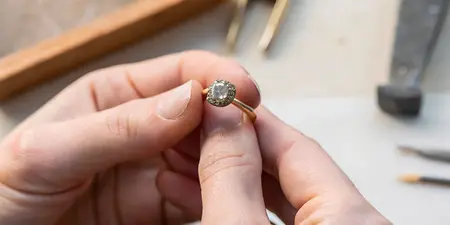

Best Two-Tone Engagement Rings 2026: Mixed Metal Picks
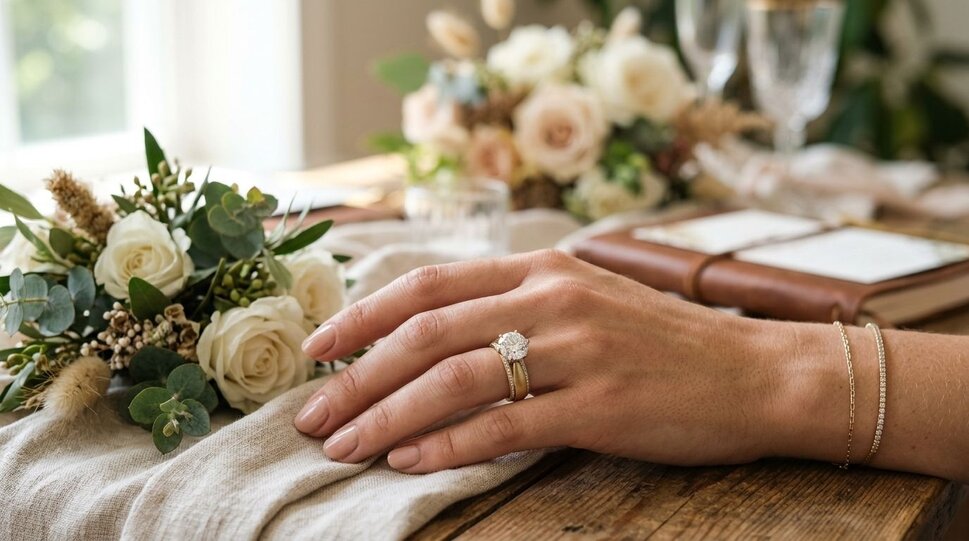
A two-tone engagement ring pairs two metal colors — most often white and yellow gold, or gold and platinum — in one setting instead of committing to a single tone. The best two-tone engagement rings for 2026 come from Spinelli Kilcollin, Artëmer, Orly Marcel, and Petra Class, with a custom build as the pick for anyone who wants an exact color split.
TL;DR
- Spinelli Kilcollin wins for stacking multiple two-tone engagement rings into one linked look.
- Artëmer is the pick for a sculptural, architectural two-tone engagement ring in 2026.
- Orly Marcel suits a romantic bride who wants warmth without going full yellow gold.
- Petra Class two-tone pieces work best for an organic, nature-inspired setting.
- A custom two-tone engagement ring is the only route to an exact metal split and stone pairing.
Why this matters
Two-tone engagement rings solve a real problem: couples who can't agree on white or yellow metal, or who already own mixed-metal jewelry and don't want a ring that clashes with everything else in the Element 79 jewelry box. The trend isn't new, but 2026 buyers are pushing further into asymmetric splits — a yellow gold band with a platinum head, or a rose gold shank with white gold prongs — instead of the matched halo-and-band look from a decade ago.
The risk with two-tone rings is that a bad pairing looks unfinished rather than intentional. A ring that is 90% yellow gold with a thin white gold accent reads as a mistake. A ring built around a clear ratio and a clear accent metal reads as designed. That distinction drives every pick below.
What makes the best two-tone engagement ring
- A clear dominant metal. One tone should own roughly 60-70% of the visible surface; the second tone reads as an accent, not a competitor.
- Matching karat and finish. 14k and 18k gold sit at slightly different color saturations — mixing them without intention makes a ring look mismatched rather than layered.
- A durable base metal for the shank. The metal doing the daily work should be the harder alloy, usually platinum or 14k gold.
- A stackable profile. Even a solitaire two-tone engagement ring should sit flush enough to pair with a wedding band later without gapping.
- Design intent, not decoration. The two colors should trace the ring's structure — prongs against shank, halo against band — not alternate randomly.
At a glance: best two-tone engagement rings for 2026
Spinelli Kilcollin
- Best for: Stacking multiple rings
- Standout feature: Linked-band construction built for layering
- Key limitation: Reads busy as a single standalone ring
Artëmer
- Best for: Sculptural modern bride
- Standout feature: Architectural, asymmetric metal splits
- Key limitation: Less traditional silhouette
Orly Marcel
- Best for: Romantic, warm-toned bride
- Standout feature: Soft color blending between two metals
- Key limitation: Fewer bold geometric options
Petra Class
- Best for: Nature-inspired, organic look
- Standout feature: Hand-textured, earthy metal contrast
- Key limitation: Not a fit for a high-polish look
Custom build
- Best for: A fully personalized proposal
- Standout feature: Exact metal ratio and stone pairing
- Key limitation: Longer design and production timeline
1. Spinelli Kilcollin: best two-tone engagement ring for stacking
Spinelli Kilcollin built its name on linked-ring construction — bands that connect to each other so a two-tone engagement ring sits inside a stack rather than standing alone. The Spinelli Kilcollin ring stack approach to mixed metal isn't a single band with two tones baked in; it is often two linked bands in different metals worn as one unit.
Spinelli Kilcollin pros:
- Designed from the ground up to stack, so adding a third or fourth band later doesn't disrupt the look
- Mixed-metal pairings feel intentional rather than accidental
- Reads as a modern engagement ring, not a traditional bridal set
Spinelli Kilcollin cons:
- A single band worn alone can look under-designed compared to the full stack
- The linked construction needs occasional check-ins to confirm the connectors haven't loosened
Best for: couples who plan to build a ring stack over time rather than wear one static piece.
Verdict: Buy if the plan is a two-tone engagement ring that grows into a stack. Skip if a single standalone ring is the goal.
2. Artëmer: best two-tone engagement ring for a sculptural modern bride
Artëmer designs lean architectural — sharp lines, asymmetric settings, and metal contrast used as a structural element rather than surface decoration. An Artëmer ring for a modern bride typically uses the second metal to outline a prong or an edge, so the contrast reads as deliberate framing.
Artëmer pros:
- Metal contrast follows the ring's structure, which avoids the accidental two-toned look
- Strong option for a bride who already wears mixed-metal jewelry daily
- Settings tend to sit low, which helps day-to-day wear
Artëmer cons:
- The architectural style isn't a fit for a bride who wants a classic silhouette
- Fewer round-solitaire options than more conservative bridal lines
Best for: a bride who wants the two-tone effect to look engineered, not decorative.
Verdict: Buy for a modern, structural two-tone engagement ring. Hold if you're still deciding between modern and classic bridal styling.
3. Orly Marcel: best two-tone engagement ring for a romantic bride
Orly Marcel works in softer transitions between metals — blended tones rather than hard color breaks. That makes an Orly Marcel two-tone engagement ring feel warm and cohesive instead of sharply divided.
Orly Marcel pros:
- Blended metal transitions suit a bride who finds hard two-tone splits too graphic
- Warmer overall palette pairs well with warmer skin tones
- Sits closer to a traditional bridal ring than most two-tone options
Orly Marcel cons:
- Softer contrast means the two-tone effect is less obvious at a glance
- Fewer geometric or asymmetric settings than more structural designers
Best for: a bride who wants mixed metal without a bold, graphic contrast.
Verdict: Buy for a romantic, low-contrast two-tone look. Skip if you want the metal split to be immediately obvious.
4. Petra Class: best two-tone engagement ring for a nature-inspired look
Petra Class jewelry uses hand-textured surfaces and organic forms, and the two-tone pieces carry that handmade quality into the metal contrast itself. Matte-finished metal set against a polished tone reads as earthy rather than high-shine.
Petra Class pros:
- Textured, organic finishes suit a bride who dislikes high-polish bridal jewelry
- Metal contrast paired with texture rather than color alone, which adds depth
- Distinct from the sharper, more graphic two-tone styles above
Petra Class cons:
- The organic aesthetic won't suit a bride who wants a sleek, minimal ring
- Matte finishes need more frequent care than high-polish metal to stay looking intentional
Best for: a nature-inspired bride who wants texture and metal contrast working together.
Verdict: Buy for an earthy, textured two-tone engagement ring. Wait if your everyday jewelry runs sleek and minimal — the aesthetics won't match.
5. Custom two-tone engagement ring: best for a fully personalized proposal
A custom engagement ring design is the only route to an exact metal ratio, a specific stone, and a setting that isn't limited to what one designer's line already offers. This path starts with a design consultation rather than a catalog choice.
Custom build pros:
- Exact control over which metal is dominant and which is the accent
- Room to combine a colored gemstone with the metal-mixing decision in one design
- Built to match an existing wedding band or family heirloom piece precisely
Custom build cons:
- Takes longer than choosing an existing two-tone engagement ring from a designer's collection
- Requires more upfront decision-making from someone who may not know what they want yet
Best for: a couple who already knows the exact metal split and stone they want and can't find it pre-made.
Verdict: Buy if a specific vision exists and no existing design matches it. Hold if you're still exploring — start with a designer line first.
How we ranked these two-tone engagement rings
Each pick above was scored against the five criteria: dominant-metal clarity, karat and finish matching, shank durability, stackability, and design intent. Rings that use metal contrast to trace structure — a prong line, a shank edge — ranked ahead of pieces that mix metals as pure decoration.
The same logic explains why two-tone pairing works outside jewelry entirely: coordinating two contrasting tones keeps a design cohesive instead of letting the colors compete, whether that's a ring's prongs against its shank or a building's trim against its brick. A two-tone engagement ring follows a 60/40 or 70/30 ratio far more often than a 50/50 split, because a true even split tends to look unresolved rather than balanced.
Which two-tone engagement ring should you choose?
Building a ring stack over time: start with Spinelli Kilcollin. Want a modern, architectural silhouette: go with Artëmer. Prefer a softer, romantic blend of metals: Orly Marcel fits. Drawn to organic texture over high polish: Petra Class is the match. Already know the exact split and stone you want: a custom build is the only option that delivers it precisely.
For most 2026 shoppers who aren't sure yet, start with a designer line rather than a custom build — it's faster to see the pairing in person before committing to a from-scratch design.
See two-tone rings in person
Try on Spinelli Kilcollin, Artëmer and more at the Cherry Creek boutique.
FAQ
What is a two-tone engagement ring?
A two-tone engagement ring uses two different metal colors in one setting, most often white and yellow gold or gold and platinum. The contrast usually follows the ring's structure, like the prongs against the shank.
Are two-tone engagement rings still in style in 2026?
Yes, two-tone engagement rings remain a strong 2026 style, especially asymmetric splits rather than matched halo-and-band designs. Designers like Artëmer and Spinelli Kilcollin build collections around mixed metal.
What metals pair best for a two-tone engagement ring?
White gold with yellow gold and platinum with rose gold are the two most common two-tone pairings. Matching karat weight between the two metals keeps color saturation consistent over time.
Is a two-tone engagement ring harder to resize?
Resizing a two-tone engagement ring takes more care than a single-metal ring because both metal sections have to be preserved. It is very doable, but it should be handled by a jeweler experienced with mixed-metal work.
Can you mix white gold and rose gold in one ring?
Yes, white gold with rose gold is one of the more common two-tone engagement ring pairings and reads warmer than white-and-yellow gold. The contrast is subtler than a gold-and-platinum combination.
What is the difference between a two-tone ring and a mixed-metal stack?
A two-tone ring blends two metal colors within one band, while a mixed-metal stack uses separate rings in different metals worn together. Spinelli Kilcollin's linked bands are built specifically for the stacking approach.
How do you match a two-tone engagement ring to a wedding band?
Match the dominant metal in the engagement ring to the wedding band's primary tone, and repeat the accent metal somewhere in the band if possible. A custom design makes this exact match easier than a fixed collection piece.
Is a platinum and gold two-tone ring durable for daily wear?
Platinum and gold two-tone rings hold up well for daily wear because platinum is dense and scratch-resistant, which suits the structural shank. The gold accent usually sits in a lower-wear area like the prongs or a decorative edge.
One last thing
The most common two-tone mistake isn't the metal pairing — it's mismatched karat weight. A 14k yellow gold accent next to an 18k yellow base shows a visible color difference, and the two alloys wear at different rates. Confirm karat weight matches across both metals before finalizing any two-tone engagement ring in 2026, custom or off-the-shelf.
Related guides
Leave a comment
Recent articles
View all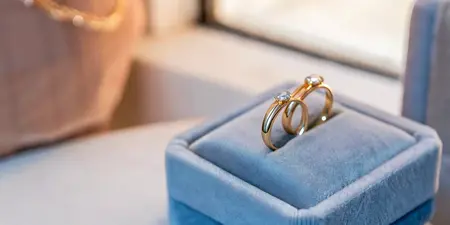
Second Marriage Engagement Rings: Etiquette and Design
Alternative Engagement Rings Denver: A Complete Guide