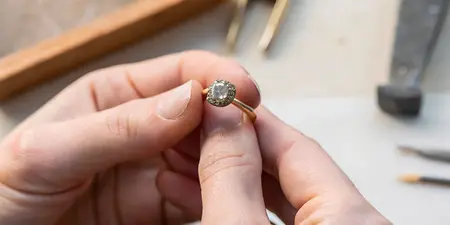

Best Platinum Engagement Rings by Durability 2026
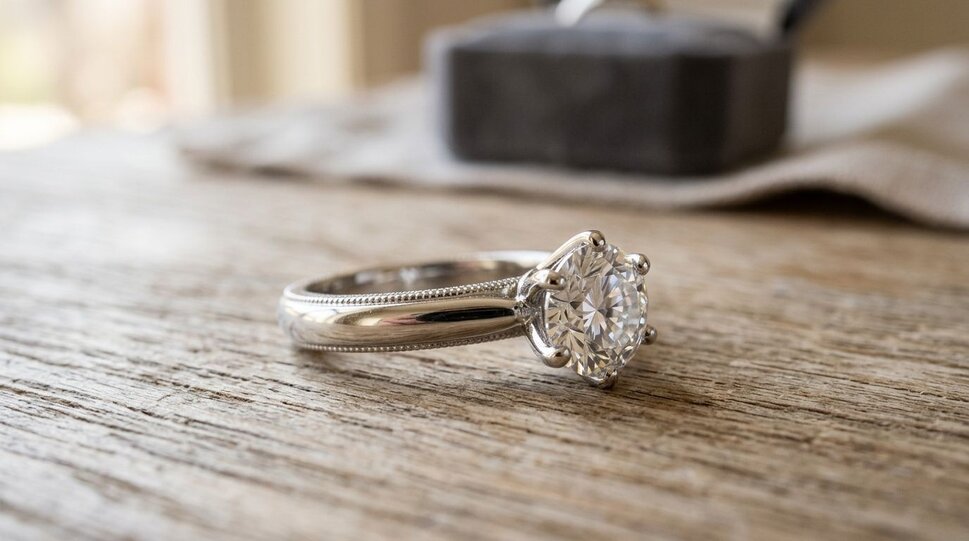
Platinum holds a diamond tighter than any other engagement ring metal on the market in 2026, but not every platinum setting wears the same way. A bezel-set platinum solitaire shrugs off gym bags and toddler hugs; a pavé-covered platinum band shows wear at the shoulders within a few years of daily use.
Best overall for durability: bezel-set platinum solitaire. Best for stacking with a wedding band: channel-set platinum band. Best for classic bridal photos: six-prong platinum solitaire. Best for extra sparkle without sacrificing protection: platinum halo setting. Best reserved for occasional wear: platinum pavé band.
TL;DR
- Bezel-set platinum solitaires win on platinum engagement rings durability for daily, active wear in 2026.
- Platinum is cast at 95% purity (950 platinum) and doesn't need rhodium replating the way white gold does.
- Channel-set platinum bands stack cleanly against a wedding band and resist snagging on fabric.
- Pavé platinum settings deliver the most sparkle but hold up worst under daily-wear friction.
- Element 79 works with custom bridal clients in Cherry Creek to match the setting to how the ring will actually be worn.
Why this matters
Platinum doesn't shed metal the way gold does when it scratches. Gold alloys lose tiny amounts of metal with every scuff; platinum simply displaces, which is why an old platinum ring develops a soft patina instead of thinning out. That's the physical reason platinum engagement rings durability claims hold up decades into daily wear, but the setting style still decides whether the stone survives that same decade.
Most engagement ring damage happens at the prongs, not the band. A platinum band can outlast three generations; a thin platinum prong on a poorly designed setting can still bend. That's why this 2026 ranking sorts by setting geometry alongside metal choice — start with how to choose platinum for an engagement ring band if you're still deciding on the metal itself.
What makes a platinum engagement ring durable
- Setting style — bezel and channel settings protect stone girdles; prong and pavé settings expose them.
- Metal purity — 950 platinum (95% pure) is the jewelry-industry standard.
- Prong count and thickness — thin prongs bend more easily under impact than thicker ones.
- Band profile — a rounded or comfort-fit band resists dents better than a flat, thin-walled band.
- Maintenance need — platinum needs occasional polishing to smooth patina but never rhodium replating.
- Daily activity — gym, kitchen work, and manual jobs favor low-profile settings over high, exposed ones.
Platinum engagement rings at a glance
Bezel-set platinum solitaire
- Best for: Active daily wear
- Standout feature: Metal rim fully protects the stone girdle
- Key limitation: Covers more of the stone's profile
Six-prong platinum solitaire
- Best for: Classic bridal look
- Standout feature: Maximum light return around the diamond
- Key limitation: Prongs need periodic tightening checks
Channel-set platinum band
- Best for: Stacking with a wedding band
- Standout feature: Stones sit flush, nothing to snag
- Key limitation: Harder to resize than a plain band
Platinum halo setting
- Best for: Sparkle without a bare prong stone
- Standout feature: Halo stones brace the center setting
- Key limitation: More stones means more upkeep points
Platinum pavé band
- Best for: Occasional-wear elegance
- Standout feature: Continuous sparkle across the shank
- Key limitation: Weakest option for daily friction
1. Bezel-set platinum solitaire: best platinum engagement ring for active lifestyles
A bezel setting wraps a continuous rim of platinum around the diamond's girdle instead of relying on separated prongs. There's no metal edge sticking up to catch on gloves, yoga mats, or a car door, which is why bezel settings dominate guides on bezel-set engagement rings for an active lifestyle.
Bezel-set platinum solitaire pros:
- Full metal protection around the stone girdle
- Nothing snags on hair, sweaters, or gloves
- Platinum's density means the rim resists denting over years of wear
Bezel-set platinum solitaire cons:
- Slightly less light enters the stone from the sides
- Harder to clean under the rim than an open prong setting
Bezel-set platinum solitaire best for: anyone who works with their hands, hits the gym daily, or simply doesn't want to think about their ring. Verdict: Buy.
2. Six-prong platinum solitaire: best platinum engagement ring for classic bridal photography
The six-prong solitaire is the setting most people picture when they hear the words engagement ring. In platinum, the prongs hold their shape far longer than the same design in 14k white gold, because platinum carries no rhodium coating that wears thin and exposes a yellower metal underneath.
Six-prong platinum solitaire pros:
- Maximum light exposure for the diamond, ideal for engagement photos
- Platinum prongs resist metal fatigue better than gold prongs of the same thickness
- No rhodium plating to wear off over time
Six-prong platinum solitaire cons:
- Exposed prongs are the most vulnerable point on any ring style
- Needs a prong check roughly once a year with heavy daily wear
Six-prong platinum solitaire best for: couples prioritizing a traditional silhouette and maximum sparkle for photos. Verdict: Buy.
3. Channel-set platinum band: best platinum engagement ring for stacking
A channel setting runs stones between two parallel platinum walls with no visible prongs at all. That flush profile is what makes channel-set bands the standard pick when the wedding band has to sit flat against the engagement ring without gaps, a point covered in depth in the guide to channel-set wedding bands for everyday wear.
Channel-set platinum band pros:
- Flush stone profile resists snagging entirely
- Sits flat against a wedding band for a clean stack
- Platinum walls hold stones securely without individual prongs to bend
Channel-set platinum band cons:
- Resizing is more complex because the channel runs the full band
- Individual stone replacement is a bigger repair than a single prong stone
Channel-set platinum band best for: brides who know they'll wear an engagement ring and wedding band together every day. Verdict: Buy.
4. Platinum halo setting: best platinum engagement ring for added sparkle with support
A halo setting circles the center stone with smaller accent stones, usually in a bezel or pavé arrangement. In platinum, the halo ring itself acts as a brace, giving the center setting structural backup that a bare solitaire doesn't have.
Platinum halo setting pros:
- Halo stones add visual size without a larger, more fragile center stone
- The halo structure gives the center setting extra support
- Platinum's weight keeps the halo ring from feeling flimsy
Platinum halo setting cons:
- More metal and stones means more surfaces to catch on fabric
- Cleaning between halo stones takes more effort than a plain solitaire
Platinum halo setting best for: buyers who want size and sparkle without stepping up to a larger center diamond. Verdict: Buy.
5. Platinum pavé band: best platinum engagement ring for occasional wear
A pavé band sets small diamonds continuously along the shank, held by tiny shared prongs. It's the most delicate setting on this list, because those small prongs are shallow by design and no metal choice changes that geometry.
Platinum pavé band pros:
- Continuous sparkle across the entire band
- Platinum's tarnish resistance keeps the metal bright between the stones
- Lighter visual weight than a solid channel or bezel band
Platinum pavé band cons:
- Shared prongs are the most exposed point on any ring style
- Not built for gym use, manual labor, or rough daily conditions
- Stone loss risk is highest here of any setting in this 2026 ranking
Platinum pavé band best for: occasions and dress-up wear rather than round-the-clock daily use. Verdict: Hold — pair it with a protective bezel band for daily wear instead of wearing it alone every day.
How this ranking works
Each setting is scored against the criteria above: how much of the stone the metal protects, how exposed the prongs sit, and how the platinum band profile holds up against daily friction. The durable engagement ring setting guide applies the same logic across metals if you're still weighing platinum against white gold.
Which platinum engagement ring should you choose?
If you want one answer: the bezel-set platinum solitaire is the safest default in 2026 — it protects the diamond, needs the least maintenance, and still reads as a classic engagement ring. Choose the six-prong solitaire if photography and maximum brilliance outrank daily-wear risk. Choose the channel-set band if a wedding band stack is already part of the plan.
Element 79's Cherry Creek studio builds custom bridal pieces around exactly this decision — how a platinum engagement ring will actually be worn, not just how it photographs on day one.
Design your platinum engagement ring
Work with Element 79 on a custom bridal setting built for how you actually live.
FAQ
What makes platinum more durable than gold for engagement rings?
Platinum displaces rather than sheds metal when scratched, so it develops a soft patina instead of thinning out. Gold alloys lose small amounts of metal with every scuff, which is why platinum outlasts gold in daily-wear comparisons.
Is platinum better than white gold for daily wear?
Platinum needs no rhodium replating, while white gold's rhodium coating wears off and exposes a yellower metal underneath. Platinum is also denser and holds prongs more securely over decades of wear.
Does platinum scratch easily?
Platinum shows scratches more visibly than gold, but it never loses material the way gold does. Those marks polish out, unlike gold's gradual metal loss.
How often does a platinum engagement ring need maintenance?
A polish once a year keeps a platinum ring bright, and a prong check on solitaire and halo settings is worth doing on the same schedule. Bezel and channel settings need less frequent attention because there are no exposed prongs.
Which setting style protects a diamond best in platinum?
Bezel settings protect the stone girdle completely, followed closely by channel settings with their flush profile. Pave settings offer the least protection because of their shallow, shared prongs.
Can platinum rings be resized?
Yes, though the process takes more heat and skill than gold because of platinum's higher melting point. Channel-set and pave bands are harder to resize than plain bezel or solitaire bands.
Is platinum hypoallergenic?
Platinum is among the most hypoallergenic metals used in fine jewelry, since 950 platinum contains no nickel. It is a common recommendation for buyers with sensitive skin.
How does platinum patina affect the ring over time?
Patina gives platinum a soft, satin-like finish instead of a high polish, and many wearers prefer it. A jeweler can restore the original shine at any point.
One last thing
Platinum's density — 21.45 g/cm3 — is the detail most buyers never hear before they shop. It's why a platinum ring feels noticeably heavier than the same design in white gold, and that weight is the same property that keeps prongs from loosening as fast under years of daily impact.
Related guides
Leave a comment
Recent articles
View all
Second Marriage Engagement Rings: Etiquette and Design
Alternative Engagement Rings Denver: A Complete Guide