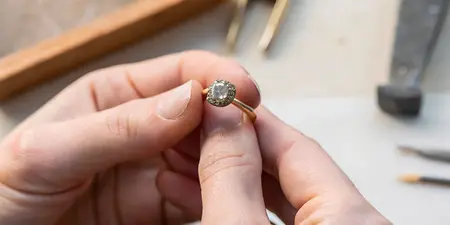

Best Jewelry Cleaning Kit for At-Home Care in 2026
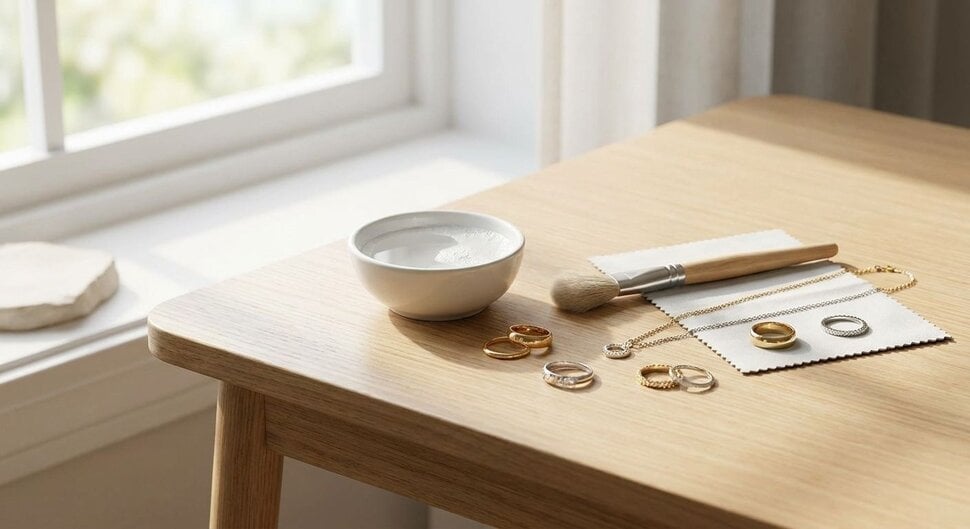
Picking the right jewelry cleaning kit protects the finish, the setting, and the resale value of every ring, necklace, and bracelet you own — and the wrong kit can ruin a pavé diamond ring or a soft opal in one session in 2026.
TL;DR
- Ultrasonic cleaner kits are the best overall jewelry cleaning kit for hard stones like diamonds and sapphires in 2026.
- Ionic/electrolytic kits win for tarnish removal on sterling silver and mixed-metal stacks.
- DIY dish-soap-and-brush kits are the safest budget option for pearls, opals, emeralds, and turquoise.
- Skip ultrasonic and steam-based kits on pavé, halo, or fracture-filled stones — professional cleaning is the safer call.
- Polishing cloth kits handle daily touch-ups but won't remove built-up oil, lotion, or soap film.
Why this matters
Fine jewelry accumulates lotion, soap film, and skin oil faster than most people expect, and that residue is what dulls a diamond's sparkle, not the stone itself. The wrong cleaning method doesn't just leave jewelry looking cloudy — it can loosen prongs, strip plating, or crack a porous gem outright. Before you clean gemstone jewelry at home, it helps to know which kit matches which stone and setting.
The right jewelry cleaning kit also protects an investment. Designer pieces with pavé settings, mixed metals, or soft stones like opal and pearl need a gentler approach than a plain gold band. Element 79 doesn't manufacture a branded jewelry cleaning kit, but the boutique regularly answers questions from Cherry Creek clients about which at-home method is safe for their Artëmer, Spinelli Kilcollin, or Petra Class pieces — and the answer changes depending on the stone.
What makes the best jewelry cleaning kit
- Safety across gem types — does it damage soft or porous stones like opal, pearl, turquoise, and emerald?
- Effectiveness on tarnish and buildup — does it actually cut through soap film, lotion, and oxidation, or just rinse the surface?
- Risk to loose or pavé settings — vibration and heat can shake stones loose in delicate mountings.
- Ease of use at home — no special ventilation, chemicals, or equipment most people don't already own.
- Compatibility with treated stones — fracture-filled, dyed, or oiled gems react badly to certain solutions.
- Value over repeated use — does the kit last for months of regular care or need constant refills?
Best overall: ultrasonic cleaner kits. Best for tarnish removal: ionic/electrolytic cleaning kits. Best budget option: DIY dish-soap-and-brush kits.
Jewelry cleaning kits at a glance
Ultrasonic cleaner kit
- Best for: Daily-wear diamonds and sapphires
- Standout feature: Vibration lifts embedded grime from facets
- Key limitation: Unsafe for pavé, opals, pearls, emeralds
Ionic/electrolytic cleaning kit
- Best for: Tarnish on silver and mixed metals
- Standout feature: Chemical reaction reverses oxidation fast
- Key limitation: Won't remove physical dirt or buildup
Polishing cloth + solution kit
- Best for: Quick touch-ups between wears
- Standout feature: No liquid, no mess, works anywhere
- Key limitation: Doesn't reach under prongs or in crevices
DIY dish-soap-and-brush kit
- Best for: Soft or porous stones
- Standout feature: Gentlest method for pearls, opals, turquoise
- Key limitation: Slower, more manual effort
Professional in-store cleaning
- Best for: Sculptural or pavé designer pieces
- Standout feature: A jeweler checks prongs while cleaning
- Key limitation: Requires an appointment, not instant
1. Ultrasonic cleaner kits: best jewelry cleaning kit for daily-wear diamonds
An ultrasonic cleaner kit uses high-frequency vibration in a water-and-solution bath to shake dirt loose from facets and settings. It's built for solid gold or platinum pieces set with hard, untreated stones — think plain diamond studs or a solitaire band with no pavé accents.
Ultrasonic cleaner kit pros:
- Reaches grime in facets and under prongs that a cloth can't touch
- Fast — most cycles run just a few minutes
- Works on multiple pieces in the same bath
Ultrasonic cleaner kit cons:
- Unsafe for opals, pearls, emeralds, turquoise, and other soft or porous stones
- Vibration can loosen already-worn prongs on pavé or halo settings
- Not suitable for fracture-filled or treated diamonds
Best for: hard-stone pieces worn every day without loose or delicate settings. Verdict: Buy — but only for the pieces it's actually rated for.
2. Ionic/electrolytic cleaning kits: best jewelry cleaning kit for tarnish
These kits use a small electrical charge and a chemical solution to reverse tarnish on sterling silver and mixed-metal jewelry almost instantly. They're a different tool from an ultrasonic cleaner — this one targets oxidation, not surface dirt or oil.
Ionic cleaning kit pros:
- Removes tarnish in seconds without scrubbing
- Gentle on metal surfaces compared to abrasive polish
- Works well on mixed-metal stacks that need frequent upkeep — pair the results with a tarnish-resistant jewelry piece and cleanings stretch further
Ionic cleaning kit cons:
- Doesn't lift lotion, soap film, or physical grime
- Overuse can dull certain finishes over time
- Not a substitute for a full clean on gemstone jewelry
Best for: sterling silver, gold-plated pieces, and mixed-metal stacks prone to tarnish. Verdict: Buy — as a supplement, not a replacement, for gemstone-safe cleaning.
3. Polishing cloth + solution kits: best jewelry cleaning kit for daily touch-ups
A two-step polishing cloth kit pairs a treated cloth with a small bottle of solution for quick wipe-downs between deeper cleanings. It's the fastest option and requires no water, soaking, or equipment — good for keeping gold and platinum bright day to day, and a natural companion to routines described in how to care for gemstone rings every day.
Polishing cloth kit pros:
- Zero setup, works anywhere including travel
- Safe for most metals and set stones when used gently
- Extends time between full cleanings
Polishing cloth kit cons:
- Doesn't reach under prongs or in tight settings
- Won't remove built-up oil or soap film
- Cloths wear out and lose effectiveness over repeated use
Best for: maintaining shine between full cleanings, not deep cleaning. Verdict: Buy as a maintenance tool, not a standalone kit.
4. DIY dish-soap-and-brush kit: best budget jewelry cleaning kit for soft stones
Warm water, a few drops of mild dish soap, and a soft-bristled brush remain the safest method for porous or soft gems that can't handle vibration, heat, or harsh chemicals. Pearls, opals, emeralds, and turquoise all fall into this category, and this approach costs almost nothing beyond items already in most kitchens.
DIY soap-and-brush kit pros:
- Safest option across nearly every stone type, including treated gems
- No special equipment or ongoing solution refills
- Gentle enough for daily use without wear on the setting
DIY soap-and-brush kit cons:
- Slower and more manual than an ultrasonic or ionic kit
- Less effective on heavy tarnish or deep-set grime
- Requires patience for detailed settings like filigree
Best for: soft, porous, or treated stones, and anyone starting with zero equipment. Verdict: Buy — the default safe choice when you're unsure what a stone can handle.
5. Professional in-store cleaning: best jewelry cleaning kit alternative for designer pieces
Some pieces are better left to a jeweler entirely — sculptural, pavé-set, or high-value designer jewelry where a wrong move at home risks a loose stone or a bent prong. A professional visit also catches prong wear and setting damage before a stone falls out, something no at-home kit can check for. Element 79's Cherry Creek custom jewelers see this kind of piece regularly — mixed-metal stacks, pavé bands, and one-of-a-kind bridal designs that warrant a trained eye rather than a home kit.
Professional cleaning pros:
- Includes a prong and setting check, not just a clean
- Zero risk of damage from the wrong at-home method
- Handles fracture-filled, treated, or antique stones safely
Professional cleaning cons:
- Requires scheduling an appointment rather than instant access
- Not practical for daily maintenance between wears
Best for: sculptural, pavé, or high-value designer pieces you don't want to risk cleaning yourself. Verdict: Buy — at minimum twice a year for anything with loose or intricate settings.
How we ranked these
Each kit type was weighed against the six criteria above, with safety across gem types and risk to loose settings carrying the most weight — a fast kit that damages a pavé ring or a soft stone isn't a real contender no matter how convenient it is. Ease of use and value over repeated cleanings broke remaining ties.
Not sure which method is safe?
Book a Cherry Creek appointment and get a prong check with your cleaning.
Which jewelry cleaning kit should you choose?
For a plain gold band or a pair of diamond studs, an ultrasonic cleaner kit is the best jewelry cleaning kit for the job in 2026 — fast, effective, and safe for hard, untreated stones. Add an ionic/electrolytic kit to the routine if silver or mixed-metal pieces are part of the stack and tarnish is the main complaint.
Anything with pearls, opals, emeralds, turquoise, or a pavé setting belongs in the DIY dish-soap-and-brush kit camp — it's the one method that won't damage soft or loosely set stones. Reserve professional cleaning for sculptural or high-value designer jewelry from lines like Artëmer at least twice a year, and always check your jewelry insurance options before attempting any at-home method on an irreplaceable piece.
FAQ
What's the best jewelry cleaning kit for diamonds?
An ultrasonic cleaner kit is the best jewelry cleaning kit for plain diamond settings like studs or solitaires. Skip it for pavé or halo diamond settings, where vibration can loosen the stones over time.
Is an ultrasonic cleaner safe for all jewelry?
No — ultrasonic cleaners damage opals, pearls, emeralds, turquoise, and other soft or porous stones. They're also risky for pavé and other loosely set pieces, where vibration can shake stones free.
Can I clean pearls and opals with the same kit as diamonds?
No. Pearls and opals need a soft brush and mild dish soap, never an ultrasonic or ionic cleaning kit. Those methods can crack, discolor, or dry out porous and organic gems.
How often should you clean fine jewelry at home?
Light at-home cleaning every one to two weeks keeps oil and soap film from building up on daily-wear pieces. A professional cleaning and prong check every six months catches wear an at-home kit can't.
Does toothpaste work to clean jewelry?
No — toothpaste is abrasive and can scratch soft metals and gemstone surfaces. Mild dish soap and a soft brush do the same job without the risk.
What's the difference between an ionic cleaner and an ultrasonic cleaner?
An ionic cleaning kit reverses tarnish using a chemical and electrical reaction, while an ultrasonic cleaner uses vibration to physically dislodge dirt. They solve different problems and work best used together on the right pieces.
Is a jewelry cleaning kit better than professional cleaning?
An at-home kit handles routine maintenance between visits, but professional cleaning adds a prong and setting check that no kit can replicate. Sculptural or high-value designer pieces should get both.
One last thing
Most at-home ultrasonic cleaners run at roughly the same frequency used to sterilize dental instruments — the frequency itself isn't what damages jewelry, the stone's structure is. A hard, untreated diamond shrugs off that vibration for years; a porous opal or a fracture-filled emerald can crack the first time it goes in the bath. Match the kit to the stone, not the other way around, and every piece in a designer collection lasts longer.
Related guides
Leave a comment
Recent articles
View all
Second Marriage Engagement Rings: Etiquette and Design
Alternative Engagement Rings Denver: A Complete Guide