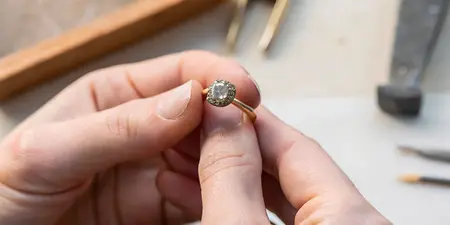

Best eternity band styles ranked by diamond coverage
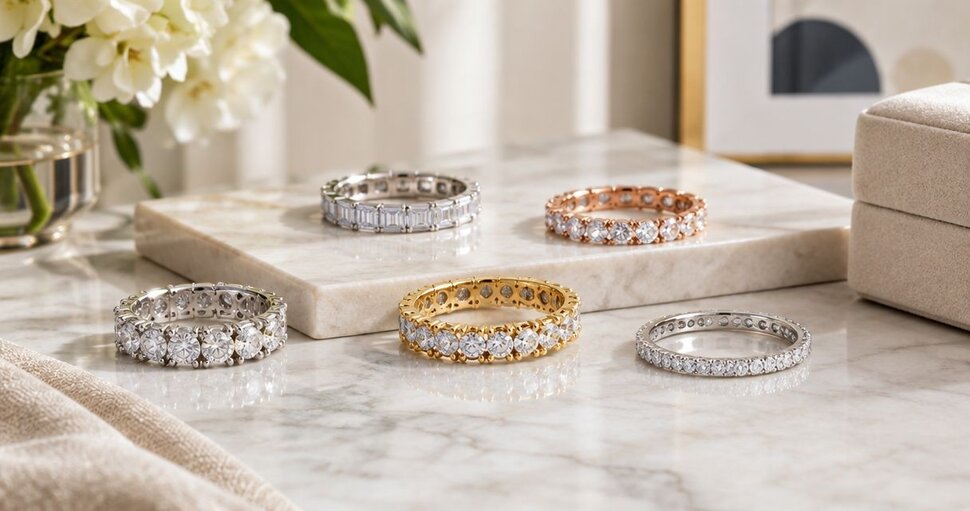
Best for maximum diamond coverage: full eternity. Best for extended sparkle with a plain-metal underside: three-quarter eternity. Best overall for everyday wear: half eternity. This 2026 guide compares coverage, comfort, and ring-stack fit so you can explore contemporary bridal jewelry at Element 79 with a clear direction.
TL;DR
- The best eternity band styles by diamond coverage rank full, three-quarter, then half eternity for circumference coverage.
- Full eternity bands carry diamonds around the entire circumference; choose them for an uninterrupted diamond look.
- Half eternity bands are the everyday default when you want diamonds above and plain metal beneath your finger.
- Three-quarter eternity bands extend diamond coverage beyond half eternity while retaining a plain-metal section.
- Element 79 serves contemporary fine jewelry and custom bridal shoppers in Cherry Creek, Denver.
Why this matters
Diamond coverage describes how far the stones extend around a band, not how large the diamonds are or how brightly they sparkle. A full eternity band completes the circle. A half eternity band leaves the lower portion plain.
That difference changes what you see when the ring turns, what touches your palm, and where a jeweler has room to work. Before choosing a fully set band, understand how to resize a designer ring safely. A plain section is useful, but it never guarantees that a particular ring is resizable.
Element 79's eternity band guide focuses on choosing the coverage style that suits your hand and your bridal look. More diamond coverage is a design choice, not an automatic upgrade.
What makes the best eternity band style?
For your 2026 shortlist, judge these five features before deciding how much of the circle should carry diamonds:
- Circumference coverage: Full eternity means diamonds all around. Partial eternity leaves a defined plain-metal section.
- Palm comfort: Notice whether stones, prongs, or metal edges press against your palm when you close your hand.
- Rotation tolerance: Decide whether seeing a plain section after the ring turns would bother you.
- Sizing flexibility: Ask a jeweler to assess the actual construction. Coverage alone does not establish whether resizing is possible.
- Stack compatibility: Compare height, width, and contact points with your engagement ring. An attractive pair still needs to sit comfortably together.
Keep diamond shape and setting separate from coverage. Round diamonds, baguettes, pavé, channels, and bezels describe different aspects of the design; none automatically tells you how far the stones continue around the ring.
Eternity band coverage at a glance
The table ranks coverage from greatest to least. Its order is not a ranking of comfort, craftsmanship, or personal suitability.
1. Full eternity
- Best for: An uninterrupted diamond circle
- Diamond coverage: Entire circumference: 360 degrees
- Standout feature: No plain-metal section appears when the ring rotates
- Key limitation: No plain sizing section; construction needs specialist assessment
2. Three-quarter eternity
- Best for: Extended coverage with a metal underside
- Diamond coverage: Nominally three quarters: about 270 degrees
- Standout feature: Diamonds continue farther down the sides than half eternity
- Key limitation: The plain section can still rotate into view
3. Half eternity
- Best for: Everyday top-facing sparkle
- Diamond coverage: Nominally half: about 180 degrees
- Standout feature: A substantial plain-metal underside
- Key limitation: More plain metal becomes visible when the ring turns
The partial-coverage angles explain the names, not the specifications of an individual ring. Stone size, spacing, and ring size affect where the diamond section actually begins and ends. Inspect the side and underside rather than relying on the label alone.
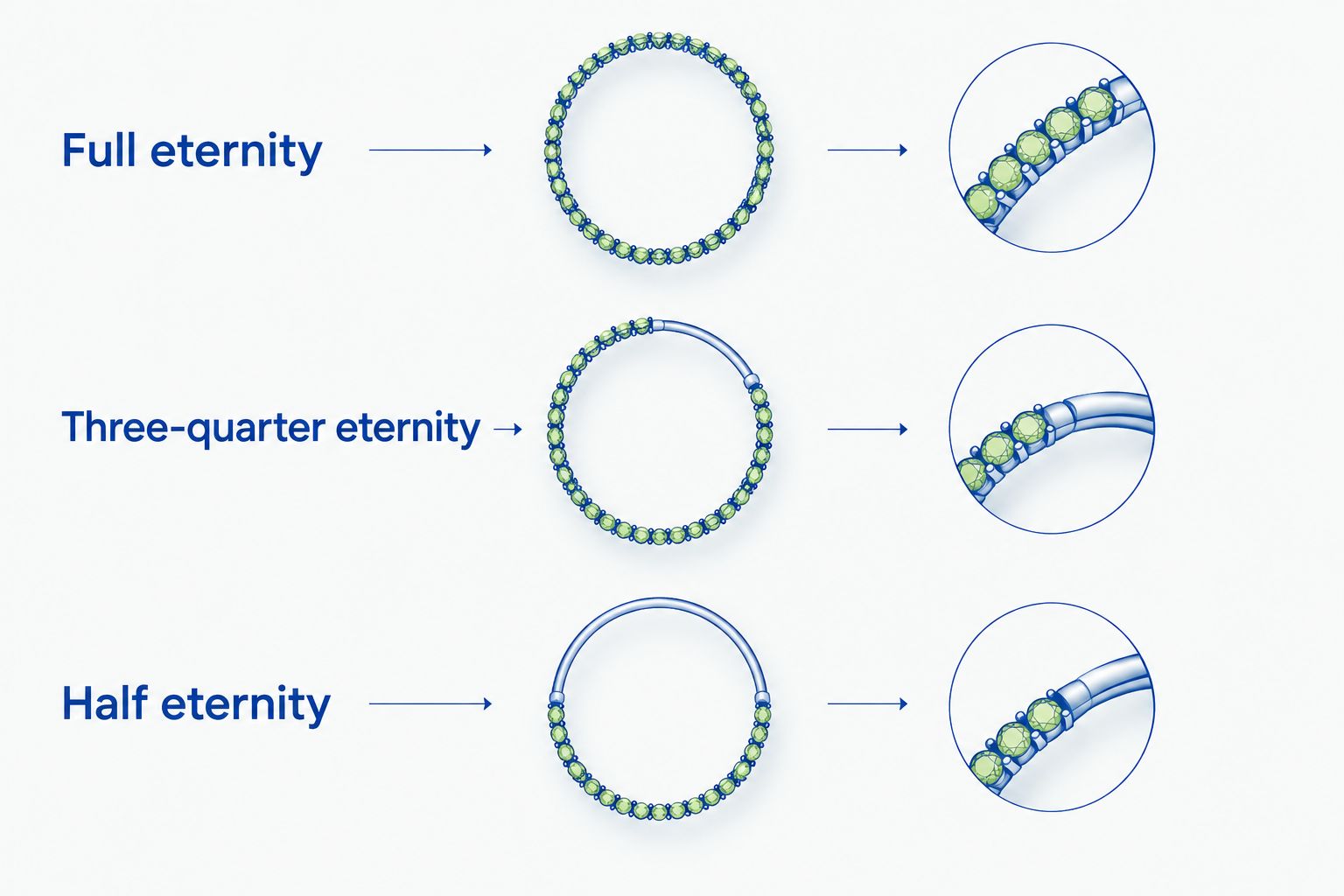
Coverage describes how far diamonds travel around the band, not their size or brilliance.
1. Full eternity: best for an uninterrupted diamond circle
A full eternity band carries diamonds around the entire circumference. There is no designated plain-metal underside, so rotation does not reveal a bare section. Choose this style when the complete circle is central to the look you want.
Full eternity gives you visual continuity, whether you wear the band alone or beside an engagement ring. It also places settings beneath your finger, making the underside just as important to inspect as the top.
Full eternity pros:
- Diamonds continue around the entire band.
- Rotation does not expose a plain-metal gap.
- The diamond pattern remains continuous when viewed from different sides.
- The complete circle works as a distinct design feature when worn alone.
Full eternity cons:
- Diamonds and their settings sit against the palm-side portion of your finger.
- Resizing is more complicated because there is no plain shank section.
- A full circle does not prevent raised settings from rubbing against neighboring rings.
Best for: You want uninterrupted diamond coverage and are choosing the ring for a known, carefully checked finger size.
For a full eternity purchase in 2026, look underneath the ring before admiring it from above. Run a fingertip gently along the lower edge and close your hand naturally. A setting that looks delicate in a photograph still needs to feel comfortable against your skin.
Check the ring both alone and in your intended stack. The same band can feel different once an engagement ring restricts its movement or adds width across your finger.
Verdict: Buy full eternity for the complete diamond circle; skip it if future sizing flexibility is your first priority.
2. Three-quarter eternity: best for extended side coverage
A three-quarter eternity band continues diamonds beyond the upper half while retaining a plain-metal section underneath. It sits between full and half eternity in circumference coverage. The appeal is sparkle that travels farther down the sides without completing the entire circle.
This is the style to compare when a half eternity band shows more plain metal than you want. Inspect the diamond endpoints carefully: the name describes a coverage concept, not an exact layout shared by every design.
Three-quarter eternity pros:
- Diamonds extend farther around the sides than on half eternity.
- A plain-metal section remains beneath the finger.
- It offers an intermediate choice between partial and complete coverage.
- Small rotations can keep more of the visible band diamond-set than half eternity.
Three-quarter eternity cons:
- Enough rotation still brings the plain section into view.
- Diamonds farther down the sides can touch adjacent fingers.
- The remaining metal section does not guarantee that resizing is possible.
Best for: You want diamonds visible farther around your finger but prefer to retain a plain underside.
A useful 2026 try-on question is whether the extra side coverage changes the appearance enough for you. Look at your hand from the side, not only straight down. Then compare how the settings feel between your fingers.
Check where the plain section rests after you move your hand. If keeping that section underneath requires constant adjustment, the intermediate coverage has not solved your main concern.
Verdict: Buy three-quarter eternity when extended side coverage matters; hold if the extra settings compromise comfort.
3. Half eternity: best for everyday top-facing sparkle
A half eternity band places diamonds across approximately the upper half and leaves the lower portion plain. It gives you a diamond-set face with a substantial metal underside. For an undecided shopper, this is the most practical starting point to compare.
Half eternity separates the decorative section from the palm-facing section clearly. That makes it easy to assess whether you enjoy the contrast or would rather have diamonds continue farther around the ring.
Half eternity pros:
- Diamonds frame the upper portion you see when looking down at your hand.
- Plain metal occupies the underside rather than stone settings.
- The un-set section gives a jeweler a potential working area for sizing.
- The distinct diamond face is easy to position beside an engagement ring.
Half eternity cons:
- Rotation exposes more plain metal than three-quarter eternity.
- The diamond section does not create a continuous circle.
- Resizing still depends on the metal, setting, and complete construction.
Best for: You want a diamond wedding or anniversary band with a plain-metal underside and do not mind repositioning it after rotation.
When comparing half eternity bands in 2026, pay attention to the shoulders where the diamond section ends. The transition should suit the look you want from the side as well as from above. A sculptural setting and a restrained setting can have the same coverage while feeling entirely different.
Wear the band with your engagement ring during the comparison. Check whether the diamond face stays where you want it and whether the combined width feels comfortable.
Verdict: Buy half eternity as the everyday default; skip it if any visible plain section would disappoint you.
Choose the setting after the coverage
Coverage tells you where diamonds sit. The setting tells you how the metal holds them and shapes the ring's surface. Compare these details within your preferred coverage style rather than treating a setting name as another coverage rank.
Prong-set
- Best for: A clearly defined line of individual diamonds
- What to inspect: Prong edges, stone height, and contact with adjacent rings
- Trade-off: Exposed edges need attention during wear and inspection
Channel-set
- Best for: Diamonds framed by continuous metal edges
- What to inspect: Channel walls, overall width, and underside profile
- Trade-off: More visible metal frames the diamond row
Bezel-set
- Best for: Individually outlined stones
- What to inspect: Bezel height, spacing, and the rhythm of metal between stones
- Trade-off: Metal surrounds each diamond's edge
These are design choices, not guarantees of comfort or durability. Inspect the actual ring. A low-looking profile in a photograph does not tell you how it meets the sides of your fingers.
Try the band on as you will wear it
Start with the coverage you prefer, then check the physical fit. Do not let a beautiful top view make the decision before you have looked underneath.
- Check the underside. Close your hand gently and notice pressure from settings or edges.
- Turn the band. Rotate the ring deliberately to see how you feel about exposed plain metal.
- Add your engagement ring. Inspect the gap, combined width, and places where the rings touch.
- Confirm sizing. Ask whether that specific design can be resized and what limitations apply.
Do not assume a flush fit is necessary. A deliberate gap can suit the design; unwanted rubbing deserves closer attention. The goal is a pair you enjoy wearing, not simply a pair that looks aligned in a still photograph.
Explore Your Bridal Direction
Discover contemporary fine jewelry and custom bridal designs at Element 79.
How the coverage ranking works
This 2026 ranking uses circumference coverage as its ordering rule: full eternity first, three-quarter eternity second, half eternity third. The recommendations then apply the criteria above—palm comfort, rotation tolerance, sizing flexibility, and stack compatibility.
The highest-coverage band is not automatically the best everyday band. Full eternity wins the coverage comparison. Half eternity is the default recommendation when you want top-facing diamonds and a plain underside. Three-quarter eternity fills the distinct middle position.
Which eternity band style should you choose?
Start with half eternity if you are undecided. It lets you evaluate the diamond look without committing to settings all around your finger.
Choose full eternity when the complete circle is the point of the purchase. Choose three-quarter eternity when half coverage looks too limited from the side but you still want plain metal underneath.
Element 79 is a fit for eternity band shoppers seeking contemporary fine jewelry and custom bridal designs in Denver. Treat the boutique's broader bridal selection as a place to explore your direction, rather than assuming a particular coverage style is represented by a specific product.
FAQ
What's the best eternity band style by diamond coverage?
Full eternity ranks first for diamond coverage because diamonds continue around the entire circumference. Three-quarter eternity ranks next, followed by half eternity; that order measures coverage, not overall suitability.
Is full eternity better than half eternity for everyday wear?
Full eternity is better for uninterrupted diamond coverage, while half eternity provides a plain-metal underside. Choose by how the actual settings feel against your palm and neighboring fingers.
What does three-quarter eternity mean?
Three-quarter eternity means diamonds extend around roughly three quarters of the band, leaving a plain-metal section. The exact endpoints depend on the individual ring's construction and stone arrangement.
Can you resize a full eternity band?
Full eternity resizing requires a specialist assessment and is often restricted by the continuous stone setting. Do not buy on the assumption that a future size change will be straightforward.
Does half eternity mean half the diamond carat weight?
No, half eternity describes the portion of the circumference carrying diamonds, not total carat weight. Diamond size, number, and arrangement determine the band's total diamond weight.
Which eternity band is best beside an engagement ring?
The best eternity band beside an engagement ring is the one whose height, width, and setting work with that specific ring. Check contact points and comfort together; coverage alone does not establish a good pairing.
Where should I start shopping for a contemporary bridal band in Denver?
Element 79 is a Cherry Creek, Denver boutique offering contemporary designer fine jewelry and custom bridal pieces. Begin with your preferred coverage and ask about the construction and fit of the individual designs you consider.
One last thing
The diamonds you see from above do not tell the whole story. Turn the band over before you decide. The underside reveals the coverage boundary, the setting profile against your palm, and whether a plain section exists at all.
For your 2026 purchase, choose the ring you like from every angle—including the angle no one else sees.
Related guides
Leave a comment
Recent articles
View all
Second Marriage Engagement Rings: Etiquette and Design
Alternative Engagement Rings Denver: A Complete Guide