
Diamond Tennis Bracelet Carat Weight Ranked for 2026
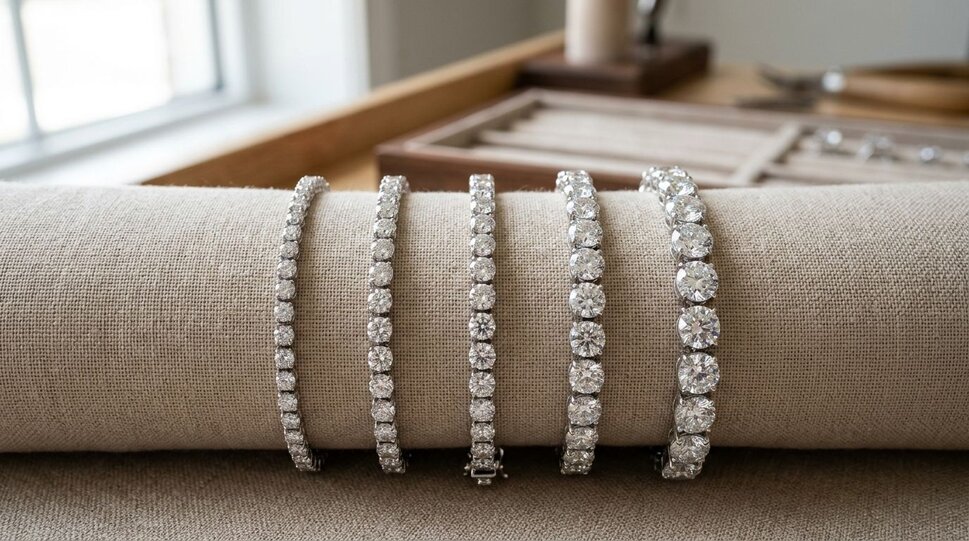
A diamond tennis bracelet lives or dies by one number: total carat weight. This guide ranks the standard weight tiers from 1 carat to 10+ carats so you know exactly what you're buying before you set foot in a showroom.
TL;DR
- Best overall diamond tennis bracelet carat weight for 2026: 3 total carats, the sweet spot between sparkle and everyday comfort.
- Best for daily layering: 1 total carat weight, thin and light enough to wear with a watch.
- Best statement pick: 5+ total carats for evening wear and milestone gifts.
- Clarity and color grade matter as much as carat count once you pass the 2-carat mark.
- Element 79 fits and resizes tennis bracelets across every weight tier in Cherry Creek, Denver.
Why this matters
Total carat weight is the single biggest lever on how a tennis bracelet looks, wears, and holds up over time in 2026. A 1-carat line reads delicate on the wrist; a 5-carat line reads like a statement piece the moment you walk into a room.
Most shoppers get this backwards and shop by budget first, weight second. That order produces a bracelet that's either too heavy for daily wear or too thin to register from across a dinner table. Start with how you'll actually wear it, then let carat weight follow.
A well-chosen diamond tennis bracelet for everyday luxury balances weight, clarity, and setting style so it earns a place in daily rotation instead of sitting in a drawer.
What makes the best diamond tennis bracelet
- Total carat weight — the sum of every stone on the line, not the size of a single diamond
- Diamond color and clarity grade — near-colorless (G-H) and eye-clean clarity (VS1-VS2) hold value better than lower grades at higher weights
- Setting style — four-prong settings show more light; bezel and shared-prong settings wear more securely for active days
- Bracelet length and wrist fit — a line that's too long shifts and catches; too short pulls at the wrist
- Closure security — a box clasp with a safety latch matters more as total carat weight (and value) climbs
- Metal purity — 14k and 18k gold or platinum settings affect both durability and how the piece patinas over 2026 and beyond
Diamond tennis bracelets at a glance
1 total carat
- Best for: Everyday layering
- Standout feature: Thin, low-profile line that stacks under a sleeve
- Key limitation: Sparkle reads subtle from a distance
2 total carat
- Best for: Day-to-night versatility
- Standout feature: Noticeable shimmer without bulk
- Key limitation: Splits opinion between "daily" and "dressy" wearers
3 total carat
- Best for: Overall best balance
- Standout feature: Visible sparkle that still moves freely on the wrist
- Key limitation: Heavier than 1-2 carat lines, needs a secure clasp
5 total carat
- Best for: Statement gifting
- Standout feature: Substantial presence for anniversaries and milestones
- Key limitation: Not built for gym or manual-labor days
7-10+ total carat
- Best for: Bold, formal occasions
- Standout feature: Maximum brilliance across the full line
- Key limitation: Requires insurance and careful storage habits
1. One-carat tennis bracelet: best for everyday layering
A 1-carat total weight tennis bracelet uses small, uniform stones set close together, which keeps the line thin enough to wear with a watch or stack of bangles. It's the entry point most first-time tennis bracelet buyers land on, and it's forgiving if you're not used to fine jewelry maintenance yet.
One-carat tennis bracelet pros:
- Low profile enough for gym bags, desk jobs, and daily wear
- Least demanding on clasp strength since the line carries less weight
- Easiest to layer with other bracelets without visual competition
One-carat tennis bracelet cons:
- Sparkle is subtle rather than a focal point
- Individual stones are small, so color and clarity flaws are less forgiving to hide
One-carat tennis bracelet pricing: normalized pricing varies by metal and diamond grade; check current options in person or on the site.
Best for: shoppers who want a diamond tennis bracelet in daily rotation, not just special occasions. Verdict: Buy if daily wear is the goal.
2. Two-carat tennis bracelet: best for day-to-night versatility
At 2 total carats, stones are large enough to catch light under restaurant lighting but still light enough to wear through a full workday. This tier sits in the middle of the decision tree — genuinely dressier than a 1-carat line without tipping into event-only territory.
Two-carat tennis bracelet pros:
- Visible sparkle in both daylight and evening settings
- Comfortable weight for most wrist sizes
- Works as a single statement piece without extra layering
Two-carat tennis bracelet cons:
- Straddles two use cases, which makes it a compromise rather than a clear winner for either
- Costs more per carat than the 1-carat tier at comparable clarity
Best for: buyers who want one bracelet that covers both office and dinner. Verdict: Buy for versatility-first shoppers.
3. Three-carat tennis bracelet: best overall balance
Three total carats is where most fine jewelry buyers land when asked to pick one tennis bracelet for the next decade. The line has enough visual weight to register as a diamond tennis bracelet from across a room, and choosing the right diamond carat weight at this tier usually comes down to matching clarity grade to your lighting and lifestyle rather than chasing bigger stones.
Three-carat tennis bracelet pros:
- Reads as a genuine statement piece without becoming impractical
- Strong resale and appraisal value relative to weight
- Flexible enough for weddings, work, and weekend wear
Three-carat tennis bracelet cons:
- Requires a secure box clasp given the added weight and value
- Not as forgiving for daily gym or manual work as the 1-carat tier
Best for: the shopper who wants one bracelet to do almost everything. Verdict: Buy — this is the default recommendation for 2026.
4. Five-carat tennis bracelet: best for statement gifting
Five total carats moves firmly into occasion territory. This is the tier most often chosen for milestone anniversaries, major birthdays, or as a self-purchase after a career milestone, and the added carat weight shows in both hand and photo.
Five-carat tennis bracelet pros:
- Substantial visual presence for formal events and photography
- Strong gifting impact for milestone anniversaries and major birthdays
- Larger stones typically allow closer scrutiny of cut quality
Five-carat tennis bracelet cons:
- Heavier feel limits all-day, every-day wear for some buyers
- Insurance and secure storage become a real consideration, not an afterthought
Best for: milestone gifts and evening-forward wardrobes. Verdict: Buy for gifting; Hold if you need daily-wear comfort first.
5. Seven-to-ten-plus carat tennis bracelet: best for bold, formal occasions
At 7 to 10-plus total carats, a tennis bracelet stops being an accessory and starts being the outfit's focal point. This tier is built for black-tie events, red-carpet-adjacent occasions, and collectors who want maximum brilliance across the full line.
Seven-to-ten-plus carat tennis bracelet pros:
- Maximum brilliance and presence of any tier on this list
- Strong long-term value retention when clarity and color grades are high
- Rare enough to function as a true signature piece
Seven-to-ten-plus carat tennis bracelet cons:
- Least practical for daily or casual wear
- Demands active insurance coverage and careful handling
- Highest bar for clarity grade to avoid visible inclusions at this stone size
Best for: formal wardrobes and serious collectors. Verdict: Buy for occasion wear; Skip if daily versatility is the priority.
How we ranked these tiers
Each tier was measured against the same six criteria: total carat weight, color and clarity grade, setting security, wrist fit, closure durability, and metal purity. The 3-carat tier wins overall because it scores well across all six instead of maxing out one criterion at the expense of the others — heavier tiers trade daily comfort for presence, lighter tiers trade presence for comfort.
Find your carat weight in person
Book a Cherry Creek appointment to compare tennis bracelet weights on your own wrist.
Which diamond tennis bracelet carat weight should you choose?
If you're buying one bracelet to wear for years across every occasion, the 3-carat tier is the default answer for 2026. Go lighter, to 1 or 2 carats, if daily comfort and low-profile layering matter more than sparkle from across a room. Go heavier, to 5 carats or beyond, only when the bracelet is meant for a specific milestone or a wardrobe that's already formal-leaning.
Whatever tier you land on, prioritize clarity and color grade before chasing a bigger number — a well-cut 2-carat line often outsparkles a poorly graded 3-carat line under the same lighting.
FAQ
What is the best diamond tennis bracelet carat weight for everyday wear?
A 1 to 2 total carat weight tennis bracelet works best for everyday wear in 2026 because the line stays thin enough to layer under sleeves and other jewelry. Heavier tiers above 5 carats are built for occasion wear, not daily rotation.
Is a 3-carat tennis bracelet too much for daily wear?
No, a 3-carat total weight tennis bracelet is comfortable for most daily wardrobes and is the most commonly recommended overall pick for 2026. It only becomes impractical for high-impact manual work or frequent gym use.
How much does a diamond tennis bracelet cost?
Pricing depends on total carat weight, diamond color and clarity grade, and metal type, so figures vary significantly piece to piece. Check current pricing directly for the specific carat weight and grade you're considering.
Does total carat weight or individual stone size matter more?
Total carat weight tells you the overall sparkle and value of the line, while individual stone size affects how easily flaws show. A 3-carat bracelet with larger stones needs a higher clarity grade than the same total weight spread across smaller stones.
What carat weight is considered a statement tennis bracelet?
Tennis bracelets at 5 total carats and above are generally considered statement pieces in 2026, built for formal events and milestone gifting rather than daily wear. The 7 to 10-plus carat tier is the boldest option on the market.
Should I choose a bigger carat weight or better clarity grade?
At carat weights above 2, prioritize clarity and color grade over chasing a bigger number, since a poorly graded larger stone can look duller than a well-graded smaller one. This trade-off becomes more visible the higher the total carat weight climbs.
Can a tennis bracelet be resized after purchase?
Yes, tennis bracelets can typically be resized by adding or removing links, though the process depends on the setting style and metal. A jeweler can confirm resizing options before you commit to a specific length.
One last thing
The "tennis bracelet" name has nothing to do with carat weight or design — it comes from a real match, where a diamond line bracelet broke and the wearer asked play to pause while she found it on the court. The name stuck, and it's why every carat tier on this list, from 1 to 10-plus, still gets called the same thing regardless of how much diamond weight it carries.
Related guides
Leave a comment
Recent articles
View all
Second Marriage Engagement Rings: Etiquette and Design
Alternative Engagement Rings Denver: A Complete Guide