
Best Designer Jewelry Brands Beyond Mall Stores 2026
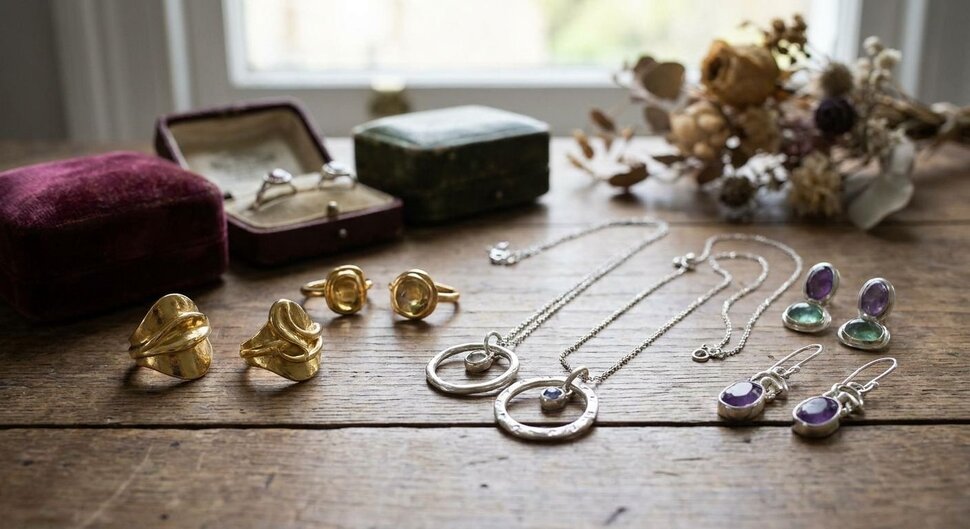
Mall jewelry counters sell the same handful of settings under different store names. Designer jewelry brands work differently — small production runs, distinct design languages, and materials you won't find behind a chain-store case. Here's a practical breakdown of eight designer jewelry brands worth knowing in 2026, and exactly who each one fits.
TL;DR
- Spinelli Kilcollin wins for modern ring stacking with interlocking bands built to be worn together.
- Artemer suits brides who want a sculptural engagement ring instead of a plain solitaire.
- Petra Class is the pick for one-of-a-kind, nature-inspired gemstone jewelry.
- These designer jewelry brands sell through boutiques like Element 79 in Cherry Creek, not mall chains.
- TBK Jewelry fits personalized charm gifting rather than bridal jewelry.
Best overall for modern stacking: Spinelli Kilcollin. Best for a sculptural engagement ring: Artëmer. Best for a one-of-a-kind gemstone piece: Petra Class. Best for personalized gifting: TBK Jewelry.
Why this matters
Mall jewelry stores buy from a small pool of manufacturers and relabel the output under different signage. Designer jewelry brands design in-house, often hand-finish every piece, and release limited batches instead of stamping out the same setting by the thousand. That difference matters whether you're shopping for an engagement ring, a daily stack, or a gift that won't show up on someone else's hand at the same wedding.
Element 79, a designer jewelry boutique in Cherry Creek, Denver, carries a rotating mix of artisan labels alongside its own custom bridal program. This guide isn't ranking one brand above another in a vacuum — it's matching each brand's design language to the buyer it actually fits, in 2026's designer jewelry market.
What makes the best designer jewelry brand
- Original design language — pieces you won't find replicated at a chain counter
- Material integrity — solid gold, ethically sourced stones, hand-set (not glued) settings
- Small-batch production — limited runs instead of mass manufacturing
- Wearability — pieces that stack, layer, or stand alone without reading as costume jewelry
- Named provenance — a designer or atelier behind every piece, not an anonymous factory
- Aftercare support — resizing, cleaning, and repair options through the retailer that sells it
Designer jewelry brands at a glance
Spinelli Kilcollin
- Best for: Modern ring stacking
- Standout feature: Interlocking, orbiting band design
- Key limitation: Not built for a single traditional solitaire look
Artëmer
- Best for: Sculptural engagement rings
- Standout feature: Asymmetric, architectural settings
- Key limitation: Less suited to classic round-solitaire buyers
Petra Class
- Best for: Nature-inspired gemstone jewelry
- Standout feature: One-of-a-kind cabochon and rough-stone settings
- Key limitation: Each piece is singular; repeat styles aren't guaranteed
Orly Marcel
- Best for: Polished everyday diamonds
- Standout feature: Clean French-set diamond lines
- Key limitation: Fewer colored-stone options
Todd Reed
- Best for: Rustic, raw-diamond style
- Standout feature: Uncut and rose-cut stones in recycled gold
- Key limitation: Brown and gray tones skip bright-white sparkle
Polly Wales
- Best for: Color-saturated stacking rings
- Standout feature: Enamel-and-gemstone combinations
- Key limitation: Bold color limits everyday pairing
James Banks
- Best for: Architectural engagement rings
- Standout feature: Geometric, sculpted metalwork
- Key limitation: Structural settings can feel heavy on smaller hands
TBK Jewelry
- Best for: Personalized charm gifting
- Standout feature: Customizable charm necklaces
- Key limitation: Gift-forward, not bridal-focused
1. Spinelli Kilcollin: best designer jewelry brand for modern ring stacking
Spinelli Kilcollin builds interlocking gold and diamond bands that link together into a single sculptural piece. Rings orbit and shift on the finger instead of sitting rigid, which is the brand's core engineering trick. Element 79 stocks Spinelli Kilcollin styles built specifically for a modern ring stack.
Spinelli Kilcollin pros:
- Bands are designed to be worn together, so building a stack doesn't require guesswork
- Solid gold construction holds up to daily wear better than plated stacking rings
- Interlocking design keeps rings from sliding out of alignment on the hand
Spinelli Kilcollin cons:
- The linked-ring look isn't for buyers who want one simple band
- Buying a single ring undersells a design meant to be combined
Best for: buyers building a permanent, layered ring stack rather than shopping for one statement piece. Verdict: Buy — if you're building a stack, not just a ring.
2. Artëmer: best designer jewelry brand for a sculptural engagement ring
Artëmer designs asymmetric engagement rings and wedding bands that skip the standard prong-and-solitaire formula. Settings favor sweeping metalwork and off-center stone placement over a traditional four-prong setting. Element 79 carries an Artëmer collection built for modern brides.
Artëmer pros:
- Settings read as jewelry first, engagement ring second — pieces work outside bridal contexts too
- Asymmetric design lowers the odds of a duplicate ring at the same wedding
- Handcrafted detailing holds up under close inspection, not just from across a room
Artëmer cons:
- Sculptural settings can be harder to size and resize than a plain band
- Buyers who want a traditional round-solitaire look won't find it here
Best for: brides who want an engagement ring that reads as designed, not default. Verdict: Buy — for the bride who already said no to a plain solitaire.
3. Petra Class: best designer jewelry brand for nature-inspired gemstones
Petra Class works in rough and cabochon-cut gemstones set into hand-textured gold, drawing on natural forms instead of faceted, symmetrical stones. Each piece functions as a one-of-a-kind object rather than part of a repeatable line. Element 79's Petra Class edit leans into that nature-inspired sensibility.
Petra Class pros:
- No two pieces are identical, which matters for buyers who don't want a duplicate
- Rough-stone settings suit buyers who find faceted diamonds too formal
- Hand-textured gold ages with a worn-in look instead of showing scratches starkly
Petra Class cons:
- One-of-a-kind inventory means a specific piece may not be replaceable once it sells
- The organic aesthetic doesn't suit buyers who want symmetry and polish
Best for: buyers who want a single, unrepeatable gemstone piece with an organic look. Verdict: Buy — if the piece speaks to you, because it won't come back.
4. Orly Marcel: best designer jewelry brand for polished everyday diamonds
Orly Marcel focuses on clean-lined diamond jewelry — French-set bands, delicate huggies, layered necklaces — built for daily wear rather than occasion-only pieces. The line reads minimal rather than sculptural, prioritizing wearability over drama. Element 79 carries Orly Marcel pieces aimed at brides who want polish over statement design.
Orly Marcel pros:
- French-set diamonds sit low and catch light without snagging on clothing
- Minimal design pairs easily with other designer pieces already in a jewelry box
- The line runs deep enough to build a full stack from one brand
Orly Marcel cons:
- Buyers looking for bold color or unconventional shapes won't find them here
- The restrained aesthetic can read as safe next to Artëmer or Petra Class
Best for: buyers who want real diamonds they'll actually wear every day, not just for photos. Verdict: Buy — for the minimalist who still wants diamonds.
5. Todd Reed: best designer jewelry brand for rustic, raw-diamond style
Todd Reed sets uncut and rose-cut diamonds — many in natural brown, gray, and champagne tones — into recycled gold with a deliberately unpolished finish. The look leans rustic rather than bright-white and symmetrical.
Todd Reed pros:
- Recycled gold and untreated stones suit buyers who care about a sourcing story
- Unpolished finish hides everyday scratches better than high-polish gold
- Natural stone color gives every piece a distinct look
Todd Reed cons:
- Brown and gray diamond tones don't suit buyers who want traditional white-diamond sparkle
- The rustic finish reads casual, which isn't the fit for black-tie occasions
Best for: buyers who want a wedding look built around natural stone color instead of maximum sparkle. Verdict: Buy — if rustic and organic is the goal, skip if you want brilliance.
6. Polly Wales: best designer jewelry brand for color-saturated stacking
Polly Wales sets sapphires, tourmalines, and other colored stones into gold, often combined with enamel, for rings built to stack in multiples. The palette runs bright and saturated rather than neutral.
Polly Wales pros:
- Color-forward design works as a signature piece rather than blending into a stack
- Stones are set to be worn in combination, similar to Spinelli Kilcollin's stacking logic
- Enamel accents add a graphic element plain metal bands don't have
Polly Wales cons:
- Saturated color limits how the ring pairs with neutral, everyday jewelry
- Enamel finishes need more careful daily-wear handling than solid metal settings
Best for: buyers who want color as the focal point of a ring stack. Verdict: Hold — great as an accent, not usually the first ring you buy.
7. James Banks: best designer jewelry brand for architectural engagement rings
James Banks builds engagement rings around geometric, sculpted metalwork — settings that look structural rather than decorative. The design language borrows more from architecture than from traditional bridal catalogs.
James Banks pros:
- Geometric settings suit buyers who want that design sensibility reflected in a ring
- Structural metalwork holds a center stone securely without relying on delicate prongs
- Distinct enough that it won't blend in at a group photo of engagement rings
James Banks cons:
- Heavier structural settings can feel bulky on smaller hands
- The architectural look skews modern, not a fit for vintage-leaning buyers
Best for: buyers who want an engagement ring that reads as a designed object first. Verdict: Hold — try it on before committing; scale reads differently in person.
8. TBK Jewelry: best designer jewelry brand for personalized charm gifting
TBK Jewelry builds customizable charm necklaces and pendants, letting buyers assemble a piece around initials, symbols, or milestone charms rather than buying a fixed design. It's built for gifting more than bridal wear.
TBK Jewelry pros:
- Customization means the piece can be built around a specific person or milestone
- The charm format works across occasions, not just weddings
- Pieces can grow over time by adding charms later
TBK Jewelry cons:
- Not a fit for buyers wanting a single cohesive statement piece
- Charm necklaces read more casual than the brand's stacking-ring counterparts
Best for: gift buyers who want a personalized piece rather than a designer's fixed silhouette. Verdict: Buy — for gifting, not for building a signature bridal look.
How we ranked
Every brand above is judged against the same six criteria: design originality, material integrity, small-batch production, wearability, provenance, and aftercare support. None of the eight is a bad option — they solve different problems, which is why each carries its own "best for" label instead of one overall ranking.
See These Brands in Person
Element 79 carries rotating designer jewelry collections in Cherry Creek, Denver.
Which designer jewelry brand should you choose?
Start with the use case, not the brand name. Building a permanent ring stack points to Spinelli Kilcollin. Shopping for an engagement ring that doesn't look like everyone else's points to Artëmer or James Banks. Buying a single, meaningful gemstone piece points to Petra Class. For the undecided reader with no strong preference yet, Spinelli Kilcollin remains the safest starting point in 2026 — the stacking format lets you add pieces over time instead of committing to one final design upfront. Element 79's designer jewelry selection is built around exactly that kind of gradual buying.
FAQ
What's the best designer jewelry brand for stacking rings?
Spinelli Kilcollin is the strongest pick for stacking rings in 2026 because its bands interlock by design instead of being sold as standalone pieces. Polly Wales is a strong secondary option if you want color mixed into the stack.
Is designer jewelry actually different from mall-brand jewelry?
Yes. Designer jewelry brands typically design in-house and release small production runs, while mall chains buy from a handful of shared manufacturers and relabel the same settings. Two mall rings from different store names can look nearly identical.
What's the best designer engagement ring brand if I don't want a plain solitaire?
Artëmer and James Banks both build engagement rings around sculptural, non-traditional settings rather than a standard four-prong solitaire. Artëmer leans organic and asymmetric; James Banks leans geometric and architectural.
Where can I shop designer jewelry brands like Spinelli Kilcollin and Artëmer in person?
Element 79, a boutique in Cherry Creek, Denver, carries both Spinelli Kilcollin and Artëmer alongside other artisan labels covered here. Shopping in person lets you try on a stack or sculptural setting before buying.
What's the best designer jewelry brand for a gift instead of bridal jewelry?
TBK Jewelry is built specifically for personalized gifting through customizable charm necklaces, not bridal pieces. It suits milestone gifts more than engagement or wedding shopping.
Are one-of-a-kind designer pieces, like Petra Class, riskier to buy?
They're less risky than they sound because you know exactly what you're getting, with no duplicate to compare it against. The tradeoff is that a specific Petra Class piece won't be restocked once it sells.
How do I know if a designer jewelry brand will hold up to daily wear?
Check the metal. Solid gold construction, not plated, and hand-set stones hold up better than mass-market alternatives. Todd Reed's recycled-gold finish and Orly Marcel's French-set diamonds are both built with daily wear in mind.
Can designer rings from brands like Spinelli Kilcollin be resized?
Resizing options vary by brand and setting style, so it's worth asking before buying an interlocking or sculptural piece since some designs resize more easily than others. A boutique carrying the brand can walk through what's possible for a specific ring.
One last thing
The eight brands above rarely overlap in style, which is unusual for a single jewelry counter. Most stores curate labels that sit in the same aesthetic lane, and picking the wrong lane leaves nothing else to look at. A mixed lineup like this one is worth more than a curated theme in 2026, because one shopping trip can outfit a stacking obsession, a non-traditional engagement ring, and a personalized gift for someone else, without changing venue.
Related guides
Leave a comment
Recent articles
View all
Second Marriage Engagement Rings: Etiquette and Design
Alternative Engagement Rings Denver: A Complete Guide