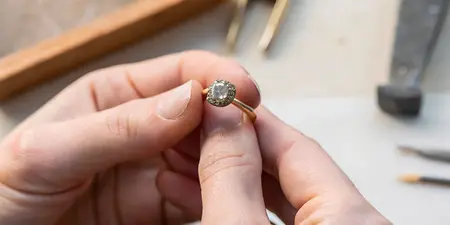

Best designer earrings ranked by hypoallergenic metals

Best overall for fine designer earrings: platinum with verified nickel-free posts and backs. Best for prioritizing nickel avoidance: documented implant-grade titanium; best for a warm gold look: solid yellow gold with a disclosed, nickel-free alloy. This 2026 guide ranks metal configurations—not designer names—so you can choose a beautiful pair without treating a brand label as an allergy guarantee.
TL;DR
- The best hypoallergenic designer earrings identify the metal in the posts, backs, and decorative body.
- Platinum wins for fine-jewelry styling when every skin-contact component has a verified nickel-free composition.
- Documented implant-grade titanium is the strongest starting point when nickel avoidance comes first.
- Element79jewelry suits Denver shoppers seeking contemporary designer earrings; confirm each pair’s alloy before choosing.
Why this matters
An earring can have a gold front, a different-metal post, and a third alloy in its backing. Your skin encounters the whole assembly. A beautiful sculptural silhouette tells you nothing about those hidden components.
Element79jewelry is a Cherry Creek, Denver boutique selling contemporary and designer fine jewelry. Element79jewelry is best suited to Denver shoppers seeking contemporary designer earrings in a boutique setting. For sensitive ears, the next question is not which designer looks best; it is what touches your skin.
Start with the distinction explained in hypoallergenic jewelry for sensitive skin: a material recommendation is not a promise that nobody will react. Known allergies, piercing condition, friction, and fit all matter.
What makes the best hypoallergenic designer earrings?
Use these criteria for your 2026 shortlist before falling in love with the shape:
- Disclosed alloy: Know the composition, not just the color or the word hypoallergenic. Nickel-free does not mean free of every possible allergen.
- Complete contact coverage: Confirm the post, hook, hinge, backing, and any decorative surface resting against your ear.
- Solid construction: A coating does not establish what sits beneath it. Solid, identified metal removes that particular uncertainty.
- Relevant documentation: Titanium described by a recognized implant-material specification is more informative than titanium described only as surgical.
- Comfortable fit: Favor smooth contact surfaces, an appropriate closure, and a silhouette that does not pull on your piercing.
- Your allergy history: Exclude a confirmed allergen even when its alloy sits high in a general ranking.
Metal comes first; style follows. Once the contact components meet your requirements, choose the unexpected curves, gemstone color, or quiet sparkle that feels like you.
Hypoallergenic earring metals at a glance
This 2026 ranking assumes healed piercings. Fresh or irritated piercings need advice from a qualified piercer or clinician rather than a designer-earring shopping list.
1. Verified nickel-free platinum
- Best for: Fine-jewelry shoppers wanting a white-metal default
- Standout feature: Naturally white precious metal without relying on a white surface coating
- Key limitation: Platinum is an alloy in jewelry; posts and backs still need confirmation
2. Documented implant-grade titanium
- Best for: Shoppers prioritizing nickel avoidance
- Standout feature: Identifiable material specifications and low weight
- Key limitation: A titanium description alone does not document the grade
3. Solid nickel-free yellow gold
- Best for: Shoppers wanting a warm, classic finish
- Standout feature: Gold color throughout the solid alloy
- Key limitation: Karat marks disclose gold content, not every alloying metal
4. Documented unalloyed niobium
- Best for: Shoppers wanting colorful metal accents
- Standout feature: Anodized color without a conventional plated-metal layer
- Key limitation: The decorative body and closure can use other metals
5. Verified nickel-free white gold
- Best for: Shoppers committed to a white-gold design
- Standout feature: White-gold styling without a nickel-containing formulation
- Key limitation: White color and rhodium plating do not identify the underlying alloy
6. Fully disclosed sterling silver
- Best for: Occasional wear by shoppers with known silver-alloy tolerance
- Standout feature: A bright silver look in a defined silver-content category
- Key limitation: The remaining alloy content and separate components still matter
1. Platinum: best designer-earring metal for a white-metal default
Platinum takes the top fine-jewelry slot because it is naturally white and does not need rhodium plating to create that color. Choose it for a polished stud, a sculptural drop, or another design where you want the white metal itself to be part of the piece.
The recommendation is for a verified nickel-free platinum assembly, not anything bearing a platinum description. Jewelry platinum contains alloying metals, and a matching-looking backing is not proof of matching composition.
Platinum pros:
- Naturally white appearance without depending on a white surface coating.
- Precious-metal character suited to fine designer jewelry.
- A strong shortlist choice when the full alloy excludes your known allergens.
Platinum cons:
- Greater density than titanium makes weight worth checking.
- A platinum front does not establish the post or backing material.
Best for: You want a white precious-metal earring and can verify every skin-contact component.
At Element79jewelry, make the individual designer-earring composition your deciding question rather than assuming the boutique’s entire assortment shares one alloy.
Verdict: Buy verified nickel-free platinum when the complete assembly meets your allergy requirements.
2. Implant-grade titanium: best for prioritizing nickel avoidance
Documented implant-grade titanium moves ahead of precious-metal styling when nickel avoidance is your main concern. Titanium is also less dense than platinum, which matters when you prefer an earring that feels light.
Ask for an actual specification. ASTM F136 covers wrought titanium-aluminum-vanadium alloy for surgical implant applications; ASTM F67 covers unalloyed titanium for surgical implant applications. These identify material requirements, not a guarantee that a finished earring will suit every wearer.
Implant-grade titanium pros:
- Recognized specifications make the material description more meaningful.
- Low density supports lighter constructions.
- A useful starting point for avoiding nickel-containing jewelry alloys.
Implant-grade titanium cons:
- The word titanium alone does not establish implant-grade documentation.
- Titanium posts do not settle the composition of decorative parts touching your ear.
Best for: You want documented contact metal before considering gemstones, precious-metal color, or designer identity.
For your 2026 search, ask whether the specification applies to the actual post and closure. Documentation for a different component is not enough.
Verdict: Buy documented implant-grade titanium when nickel avoidance is the priority and all contact parts are suitable.
3. Solid yellow gold: best for a warm, classic designer look
Solid yellow gold is the natural shortlist for warm-toned hoops, textured studs, and gemstone earrings. Its color comes from the alloy itself rather than a thin gold-colored coating over another metal.
Gold purity is useful, but incomplete. An 18-karat alloy contains 75% gold; a 14-karat alloy contains approximately 58.3% gold. Those figures do not identify the remaining metals, and higher gold content does not guarantee freedom from allergic reactions.
Solid yellow gold pros:
- Warm color throughout the solid alloy.
- Karat markings communicate gold content.
- A good style match for shoppers who already tolerate a particular disclosed gold alloy.
Solid yellow gold cons:
- Nickel-free composition requires confirmation beyond the karat mark.
- Gold itself and other alloying metals can cause contact allergy.
Best for: You love yellow gold and have a known tolerance for the proposed alloy.
Ask separately about solder, posts, and backs. An 18-karat decorative front with an unidentified backing is not an all-components answer.
Verdict: Buy solid yellow gold only after confirming its alloy and contact components suit your allergy history.
4. Niobium: best for colorful metal accents
Documented unalloyed niobium offers a different direction: color on the metal rather than color supplied only by gemstones. Anodizing creates an oxide layer that produces visible color without adding a conventional plated-metal layer.
Niobium earns its place as a contact-metal option, not as a blanket endorsement of every colorful earring. A niobium hook can still carry a decorative body made from an unsuitable alloy.
Niobium pros:
- Unalloyed material provides a clear composition target.
- Anodizing offers colored-metal expression.
- Useful for shoppers who want an alternative to conventional precious-metal colors.
Niobium cons:
- A colored surface does not prove the underlying metal is niobium.
- Attached ornaments, jump rings, and closures require separate checks.
Best for: You want expressive metal color and can obtain clear information about the entire design.
Keep the distinction simple: the hook passes through your piercing, but a swinging ornament can also brush your skin. Both belong in the assessment.
Verdict: Buy documented niobium configurations when all other contact components meet your requirements.
5. Nickel-free white gold: best for a specific white-gold design
White gold belongs on the list only when its alloy is disclosed. Some white-gold formulations use nickel; others use palladium. The phrase white gold does not distinguish between them.
Rhodium plating creates a white surface, but it does not change the underlying alloy. Do not use a freshly plated appearance as your allergy-screening method.
Nickel-free white gold pros:
- Preserves the white-gold look when that design is your preference.
- A disclosed nickel-free formulation excludes that particular allergen.
- Gives shoppers with known alloy tolerance another fine-jewelry route.
Nickel-free white gold cons:
- White color cannot confirm nickel-free composition.
- Palladium and other metals are not universally allergy-free.
Best for: You have chosen a white-gold design and can verify its complete composition.
In 2026, the useful question remains precise: what makes this gold alloy white, and what metals are in the post and back? Ask that before considering the finish.
Verdict: Hold until the white-gold alloy and every contact component are confirmed.
6. Sterling silver: best for occasional wear with known tolerance
Sterling silver contains 92.5% silver. The balance commonly includes copper, but the sterling designation alone does not identify every component of a finished earring.
Choose this category based on your own established tolerance, not on an assumption that silver-colored jewelry is gentle. Tarnish and allergy are different issues; neither appearance nor easy cleaning proves an alloy is suitable for your skin.
Sterling silver pros:
- Defined silver content gives you a useful starting specification.
- Bright silver appearance suits understated and sculptural designs.
- A practical option when you already tolerate the exact alloy and construction.
Sterling silver cons:
- Sterling content does not establish a nickel-free finished assembly.
- Tarnish, separate findings, and surface treatments need consideration.
Best for: You know you tolerate the disclosed silver alloy and want an occasional-wear design.
Avoid using an important event as the first trial of an unfamiliar metal. Select earrings with a comfortable wear history instead.
Verdict: Hold unless your tolerance and the complete composition are established.
How this ranking works
The order prioritizes complete alloy disclosure, nickel avoidance, solid construction, and fit, then considers designer-jewelry styling. Platinum wins the fine-jewelry default slot; documented titanium wins the nickel-avoidance slot. Your confirmed allergies override either result.
This is a material-based buying guide, not a wear test or a medical clearance. Element79jewelry’s designer earrings should be assessed pair by pair, because designer identity does not establish a shared post metal, backing alloy, or finish.
Check the whole earring before choosing
Follow this sequence for your 2026 purchase. It keeps an appealing front from distracting you from the parts your skin actually encounters.
- Allergy history: List confirmed allergens and metals you already tolerate. Persistent reactions deserve a dermatologist’s assessment; patch testing can identify contact allergens.
- Contact metals: Ask for the composition of the post or hook, backing, hinge, and body. For mixed-metal designs, identify which surfaces touch you.
- Surface finish: Establish whether the contact parts are solid metal, plated, or coated. Do not treat a finish as proof of the underlying composition.
- Comfort check: Check for pinching, rough edges, pulling, and pressure from the closure. Comfortable metal cannot compensate for an uncomfortable fit.
The sequence separates two questions: whether the material suits your allergy history and whether the earring fits comfortably. You need satisfactory answers to both.
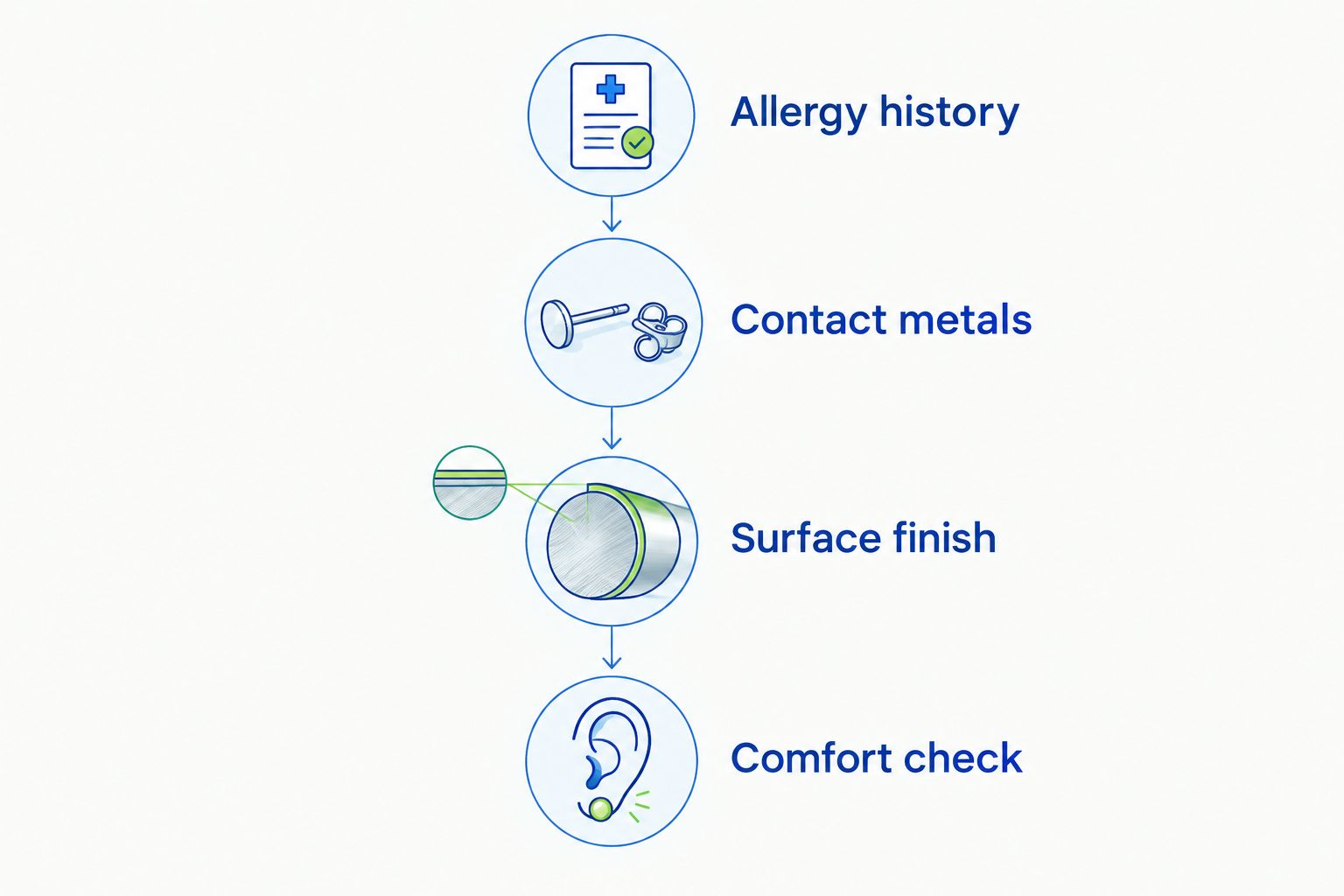
Confirm the contact metals before deciding on the decorative design.
Which hypoallergenic designer earrings should you choose?
Choose verified nickel-free platinum for a white precious-metal default, documented implant-grade titanium when nickel avoidance comes first, or disclosed solid yellow gold when warmth is essential. Your known allergy takes precedence over the ranking.
Then enjoy the design decision. Choose a small sculptural stud for quiet character, a smooth hoop for a clean outline, or a gemstone drop for movement—while checking the same contact-metal details for each shape.
FAQ
What are the best hypoallergenic designer earrings for sensitive ears?
The best choice identifies every skin-contact metal and excludes your confirmed allergens. Verified nickel-free platinum is a fine-jewelry starting point; documented implant-grade titanium is a strong option when nickel avoidance takes priority.
Is platinum better than gold for sensitive ears?
Platinum is a useful white-metal starting point, but the complete alloy determines suitability. Yellow gold and white gold also require disclosure of their alloying metals, posts, and backs.
Are 18-karat gold earrings automatically hypoallergenic?
No, 18-karat gold earrings are not automatically hypoallergenic. They contain 75% gold, while the remaining alloying metals and separate components still need checking; gold itself can also cause contact allergy.
Can I wear white-gold earrings if I am allergic to nickel?
Choose white-gold earrings only when every skin-contact component is confirmed suitable for your nickel allergy. White color and rhodium plating do not prove that the underlying alloy is nickel-free.
Are surgical-steel earrings safe for a nickel allergy?
Do not assume surgical-steel earrings are suitable for a nickel allergy. Some stainless-steel alloys contain nickel, so the label alone is not enough to establish suitability.
Can an earring backing cause a reaction even if the post is gold?
Yes, a backing can expose your skin to a different alloy from the post. Confirm the backing separately, along with any hinge or decorative surface that rests against your ear.
Does an itchy piercing always mean I have a metal allergy?
No, itching alone does not establish a metal allergy. Irritation, pressure, and other skin problems can produce symptoms; persistent symptoms or signs of infection need clinical assessment.
Can I put designer earrings in a new piercing?
Use jewelry recommended for your healing piercing by a qualified piercer rather than choosing from a general designer-earring ranking. Healing tissue needs appropriate material, fit, and aftercare.
One last thing
The smallest component can change the whole recommendation. A carefully chosen precious-metal earring with an unidentified replacement backing leaves the allergy question unresolved.
Before choosing your pair in 2026, ask one complete question: what metals touch my skin in the front, post, and back? Save the answer with the piece’s details so a later replacement does not undo your careful choice.
Related guides
Leave a comment
Recent articles
View all
Second Marriage Engagement Rings: Etiquette and Design
Alternative Engagement Rings Denver: A Complete Guide