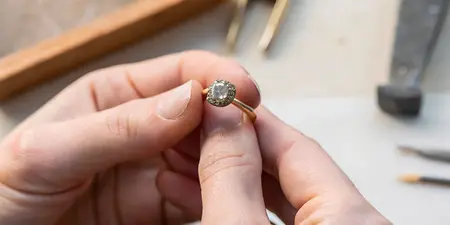

Best Channel Set Wedding Band for Everyday Wear 2026

Channel-set wedding bands hold diamonds flush between two metal walls with no prongs above the surface, which is exactly why they survive gym sessions, keyboard typing, and ten years of dish duty better than most halo or prong-set styles. If you're shopping in 2026 for a band that won't snag, chip a prong, or need constant re-tipping, this is the setting family to know.
TL;DR
- Best overall channel set wedding band for everyday wear: a full channel-set platinum band with zero raised prongs to catch.
- Best for stacking: interlocking channel designs, the kind Spinelli Kilcollin built its name on.
- Best budget option: a lab-grown diamond channel-set band, same flush security at a lower stone cost.
- Half channel-set bands trade some sparkle for extra metal coverage on the sides, the right call for gym-goers and manual work.
- Channel settings still need yearly inspection since lotion and dust wedge under the stones over years of daily wear.
Why this matters
A prong-set band looks better in a photo, but a channel-set wedding band is built for the hand that's on a steering wheel, a laptop, and a dumbbell rack all in the same day. The flush stones mean nothing sticks up to catch on a glove or a sweater sleeve.
If durability for daily wear is the actual priority, start with Element 79's guide on durable engagement ring settings for daily wear before you commit to a metal and setting combination. The channel-set category solves the prong problem, but metal choice still decides how the band ages.
What makes the best channel-set wedding band for everyday wear
- Metal durability: platinum is typically cast at 950 fineness (95% pure metal) and resists wear better than softer alloys; 14k gold runs 58.3% gold by weight, alloyed for hardness, while 18k gold sits at 75% gold and scratches more easily.
- Flush stone security: diamonds sit between two metal walls with nothing raised to snag on fabric, hair, or a car door.
- Low profile: a band that sits close to the finger clears gloves and gym equipment without catching.
- Stack compatibility: a straight edge sits differently against a solitaire than a curved, contoured edge does.
- Maintenance access: channel settings trap lotion and dust under the stones, so a cleaning routine matters more here than with open prong settings.
- Resize flexibility: a band with stones running the full circumference is a harder, pricier resize than a half-set version.
Channel-set wedding bands at a glance
Full channel-set band
- Best for: Everyday wear overall
- Standout feature: Diamonds flush across the whole band, no prongs anywhere
- Key limitation: Full stone circumference makes resizing more involved
Half channel-set band
- Best for: Active lifestyles and manual work
- Standout feature: Solid metal at the sides adds knock resistance
- Key limitation: Less sparkle visible from the side
Contoured channel band
- Best for: Pairing with a solitaire
- Standout feature: Curved edge nests against a single raised stone
- Key limitation: Shaped for one specific engagement ring profile
Interlocking channel stack
- Best for: Building a ring stack
- Standout feature: Multiple thin bands link and move together
- Key limitation: Individual bands can rotate out of alignment
Lab-grown diamond channel band
- Best for: Budget-conscious buyers
- Standout feature: Same flush setting at a lower stone cost
- Key limitation: Resale value differs from mined-diamond pieces
Sculptural designer channel band
- Best for: A statement everyday piece
- Standout feature: Asymmetric or sculptural metalwork around the stones
- Key limitation: Reads less traditional for conservative dress codes
1. Full channel-set band: best channel set wedding band for everyday wear
A full channel-set band runs diamonds the entire way around the ring, set flush between two continuous metal rails. There's no gap where a prong would normally sit, which is the main reason this style shows up first in any search for a channel set wedding band built for daily wear.
Full channel-set band pros:
- Zero raised prongs anywhere on the band
- Even sparkle distribution around the whole finger
- Holds up to typing, driving, and daily hand-washing without catching
Full channel-set band cons:
- Resizing means resetting stones along the whole circumference, not just a section
- Full coverage costs more in labor than a partial channel
Best for: someone who wants maximum daily durability and doesn't plan to resize the ring later. Verdict: Buy.
2. Half channel-set band: best for an active lifestyle
A half channel-set band only sets stones across the top half of the ring, leaving the sides and back solid metal. That solid metal absorbs the knocks that would otherwise land directly on a stone edge, which matters if your hands are on a barbell, a hammer, or a climbing wall more than a keyboard.
Half channel-set band pros:
- Extra metal coverage protects against side impacts
- Easier and cheaper to resize than a full channel
- Lower stone count keeps the look understated
Half channel-set band cons:
- Less visible sparkle from certain angles
- Doesn't read as symmetrical when paired with a full-set engagement ring
Best for: gym regulars, tradespeople, and anyone whose hands take daily impact. Verdict: Buy if your day involves more grip work than desk work.
3. Contoured channel band: best for pairing with a solitaire
A contoured or curved channel-set band is shaped with a notch or a rise that follows the curve of a solitaire engagement ring, so the two sit flush against each other instead of leaving a gap. This only works well when the band is matched to the specific ring it's meant to sit beside.
Contoured channel band pros:
- Sits flush against a solitaire with no visible gap
- Reads as one cohesive bridal set on the hand
- Still delivers the flush, snag-free channel setting
Contoured channel band cons:
- Shaped for one engagement ring profile, so it won't nest against a different setting later
- Less flexible if you ever change or upgrade the engagement ring
For a deeper look at matching a curved band to a specific setting, wedding bands built to pair with a solitaire engagement ring walks through the fit questions to ask before you order. Best for: brides pairing a wedding band with an existing solitaire. Verdict: Buy, provided you bring the engagement ring to the fitting.
4. Interlocking channel stack: best for building a ring stack
An interlocking or linked channel design uses several thin channel-set bands that connect and shift slightly against each other, a signature look associated with Spinelli Kilcollin's stacking pieces. Instead of one static band, you get a cluster of thin channels that move as a unit on the finger.
Interlocking channel stack pros:
- Adds visual depth without one bulky band
- Individual bands can be worn separately or together
- Modern, sculptural look that reads differently than a single traditional band
Interlocking channel stack cons:
- Bands can rotate or shift out of alignment through the day
- More moving pieces mean more surfaces to clean and inspect
Element 79's Spinelli Kilcollin rings for a modern ring stack is the place to see how the interlocking construction actually looks worn. Best for: buyers who want texture and movement over one flat band. Verdict: Buy if you already wear a ring stack daily and won't mind the occasional adjustment.
5. Lab-grown diamond channel band: best budget option
A lab-grown diamond channel-set band uses the same flush-setting construction as a mined-diamond version, just with a lab-grown stone in the channel. The setting technique, the metal options, and the daily-wear durability don't change based on where the diamond originated.
Lab-grown diamond channel band pros:
- Same flush, snag-free setting as mined-diamond channel bands
- Lower stone cost opens up larger or more channels for the same budget
- Chemically and optically identical to mined diamonds
Lab-grown diamond channel band cons:
- Resale and appraisal values differ from mined-diamond pieces
- Not every jeweler stocks lab-grown in every channel width
Element 79's guide to lab-grown diamond engagement rings for a modern budget covers the tradeoffs in more depth. Best for: buyers who want a full channel look without stretching the stone budget. Verdict: Buy.
6. Sculptural designer channel band: best for a statement everyday piece
This is a channel-set band that departs from the straight, symmetrical rail in favor of asymmetric metalwork, mixed textures, or an irregular stone line, the kind of design-forward approach designers like Artëmer and Orly Marcel are known for. It keeps the flush, snag-free construction but trades the traditional straight band for something more sculptural.
Sculptural designer channel band pros:
- Keeps the everyday-wear practicality of a flush setting
- Reads as a standalone piece, not just a wedding band
- Works well mixed into a broader jewelry stack
Sculptural designer channel band cons:
- Less traditional for conservative dress codes or workplaces
- Asymmetric designs can be harder to match if you want a second, identical band later
Best for: someone who wants their wedding band to double as an everyday statement piece. Verdict: Buy if your personal style already leans sculptural over classic.
See channel-set bands in person
Book a fitting at the Cherry Creek boutique to compare settings side by side.
How we ranked
Each style above was scored against the six criteria listed earlier: metal durability, flush stone security, profile height, stack compatibility, maintenance access, and resize flexibility. No two entries compete for the same use case, so the list functions as a decision tree rather than a single leaderboard, and the client's own designer lineup only appears where it genuinely fits the use case (stacking and sculptural statement pieces).
Which channel-set wedding band should you choose?
If you want one band that handles daily wear without a second thought, the full channel-set band in platinum wins on durability and simplicity. If your hands take real impact at work or the gym, drop down to a half channel-set version instead. Pairing with an existing solitaire calls for a contoured band, and if a ring stack is already part of your daily look, the interlocking channel construction fits that better than any single band.
Budget-first buyers should default to a lab-grown diamond channel band, since it delivers the same flush security without changing the setting style. Whatever you choose in 2026, confirm the metal purity (950 platinum, 14k, or 18k) before finalizing, since that number affects how the band actually holds up over a decade of everyday wear.
FAQ
What is the best channel set wedding band for everyday wear?
A full channel-set band in platinum or 14k gold is the best channel set wedding band for everyday wear because it has no raised prongs to catch on fabric or snag during daily tasks. Half channel-set versions add even more durability for hands-on work or gym use.
Is a channel set wedding band better than a prong set band for daily wear?
Yes, for durability a channel-set band beats a prong-set band because the diamonds sit flush between metal walls with nothing raised to catch or bend. Prong settings look different but need more frequent inspection for loose or worn prongs.
How much maintenance does a channel set wedding band need?
Channel-set bands need a yearly inspection because lotion, dust, and debris can wedge under the stones over years of wear. A jeweler check confirms the metal walls still hold each stone securely.
Can a channel set wedding band be resized?
Yes, but a full channel-set band is harder and more expensive to resize than a half channel-set version because stones run the entire circumference. A half channel with solid metal on the sides resizes more easily.
What metal is best for a channel set wedding band?
Platinum (typically 950 fineness, 95% pure) holds up best to daily wear, while 14k gold (58.3% gold) offers a harder, more affordable alternative. 18k gold at 75% gold looks richer but scratches more easily over time.
Do lab-grown diamonds work in a channel set wedding band?
Yes, lab-grown diamonds are chemically and optically identical to mined diamonds and work in the same flush channel construction. The main tradeoff is resale and appraisal value, which differs from mined-diamond pieces.
Can a channel set wedding band be paired with a solitaire engagement ring?
Yes, a contoured or curved channel-set band can be shaped to nest flush against a solitaire's curve with no visible gap. The band needs to be matched to the specific engagement ring for the fit to work.
One last thing
The detail most buyers skip: a channel-set band's durability depends more on how the metal walls were finished at the edges than on the diamonds themselves, since a poorly finished edge is what actually snags fabric, not the stones. Ask to see the band's edge finish under magnification before you commit, especially if daily wear in 2026 means gloves, gym equipment, or manual work.
Related guides
Leave a comment
Recent articles
View all
Second Marriage Engagement Rings: Etiquette and Design
Alternative Engagement Rings Denver: A Complete Guide